
Article / Cheng Chih-Ya
Photo / Taiwan Ecotourism Association
Interviewees / Chang Hsun-Fa, Division Chief, Recreation Management Division, National Park Service, Ministry of the Interior; Kuo Yu-Jen, President, Taiwan Ecotourism Association
The recent Seoul International Book Fair in South Korea was themed around Taiwan and introduced the term "Taiwan Sensibility." International celebrities shared photos with Taiwanese street backgrounds on their social media platforms. Foreign hikers documented their climbing routes to the 100 Peaks of Taiwan. All of these have gradually ignited an online trend centered on living in Taiwan, leaving many delighted yet puzzled: It turns out that the landscapes so many of us take for granted are, in fact, captivating.
The National Park Service (NPS), acting almost like a talent scout, has already recognized Taiwan's potential as a subtropical island. Taiwan is a land of "Many Mountains", but how is it that they are numerous enough to be a distinctive feature of Taiwan? And how do they influence the ecology and cultural landscape of this island? With this in mind, the NPS has created a list of mountain and sea cultural experiences, with a view to showcasing Taiwan's unique charms far and wide.

The Unique Pulse of the Tropic of Cancer
Kuo Yu-Jen, President of the Taiwan Ecotourism Association (TEA), explains that the local topography and microrelief make Taiwan stand out literally above the crowd, with 268 mountains over 3,000 meters high situated in an area of just 36,000 km2. Chang Hsun-Fa, Division Chief of the NPS Recreation Management Division, also notes that the short east-west span of Taiwan encompasses a great diversity of landscapes, from offshore islands, oceans, coasts, and wetlands, to plains, hills, and canyons. This makes Taiwan second to none among the 22 countries on the Tropic of Cancer in terms of landscape diversity.
The combination of complex topography, monsoon, and ocean currents leads to a highly changeable climate and great biodiversity in Taiwan. Both Kuo and Chang note, that Taiwan is a subtropical country, but has vertical ecosystems rich in biodiversity. For example, landscapes and species usually seen only in temperate climate zones can also be found at the summits of Taiwan's 100 Peaks. This makes Taiwan rather unique as compared to other subtropical countries on the Tropic of Cancer.
School textbooks teach us that the lines located at 23.5° north and south latitude, known as the Tropic of Capricorn (south) and the Tropic of Cancer (north), divide the Earth into tropical and temperate climate zones. Kuo states, "The general public often thinks of the Tropic of Cancer as a 'horizontal line around the Earth', and that's where their understanding stops. In fact, though, the Earth is slightly tilted on its axis as it rotates around the sun, which means that the angle of the noon sun shifts up and down. The changes created by that line form a 'Tropic of Cancer Belt' – in other words, the climate zone between the tropics and the temperate zone is the Subtropics."
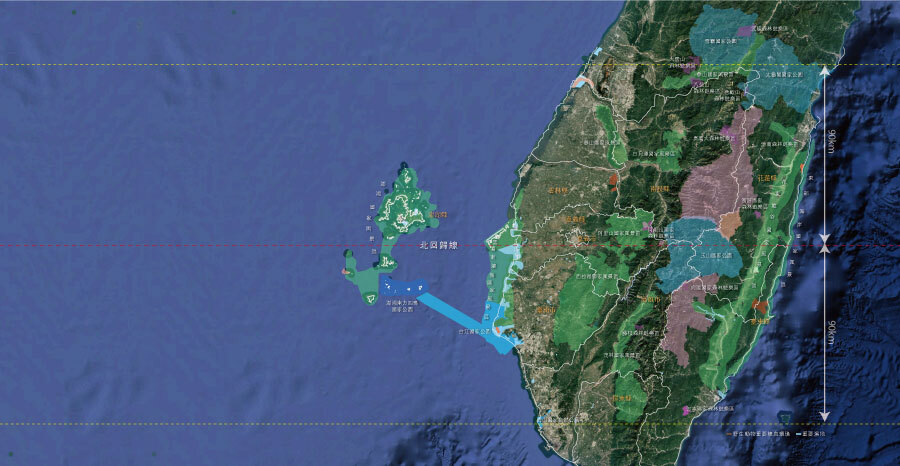
The international consensus is that this climate zone extends approximately 180 kilometers from north to south. In Taiwan, it extends from the southern edge of Miaoli County to the northern edge of the border between Kaohsiung City and Pingtung County. Kuo states that the northernmost point of the Tropic of Cancer Belt is near the eight communities of the Mpaynux Tribe in the Xuejian area of Shei-Pa National Park, while the southernmost point extends to connect the Shoushan National Natural Park area. This explains the climate transition we experience when driving past Huoyan Mountain in Miaoli, or crossing the Gaoping Bridge between Kaohsiung and Pingtung.
It’s a Pleasure Meeting You, We Are Taiwan!
So, why has the Tropic of Cancer Belt in Taiwan been designated as our new calling card to the international community? Chang gives some insight on the matter: "The Central Mountain Range Conservation Axis project that we started around 2010 has yielded quite a few positive outcomes. Since the official establishment of the National Park Service on September 20, 2023, we have been contemplating how these achievements can be applied in our work in order to deepen the role of the national parks, and how we can practically respond to the SDGs and OECMs that have garnered international attention in recent years." In other words, the goal is to extend the reach and effectiveness of national parks' conservation measures to the public through wise utilization of resources. In this regard, the NPS has begun an official collaboration with the TEA to implement the SDGs and sustainable development in the Tropic of Cancer Belt. As a result, the Tropic of Cancer Belt was re-examined and further expanded into the Formosa Tropic of Cancer Sustainability Belt, in hopes of giving equal attention to tourist economy and conservation work.
With the concept in place, the NPS and TEA discussed a clearer vision, giving rise to the key concepts of "The Peak on the Tropic, the Origin of the Austronesians." Chang explains, "'The Peak on the Tropic' literally refers to the Jade Mountain being the highest point in the Tropic of Cancer Belt. The fundamental purpose is to showcase the unique biodiversity in Taiwan resulting from the temperature changes with elevation."
Kuo further notes, "We encourage the public to see Taiwan's vitality and way of life by thinking in terms of the subtropical climate. In the past, Taiwan has often been marketed as a tech hub, a key hub in the Pacific island chain… things like that – all of which are overly simplified. Such phrasing cannot fully express the vast geography and rich cultures of Taiwan." Chang adds that the Sustainability Belt includes Indigenous peoples, Minnan and Hakka ethnic groups, and so many more, as well as the beliefs and cuisines that each group has given rise to. The cultural diversity that arises in such close concert from the geography, terrain, and climate gives a much more well-rounded perspective on Taiwan. This also connects deeply with what the "Origin of the Austronesians" is getting at.
The Origin of the Austronesians is based on the Out of Taiwan anthropological theory. However, the concept as proposed in the blueprint seeks to break free from historical perspectives by redefining Taiwan with a new sense of identity for the next generation, rather than solely focusing on the "origin". This aims to facilitate exchanges and cooperation between Taiwan and other countries in social, economic, and other spheres. From the Peak on the Tropic to the Origin of the Austronesians, this vision will give a direction for future development. We anticipate that the project will embody the spirit of our ancestors who crossed the seas to trade, intermarry, and settle in new lands, thereby transcending geographical boundaries and promoting cultural heritage. Ultimately, this project will enable everyone to see and understand the myriad facets of Taiwan's diverse ecologies and cultures.
The Central Mountain Range Conservation Axis
One of the three main “axes” in the national land development project started in 2010, this corridor focuses on the unique characteristics of the Central Mountain Range. It aims to enhance the visibility of rare ecological resources and Indigenous cultures in Taiwan by establishing protected areas (such as national parks and nature reserves) and through environmental education.
Out of Taiwan Hypothesis
This academic hypothesis posits that Austronesian languages and cultures originated in Taiwan, then spread to Southeast Asia, Micronesia, and other regions through inter-island migration. Research in fields such as biology, linguistics, ethnology, and physical anthropology has covered factors such as similar species, overlapping root words, and the content of oral myths across regions. Based on all this, experts have proposed an ancient human migration route. It is believed to have originated in Taiwan, then stretched to the Philippine Islands, where it split into two branches – one heading toward Oceania, the second toward Borneo.
A National Sustainable Development Team Coming Together
The NPS and TEA have moved beyond the Central Mountain Range. We have further divided the Formosa Tropic of Cancer Sustainability Belt into five east-west sub-Belts, one marine and offshore island sub-belt, and two north-south sub-belts. In these areas, we have rolled out five major tasks: Nature conservation; cultural preservation; ecotourism; environmental education; and natural healing. Most importantly, the project shifted approach, from the traditional 'linking resources' to instead 'consolidating resources'. This aims to form a national sustainable development team through cross-departmental, cross-industry collaboration.
Kuo notes that animal species do not recognize human administrative boundaries; and as a result, it is essential to transcend limitations by linking and coordinating different organizations' conservation efforts for the same species. He gives an example: "The Hong Kong Bird Watching Society conducts a global, simultaneous census of black-faced spoonbills. They join with NGOs worldwide, to give the entire world a deeper understanding of the ecological status of black-faced spoonbills." For reasons like this, a transparent and equitable platform becomes particularly crucial, as it facilitates sharing and exchanging sustainability insights and resources among governments, the public, NGOs, and businesses.
The development and preservation of local ethnic cultures are also inextricably linked to the Sustainability Belt, and this is a key factor in promoting ecotourism that combines nature conservation, arts, and humanities through the sub-belts. The central government has been promoting local innovation initiatives to balance development in urban and rural areas – and ecotourism is a key pathway in these initiatives. Chang shares, "There are many recreational resources situated within the Tropic of Cancer Belt, such as forest recreation areas, national scenic areas, and the Mountains to Sea National Greenway. However, we are contemplating implementing sustainable development practices on these recreational resources and extending the reach to tribal communities to respond to local revitalization initiatives."
The Belt is home to many communities and tribal villages characterized by rich cultural and historical heritage. By uncovering and recognizing their own unique cultural DNA, and designing distinctive tour itineraries that offer in-depth exploration for visitors, we will be able to promote sustainable development for local industries. In doing so, local communities will be self-sufficient rather than reliant on public funding, creating a virtuous economic cycle. This, in turn, will draw more residents into the local communities and bring more locals to return, eventually forming stable and thriving communities.
Turning to environmental education and natural healing, these are closely tied to the concept of cross-industry and cross-departmental collaboration on ecotourism. Kuo cites the Ministry of Education's Taiwan Global Pathfinders Initiative as one example, explaining that outdoor education aims to encourage people to step out of their comfort zones and broaden their horizons by exploring new places. He also references the US National Park Service's Healthy Parks Healthy People global movement, which emphasizes wise utilization of natural resources to offer the public opportunities to get into the wilderness. By getting plenty of physical activity, the public will see improvement in their well-being and experience strong mental and physical health, eventually attaining preventive healthcare effects.
Chang concludes, "These efforts are based on two core values: Ecology and culture. They highlight how multifaceted the Formosa Tropic of Cancer Sustainability Belt is. We need support from diverse partners in order to turn these ideas into reality."
Natural Healing
Scientific research has shown that doing things like listening to birdsong or ocean waves, or breathing and stretching exercises in a natural environment, can relieve stress and improve sleep quality. This helps to stabilize emotions and further improve physiological mechanisms such as the circulatory system. Such activities can also help the body’s immune system fight disease and can stimulate creative thinking, resulting in harmonious and positive interpersonal relationships.


Demonstration Sub-Belts: Eat Well, Live Well, Learn Well
For five years beginning in 2026, the National Park Service is set to implement Sub-Belts 3, 4 and 6 as Demonstration Sub Belts. The government, enterprises, and civil NGOs/NPOs will join forces to engage in regional ecology resource investigation and surveying, then formulate wise resource usage plans. The process will integrate plans for original and reconstructed his torical sites, using culture to drive ecotourism, preserve local uniqueness, train youth talent, and realize local innovation.
Also, in step with the 2019 Curriculum Guidelines’ literacy design and implementation lesson plans and experiential teaching, we will be inviting students at every age to get out of the classroom, take a grand tour of nature, and practice diverse forms of learning. We will also advocate Fitcoin to the general public. This advocacy will include an environmentally-friendly diet campaign, which will encourage everyone to get outside; take health walks that relax body and mind; try eating seasonally and locally; and support small farmers and green-certified agricultural products. Doing all these activities will earn you health capital.

Demonstration Sub-Belt 6
This Sub-Belt centers on the Penghu Archipelago, which is a core site for developing Taiwan’s marine and offshore island experiences. This Sub-Belt integrates South Penghu Marine National Park, Penghu National Scenic Area, basaltic/volcanic landscapes, and a wide variety of Nature Reserves, Natural Monuments, marine protected areas, seabird and green sea turtle protected areas, Wetlands of Importance, Recreation Areas, and other resource areas.
Demonstration Sub-Belt 4
In the west, this Sub-Belt starts with the Tainan metropolitan area, including the Jianan Coastal Wetlands, the southern Jianan Plain, and the Liugui-Jiaxian Foothill forest conservation area, which are crossed by the Zengwen and Yanshui Rivers. This then connects to the Siraya National Scenic Area and tourism areas along the Southern Cross-Island Highway, continues on to the Central Mountain Range Conservation Corridor, and thence on to the southern tourism & living areas of Hualien and Taitung.
Demonstration Sub-Belt 3
In the west, this Sub-Belt begins at the Chiayi metropolitan area, including the Jianan Coastal Wetlands, the northern Jianan Plain, and Alishan foothill agricultural land, which are crossed by the Beigang, Puzi, and Bazhang Rivers. It then connects to Alishan’s forestry railroad and the tourism areas along the Provincial High way No. 18 (Alishan Highway), continues on to Yushan National Park, then encompasses the central tourism & living areas of Hualien and Taitung.
Sharing Taiwan’s Calling Card to Meet the World
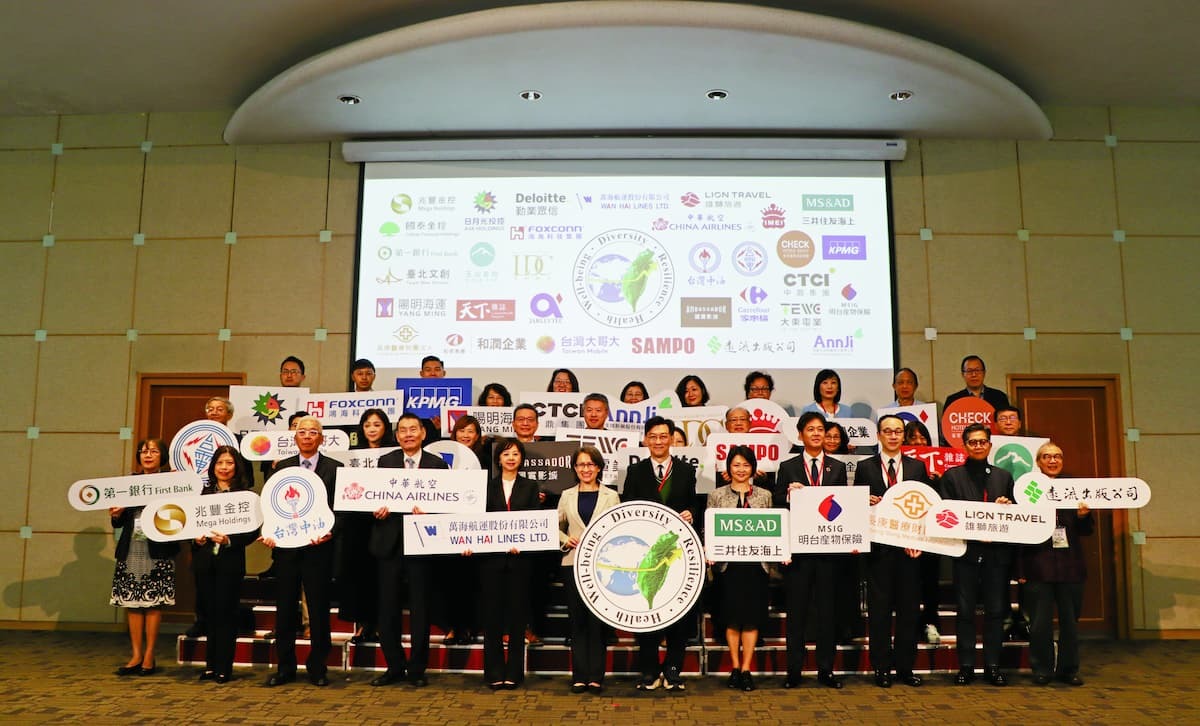
The NPS, as the project navigator, bears two key responsibilities: Gathering resources, and communicating. Chang shares that the project is continuing to listen to the actual needs of businesses and government agencies as the project progresses, making adjustments to short-, medium-, and long-term planning as the project moves forward. But the NPS has limited human resources, and Rome wasn’t built in a day, so the NPS needs all sectors of society to step forward and join in this endeavor. Coordinating existing resources and give full play to potential resources their full play will increase Taiwan’s visibility; and this, in turn, will not only attract more foreign tourists, but also encourage Taiwanese people to re-discover our homeland.
The TEA, for its part, has held multiple consensus meetings and forums, and has tirelessly visited civil groups to continue promoting the concept of the Tropic of Cancer Sustainability Belt. The aim is to establish a public-private partnership platform, in order to explore and demonstrate feasible implementation plans for the sub-belts.
Kuo notes that in recent years, TWSE- and TPEx-listed companies have been required to submit periodic ESG reports, but this remains a foreign concept to the general public. Thus, in each meeting, forum, or visit, the needs and questions that enterprises raise help us identify areas where the NPS – and even the entire Belt project – can provide support or feedback. For example, how is ESG related to employee travel? The solution lies in organizing ecotours.
Chang notes that the NPS taking the initiative will provide clear, reliable guidelines for both public and private sectors. Examples include the Wanhai Planting Tree Activity, co-organized by Wan Hai Lines, the NPS, the Forestry and Nature Conservation Agency, and NTU Experimental Forest; and the industry-government-academia collaboration in the Blue Carbon Mangrove Restoration Project between Taiwan Mobile, the NCHU Department of Life Sciences research, and Taijiang National Park Headquarters.
In the future, we will continue to align the needs of each sector, organize local strolls, and hold international forums, implementing the Tropic of Cancer Belt, and working toward achieving the sustainable development goals. We encourage everyone to create all-new, refined, persuasive calling cards for Taiwan, showcasing our thriving vitality to the world. After all, this land is indeed filled with endless fascinating stories waiting to be told.


