Article / Cheng Chih-Ya
Interviewees/Chang Hsun-Fa, Division Chief, Recreation Management Division, National Park Service, Ministry of the Interior、Kuo Yu-Jen, President, Taiwan Ecotourism Association
As global attention to sustainable development continues to grow, how can Taiwan, as a nation, encourage its people to take more concrete actions and show the world that Taiwan can lead? One of the core intentions behind the Tropic of Cancer Sustainability Belt project is to highlight the unique geo graphic position of Taiwan on the Tropic of Cancer and the extraordinary richness it holds. This island is home to an exceptional diversity of life, culture, and landscapes. These three layers of diversity—ecological, cultural, and geological—are deeply intertwined with the principles of the Sustainable Development Goals and are integrated into a new identity crafted as Taiwan’s calling card to the world.
In this article, Chang Hsun-Fa, Division Chief of the Recreation Management Division at the National Park Service, and Kuo Yu-Jen, President of the Taiwan Ecotourism Association, offer in-depth perspectives on how collaboration between public and private sectors can make powerful use of five key terms. Together, these five terms forge a vivid and resonant calling card for Taiwan—one that conveys the island’s unique ecological and cultural strengths, as well as its commitment and capacity to contribute meaningfully to the global vision of sustainability.
Five Kewords
#PeakoftheTropic #FormosasGreenGem
#OriginoftheAustronesians
#TaiwansCallingCard #TropicofCancerLandscapeShowcase
The Peak on the Tropic: The Ecological Pinnacle of the Subtropics
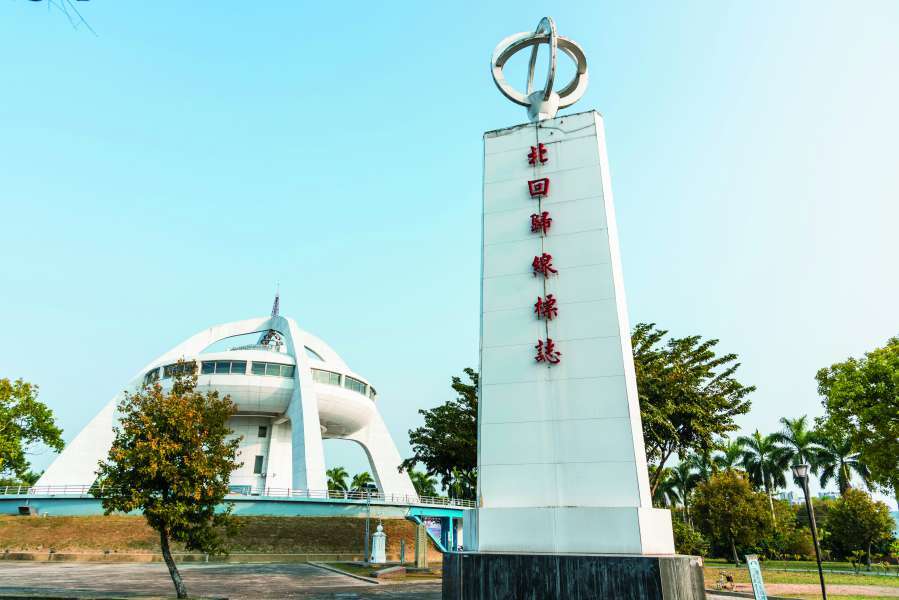
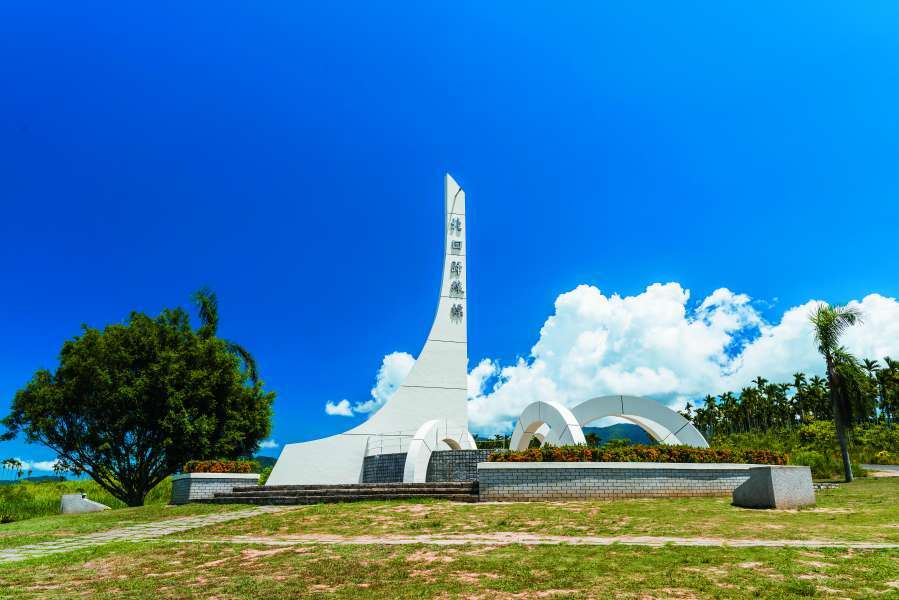
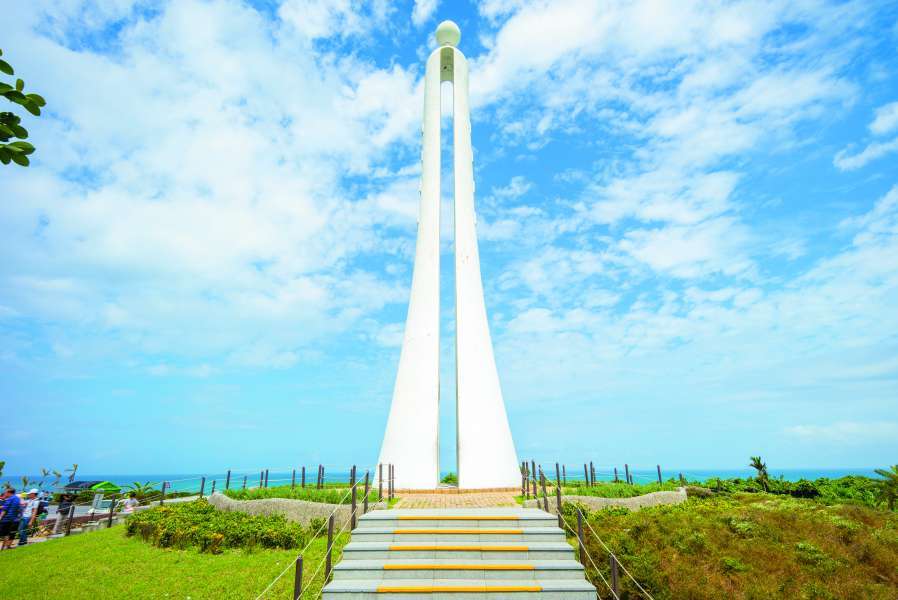
Yu-Jen Kuo begins by explaining the significance of this term from a geographical perspective: "The Tropic of Cancer is a belt that encircles the world, passing through 22 countries. The main peak of Yushan (Jade Mountain), at approximately 3,952 meters above sea level, happens to stands as the highest point on this belt. In this sense, Taiwan can be seen as the pinnacle of the Northern Hemisphere's subtropical zone."
But "The Peak on the Tropic" is not merely a reference to elevation—it also highlights Taiwan's unique ecological profile within the Tropic of Cancer Belt. As Division Chief Chang Hsun-Fa explains, "Taiwan is compact, yet densely populated, with high mountains. This has given rise to the island's extraordinary vertical ecosystems."
Beyond presenting Taiwan's natural grandeur to the world, this concept also deepens the Taiwanese identity and encourages people to see the island from new perspectives. As Chang further notes, "Future outreach efforts may include 'peak-spotting' activities, such as identifying ten locations with views of Yushan and encouraging the public to take photographs at each location. These activities offer a subtle yet powerful way to reconnect people with Taiwan's mountainous landscape."
Formosa’s Green Gem: An Ecological Treasure
"This key term is meant to emphasize Taiwan's exceptional ecological richness within the Tropic of Cancer Belt," says Chang.
Kuo Yu-Jen adds, "Among the countries that lie along this latitude, most landscapes tend to be relatively uniform, with large expanses of desert, grassland, or plateaus. In contrast, Taiwan stands out due to its dramatic and rare topographic diversity."
Due to its geography and its climate, Taiwan encompasses a full spectrum of representative vertical ecosystems. Biomes ranging from subtropical lowland plains to alpine tundra exist within a remarkably short distance from one another. This compressed gradient of climates and landscapes has given rise to extraordinary biodiversity, making Taiwan a vibrant ecological gem along the Tropic of Cancer.
.jpg)
Origin of the Austronesians: A Geographic Key to Cultural Roots
The term "Origin of the Austronesians" refers to a hypothesis in cultural anthropology that identifies Taiwan as a possible point of origin for the Austronesian peoples. However, as Chang clarifies, "The heart of this concept lies in recognizing that the languages and cultural traits of Taiwan's 16 officially recognized Indigenous peoples share notable similarities with Indigenous groups in other regions. This suggests a long history of interaction and exchange between Taiwan and the wider world."
Taiwan's location—at the convergence of monsoons, ocean currents, and the Kuroshio Current—enabled early Indigenous communities to bring species, cultural knowledge, and traditions with them as they migrated and connected with other lands. "From a historical perspective," says Kuo, "the notion of Taiwan as an Austronesian origin point powerfully underscores the island's geographic importance while also symbolizing the adventurous spirit of an island people."
"Origin of the Austronesians" speaks to Taiwan's unique role as a nexus and conduit of geography and culture. In terms of Taiwan's brand identity, this term deepens the human and ecological foundations of the story that Taiwan continues to share with the world.
Taiwan’s Calling Card: A New Interpretation for the Global Stage
Why do these five key terms matter, and why are they being shaped into a new calling card for Taiwan? "We hope to move beyond the conventional image of Taiwan as a tech island," says Chang. "It's equally important to highlight Taiwan's environmental and social aspects."
Kuo echoes this sentiment, "When these keywords are clearly interpreted and thoughtfully presented, international visitors can swiftly form a meaningful first impression of Taiwan—one that fully reflects our depth, diversity, and values."
This calling card not only encourages domestic travelers to rediscover their homeland but also draws more international visitors to explore Taiwan firsthand. "In recent years," Kuo notes, "there has been growing interest in Taiwan's Mazu belief, even prompting many people to take part in the Dajia and Baishatun Mazu Pilgrimage. During this annual journey, the two Mazu statues—which represent the same sea goddess, but are worshipped in different temples—travel along the island's southwest coast, where the landscape unfolds into a series of lagoons, wetlands, and coastal plains. In many ways, the route itself is a living expression of Taiwan's unique blend of culture and ecology."
Tropic of Cancer Landscape Showcase: Launching Taiwan’s Calling Card
Chang also shared the inspiration behind the Tropic of Cancer Landscape Showcase, envisioned as a launchpad for introducing Taiwan's calling card to the world. "Bringing together the ideas we've just discussed, we believe these key terms must be thoughtfully packaged and promoted as a unified message. Through a showcase platform, we can help people understand how the ideals of sustainable development are being put into action."
To support this vision, the National Park Service and the Taiwan Ecotourism Association have drawn on global precedents. Kuo explains how the team drew inspiration from Japan's renowned international art festival, the Setouchi Triennale, and in turn proposed a development vision tailored for Taiwan. "The Seto Inland Sea region was first designated as a national park in 1934, and by 2010, it had launched its art festival initiative. The festival is now held once every 3 years. This year's event featured works from more than 37 countries and regions, and attracted over one million visitors during its 100-day run."
Building on this model, Taiwan's sustainability belt will feature four thematic art festivals. "These include a Marine Landscape Art Season, a Cultural Arts Season, a Mountain Arts Season, and a Valley Arts Season," explains Chang. "The vision is to invite visitors to journey along the Tropic of Cancer Belt and experience the diverse beauty of Taiwan through these varied landscapes."
Examining each of the five keywords—both individually and as a whole—reveals the broader international image that Taiwan is actively shaping: a unique island nation rich in biodiversity, landscape diversity, cultural depth, and recreational appeal. It is an invitation for locals to rediscover, reconnect with, and fall in love with the island they call home, and for the world to once again be captivated by Taiwan's soft power.
Tropic of Cancer Landmark