Photography Expert/ Lee Hsueh, Volunteer, Yangmingshan National Park
Equipment Reveal

A constant necessity for Lee Hsueh, this scale card features a built-in magnifier, making it easy to measure and observe insects with precision.
In early summer, the subtle scent of growing plants hangs in the air at Yangmingshan. Lee Hsueh, a senior volunteer interpreter at Yangmingshan National Park, guides participants in the “Caoshan Butterfly Visit” on a stroll through the lush greenery from Menghuan Pond to Qixing Park. They follow the blooming, nectar-rich plants, searching for insects hidden among the leaves and flowers.
A Research Path Born from a Simple Question
In early summer, the subtle fragrance of greenery permeates the air on Yangmingshan. Participants of the "Caoshan Butterfly Visit" follow in the footsteps of Lee Hsueh, a senior volunteer interpreter at Yangmingshan National Park, as they wander through the lush trails leading from Menghuan Pond to Qixing Park. Their eyes trace the blooming nectar plants, searching for the delicate silhouettes of insects hidden among the leaves and flowers.
A volunteer interpreter for 28 years, Lee Hsueh has a profound fascination with insects. Her journey began at an insect camp organized by Yangmingshan National Park for elementary students. Initially unfamiliar with the subject, she studied tirelessly before each session. "But reading about them is one thing; observing them in the wild is another," Lee recalls. The imaginative questions from children—Why are there bite marks on this leaf? Who ate it?—ignited her own curiosity and fueled her determination to dive deeper into the world of entomology.
This passion led to a decades-long commitment to meticulous observation and documentation. Since 2006, she has collaborated with Dr. Lee Chi-Feng’s team at the Taiwan Agricultural Research Institute (TARI), Ministry of Agriculture. Together with like-minded citizen scientists, they documented the life cycles of leaf beetles (Chrysomelidae), culminating in the publication of The Chrysomelidae of Taiwan (Volumes 1-3). During this period, the team even discovered several new species.
At Yangmingshan, Lee leads public programs focused on butterflies, moths, and leaf beetles, while also training fellow volunteers to enhance their professional interpretation skills. Additionally, she has led pond ecology courses in Taoyuan for nearly 15 years. Beyond field records, she participates in various terrestrial ecological surveys, immersing herself in the complete life history of every insect she encounters to understand the drastic changes in morphology and diet throughout their development.

Into the Hidden World of Moths
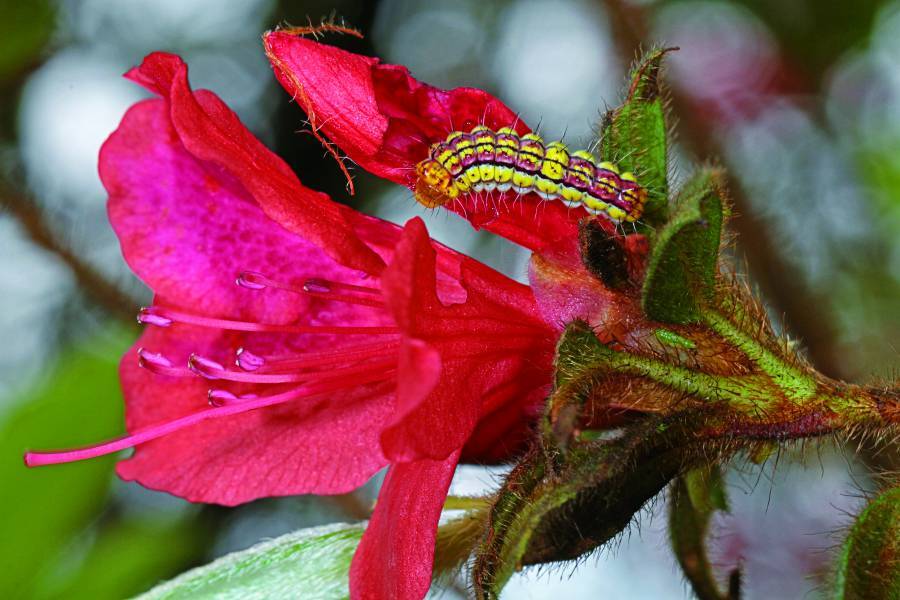
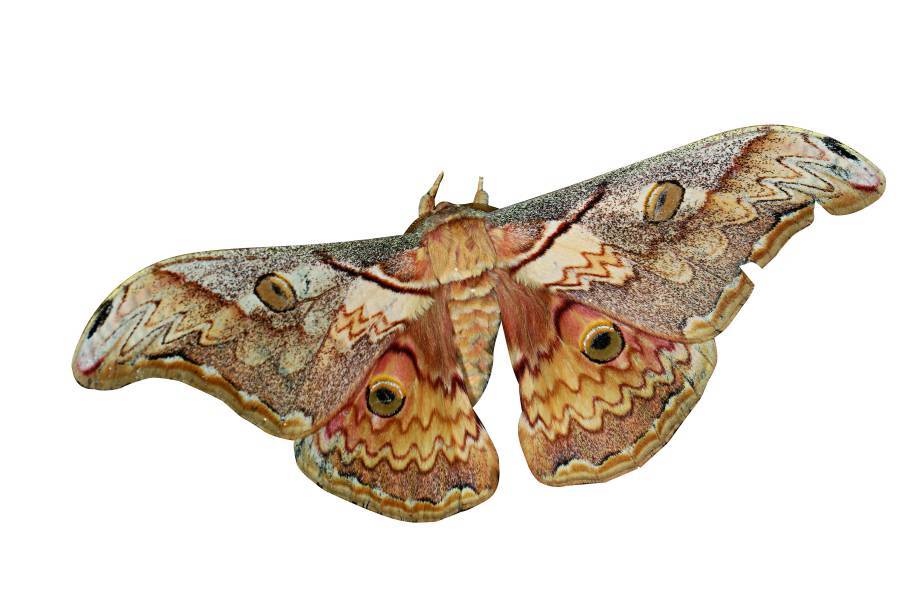
Lee Hsueh’s interest in insects began with moths. Compared to the vibrant, fluttering butterflies, moths often receive less attention and face many misconceptions— people tend to think they are hairy, venomous, or simply unappealing. “I often heard it said that ‘butterfly caterpillars have no hair,’ but that isn't true. Both butterflies and moths belong to the order Lepidoptera. Butterflies evolved from moths; they are essentially moths that fly during the day.”
With a smile, she notes that most people prefer to photograph the adults of holometabolous insects or rare species with only one generation per year. “Common species are often overlooked, especially moths,” says Lee. “Even if one lands right next to you, you might not feel like capturing it. But in Yangmingshan’s lowelevation habitats, there are low- and hightemperature forms, individual variations, and ignored ecological behaviors that are far more worth recording.”
Among her many insect courses, Lee finds moth interpretation the most challenging. While Taiwan has around 375 recorded butterfly species, there are over 5,000 species of moths. “Some cannot even be identified to the species level; even their family or genus remains uncertain.” These countless unknowns are what drive Lee to dedicate her time to continuous observation and documentation.
Cultivating Observation through a Connection with Nature
When leading interpretation courses, Lee encourages participants to practice observing and documenting with their cellphones. “Ecological observation photography starts from an environmental perspective, so the relationship between species and their habitats is a key focus.” For example, during the northeast monsoon in winter, Yangmingshan is damp and rainy; fallen leaves cover the soil, while mosses and lichens grow on rocks and tree trunks. Seeing this, she can predict which moth caterpillars will appear in these spots when spring arrives.
In the past, a wide-angle lens was necessary to capture the relationship between an insect and its environment, but now cellphones can achieve this without changing lenses. “With enough experience,” says Lee, “you can mentally reconstruct an insect’s habitat. Without consulting any references, you’ll remember how it interacts with its surroundings. This is the essence of ‘habitat photography’.”
Next, she suggests capturing as many morphological features as possible: the head, thorax, abdomen, back, sides, and wings. “These features make it easier for experts to determine which family the insect belongs to.” For those rearing insects for observation, she advises photographing every stage from egg to adult. “That is how you truly decode its life history.”
Friends often remark on Lee’s remarkable memory, noting how she remembers exactly where each photo was taken. “It’s not really about memory; I just have a ‘feel’ for the insects,” she says with a smile. Through detailed observation during the photography process, she develops a deep impression of each insect, which in turn fosters an intuition. Understanding its habitat, its diet, and its seasonal behaviors makes it hard to forget. Thus, she encourages her students: “In observation and documentation, you must develop a feel for the ecological environment.” It’s more than just a visit; it’s about being moved by the experience of being part of it.
.jpg)
Sharing Knowledge to Complete the Puzzles of Nature
Observing an insect’s life history can unravel one mystery while raising even greater questions. “Take the Taiwan mulberry butterfly (Calinaga buddha formosana), which feeds on the Taiwan mulberry (Morus australis). Textbooks state they have one generation per year, but I’ve observed cases where pupae had still not emerged after two years.” Lee says this might be due to climate change or an evolutionary process; either way, more data must be accumulated for scholarly analysis. “An individual's observation has blind spots and a limited perspective. In this era of sharing, we must rely on collective efforts to gather data rather than stay within our own small circles.”
Throughout her journey, Lee has been driven not only by curiosity but by a continuous wellspring of joy that keeps her true to her original purpose. “I am a volunteer interpreter and an ecological observer. When you move past 'check-in' or 'stamp-collecting' styles of photography, you are more likely to unintentionally discover things others miss. And when you make such a discovery, the joy is immense.”
A Family-Friendly Butterfly and Flower Corridor
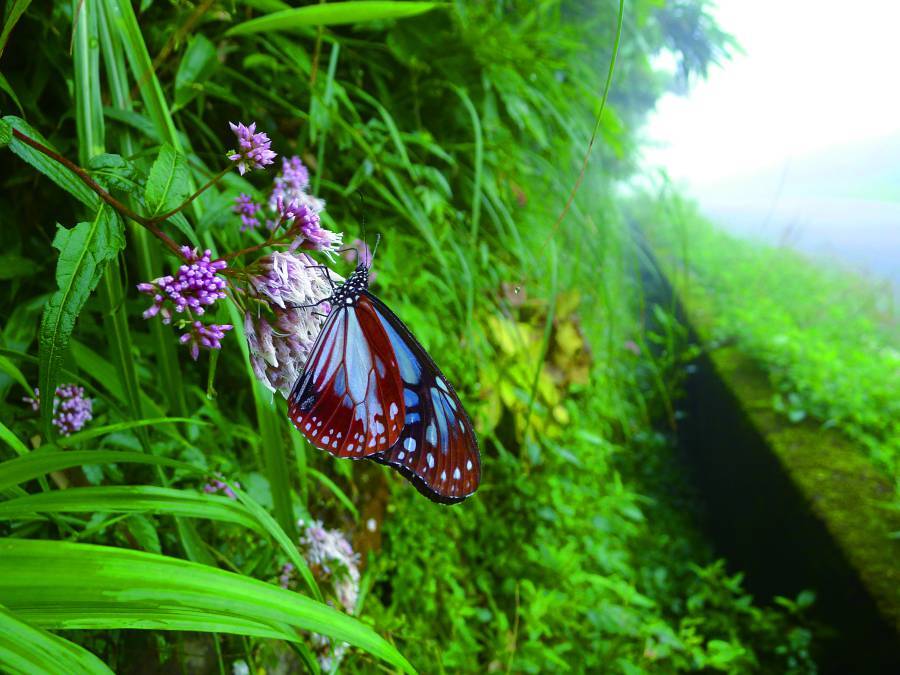
As the weather warms, Lee recommends a visit to the Erziping Trail. The flat path is perfect for families to stroll along; alternatively, one can hike toward Mount Miantian or Mount Xiangtian. “The insect activity in these areas from April to July is exceptional.” Another excellent route is the walk from Menghuan Pond—where the Yangmingshan National Park Headquarters frequently holds butterfly-watching events—to Qixing Park. From May to July, nectar-rich plants such as thistles (Cirsium japonicum), Angelica pubescens, and Eupatorium shimadai come into full bloom, creating a vibrant scene of fluttering butterflies that is a must-see spring highlight.