Photography Expert/ Yang Cheng-Feng, Assistant Technical Specialist, Recreation Service Section, Kenting National Park Headquarters
Equipment Reveal

For over 30 years, Yang Cheng-Feng, an assistant technical specialist in the Recreation Service Section at Kenting National Park Headquarters, has documented many things through his photography: Kinmen’s sorghum fields and traditional settlements; Shei-Pa National Park’s tung blossoms and fireflies; Kenting National Park’s Formosan Sika Deer, raptors, and beautiful marine ecosystems. He defines photography as “painting with light and shadow”. When you master the principles of composition, accumulate experience and skills, and have the patience to endure the ‘waiting’, then there will eventually come that moment when you encounter nature’s beauty.
Documenting Landscapes with Light and Shadow
Yang started doing photography with a rented film point-and-shoot camera. At the time, he had been selected for military duty in Kinmen (a military assignment jokingly nicknamed the "Golden Horse Award"). At that time, Kinmen’s battle administration status had still not been lifted. Yang told himself that since he was already there, he might as well get comfortable with it. “This was a rare opportunity, so why not take the time to look around?” In addition to unique battlefield sites, he also saw Kinmen’s sorghum fields, flying birds, lakes/ponds, and traditional settlements. With this unique blend of nature and culture, Kinmen really is beautiful!
Yang was deeply inspired by the scenery in books like A Trip Around Kinmen and The Origins of Kinmen’s Historical Sites. So, on the half-day he got off each week, he used a film point-and-shoot camera he rented from a shop near his barracks to photograph Kinmen. “The rule for renting a camera was, I had to buy film and then return the film to the shop for processing.” Yang smiles; for a long time, he didn’t really know anything about photography, and was just getting used to the camera. “Yet, because the landscape was so pristine, sometimes a casual click of the shutter would result in a beautiful composition.”
When he was a graduate student, Yang used study grants and his own savings to buy his first SLR camera. He taught himself through books, focusing on understanding how to manage light and composition. “I gradually realized that photography is like painting,” says Yang, “a way to distribute proportions and present a theme through composition. Add to that, if you use the right depth of field and aperture, you’ll get a nice photo. With good composition, any camera can take a great photo.”
A stroke of serendipity led him to Shei-Pa National Park Headquarters and into the high mountains. There, he needed not just mountaineering skills, but also the strength to carry heavy photography gear. To keep his load light, he had to plan carefully before every trip. “After all, photography equipment is hard to lighten; the weight of the equipment often reflects the quality of the lens”. Yang smiles and says, “My photography pack is probably the item I replace most often!” Due to a lack of ergonomic photography pack systems on the market, he has often suffered from lower back pain and sore shoulders in the mountains. Fortunately, he eventually found one that suited his needs.
Balancing the Forces of Stillness and Motion
Fifteen years ago, after joining Kenting National Park Headquarters, Yang turned his lens toward the rich ecosystems of the Hengchun Peninsula. With his biology background, he naturally gravitated toward wildlife photography. He mentions that wildlife photography relies heavily on luck. Waiting is the wildlife photographer’s bread and butter; quite often, you can wait for hours and no animals show up.
Before dawn, he was already concealed in a blind with his telephoto lens, waiting for sika deer to appear. “Photographing sika deer is a hard task. You need to get into position before sunrise, or you’ll startle them. Next, all you can do is wait. If you are unlucky and the animals take a path you weren’t expecting, you won’t get any good photos all morning.”
Photographing birds is another form of inner cultivation. In autumn, the Hengchun Peninsula becomes a hotspot for migratory raptors. Tourists can look up at the sky and admire the flying Grey-faced Buzzards and Chinese Sparrowhawk. “But even if the birds appear,” says Yang, “that doesn’t mean you will get good photos of them.” What the eye can see, the lens may not be able to capture. “Photographing birds relies heavily on equipment; the lens and camera’s focusing system must be very powerful.” With advancements in photography gear, bird eye autofocus and red dot finders can both help with target correction. Yang notes, “These tools can at least save the photographer some eye strain.

The Rhythms of Life Beneath the Sea
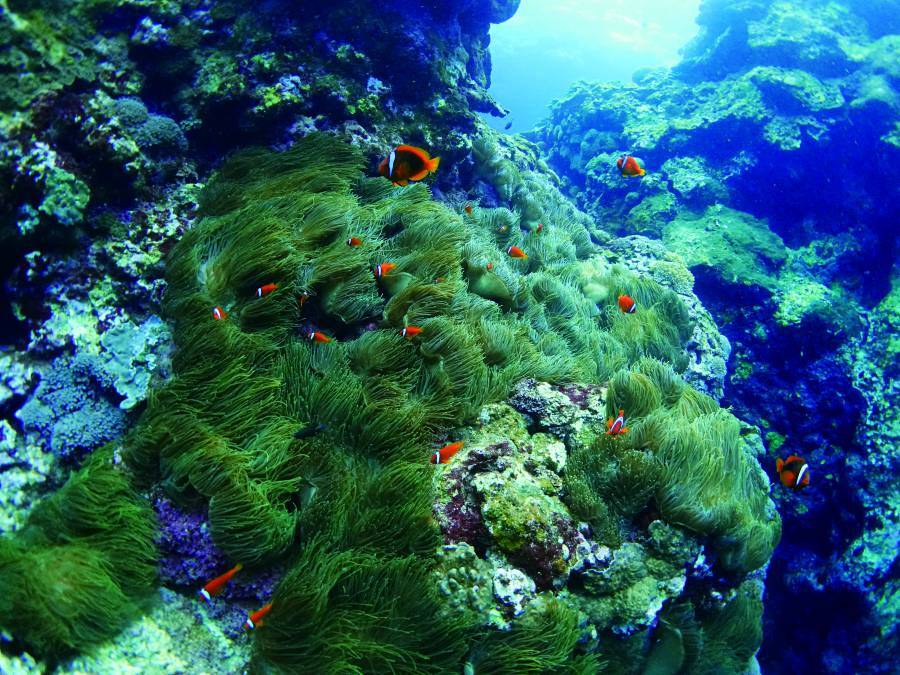
A few years ago, Yang started doing underwater photography. There are some well-known diving sites in Kenting National Park, including Houbihu, Sail Rock, Wanlitong, and Tiaoshi. The world beneath the sea presents little for the ears, but a riot of color for the eyes. Underwater photography is completely different from terrestrial photography, both in terms of subjects, and the photographer’s own physical experience. “On land, photography requires you to sit or crouch while waiting,” says Yang. “But underwater, your body remains active, which is more relaxing. In addition, sea creatures are less skittish around humans; sometimes, they even slowly approach you. The Green Sea Turtles in Kenting, for example – as long as you don’t touch them, they’re right there for you to take photos of”.
Yang describes underwater photography gear as “monstrous equipment”. Each model of camera requires its own specific underwater housing. And every trip requires a lot of advance preparation: Put the camera into the housing; secure it; and lock on the supports. Attach the arms for the strobe. Make sure all the camera buttons are correctly aligned. Vacuum-check the housing after assembly to ensure it is sealed properly. Yang notes, “During the process, if even a single pet hair gets in there, that can cause a mess.” He smiles as he says pre-dive preparation can take over an hour and leave him exhausted; and yet, the wonderful underwater scenery keeps calling to him, every single time.
Hengchun Peninsula: Scenic Wonders Through the Seasons
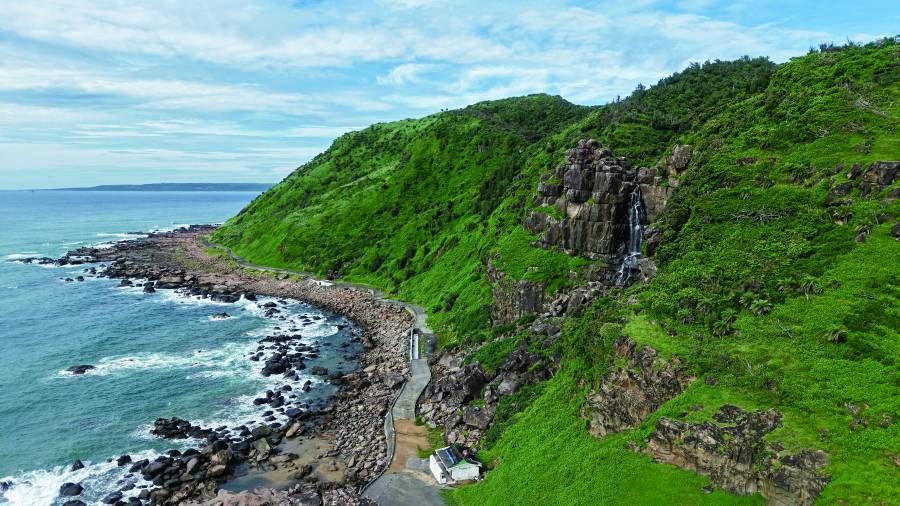
The Hengchun Peninsula offers wonders in every season. Migratory birds return north in spring; then, as spring turns to summer, the Formosan Sika Deer’s coats become brilliant. And bioluminescent mushrooms (Mycena chlorophos), which emit a faint green glow after dark, are a summer highlight in Kenting. In late summer and early autumn, you can enjoy incredible stargazing in areas with less light pollution, such as Chufengbi, Jialeshui, and Shanhai Waterfall.
The powerful downslope winds (locally known as Luoshanfeng) are a winter feature on the Hengchun Peninsula. Yang thus suggests that visitors who want to photograph coastal scenery choose locations on the western coast of the peninsula, such as Sail Rock or Siangjiao Bay, where the sea is calmer. “The Hengchun Peninsula is also famous for its frequent rainbows,” notes Yang. Rainbows after the rain are of course something we can only hope for, not schedule, but they always bring surprise and delight to photographers.
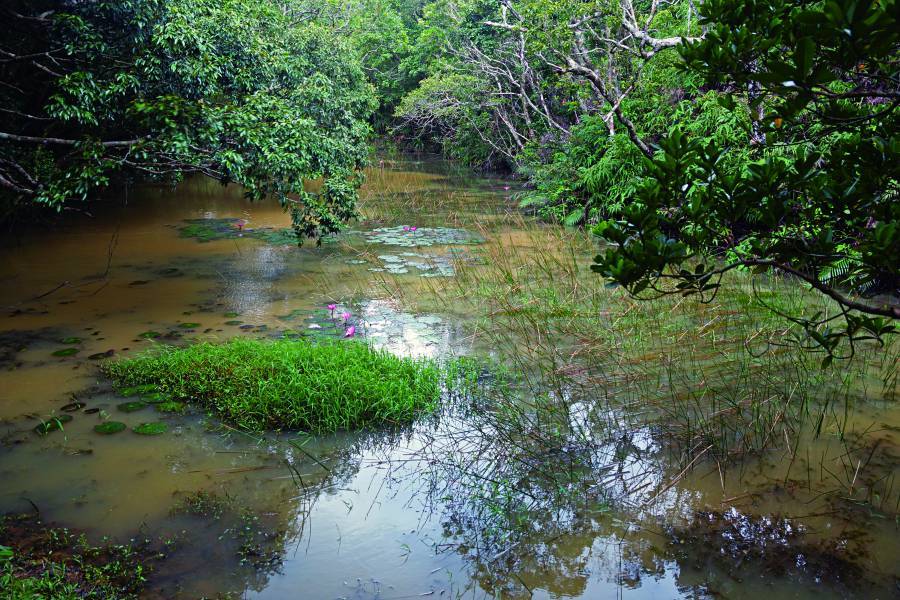
With comfortably warm sun and little rainfall, spring is a perfect time to visit Kenting. Yang recommends that visitors take the hiking trails on Mt. Dashanmu, Chiniuling, and Mt. Menmaluo to appreciate the “Fuci Tree” and magnificent, panoramic view of the mountains and sea. Another option is Nanren Lake Ecological Protected Area, which requires getting permits in advance to enter; there, you can appreciate the vegetation along trails and experience the serenity of a low-altitude forest.