

Photography Expert/Ho Chang-Ying, Park Ranger, Paiyun Station, Yushan National Park Headquarters
Equipment Reveal

Ho Chang-Ying, a park ranger at Yushan National Park Headquarters’ Paiyun Station, recalls that when he was five, he and his father took the Alishan Forest Railway into the lush forest and looked up at the giant “Sacred Tree”. He was greatly impressed watching his father raise his SLR camera and press the shutter button. Ho says, “That, I think, was the moment I fell in love with Taiwan’s mountains and forests.”
From Loving Mountains to Protecting Mountains
During his senior high school graduation trip, he had his first experience climbing Yushan. In the visitor center, he purchased a poster of Yushan and a photography book by Chien Min-Nan. “While flipping through the book after my trip,” says Ho, “I was thinking: Taiwan’s mountains are so beautiful – there should be more people recording their beauty.” The seeds of his passion for photography took root in his early 20s. He used his first credit card to buy his first SLR camera. After that, he found information online to study by himself, studied the compositions of more experienced photographers, and headed to the mountains whenever he had time.
In the film era, every click was precious, and half the photos on a roll of film might be failures. “I would review the photos when I returned,” says Ho. “Why did the exposure fail? I’d compare it with the info I had at hand. And then, the next time I’d click the shutter with confidence.”
He later started his own blog, “Green Elf's Mountain-Loving Diary”, to share his photos. This received great response from his readers. He also joined an environmental preacher training course taught by Professor Chen Yu-Feng. “I gradually started blending ecology with photography,” says Ho. “I became more and more interested.” Once, as he was getting his permits together for a trip to Yushan National Park, he noticed a job vacancy at the Headquarters. From there, he joined Yushan National Park Headquarters, and has now been working there for over 20 years.
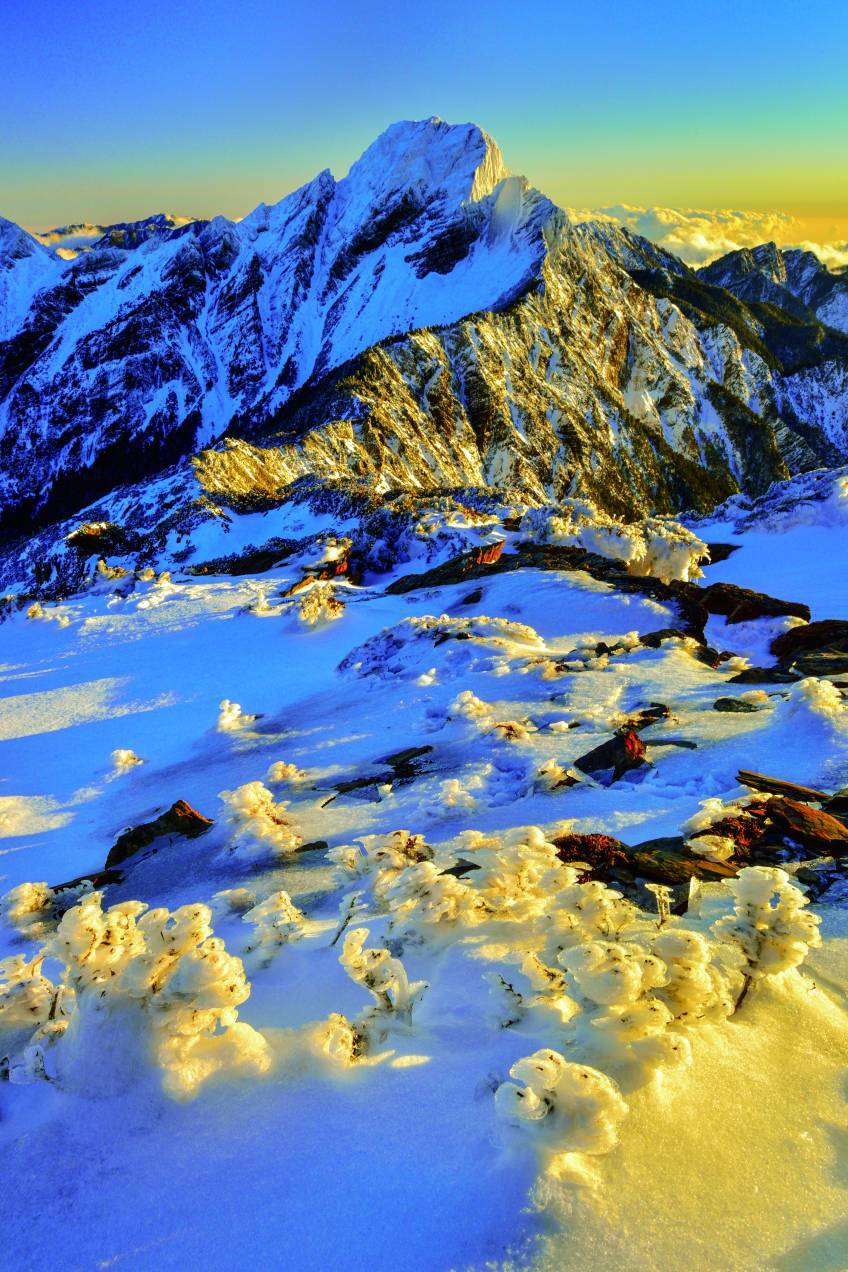
Capturing the Strength and Grace of the Mountains
During the early stages of his photographic journey, Ho was fascinated by the mountain scenery of the Southern Cross-Island Highway. “At that time,” says Ho, “I was determined to take photos of forests, with mountains in the background. But the contrast was usually too high, and the shots ended up underexposed.” After trying over and over, he finally mastered the "addition and subtraction" of light, shadow, and composition. “So that’s the secret!” He later applied the skills he had taught himself to digital cameras and was very confident in using them.
He encourages photography lovers to use the same location for repeated practice. This is particularly true for mountains, which exhibit different expressions, personalities, and moods as the seasons change. Every facet, all four seasons – it’s all worth appreciating. And this is true especially of the highest mountain in Northeast Asia, Yushan.
In spring and summer, Yushan is charmingly adorned with alpine plants; especially when the rhododendrons are in full bloom, it’s like someone offering a bouquet. In autumn, the sea of clouds surges, shrouding the mountains in white veils. In winter, Yushan reveals its majestic, solitary beauty amidst ice and snow. Ho says with a smile that this is likely why he still hasn’t bagged all of "Taiwan's Top 100 Peaks" (Baiyue); he has yet to visit the six peaks of the South Section 3 (Nan-San-Duan). “Yushan, Mount Nanhu, and Mount Xue are so beautiful that I can visit the same mountain ten or twenty times.”
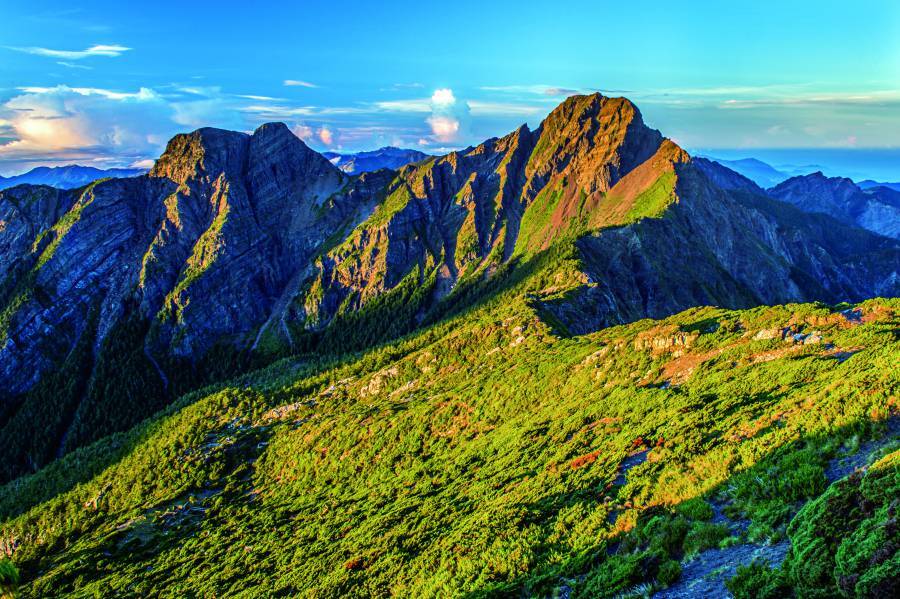
Understanding the Mountains Before the Shutter Clicks
Yushan is depicted on the NT$1,000 bill. This view captures the mountain’s majestic, spectacular presence, making it a familiar landmark to the public. This is also the view enjoyed by mountaineers when they reach the North Peak and look south. “It resembles an emperor seated on a dragon throne,” says Ho, “leaning his right arm against the East Peak. Such a magnificent and resolute posture makes it look sacred, unapproachable.” Moreover, the challenging scree slope that plunges down from a great height inspires reverence toward this mountain.
Yushan’s left arm stretches out toward the North Peak, as if to embrace it, adding a sense of gentleness and charm to this majestic vista. From this angle, you can get photos of vegetation and a multi-layered sea of clouds. Ho also shares a view of the ‘rear’ of Yushan, viewed from Yuanfeng – a view rarely seen by people. “Whenever I see this, I’m reminded of the idiom ‘gazing at one's back in admiration’ (wang qi xiang bei).” It’s like you can trace the giant’s footsteps, admiring Yushan’s resolute back as it guardsTaiwan.”
Practicing Solitude, Encountering Nature
Mountain photography brings greater challenges than either mountaineering or photography alone do. Photography gear is almost always going to add at least 10 kilograms to your mountaineering equipment. And unlike in the studio, where you can adjust the lighting and placement to your liking, scenes in the mountains and forests are all subject to the weather. As a result, it takes more time to build up your portfolio. “For this reason,” says Ho, “I could probably count the fellow photographers I go into the mountains with on one hand. Naturally, it becomes a solo endeavor.”
As Ho states, mountaineering alone brings a certain level of risk; but a greater challenge lies in overcoming the psychological loneliness. “Are you able to stay in the mountains for several nights, not seeing another person for two or three days? Especially on rainy days, stuck in a tent, it’s easy to start overthinking things.”
However, when there are no other voices, it’s also possible to really calm down and appreciate the vibrant life in the mountains and forests. Ho recalls that 20 years ago, it was rare to see wild animals around Tataka, which is at an altitude of 2,600 meters. But now, with the National Parks’ conservation efforts, Tataka has become an outstanding place for tourists to observe wildlife. There are occasional encounters with Formosan rock macaques, Formosan Reeves’s Muntjacs, Formosan Sambar, Formosan Serow, Yellow-throated Marten, Formosan White-headed Flying Squirrel, Mikado Pheasant, Swinhoe's Pheasant, Alishan Salamander, Himalayan Owl, and more.
“When observing wildlife,” says Ho, “it’s not just about not disturbing or startling the animals. The time has to be right, too. Dawn and dusk are the best times to spot them.” Formosan Reeves’s Muntjacs and Mikado Pheasants are relatively habituated to human activities, making them easier to photograph up close. “The knack is, ‘Take three steps, pause ten seconds’”, says Ho. “When you see them, take three steps toward them, then stop for ten seconds. This will usually make photographing them much easier.”
Encounters with nature provide the ideal conditions for wildlife photography. “You photograph animals in their most natural attitudes,” says Ho, “and correctly document their habits.” Take the secretive Himalayan Owl as an example. In spite of having spent many years in the mountains, Ho has only encountered this mysterious species a few times. “But one year, I kept encountering one specific tawny owl. It seemed to accept me and let me stay near it for a long time. But after I had been photographing it for a while, I never encountered it again. That was a special experience.”
A Spring Visit to Tataka
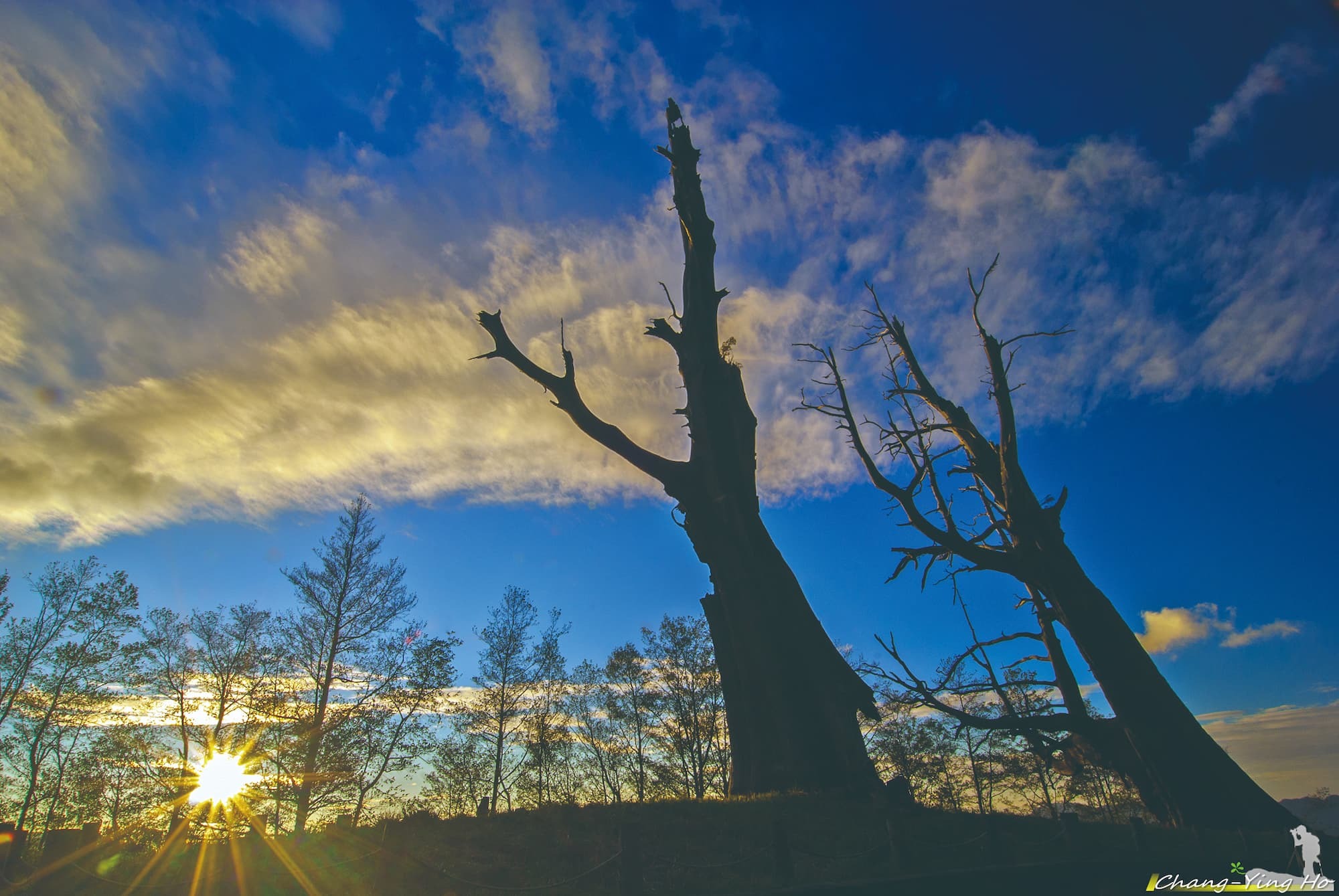
Mount Lulin and Mount Linzhi are two great locations that Ho recommends for spring photography: “These two locations sit right between the Yushan and Alishan mountain ranges, offering both a decent altitude and great views of the Yushan ridge. It takes maybe four to six hours to visit both locations in one go and have sufficient time for photography. It is an accessible, user-friendly route with convenient transportation.”
The iconic Fuci Tree./ Photo by Ho Chang-Ying


