

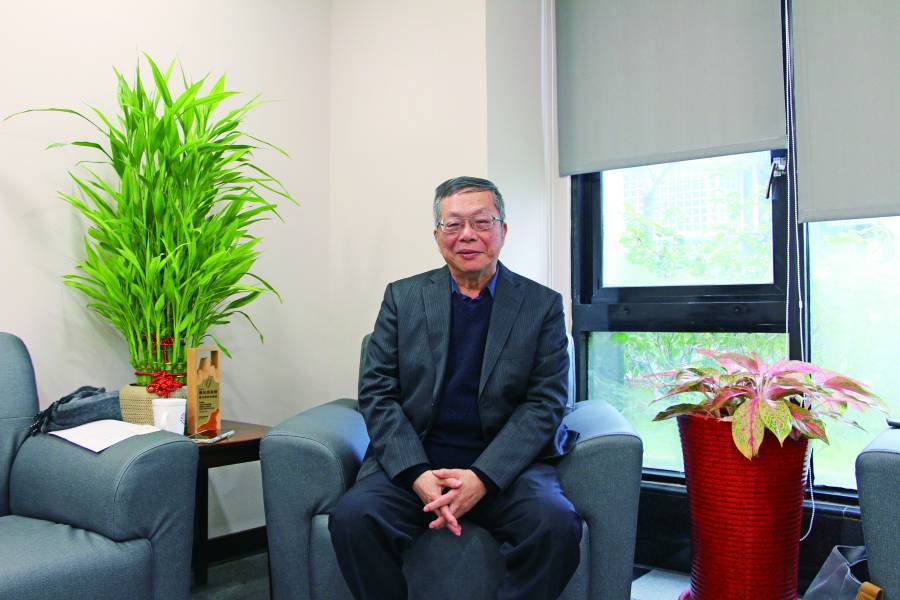
Interviewee/Hsu Wen-Lung, Former Director-General of the Construction and Planning Agency
“In the beginning, our goal was to introduce Taiwan’s national parks to the public.”
Hsu Wen-Lung recalls that Chen Kuang-Hsiung, then Director-General of the Construction and Planning Agency, sought to communicate the value of Taiwan’s mountains, coastlines, wetlands, and surrounding seas, as well as the objectives and responsibilities behind the establishment of national parks. With this vision in mind, he approved the launch of the National Parks bimonthly, marking an important milestone in the development of Taiwan’s national park system.
The Publication Began as a Journey of Partnership
Hsu believes that publishing the magazine was part of a deliberate and comprehensive communication strategy. Internally, it functioned as a transparent platform, enabling park headquarters to clearly communicate their ongoing work and explore opportunities for collaboration and collective action. Externally, it served to help academic communities and the broader public understand the government’s efforts and advocacy in conservation and ecological restoration.
Hsu recalls that when he first took office as Director of Kinmen National Park Headquarters in 2000, he put in endless effort to coordinate everything. Despite this, he was met with complaints from local residents and opposition to the national park’s establishment. That was when he realized that the early stages of every National Park are often filled with unknowns and misunderstanding among local communities and Indigenous villages. This showed how arduous ecological conservation and restoration work could be in a society dominated by the values of economic development. Hsu’s personal experience at Kinmen National Park Headquarters speaks directly to the vital function and mission of communication that the Quarterly holds. In other words, the National Parks require the collective efforts of the many to reach their ideal.
Advancing the Vision through Partnership 2.0
With nearly twenty years of publication history, the National Park Service has been officially inaugurated. This not only marks a milestone, but also the beginning of the next phase of challenges. While outlining his recommendations for the Quarterly’s next decade of development, Hsu also expresses his hopes for the National Park Service.
He emphasizes that strengthening alignment with international standards is the foremost priority. For example, since establishing the Korea National Park Service in recent years, South Korea has been actively participating in international affairs. Several South Korean national parks have already made their way onto the IUCN Green List. “And therefore,” notes Hsu, “our Quarterly needs to track trends in international national parks in other countries, strengthening our planning, proactive drive, and resolve by learning from others’ successes.”
Additionally, Hsu encourages the editorial team to go on field visits. This will help the words on the page be infused with personal insights, producing compelling materials while shedding light on overlooked aspects. Hsu adds, “Only by disclosing the issues we see and feel can the National Parks and the public move further, longer, and better.”
Finally, Hsu places special emphasis on the concept of “citizen scientists”. “If citizen scientists maintain regular contact with the National Park Headquarters,” says Hsu, “then whether that’s through supervision or collaborative effort, it will help the National Park Service implement its mission with greater precision and comprehensiveness.”
To Hsu, not only does the National Park Quarterly chronicle the trajectory of Taiwan’s natural conservation efforts and progress, but it also enhances government transparency, gradually fostering public trust and support for governmental decisions.
Hsu reflects with deep emotion, noting that “Taiwan is rich in natural and cultural resources, despite its limited land area. When we read the special reports on the Tropic of Cancer Belt published last year, we truly understand how fortunate we are to live in Taiwan!”
In this way, the National Park Quarterly bears witness to how the public and private sectors work toward achieving the mission of sustainable ecological development, progressing from navigating interaction, to fostering mutual prosperity, and ultimately embracing shared learning.


