
/何小綠 攝_1.jpg)
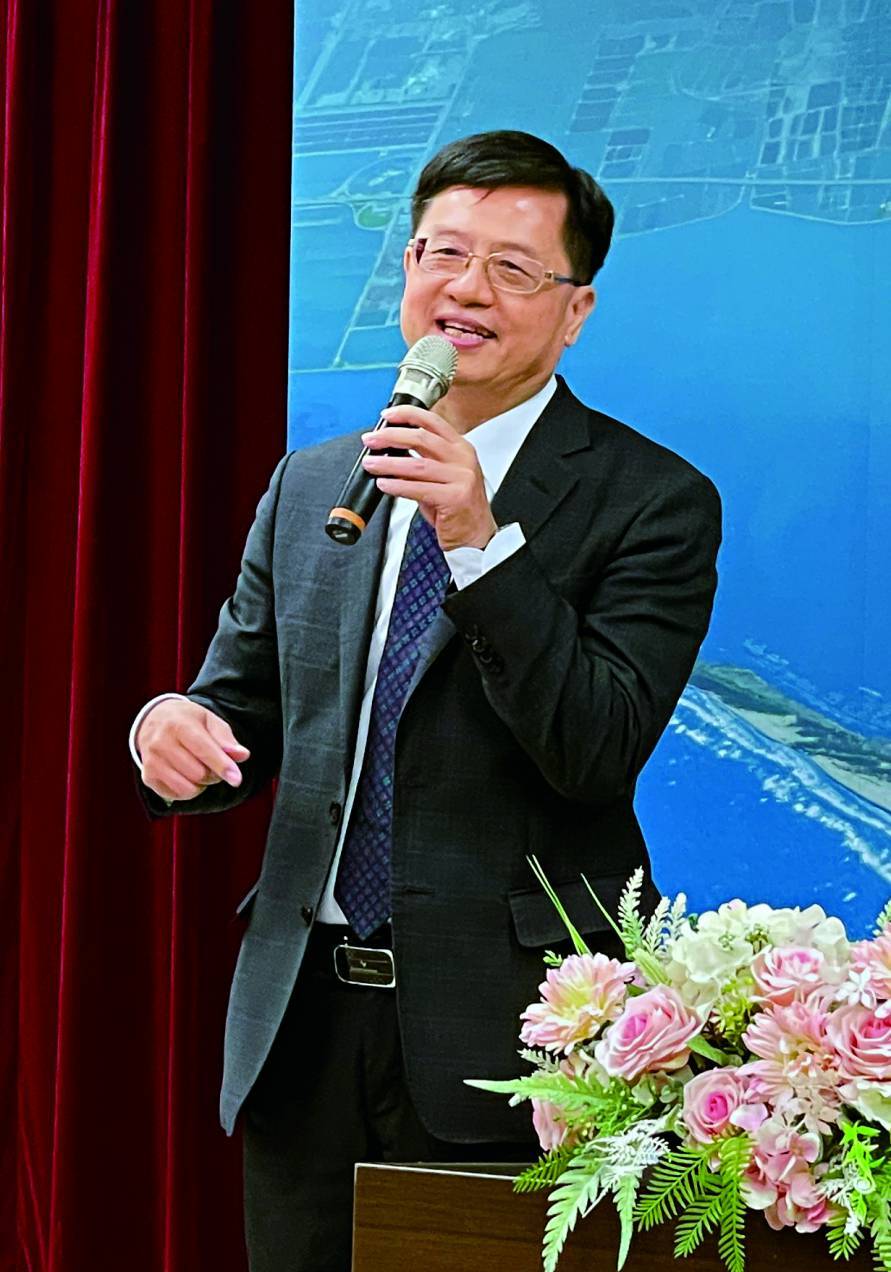
Interviewee/Wang Cheng-Ji, Director-General of National Park Service
With tools and equipment on the back, trekking up the mountain step by step with teammates, trying to position the satellite control points… National Park Service Director-General Wang Cheng-Ji recalls how when his journey with the National Parks began, he was only a staff member at the Department of Land Administration, but full of passion, going into the mountains to take measurements. Many years later, he has become one of the driving forces behind the 21st-century vision of the National Park Service, and so he has had to approach the task from an operations management perspective. So now, he wakes up every morning pondering the question, “If we look at the coming five years, what new impressions of the National Parks will we offer the public?”
Memories Since the First Issue
Since the first issue in 2006, The National Park Quarterly has journeyed alongside readers for nearly two decades. At this moment of bridging the past and the future, Wang uses his personal experiences as a starting point for discussing comprehensive strategic planning for the National Park Service. Based on his extensive practical experience and some significant responsibilities he has had to tackle, he outlines innovative approaches to environmental promotion, international exchanges of expertise, and ecological marketing that the National Park Quarterly should adopt.
When asked about the objective of the Quarterly, Wang shares his own reading experience: “I’ve enjoyed reading all kinds of magazines since I was in junior high school, especially those magazines that were seemingly available only in school libraries. Despite having little money back then, I bought the series about the vast mountains and seas, which I still enjoy reading to this day.”
Flipping through those pages, the myriad landscapes and creatures featured in the magazines have slowly become part of his life, and part of his whole way of thinking. For this reason, Wang emphasizes how the value and meaning of the Quarterly’s reports lie in not just disseminating information, but also in creating an emotional connection. To him, every article brings him a vividly realized “human library”.
He recommends reading the reports on natural carbon sinks and wetland conservation in the Quarterly, underscoring the critical importance of wetland issues: “Taiwan has 59 Wetlands of National Importance, which serve not only as habitats for waterbirds, but also as ‘blue carbon’ reservoirs for climate change mitigation. So, why must the waterbirds inhabiting these wetlands be protected? How do we quantify a wetland’s carbon sink value? Take, for example, Taijiang National Park, which has recently received a National Sustainable Development Award. At the beginning, all the local residents opposed it. It was after they understood biodiversity and the spirit of safeguarding endemic species that they turned to actively offering their assistance.”
Wang jokes that, if the intellectual yet accessible the Quarterly can educate the public on the value and uniqueness of wetlands, then the agency in charge gains a powerful ally in requesting funds from the reviewing authorities. And that, in turn, helps wetland protection be done in a more comprehensive way.
This is why Wang views the Quarterly as not merely aimed at disseminating new information, but essentially at presenting compelling stories that can spark public identification with, and engagement in, national park initiatives. That child who was greatly moved by a magazine in the school library so many years ago and, after growing to adulthood, chose to incorporate the passion for the mountains and sea into his life’s pursuits – Wang is just one example.

Building a Cross-Border Platform for Connection
The establishment of National Park Service, Ministry of the Interior, signifies Taiwan’s shift toward “integration” in land conservation, with an extended operational scope. Wang therefore proposed that the Quarterly be expanded to develop a macro perspective and forward-thinking approach, transforming its role from that of a passive recorder, to being an active guide in initiating discussions.
Wang also shares his insights on the annual topics covered in the last three years: Cultural diversity and co-prosperity with local communities; sustainable low-carbon tourism; and initiatives that respond to international trends. Wang observes that these topics reveal the national parks’ progression from being “isolated sites” to a “cross-border network”. He expresses a hope that the Quarterly will include more in-depth feature reports that go into more detail about this.
He further explains that having a detailed feature report in print is like building a multidimensional platform and fostering close ties between all sectors of society. It offers a vital channel for dialogue – between government and the general public, between nature and humanity, and between nations.
“Though we are not a UN member state,” says Wang, “we remain an integral part of the global community in all public affairs. So the Quarterly should focus on showcasing all the efforts that the National Parks have made, in a comprehensive manner, both internally and externally. By helping the public know and see what we do, and by encouraging the headquarters to take action and become models and pioneers, to spark opportunities for interaction and partnership with different organizations domestically and internationally. Through this, the objectives of integrating and strengthening the impact of conservation and restoration work will be realized.”
Sharing Ecological Wisdom via New Media
People’s reading habits have shifted drastically, but will the print Quarterly survive? Wang emphasizes that content editing remains crucial. It requires continuously collecting expert discussions and research, then integrating and translating that information into clear, systematic articles that the public can understand. This high-value content, however, should not be confined to the printed page, but instead be distributed via a multi-channel marketing approach.
Wang notes, “Digital technology exposes us to an information-overloaded environment every day. People increasingly prefer to grasp information within mere minutes. This demand for new media needs is something we must address. In the future, we might attempt to present the key insights extracted from each Quarterly issue using short-form videos. That way, we can pique people's interest within a short time, and persuade the public to spend more time to find, read, and digest in-depth knowledge.”
The rise of digital media does not spell the demise of print. At this juncture, where information channels diversify and environmental awareness rises, a reduction in print volume is inevitable. Yet, with e-books and video content available, information sharing will become that much more efficient and far-reaching. The Quarterly is now published in English on international e-book platforms, and overseas school libraries have recently signed up for long-term subscriptions.
The National Park Service is actively negotiating with the Tourism Administration and private airlines, in hopes of securing dedicated National Park coverage in tourism monthlies, or making videos linked to the Quarterly reports available for in-flight promotion and broadcasting. These are both excellent approaches to consistently showcase and promote Taiwan’s National Parks—our beautiful calling card—along with the ecological wisdom of the mountains and seas.
A Vision of Future Dreams
The things that Wang shares – from his personal reading memories to the Quarterly’s editorial direction, from conservation practices to international marketing, and from cross-sector collaboration to corporate ESG – all subtly center on a core idea of the Quarterly: Bringing the spirit of the National Parks into everyone’s future.
Looking back now, the images, words, textures, and sounds in those pages he flipped through as a teenager remain as fresh as yesterday. And perhaps it could be said that that same experience – of seeing something “vividly etched in one's mind” – is what Wang hopes the Quarterly will continue to bring to everyone. “Once you embrace and genuinely appreciate this ecological knowledge, the national parks become a part of you, a part of your life. I believe that this is the fundamental reason and ideal behind continuing to plan and publish the Quarterly.”
As Wang vividly puts it, “Once the Quarterly truly connects with the reader, it’s just like those magazines I read 40 years ago that are still so clear in my memory. Picture this: Maybe in 40 years’ time, another director-general will say, ‘I grew up reading the Quarterly.’ The most valuable aspect of the Quarterly is precisely this enduring impact, carried from generation to generation, by memory.”


