

Article / Hsueh Chiao-Ni
Interviewee / Chen Chao-Lun, Research Fellow, Biodiversity Research Center, Academia Sinica
Donning snorkeling gear and immersing oneself in the vast blue ocean, one feels the seawater envelop every part of the body as colorful fish weave gracefully through the water. A profound silence fills the ears, while before the eyes unfolds a vibrant underwater garden—dreamlike in its beauty. Chen Chao-Lun, Research Fellow at the Biodiversity Research Center of Academia Sinica, reveals the origins of this underwater beauty and the secrets hidden within these “flowers” of the sea.
Rainforests Beneath the Sea
Within a vibrant underwater garden, corals of dazzling colors and remarkable forms flourish side by side. Some spread into intricate branching shapes, some resemble rounded mounds, others look like low tables, while some rise like gentle hills. Are these corals plants, quietly growing toward the sunlight beneath the sea? Or are they animals that feed and reproduce like other living creatures? The boundary between plant and animal seems both mysterious and blurred.
To most people, an animal is an independent organism capable of feeding on its own, while a plant is rooted in the earth, drawing energy from sunlight. Corals, however, embody characteristics of both. What appears to be a single majestic coral is in fact a colony composed of tens of thousands of coral polyps, each with its own tentacles and mouth. Based on the structure of their skeletons, corals can generally be divided into stony corals and soft corals.
Compared to soft corals, which are more capable of capturing prey, stony corals represent a remarkable evolutionary achievement. As early as 300 million years ago, in the ancient oceans of Earth, they formed a symbiotic partnership with microscopic symbiotic algae. This relationship, known as endosymbiosis, involves the algae living within coral cells and providing a steady supply of oxygen and nutrients through photosynthesis. In return, corals transform metabolic waste produced through respiration—such as carbon dioxide and ammonia—into nutrients that nourish the algae. This partnership is more than a simple exchange of energy; it is these colorful symbiotic algae that give corals their dazzling hues.
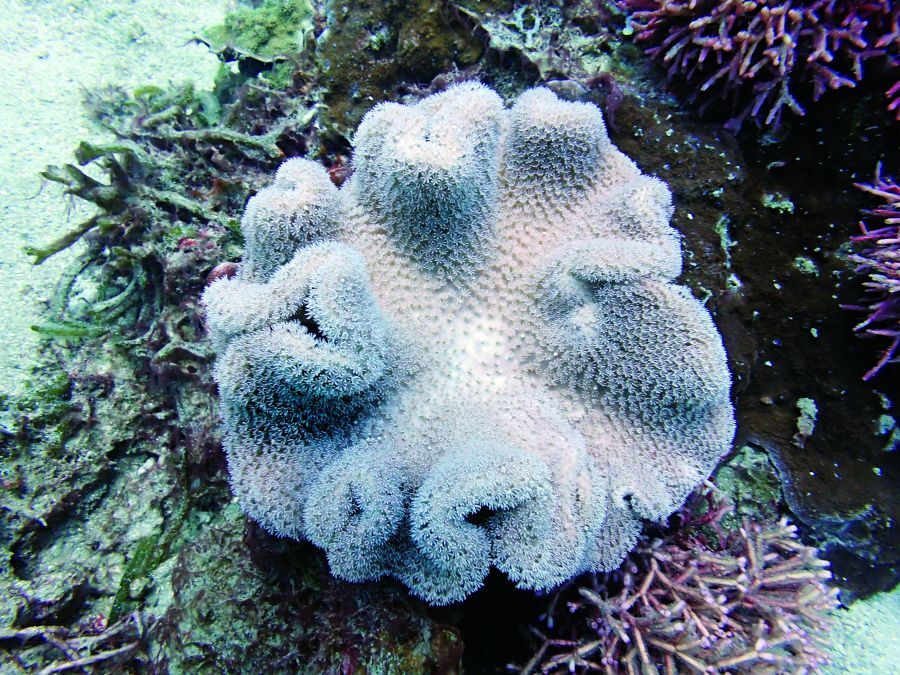
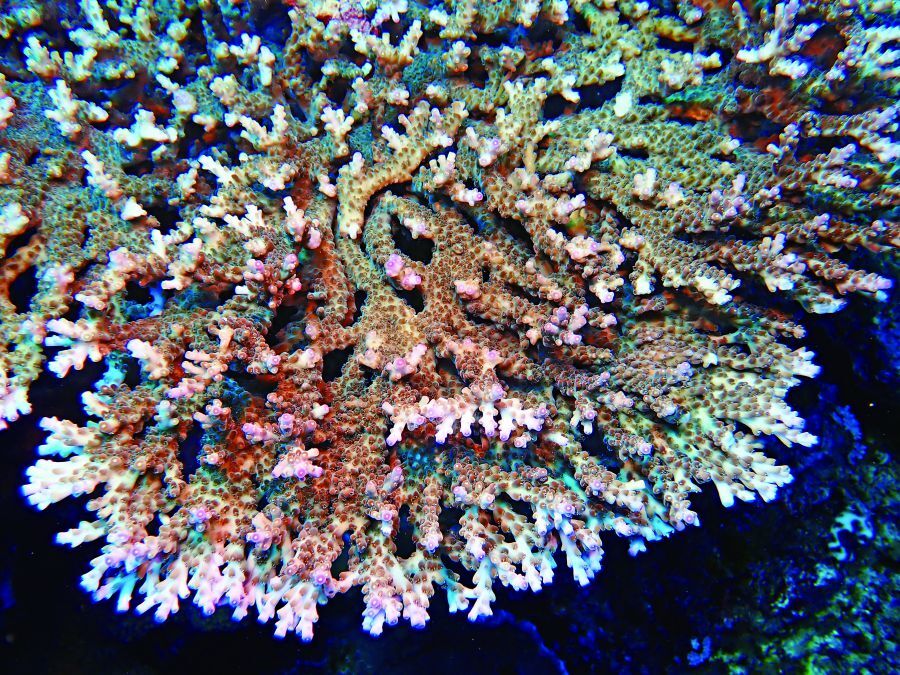
Corals are more than objects of beauty; they are ecosystem engineers. The calcium carbonate skeletons secreted by corals accumulate over tens of millions of years, gradually building coral reefs and making them the architects of the undersea world. The world’s largest coral reef system, the Great Barrier Reef off the northeastern coast of Australia, stretches for more than 2,000 kilometers and is even visible from outer space.
Like thriving cities beneath the sea, coral reefs support an enormous variety of life.
Invertebrates, fish, crustaceans, and mollusks are all common inhabitants of these reefs. Although coral reefs are mainly found in tropical and subtropical waters and cover less than 1% of the ocean’s surface, they provide habitat for nearly 25% of the world’s marine species. Because of their extraordinary biodiversity, coral reefs are often called “the rainforests of the sea.”

Beyond Beauty: The Fate of Coral Reefs
You might ask: What does the beauty and fragility of this deep blue world have to do with those of us on land? In fact, coral reefs are not only a reflection of the broader ocean ecosystem, but also closely tied to the history of human migration. Chen Chao-Lun, Research Fellow at the Biodiversity Research Center of Academia Sinica, explains that thousands of years ago, Austronesian peoples spread outward from Taiwan across vast stretches of ocean. Their distribution—from Taiwan in the north to New Zealand in the south, from Easter Island in the east to Madagascar in the west—overlapped strikingly with the global distribution of tropical coral reefs.
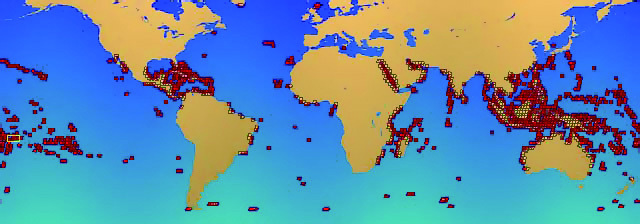
This meant that during their long ocean migrations, the discovery of coral reefs often meant access to reliable sources of food and fresh water. Coral reefs once played a vital role in where island communities settled; today, this connection that once sustained human civilization is now being profoundly disrupted by climate change.
The tropical oceans between the Tropics of Cancer and Capricorn have long provided stable conditions for coral reefs, allowing them to grow and reproduce over tens of millions of years in clear, warm waters within an ideal temperature range of 23–28°C. Since the Industrial Revolution, however, massive greenhouse gas emissions have driven global warming, causing ocean temperatures to rise steadily.
Corals are extremely sensitive to environmental changes. Once seawater temperatures rise above 28°C and persist for about two weeks, the mutualistic relationship with algae breaks down. At this point, coral polyps expel the symbiotic algae. After losing the algae that give them color, the transparent polyps reveal the white calcium carbonate skeleton beneath—the phenomenon known as coral bleaching.
.jpg)
Fortunately, bleaching can still be reversible. Chen Chao-Lun compares the process to recovering from an illness: once water temperatures fall, corals can gradually regain their symbiotic algae. However, this “illness” has a critical threshold—if high temperatures persist, coral polyps, unable to sustain themselves, will eventually exhaust their energy reserves. Once the polyps die, algae quickly overgrow the remaining white skeletons, and the once-thriving reef gradually becomes a barren ruin.
In the past, mass coral bleaching events occurred once every 20 or 30 years. The interval has since shortened to once every 10 years, then every 5 years, and now bleaching occurs almost annually. The pace of coral evolution cannot keep up with the speed of climate change; once heatwaves or typhoons strike, corals often cannot survive such events.
Chen notes that according to research by the Intergovernmental Panel on Climate Change, if global temperature rise is not kept within 1.5°C, coral reef ecosystems could largely disappear by 2050, becoming the first ecosystem on Earth to disappear on a global scale. Conversely, if rising temperatures can be controlled, 10–30% of coral reef ecosystems may still survive.
If corals were to disappear entirely, the consequences would extend far beyond marine ecosystems and seriously threaten human livelihoods. Industries such as fisheries and tourism would be heavily affected, directly and indirectly impacting approximately one billion people worldwide. For island nations such as Taiwan, these consequences would be impossible to ignore.
.jpg)
A Southern Refuge for Coral Reefs
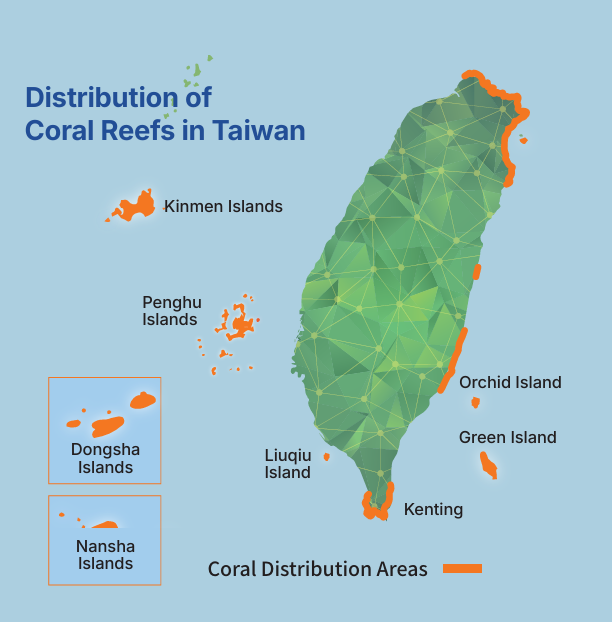
In the conservation of coral reef ecosystems, the establishment of Kenting National Park marked a pivotal milestone. Founded in 1982, it was Taiwan’s first national park and is home to the country’s largest and most continuous coral reef system. Influenced by the Kuroshio Current, the waters around Kenting are enriched by cool upwelling currents that provide a natural cooling effect, helping regulate seawater temperatures and offering local coral reefs a glimmer of hope under the pressures of climate change.

Since the 2000s, the Kenting National Park Headquarters has actively established Marine Resource Protection Demonstration Areas in places such as Houbihu, Tiaoshi, and Wanlitong to reduce direct human disturbance to coral reef ecosystems. Among them, the Tiaoshi Marine Resource Protection Demonstration Area has proven particularly effective.
While public awareness of conservation has improved through years of advocacy and education, actual changes in individual and societal behavior remain limited. Chen believes that despite the time and resources invested by government and civil society—whether through coral gardening, beach cleanups, or efforts to enhance coral heat tolerance—the issue must still be addressed at its root: reducing carbon dioxide emissions and slowing global warming. “Otherwise, any effort is ultimately futile,” he says, recalling a phrase often repeated by his mentor: “Study after study, yet everything remains the same.”
Taiwan, an ocean nation embraced by blue waters, holds coral reefs that are treasures where civilization and ecology intertwine. When we dive beneath the surface, feeling the gentle embrace of the sea and watching cleaner shrimp busily move among the corals while schools of fish weave through coral branches, the ocean is no longer a distant landscape—it becomes a home deeply connected to our own fate.
Come Explore the Underwater Gardens
Understanding coral reefs often begins with knowledge shared by experts, and gradually grows into meaningful appreciation and personal action. The National Museum of Marine Biology and Aquarium, the National Museum of Marine Science and Technology, and the Dongsha Atoll National Park Headquarters invite you to dive beneath the waves and explore the vibrant world hidden beneath the sea. Meanwhile, Kenting National Park welcomes travelers to Taiwan’s southernmost shores, where, among the tidal zones of Tiaoshi and Houbihu, authentic encounters with diverse marine life unfold amid coral reefs shaped by waves and sea winds.


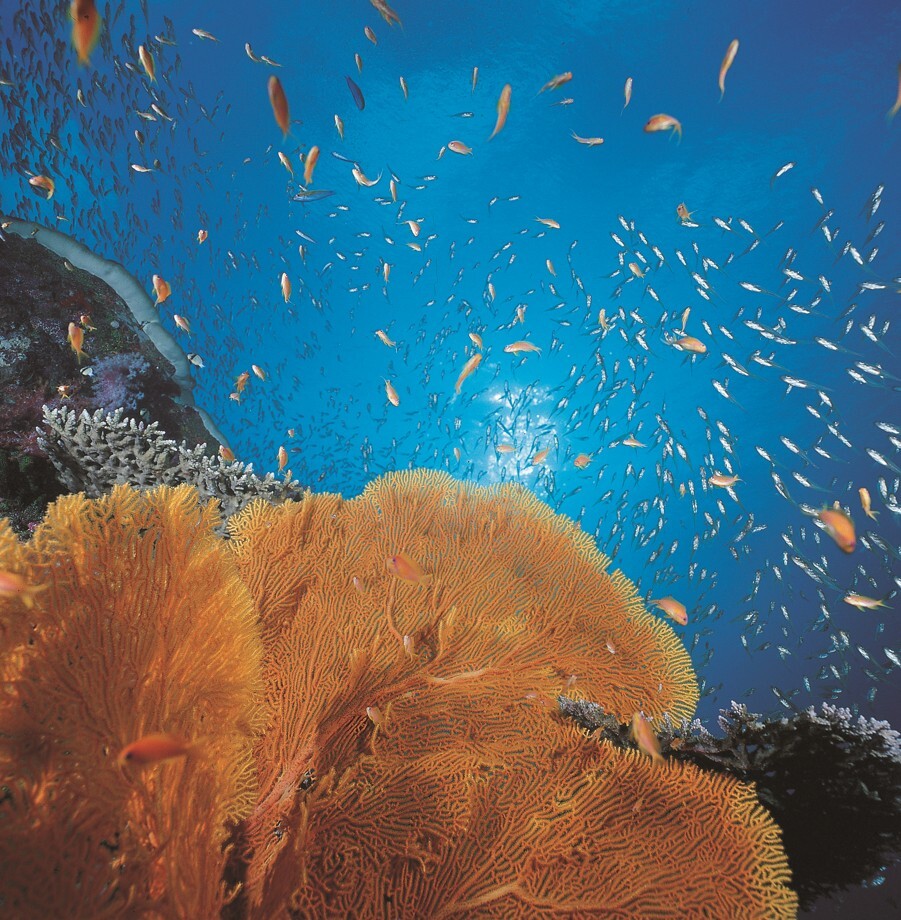

Damselfish, often called the“farmers of the sea,”are highly territorial. They cultivate tiny algal“farms”of less than 0.5 square meters among coral reefs, tending them like careful gardeners. To create space for their preferred algae to grow, some damselfish species deliberately bite away parts of the coral. When corals bleach as ocean temperatures rise, herbivorous reef fish graze on excess algae covering the reef, allowing coral polyps to settle once again.
Branching and table forms of Acropora corals serve as the infrastructure of the underwater world. The branching varieties spread outward like colorful Christmas trees beneath the sea, attracting countless marine organisms.
.jpg)


Porites corals form massive rounded mounds, creating fortress-like structures in the ocean. Not only do they provide habitat for countless marine creatures, but the calcium carbonate skeletons they leave behind also form the foundation for new corals to grow.

“Brain coral” is actually a common term referring to various corals within the families Merulinidae and Mussidae. They are typically massive or encrusting in form, with grooved surfaces and patterns resembling the folds of the human brain, which is how they get their name.


