
Article / Huang Shih-Ju
Interviewees / Hung Ching-Chang, Chairperson of the Kinmen Intertidal Zone Association、 Yan Chun-Yi, Penghu ecological documentarian and volunteer interpreter at Marine National Park Headquarters、 Chen Yi-Chen, Environmental education instructor at Taijiang Wetland School, Taijiang National Park Headquarters
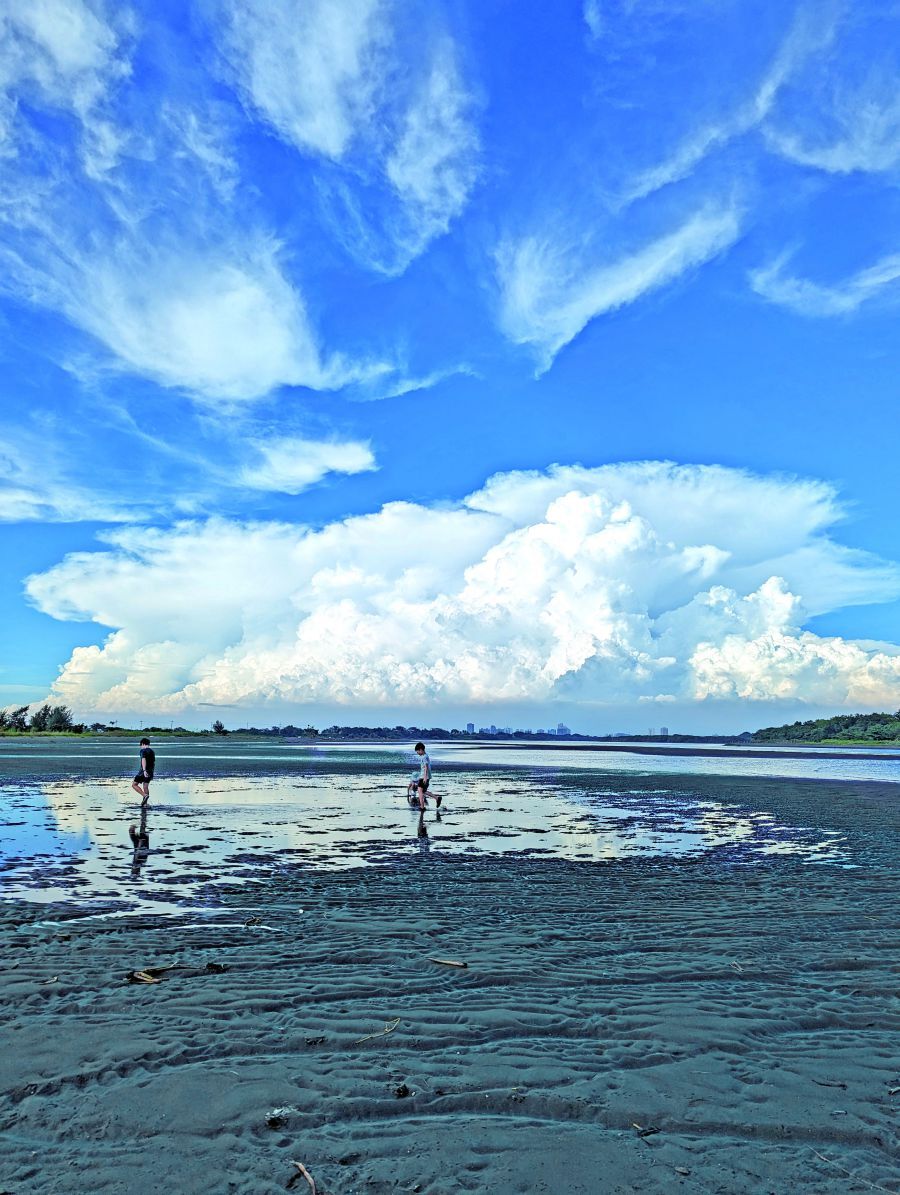
As the tide slowly recedes, the intertidal zone—where sea and land meet—reveals another lively side. Slow your pace and bend down. When your gaze falls to ground level, you’ll discover the remarkable lives normally hidden beneath the waves.
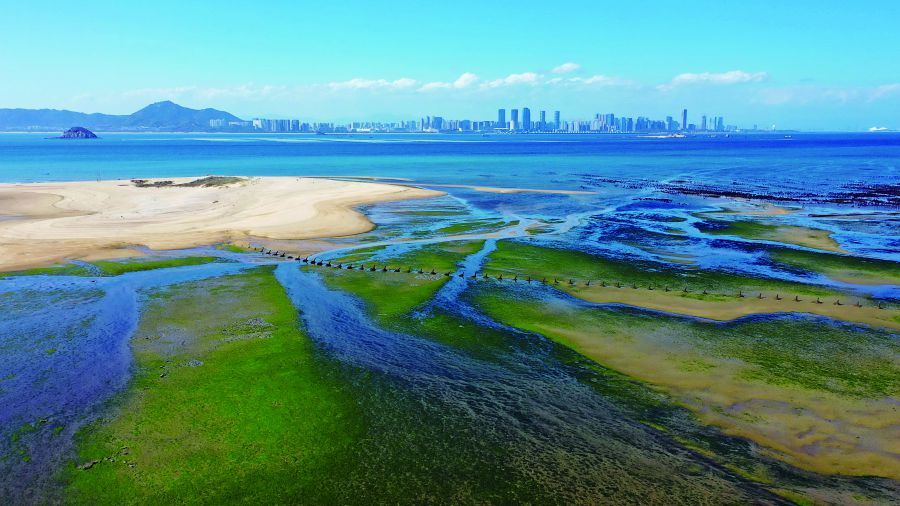
Kinmen Mudflats: Tracing Life Through Mud and Sand
Visitors to Kinmen’s vast mudflats often wonder, “Is there really anything to see here?” Hung Ching-Chang, Chairperson of the Kinmen Intertidal Zone Association, says with a smile, “Although Kinmen Island covers only about 150 square kilometers, its coastline stretches for as long as 130 kilometers.” Within a relatively short stretch of intertidal zone, one can find coarse sandy beaches, soft and sticky mudflats, and rugged rocky shores. These diverse habitats have nurtured remarkable biodiversity. Simply crouch down and take a closer look, and you’ll discover many species unique to the area.
Situated within Xiamen Bay, Kinmen receives abundant sediment carried by the Jiulong River, giving its waters a turbid appearance that light can barely penetrate and resulting in low visibility. Yet this very murkiness provides abundant nutrients for marine life, supporting a complete food chain.
“The distribution of intertidal species in Kinmen is primarily determined by the ratio of sand to mud, as well as the rate of sediment deposition.” For example, horseshoe crabs, which have existed for more than 400 million years, thrive in Kinmen’s sandy mudflats. “Their ideal habitat requires a balance of roughly 60 percent mud and 40 percent sand. Changes to this balance could affect the entire population.”

A Living World Beneath Your Feet
Timing your visit with the tides is the first rule of intertidal observation. “Kinmen’s average tidal range is around six meters, and the best time to observe intertidal life is during spring tides. If you go to the shore at the wrong time, you could easily end up making the trip for nothing.”
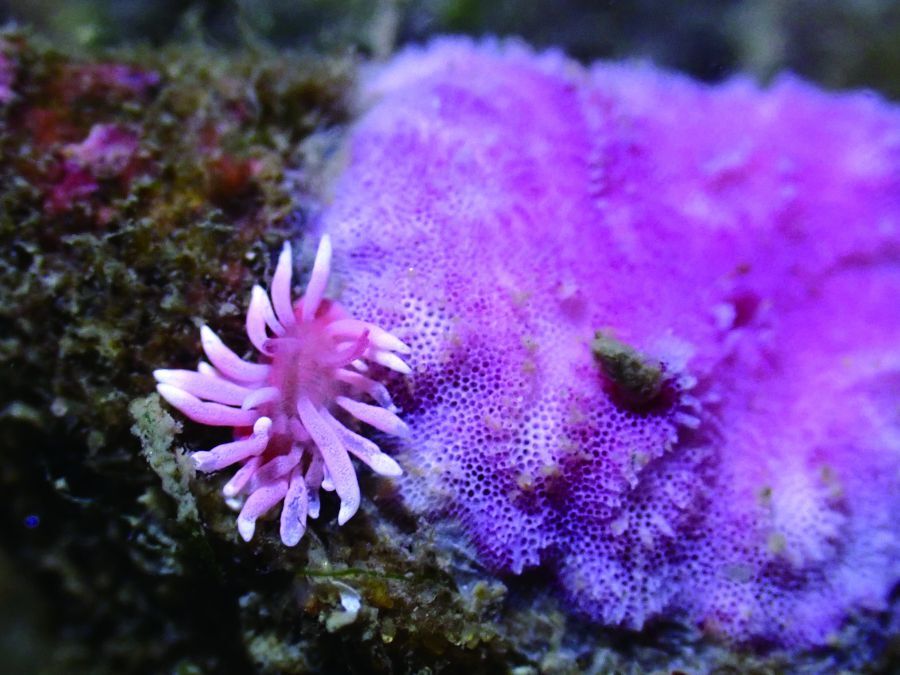
While leading visitors along the shoreline, Hung always reminds them, “Many creatures normally stay hidden and only emerge when the tide recedes. At the same time, many are camouflaged to blend into their surroundings, so you need to squat down, lower your gaze as close to the mudflat as possible, and move slowly.” Once your perspective drops lower, the world beneath your feet suddenly comes alive. You may spot bivalves buried in the sand, or bryozoans, corals, and seaweed attached to rocky surfaces. Flip over a clam shell, and you may find a tiny octopus hiding inside. You might even spot sea slugs less than a centimeter long right at your feet.
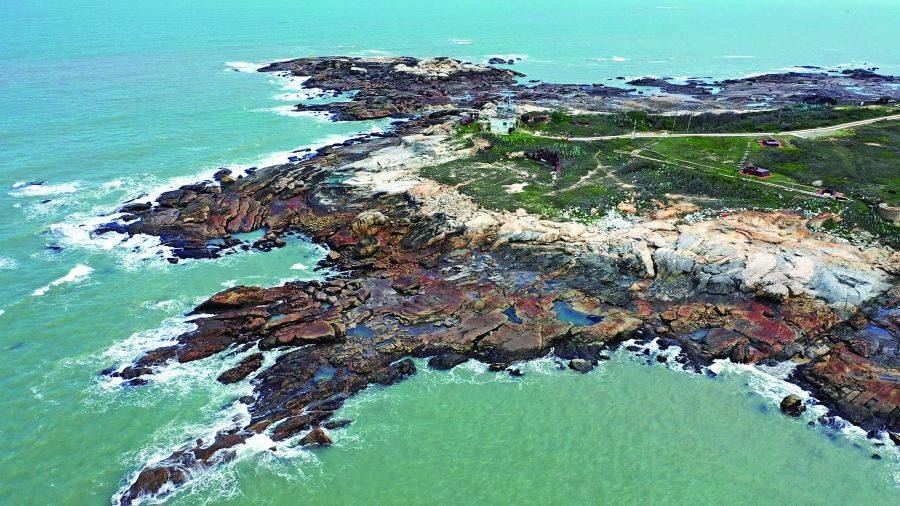
South Penghu Four Islands: A Colorful World in the Tide Pools
On the South Penghu Four Islands, countless tide pools remain among the rocky reefs after the tide recedes. Yan Chun-Yi, a volunteer interpreter at Marine National Park Headquarters, gently flips over a small stone to reveal an elegant hermit crab hiding beneath it.
Tide pools of all sizes offer endless opportunities to observe fascinating animal behavior. Sand shrimp are always scurrying backward, while spotted sea hares release purple ink when disturbed—a sign that they are about to make their escape. Visitors may also unexpectedly encounter protected giant clams. “Because giant clams rely on photosynthesis, they rarely move once settled in place, so they can usually be found in roughly the same location,” Yan explains.
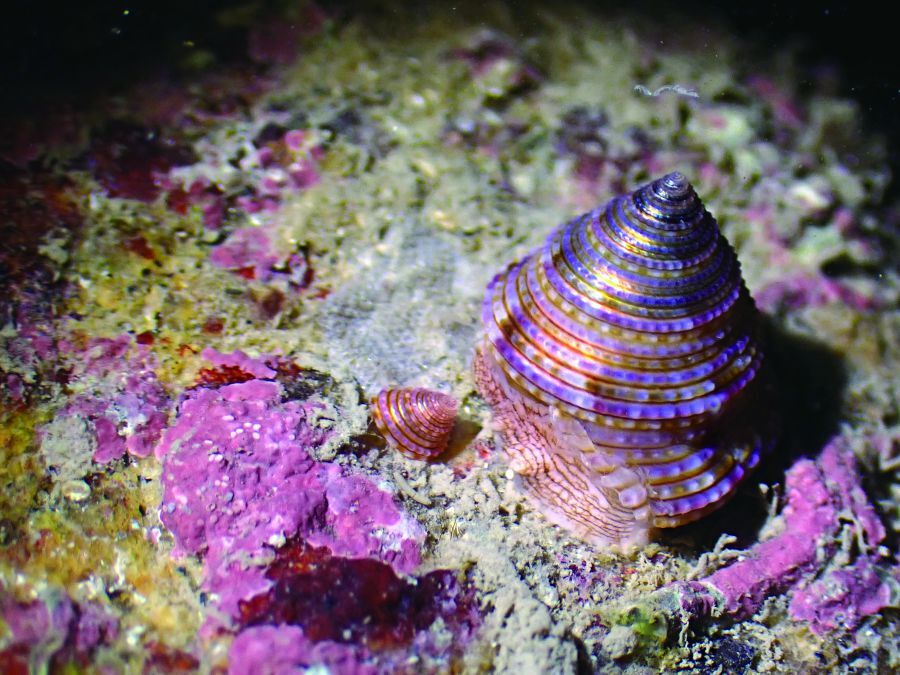
The intertidal zones of the South Penghu Four Islands are also excellent places for observing sea snails. “Whenever I visit, I can usually spot between 30 and 50 species,” says Yan.
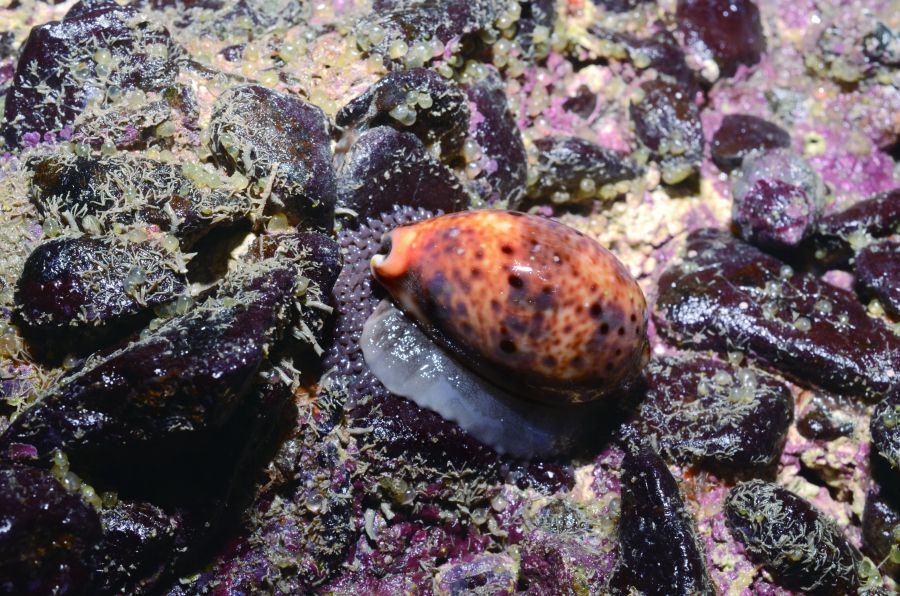
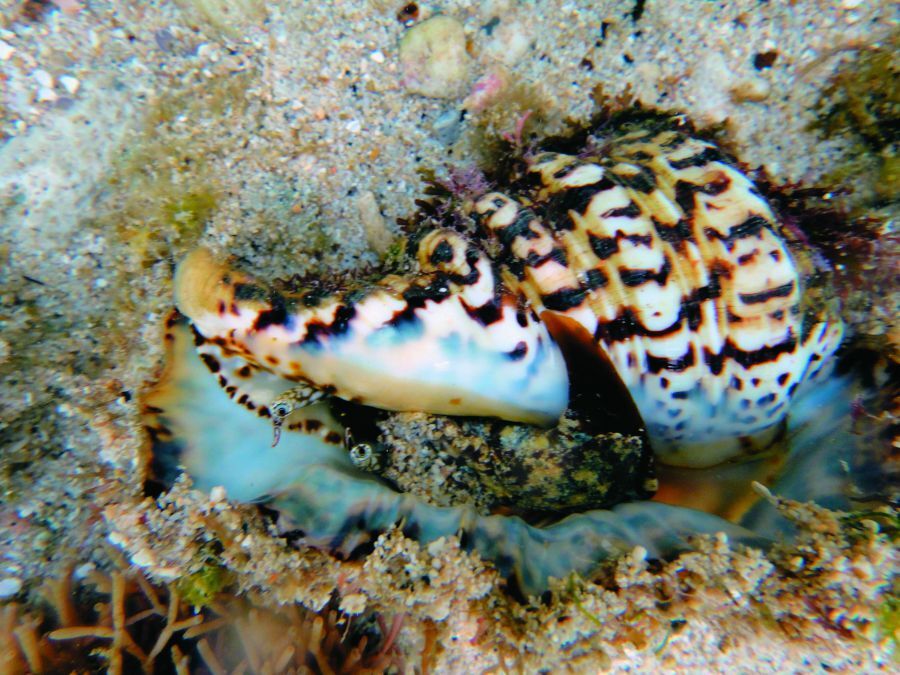
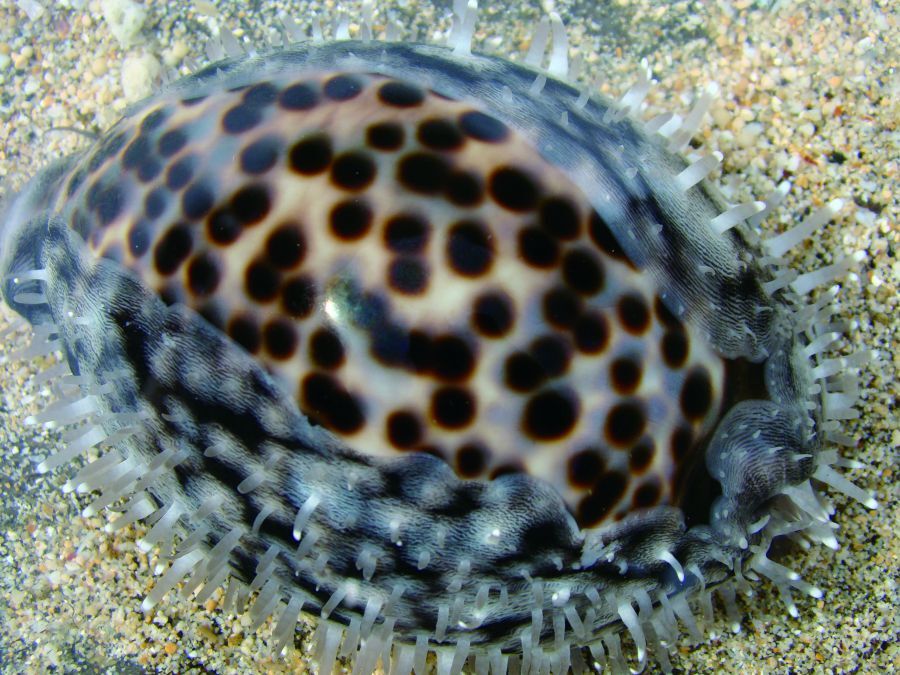
Shell collecting was once a thriving industry in Penghu, and top shells, turban shells, and cowries were all common economic resources. “Sea snails are relatively easy to identify because their mantles are often distinct. In calm, shallow coastal areas, species such as gold-ring cowries can often be spotted with ease.”
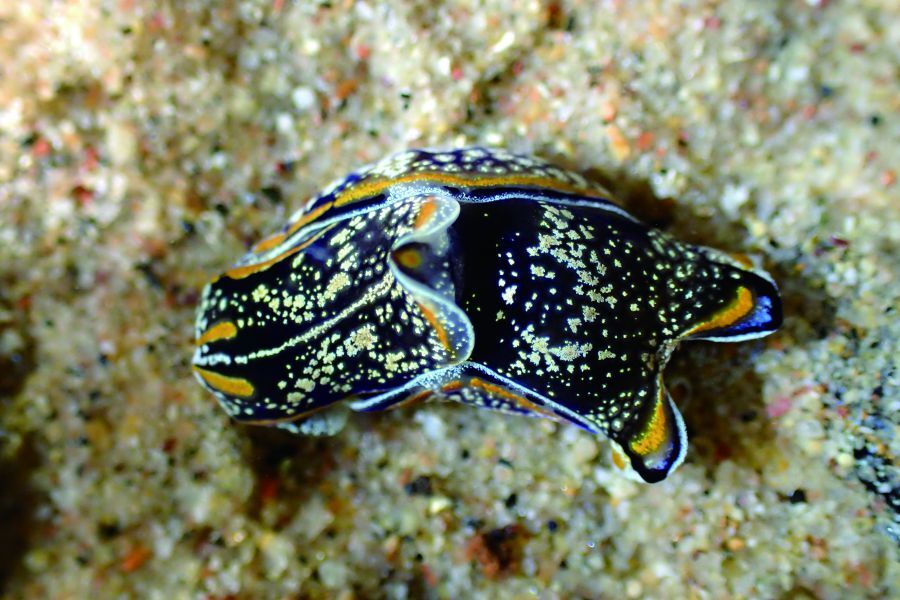
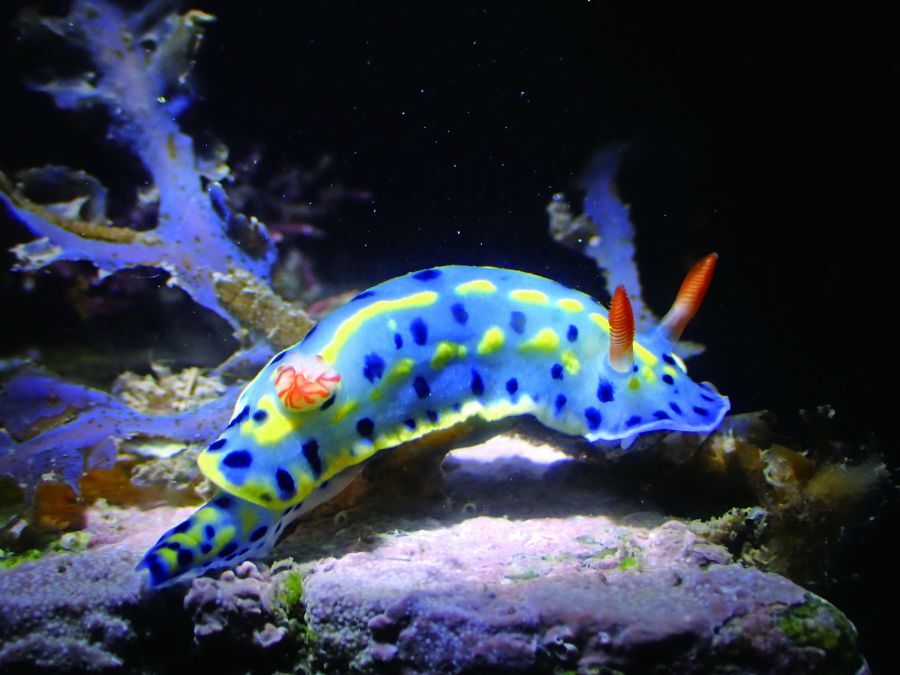
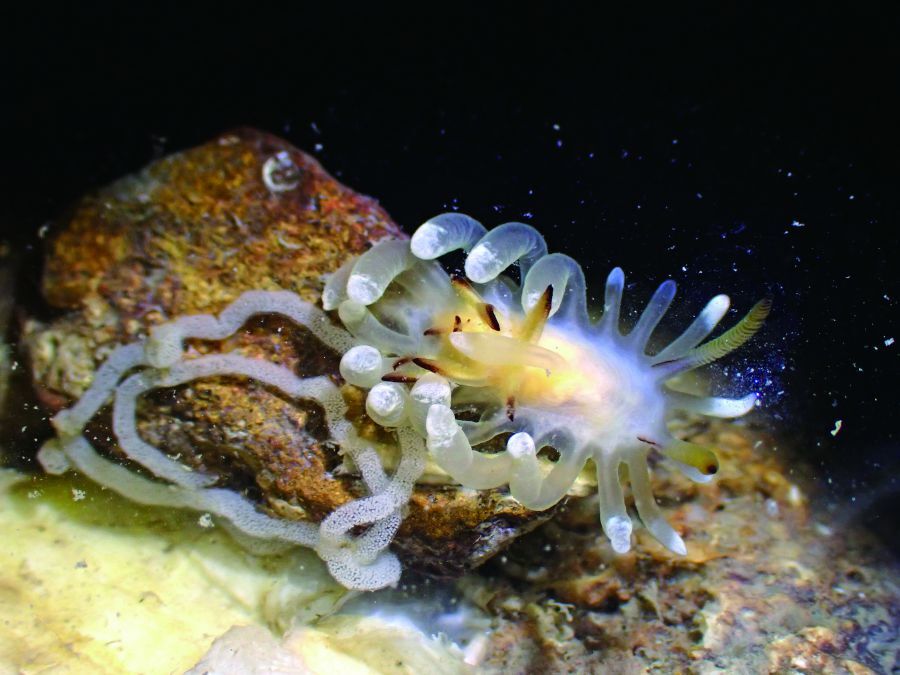
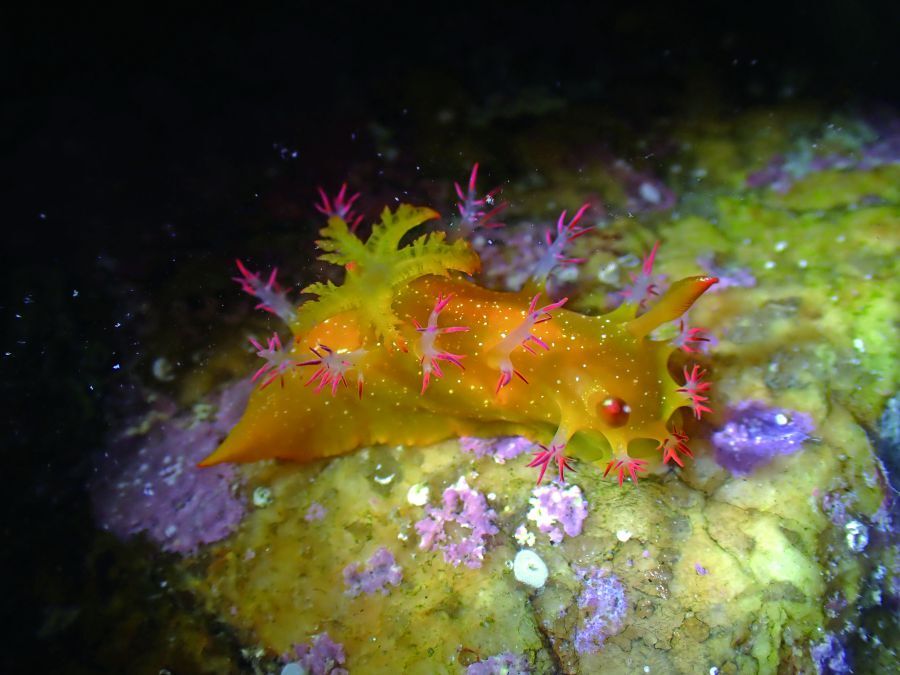
Sea Slugs of Kinmen
Provided by Hung Ching-Chang
Sea slugs are marine mollusks formerly classified under the subclass Opisthobranchia. The group includes various creatures commonly known as sea hares,nudibranchs, and other soft-bodied gastropods. Sea Slugs of Kinmen, compiled by Hung and Huang Hsiu Ting, documents 169 species of sea slugs across 34 families and 6 orders.

Protecting the Stillness Beneath the Surface
Observing life in the intertidal zone requires patience, a careful eye, and respect for nature. Yan especially reminds visitors that “if you flip over a stone, remember to place it back where it was. Fish eggs, algae, and sea anemones are often found underneath, and leaving the stone overturned may harm them.”
Whenever possible, observe with your eyes and avoid unnecessary contact. This not only protects marine life, but also helps prevent accidental encounters with potentially dangerous species. For example, oysters with razor-sharp shells can easily cut the skin, while lionfish commonly found in tide pools carry venomous dorsal spines. By wearing waterproof boots and gloves and keeping a respectful distance, visitors can appreciate the vibrant life that emerges with the changing tides.
Taijiang Sandbars: Traces of Life Along the Shore
Beneath Sicao Bridge, where the Yanshui River meets the sea, the sparkling sandbars and scattered concrete tetrapods slowly emerge as the tide recedes. Students participating in the “Taijiang Tides” environmental education program squat down on the sand alongside environmental education instructors and volunteers from Taijiang Wetland School, searching carefully for signs of life.
“Because Sicao Bridge is located near the estuary, the condition of the sandbars changes with the seasons and the replenishment of sediment, so the species you can observe vary throughout the year.” In spring, visitors may encounter sea hares that have recently finished spawning, while autumn is the season when sand crabs become especially active. Taijiang’s environmental education instructors guide students to begin their search in shaded areas and tidal pools left behind by the receding tide. “These places provide shade and nutrients, making them good places to spot signs of life.”
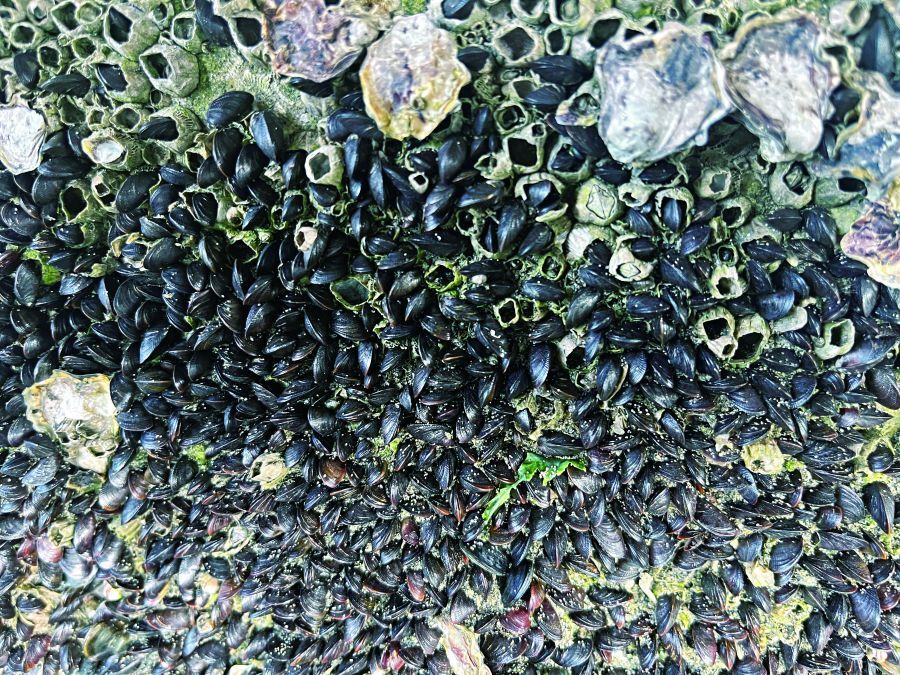
For example, periwinkles move up and down rocky surfaces with the changing tide, while barnacles remain fixed in place like natural water-level markers, revealing the highest reach of the tide.
Before You Explore
Every intertidal zone has different terrain and tidal conditions. Before setting out, check the tide times and tidal range, and explore with companions whenever possible.
Tracking Clues Between the Tides
To spot creatures that move about, visitors need to sharpen their eyes and follow the traces they leave behind. Hermit crabs carrying borrowed shells leave tire-like tracks across the sand, while larger horn-eyed ghost crabs (Ocypode ceratophthalmus) leave dotted, skipping trails as they dart quickly across the beach. “Horn-eyed ghost crabs also like to leave food near the entrances of their burrows, so some people jokingly call them ‘crab lunchboxes.’”
The Taijiang intertidal zone is also home to the moon crab Matuta victor and the mangrove swimming crab Thalamita crenata. With its reddish-brown spotted carapace, Matuta victor is an elusive inhabitant of sandy shores. “They quickly burrow backward into the sand, and students are always amazed when they see it happen,” Chen says. The mangrove swimming crab, locally nicknamed the “oyster crab,” is easy to recognize from the blunt projections along the front edge of its carapace and its powerful claws. “Because oyster farming is common here, these crabs are often found living among oyster racks, though they can also occasionally be spotted in shallow waters.”
Taijiang’s environmental education instructors also remind visitors that the area around Sicao Bridge lies near the estuary and is considered open water, so visitors should still pay close attention to safety. The next time you visit the intertidal zone, take a closer look at the mudflats and gently turn over a small stone— you may just encounter these lively little crabs and shrimp thriving between the tides.
 and a horn-eyed ghost crab (lower left to upper right)..png)


