
.jpg)
Article/ Zuo Mei-Yun
Photos/ Taijiang National Park Headquarters
Interviewees/ Liao Ming-Chu, Chief, Wetland Planning Section, Comprehensive Planning Division, National Park Service
Wetlands have been called the cradle of life—a precious and indispensable presence on Earth, vital to the survival and continuity of all living things. Yet, according to the Global Wetland Outlook, wetlands are disappearing three times faster than natural forests—making them one of the most rapidly vanishing ecosystems on the planet. Amid the many environmental crises humanity faces today, wetland conservation has become a pressing priority that leaves no time to spare.
Aligning with international standards, Taiwan classifies its wetlands into three tiers. As of 2025, the island boasts two wetlands of international importance—Sicao Wetland and the Zengwen Estuary Wetland—alongside 40 national- level wetlands, 17 local-level wetlands, and two provisionally designated local-level wetlands.
To manage these precious landscapes, the National Park Service has crafted short-, medium-, and long-term strategic plans. By leveraging smart technology and scientific management, establishing ecological baselines, championing environmental education, expanding community involvement, and promoting low-carbon travel, the Service is making wetland conservation accessible to everyone—turning it into a natural part of our everyday lives.
Taiwan's Experience: A Model for Global Wetland Conservation
Taiwan’s focus on wetland conservation took root in the 1990s. Back then, industrial development projects were being launched one after another in Tainan's Qigu and Sicao areas. While industrial growth promised to boost the economy, local finances, and livelihoods, these proposed sites sat right on lagoons, salt pans, and wetlands—vital habitats for countless species. Reclaiming land for factories meant bringing air and water pollution, imposing a heavy cost on both nature and society.
What mattered more: ecology or the economy?
The controversy ignited waves of public protest. Ultimately, the controversial Binnan Industrial Park project was halted, and a protective sanctuary was established for the Black-faced Spoonbill. This victory laid the groundwork for the future establishment of Taijiang National Park, officially bringing wetland conservation into the public spotlight.
With wetlands of all sizes scattered across Taiwan, deciding which ones deserved priority protection required a clear, transparent evaluation mechanism. Long before wetland conservation laws were officially codified, Taiwan had already begun selecting key wetlands.
The Ministry of the Interior launched medium- and long- term budget plans to evaluate and designate National Important Wetlands through various nomination channels, with final designations made by the National Important Wetlands Evaluation Committee.
Selected wetlands received financial support tailored to their classification tier: up to NT$5 million for international- level wetlands, NT$3 million for national-level wetlands, and NT$1 million for local-level wetlands., to support local authorities in carrying out conservation, restoration, and management work.
Liao Ming-Chu, Chief of the Wetland Planning Section, Comprehensive Planning Division, National Park Service, notes that nominations flooded in from diverse sources— including government agencies, environmental groups, and academic institutions. Even colleges nominated wetlands on their own campuses. It was a truly bottom-up, community- driven effort.
.JPG)
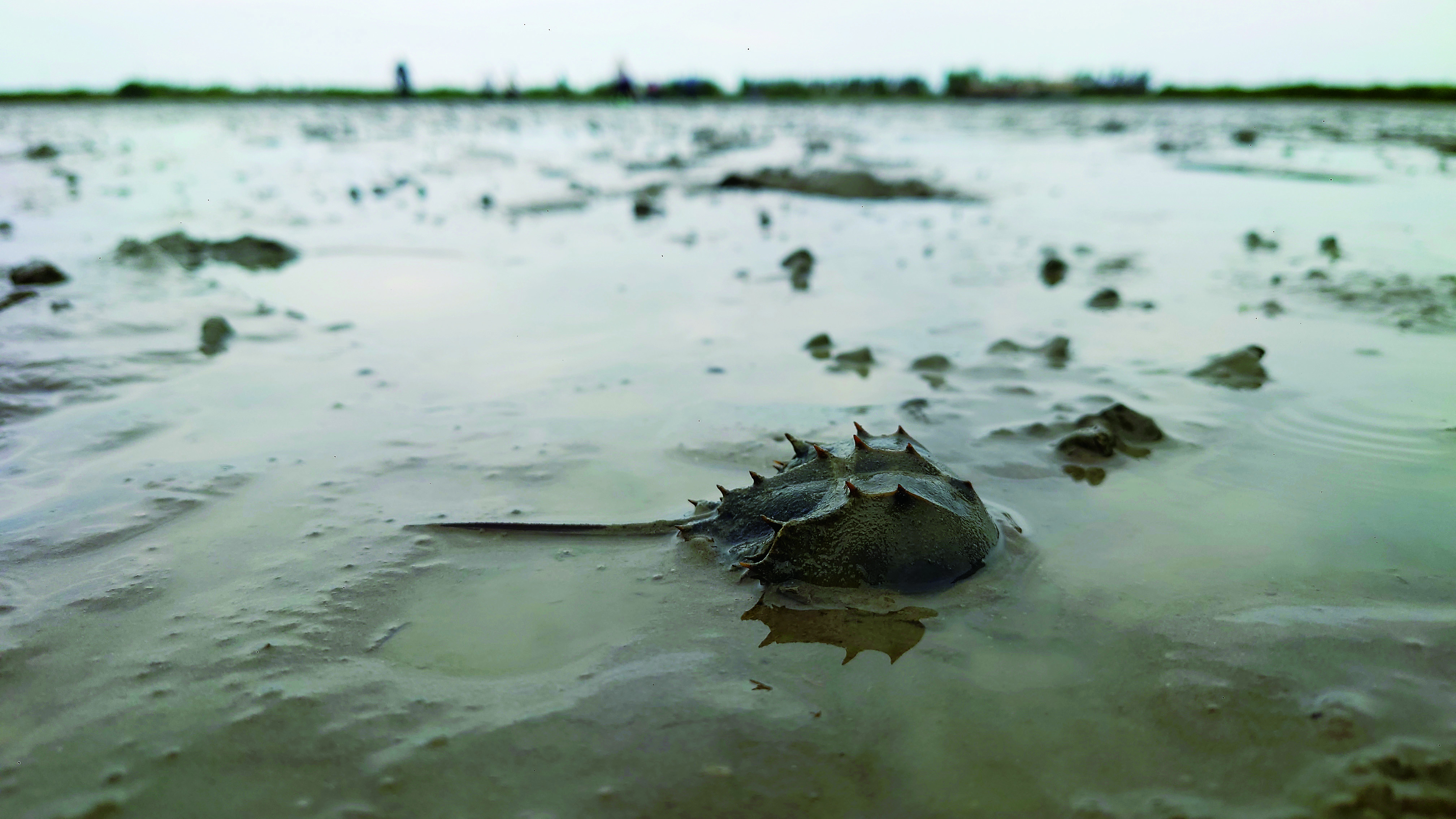
The selection criteria were largely modeled after the spirit of the Ramsar Convention—the world’s most crucial international treaty for wetland conservation. Adopted on February 2, 1971, in the Iranian city of Ramsar, it stands as the United Nations' first environmental treaty. Today, over 170 countries participate, united under a shared mission: to protect and wisely use all wetlands through local, national, and international action as a contribution toward achieving sustainable development worldwide.
Recognizing the significance of the Ramsar Convention, Taiwan adopted its core principles— such as biodiversity, naturalness, uniqueness, representativeness, and planning feasibility— as key metrics for classifying its wetlands. Final decisions were then entrusted to a central wetland evaluation committee.
Taiwan’s two internationally designated wetlands—Zengwen River Estuary Wetland and the Sicao Wetland—are both located within Taijiang National Park in Tainan. Many wonder why both top-tier sites happen to be in Tainan.
Liao Ming-Chu explains that the key reason lies in the Black- faced Spoonbill, an internationally migratory species once classified as endangered by the IUCN. Historical significance also played a role: Sicao was the historic landing site of Koxinga when he arrived in Taiwan in the 17th century.
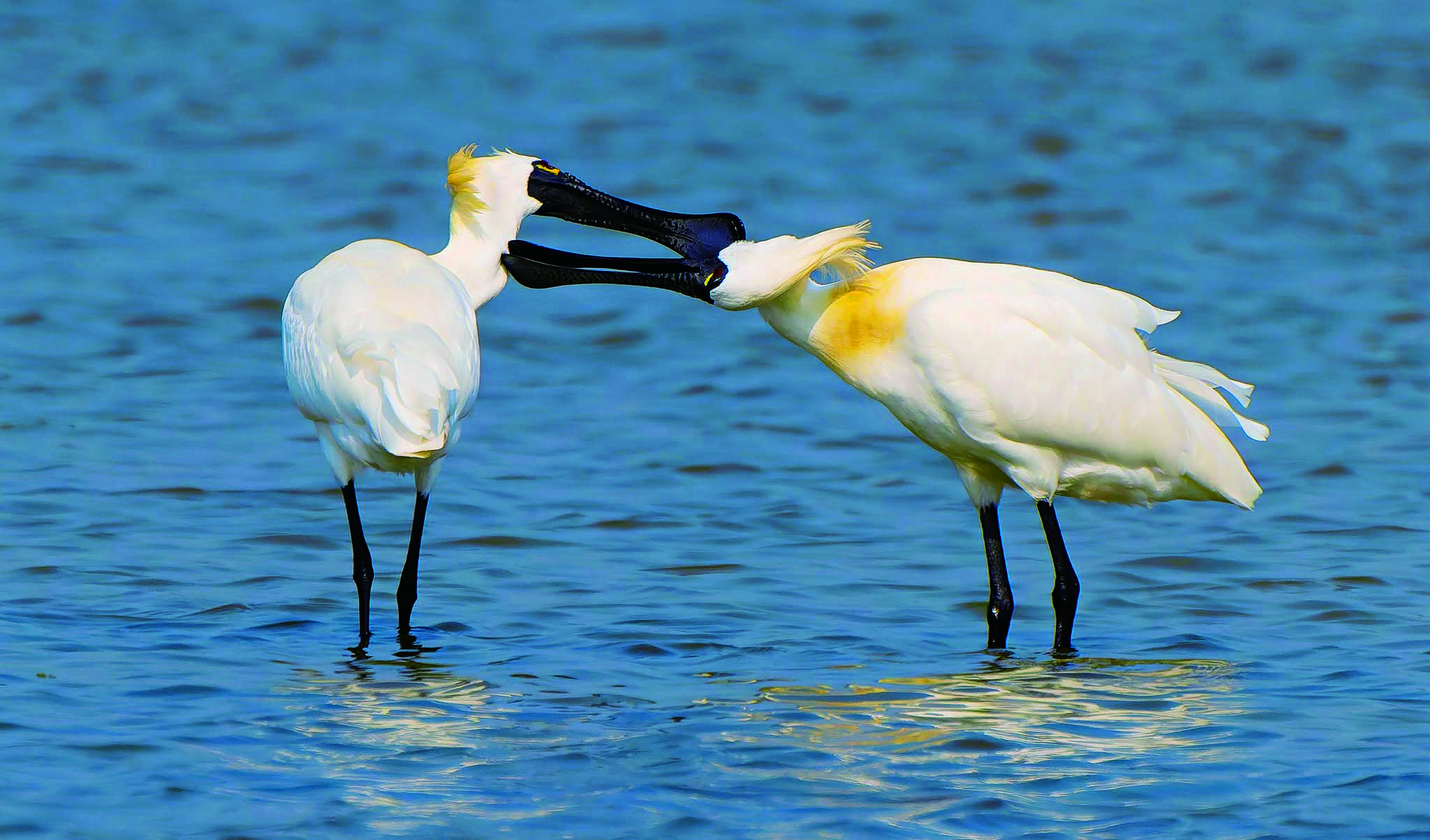
Now a superstar species, the migratory Black-faced Spoonbill is the rarest of all spoonbills. At one point, its global population hovered at a perilous 200 individuals, pushing the species to the brink of extinction. Every winter, these birds migrate south to feed and rest in the salt pans, fishponds, and tidal flats of Qigu, Sicao, and Jiangjun. Should these habitats be damaged, the survival of the Black-faced Spoonbill and other migratory birds would be put at risk. Protecting their habitat meant protecting an entire fragile ecosystem—making the mission immensely significant.
Thanks to the joint efforts of civic organizations and government agencies, the global population of Black-faced Spoonbills has surged from just over 200 in the 1990s to more than 7,000 today— with over 4,000 choosing Taiwan as their winter home.
How was this joyful conservation miracle achieved while balancing ecological health, local livelihoods, and community development?
Conservation Through Collaboration
Unlike traditional conservation models that rely heavily on strict bans and restrictions, wetland management centers around the concept of “wise use.” Tailoring strategies to respect existing rights and local conditions, this approach allows traditional, ongoing uses within critical wetlands. By combining development avoidance, impact mitigation, and ecological compensation, it strikes a thoughtful balance between community rights, regional development, and environmental protection.
Lin Zhe-Yu, a Specialist in the Conservation Research Section at Taijiang National Park Headquarters, highlights the management of the Black-faced Spoonbill Sanctuary as a model of wise use in action. By weaving local participation into wetland management, all stakeholders— from nearby residents to civic groups—develop a genuine connection and empathy toward the wetlands.
Lin explains that Black-faced Spoonbills, as migratory winter visitors, reside in the sanctuary roughly from September to April of the following year. Once the birds fly north for the season, local residents of Qigu can apply for access permits to harvest commercially valuable shellfish like hard clams, Venus clams, and razor clams. This allows the protected wetland to provide the ecosystem service of food provisioning for local residents, naturally boosting the community’s enthusiasm for wetland conservation.
Habitat environments are never static, requiring continuous monitoring and flexible, rolling adjustments. Between 2017 and 2018, local fishermen noticed that the harvested Venus clams were noticeably less plump than before, and total yields were steadily dropping. These warning signs pointed to underlying issues, while research teams simultaneously detected shifts in the mudflat geology.
To pinpoint the root cause, Taijiang National Park Headquarters launched field studies on the sanctuary's environment and aquatic life in 2020, uniting various academic institutions. National Chiayi University's Department of Biological Resources evaluated aquatic life, bird activity, and food availability. National Cheng Kung University's Department of Hydraulic and Ocean Engineering measured mudflat elevation, sediment accumulation, and tidal water exchange, while using drone and satellite imagery to track mangrove expansion. Meanwhile, Chia Nan University of Pharmacy and Science's Department of Environmental Management analyzed water quality and sediment composition. The rapid expansion of mangroves was disrupting water exchange and degrading the mudflat substrate—conditions unfavorable for benthic organisms and migratory birds like the Black- faced Spoonbill.
.jpg)
Following a year of study, the Headquarters convened key stakeholders—including the Tainan City Government, river management agencies, non-profit organizations, and local village leaders. By bringing everyone together, stakeholders gained a clear understanding of the ecological crisis and proposed solutions, paving the way for a solid consensus. Soon after, habitat adjustment and mangrove vegetation management got underway.
“When volunteers stepped right into the mud of the sanctuary, feeling the soil beneath their feet and clearing out mangrove saplings to build a healthier habitat for benthic life, conservation and wetland management suddenly became deeply personal,” reflects Lin, who has shared the Taijiang experience at numerous international ecological conferences. “That's when people truly stand behind conservation.

Shining Bright on the Global Stage
Although Taiwan is not a UN member state, both its government and civil society actively engage in global ecological initiatives— aspiring to play a vital role in international conservation. Zheng Kai-Fang, Chief of the Conservation Research and International Cooperation Section, Conservation and Interpretation Division,National Park Service, notes that the Service hosts an international symposium every three years. Bringing together scholars from Taiwan and abroad, along with representatives from the Society of Wetland Scientists (SWS), the event offers a platform to showcase Taiwan’s conservation milestones and share its expertise with the world.
SWS, a globally recognized organization dedicated to promoting wetland sustainability through scientific management, has long maintained a close relationship with Taiwan. Zheng excitedly shares that in 2024, SWS held its annual meeting in Asia for the very first time—and chose Taipei as the host city. Co- organized by the National Park Service and SWS, the meeting centered on the theme "Wetlands and Global Change: Mitigation and Adaptation," highlighting wetlands' essential roles in boosting biodiversity, storing carbon, supporting climate change adaptation and mitigation, and strengthening social resilience.
Building on that momentum, the SWS Asia Chapter held its 2025 conference in Taiwan as well. During the event, Taiwan officially signed a Memorandum of Understanding (MOU) with the Ramsar Regional Center - East Asia (RRC-EA). This milestone marked international recognition of Taiwan’s wetland conservation expertise, bringing greater global attention and resources to the island.

Another international highlight of 2025 was the forum titled "Symbiosis in Tidal Flats: Future Wetland Action Inspired by Black-faced Spoonbill Conservation," co-hosted by SAVE International and National Cheng Kung University’s Water Sustainability Lab. Gathering experts from governments, academia, corporations, and NGOs worldwide, the forum explored the success and future vision of wetland governance in Tainan. International experts were thoroughly impressed by the conservation success, achieved through Taiwan's collaboration with countries along the Black- faced Spoonbill's migratory route, which grew the Black-faced Spoonbill population from just over 200 to more than 7,000.
From the anti-Binnan Industrial Park protests of 30 years ago to the establishment of the Black-faced Spoonbill Sanctuary, and from the founding of Taijiang National Park to the enactment of the Wetland Conservation Act, Taiwan has taken steady, grounded steps in wetland conservation.
Looking ahead, solid mid- and long-term planning remains essential. The National Park Service plans to release a comprehensive Policy White Paper on National Parks, Wetlands, and Coasts by the end of 2026. Following that, Taiwan will establish regional wetland centers in the North, Central, and South. These centers will manage wetlands through regional division and task-based teams—serving as operational bridges between the National Park Service, local management offices, municipal governments, and civic groups.
By continuing to forge a new paradigm for wetland conservation, Taiwan is turning wetland conservation into a brilliant name card presented proudly to the world.

.jpg)
FAQ
Q:Why is the Black-faced Spoonbill called an "umbrella species" in wetland conservation?
A:An "umbrella species" is a key species with high standards for habitat quality. By protecting this single species and the habitat it relies on, you effectively open up an umbrella—providing shelter for countless other plants and animals sharing the same ecosystem, ensuring its overall health and integrity.
Since the Zengwen Estuary and Sicao Wetlands were designated as protected areas, not only has the population of the once- endangered Black-faced Spoonbill bounced back significantly, but other migratory birds, aquatic animals, and plant life have also thrived. This has made the wetland ecosystem far richer, more diverse, and resilient.
Q:Are there clear regulations governing the "wise use" of wetlands?
A:Yes. According to Subparagraph 4, Article 4 of the Wetland Conservation Act, "wise use" is defined as: "a timely, fittingly, moderately and adequately sustainable utilization of the biological resources, water resources and land resources that is achieved in a compatible approach within the wetland ecological capacity to maintain the quality and quantity of wetland resources in a stable condition."
Furthermore, Paragraph 1, Article 21 of the same Act stipulates that "the land situated within the borders of the Wetlands of Importance may be utilized by agriculture, fishery, salt-making industry, and building structures per the continuing conditions." These legal provisions aim to safeguard the pre-existing, lawful agricultural and fishing activities within key wetlands, ultimately achieving the goal of long-term sustainability.


