Article ∕ Huang Shih-Ju
Interviewee ∕ Shih Pei-Chun, Chief, Planning Management Section, Taijiang National Park Headquarters、 Tsai Liang-Tien, Appointed Interpreter, Interpretation and Education Section, Taijiang National Park Headquarters、Chen Chih-Fa, Volunteer Interpreter, Kinmen National Park Headquarters
At 9:00 a.m., tourists meet in front of Jiangong Elementary School in Cigu District and prepare to depart. As the cycling team moves along the path beside the fish ponds, a faint salty smell wafts in on the sea breeze, and black-faced spoonbills can occasionally be seen taking flight from the water. When traveling around Taijiang National Park, cycling is more than a way to move—it sets the perfect pace for exploring local areas. Taijiang National Park Headquarters (TNPH) weaves the four seasons together through a network of distinctive cycling routes, inviting the public to embark on an immersive tour of satoumi areas—coastal zones where humans and nature live in harmony—experiencing the connection between nature, ecology, and human culture.
Taijiang Satoumi: A Sensory Cycling Journey
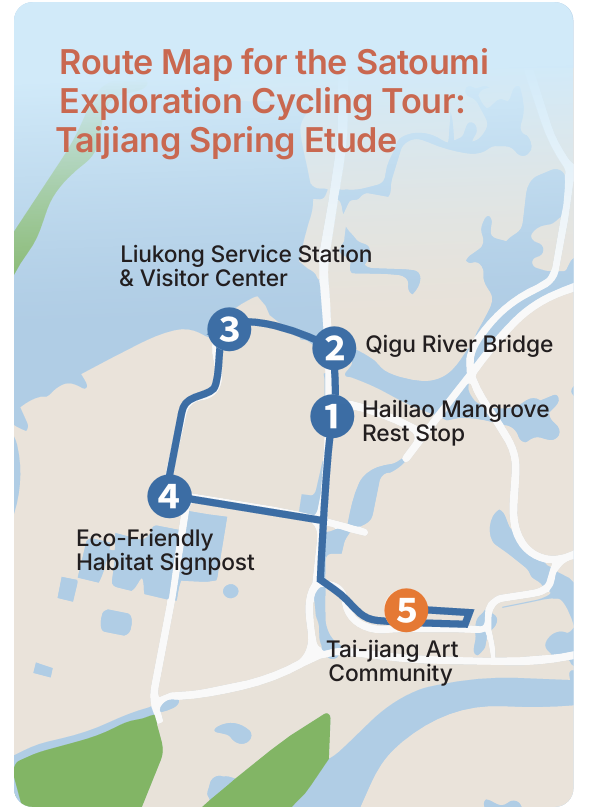
The Satoumi Exploration Cycling Tour: Taijiang Spring Etude takes place every spring, covering a route of approximately 13 kilometers. The route offers both 3-hour and 6-hour itineraries, allowing visitors to explore Taijiang at their own comfortable pace. Shih Pei-Chun, Chief of the Planning Management Section, TNPH, explains that the area surrounding Taijiang National Park features flat terrain and low-traffic roads, making it an easy and enjoyable ride for all ages and skill levels—from experienced cyclists to families with small children. “In particular, exploring the minor trails gives you a better feel for the lifestyle and landscape of Taijiang.”
The cycling team moves slowly along the path beside the fish ponds, catching glimpses of busy fish farmers working in the ponds. A volunteer interpreter stops beside an eco-friendly fish pond to introduce the Eco-Friendly Habitat Creation Project, which is a collaboration between TNPH and local fish farmers.
“After harvest, fish farmers usually drain their ponds for sun-drying. However, we encourage them to maintain an appropriate water level, leaving residual fish and shrimp for the black-faced spoonbills and other waterbirds that overwinter here in the winter.” Shih states that visitors are deeply moved after learning about the nature-friendly farming methods. “They see a group of fish farmers who are willing to adapt their farming practices to support the ecosystem.” While cycling, participants can see beautiful scenes that show people living in harmony with nature.
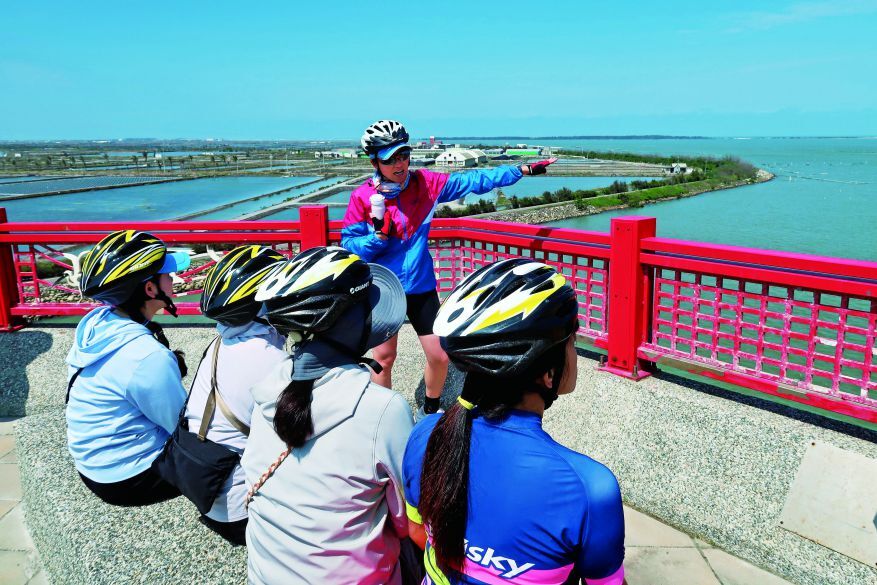
The cycling team continues their tour, passing the Hailiao Mangrove Forest, and stopping under the Qigu River Bridge. They climb the stairs to the wide bridge, where a breathtaking view suddenly unfolds. Beneath their feet lies the Qigu River. A bit further out is a shimmering lagoon with oyster racks scattered across it, and beyond that sits the vast Taiwan Strait. “Most people have only glimpsed this scenery through aerial photos. When you stand on the bridge in person and gaze out into the distance, the layered wetlands and sandbars unfold before your eyes—it’s an entirely different experience!”
Local Stories from Local Residents
After completing the morning itinerary, the team enjoys lunch at Xianren café, a café run by a local youth who returned to his hometown. The afternoon journey will shift its focus to the people and villages of Taijiang.
Visitors are often surprised and delighted when they first visit the Tai-jiang Art Community. Through guided tours by appointment, visitors can explore pottery studios and sculpture rooms rarely open to the public. They get a close-up view of the artists at work and can even make their own paper-sculpture postcards featuring satoumi landscapes.
Shih reveals, “Many participants say that the most impressive part of the tour was meeting locals and hearing their stories.” This is also the charm of the Satoumi Exploration Cycling Tour: Taijiang Spring Etude. The tour is not designed as a test of physical endurance; instead, the pace of cycling allows participants to pause, listen to stories, admire the scenery, and explore corners of local villages that would otherwise remain unfamiliar.
In addition to spring cycling tours, TNPH has organized other seasonal events such as Crabs and Cicadas: Taijiang Summer Night Carnival, Bountiful Catches and Crops: Taijiang Autumn Harvest Season, and Seasonal Delicacies: Taijiang Winter Feast. These events invite visitors to discover Taijiang’s satoumi zone through seasonal themes.
Each group of cyclists is supported by trained interpreters (Taijiang Guides), with a leader at the head of the pack and a tail guide bringing up the rear. Participants do not even need to bring their own bicycles. “This itinerary is great for families. Although it is designed for kids ages 8 and up, we’ve even had children as young as 4 or 5 complete the ride!”
As wheels slowly roll past fish ponds, lagoons, and villages, travelers experience more than just beautiful scenery; they uncover the memories of the land, forged through the shared efforts of national park, schools, and local communities. This is the real treasure of Taijiang’s Satoumi Exploration Cycling Tour.
Cycling and Birdwatching Along the Mountains to Sea National Greenway
Renowned for its rich wetland and bird ecosystems, Taijiang National Park also features a popular cycling route:Cycling and Birdwatching along the Mountains to Sea National Greenway. This route takes visitors into a realm of winged wonders. By following the Yanshui River and the Chianan Irrigation Canal, it offers a different perspective for a leisurely tour around Taijiang.
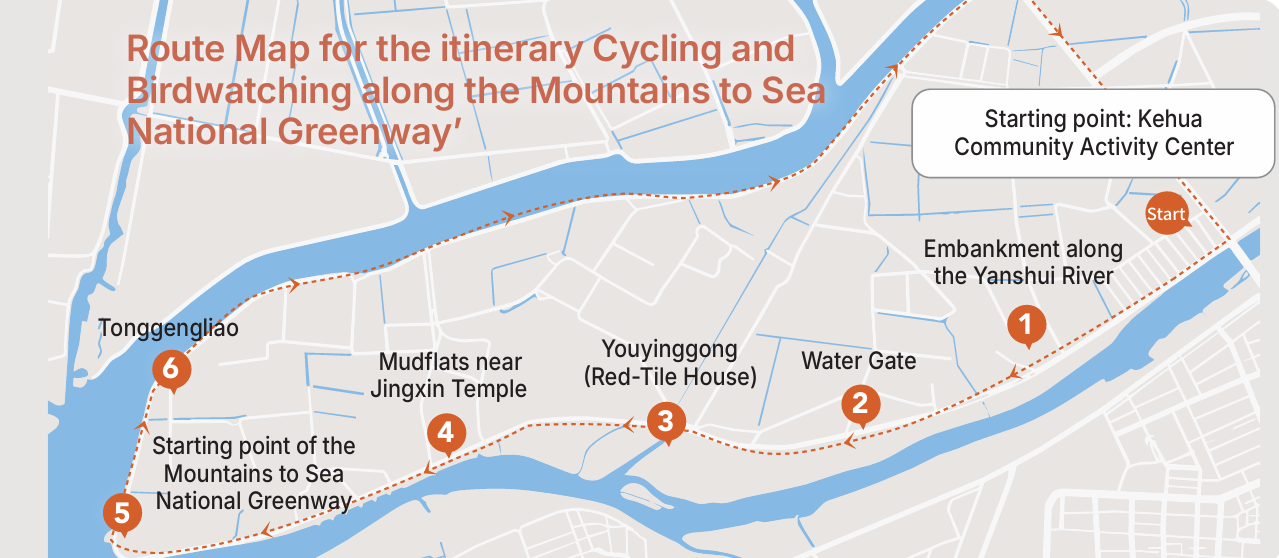
Starting beneath Hainan Village’s Guanhai Bridge and heading west along the Yanshui River, visitors will see blackboard trees (Alstonia scholaris), Chinaberry trees (Melia azedarach), and mangrove forests as the scenery gradually shifts from riverbank to wetland. If cyclists scan the area closely, they may spot black-faced spoonbills and fiddler crabs. Next, they head to the starting point of the Mountains to Sea National Greenway at the mouth of the Yanshui River, and follow the Chianan Irrigation Canal back to complete a roughly 10-kilometer loop.
Several interpretation stops along the route link the fish ponds, mangroves, mudflats, and estuarine wetlands to showcase the most representative waterscapes of Taijiang. “We hope to take a more relaxed approach by guiding participants to ride, take in the sights, and get to know Taijiang at a leisurely pace”, says Tsai Liang-Tien, an appointed interpreter at the TNPH.
Meet the Three Treasures of Taijiang
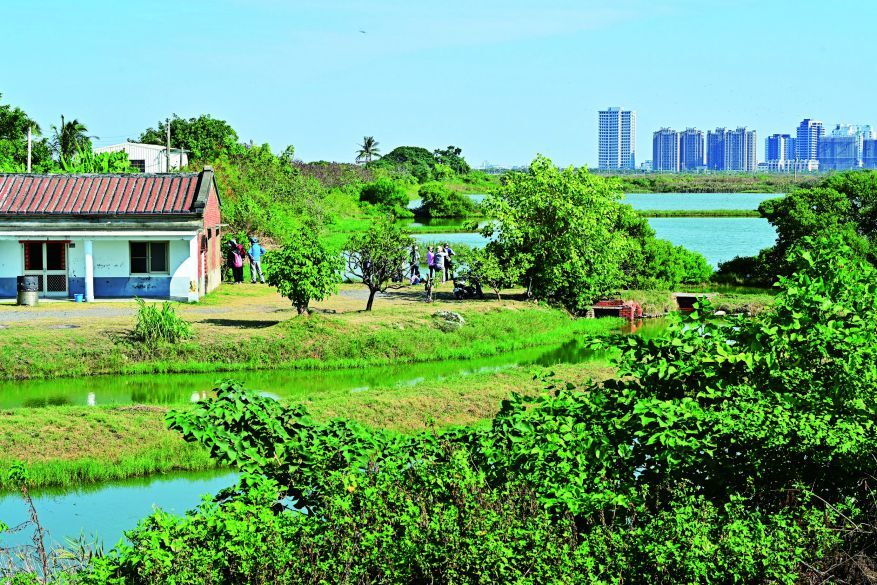
Every autumn and winter, migratory birds flock to Taijiang, marking the start of the lively bird-watching season. A volunteer interpreter leads the participants on a bike ride to the Youyinggong Red-Tile House, saying, “A vast expanse of abandoned fish ponds stretches out here. Let’s make a quick stop to observe the Three Treasures of Taijiang: the black-faced spoonbill, the black-winged stilt, and the pied avocet.” The cyclists gasp in amazement while watching the birds foraging. The volunteer interpreter politely asks everyone to keep their voices down, adding with a smile, “Our mascots came into work today!”
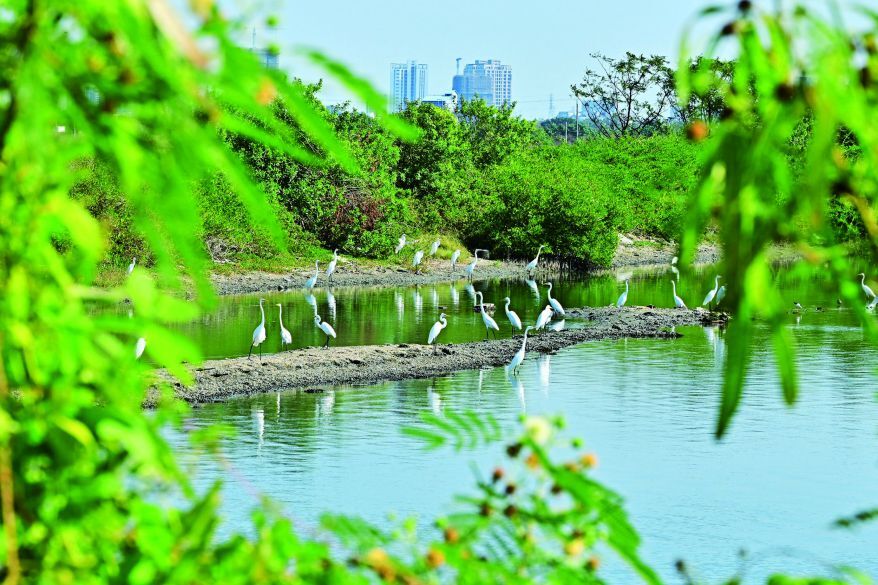
The cycling team continues their ride past the mudflats near Jingxin Temple. Here, they can observe egrets nesting in the mangroves, along with various waterfowl of the Anatidae family. “A local resident once said he used to think birdwatching was just for ornithologists. He was amazed to find such rich ecological resources right on his doorstep.”
Before birdwatching begins, staff will check the area first and set up spotting scopes in ideal locations to enhance visitors’ ecological observation experience. Tsai shares that passersby usually don’t stop to look, not knowing that the wetlands’ hidden treasures are right there in front of them. Through volunteer interpreters’ guidance, what initially appeared to be ordinary fish ponds and riverbanks have been transformed into open-air ecological classrooms for visitors.

Taijiang's Waterscapes by Bike
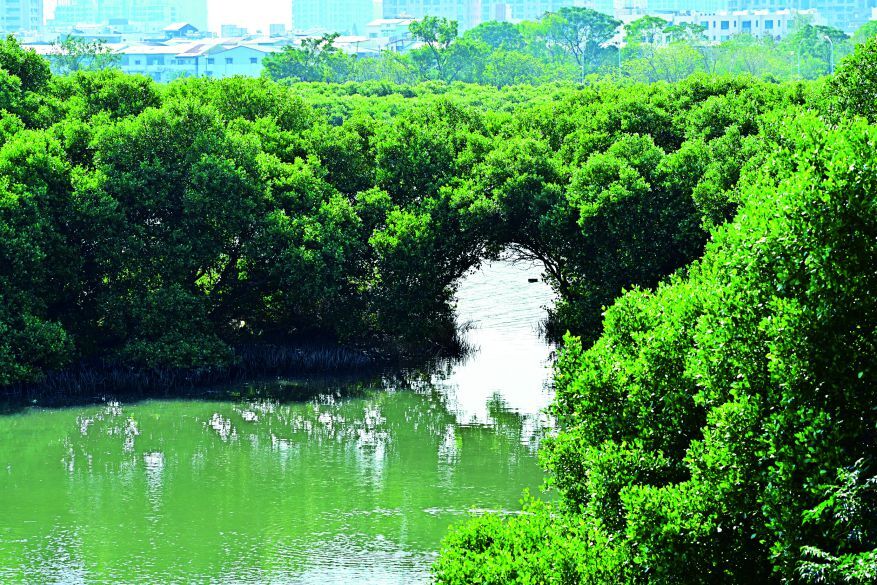
Upon reaching the Tonggengliao area, where the Yanshui River meets one of the drainage channels of the Chianan Irrigation Canal, riders are greeted by the Sicao Wetlands and a forest on the water. They pause to watch the graceful movements of egrets and wild geese. “Unobstructed by tall buildings, this area offers an expansive view for people to watch waterbirds foraging and taking flight, making it a unique waterscape of Taijiang.”
This spot also marks the starting point of the Mountains to Sea National Greenway. This Inner Sea Trail leading to Wushantou Reservoir not only connects the Chianan Irrigation Canal with the waters of Taijiang—it has witnessed Tainan’s history and culture as the region expanded from the coast to the interior.
The Cycling and Birdwatching along the Mountains to Sea National Greenway is very family-friendly. Tsai notes with a smile that some children even completed the entire ride on balance bikes. In addition to arranging volunteer interpreters with diverse expertise, TNPH provides support vehicles with drinking water so visitors can relax both physically and mentally while leisurely exploring Taijiang by bike.
Exploring Kinmen's Timeless Charm by Bike
Unlike the waterscape tours in Taijiang, the 3-day Cycling Shangri-La itinerary offered by the Kinmen National Park Headquarters allows participants to fully experience Kinmen’s natural ecosystems, battlefield landscapes, and traditional settlements.
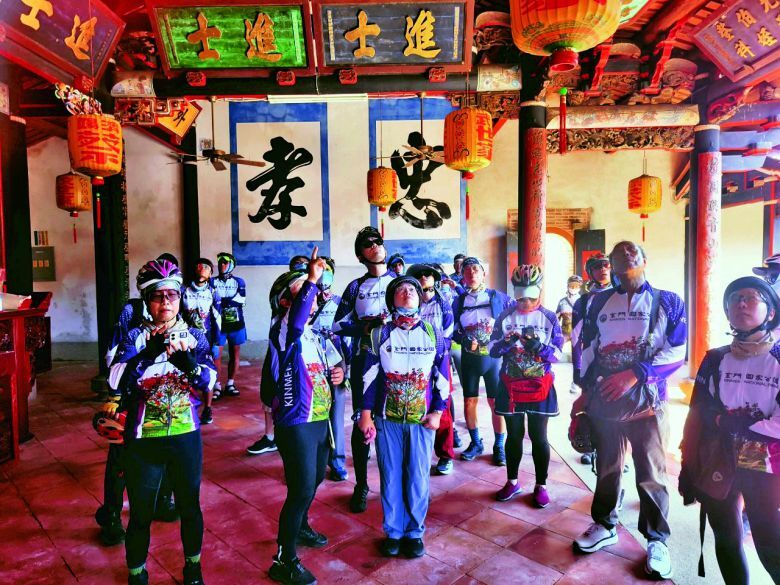
When cycling through the lanes of Zhushan Settlement, visitors can admire the sunlight spilling over the swallow-tail roof ridges of traditional Minnan-style houses. This ride lacks the roar of a speeding car, yet offers a brisker pace than walking. “That’s why we often say, ‘Driving is too fast and walking is too slow; cycling is just right’,” says Chen Chih-Fa, a volunteer interpreter at Kinmen National Park Headquarters, with a smile.
Kinmen National Park Headquarters has organized eco-cycling events since 2011, linking Kinmen Island and Lieyu Island. Since 2015, the event has been named "Cycling Shangri-La," combining low-carbon tourism with battlefield ecology to create a rider-friendly, immersive route that draws cyclists from all over to slowly discover the beauty of Kinmen.
Chen notes that while tourists to Kinmen in the past invariably visited spots like Taiwu Mountain, Juguang Tower, and Zhaishan Tunnel, the island’s beauty merits a much deeper, more detailed exploration. “The true beauty of Kinmen lies especially in its traditional settlements. I always recommend that visitors cycle around to explore them—they’re really fascinating!”

A 3-Day, 120-Kilometer Journey
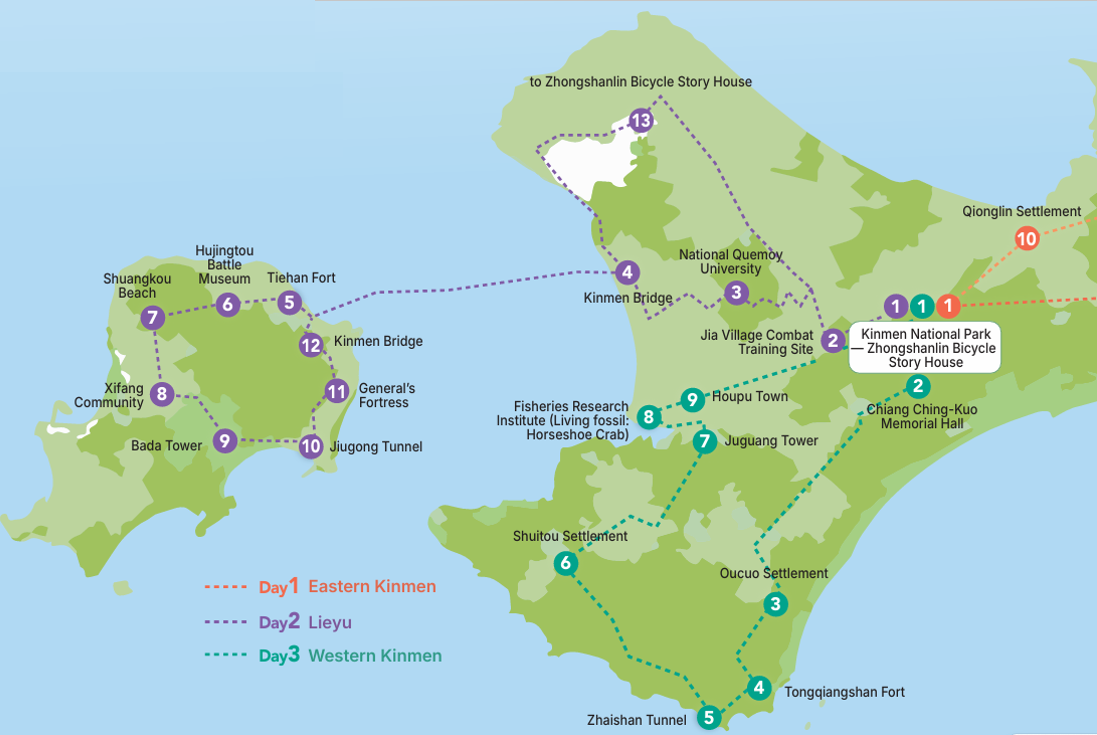
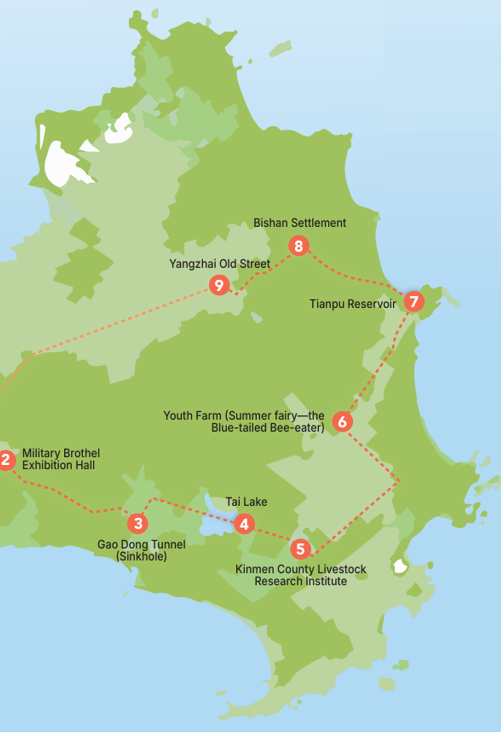
The Cycling Shangri-La route starts at the Zhongshanlin Bicycle Story House and involves cycling across the eastern Kinmen, Lieyu Township, and western Kinmen. The daily ride is about 40 kilometers—a distance that may sound short, but it truly encapsulates Kinmen’s most representative natural and cultural landscapes.
The eastern Kinmen route on the first day blends local settlements with natural landscapes. Visitors can step into the culturally rich Qionglin Settlement to admire the historic Ancestral Shrine of the Cai Family and the Wind Lion God. With the power lines moved underground, the clean, unobstructed skyline has become a favorite photo spot for cyclists. In the summer, visitors can admire the vibrant plumage and agile flight of the “summer fairy” (the Blue-tailed Bee-eater); in winter, they are offered the spectacular sight of migrating cormorants.
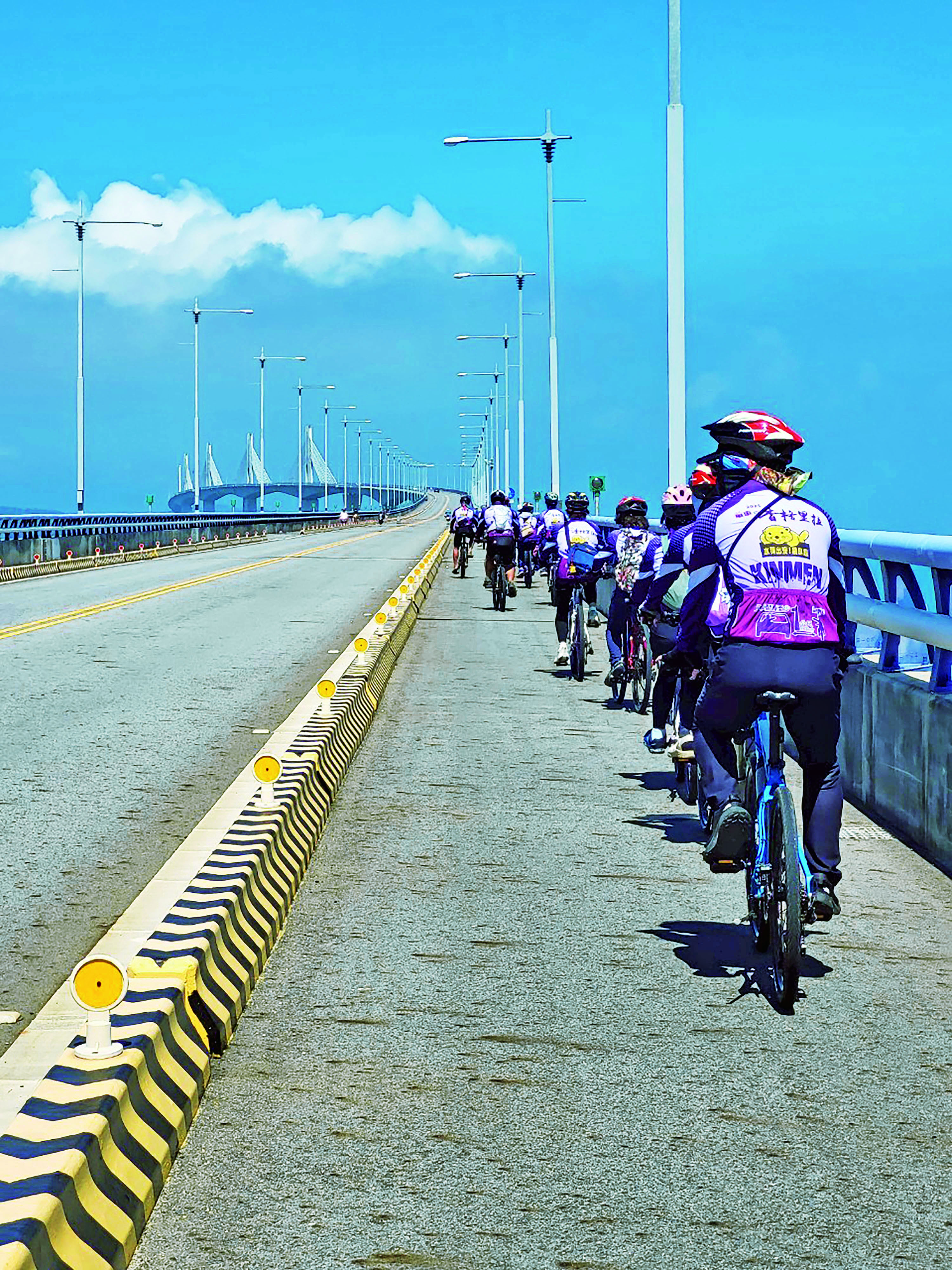
The route for Day 2 takes cyclists across the Kinmen Bridge to Lieyu Township—a journey rich with the atmosphere of a former battlefield. Chen points out that riding across Taiwan’s longest cross-sea bridge is, in itself, a rare and special experience. Combined with Lieyu’s rugged terrain, the day’s journey presents an extra challenge. The route passes by sites such as the Hujingtou Battle Museum, Jiugong Tunnel, and the General’s Fortress, giving cyclists a chance to experience memories of the former frontline.
On Day 3, cyclists head to western Kinmen, visiting Oucuo Settlement, the Zhaishan Tunnel, Shuitou Settlement, and Tongqiangshan Fort — which recently opened to the public after renovation. This is a journey where history and culture intertwine. Over the 3-day journey, cyclists weave through traditional settlements and coastlines, riding through Kinmen’s past and present.
Every interpretation stop has been carefully selected based on years of experience organizing this event. “These particular locations are often the kind of hidden gems you won’t find through a standard Google search.” With local volunteer interpreters’ guidance, visitors can venture deep into a traditional settlement to discover the stories behind an old house or an ancestral shrine. Some participants remarked, “Three days really isn’t enough; Kinmen is a place worth visiting again and again!” Many local residents also feel that they have rediscovered their hometown after taking part in the activities.
Chen reveals that the participating cyclists are a remarkably diverse group; in addition to cycling enthusiasts, there are also professors, physicians, tour guides, and travel writers. “Although many of these people had visited Kinmen before, after this 3-day tour, they all said they saw a completely different view of the island.”