

Accommodation in Kinmen
Published: 2009-08-12
| Hotel | Tel | Address |
|---|---|---|
| Six brother hotel | (082)324-311 | No.164, Jyuguang Rd., Jincheng Township, Kinmen County 893, Taiwan (R.O.C.) |
| HaiFu hotel | (082)322538 | No.85, Mincyuan Rd., Jincheng Township, Kinmen County 893, Taiwan (R.O.C.) |
| Golden Lily hotel | (082)323-151 | No.82, Siapusia, Jinning Township, Kinmen County 892, Taiwan (R.O.C.) |
Last Updated: 2020-11-20
Travel Guide
Published: 2009-08-12
Sightseeing Route Recommendations
- One day Tour
- Bike Tour
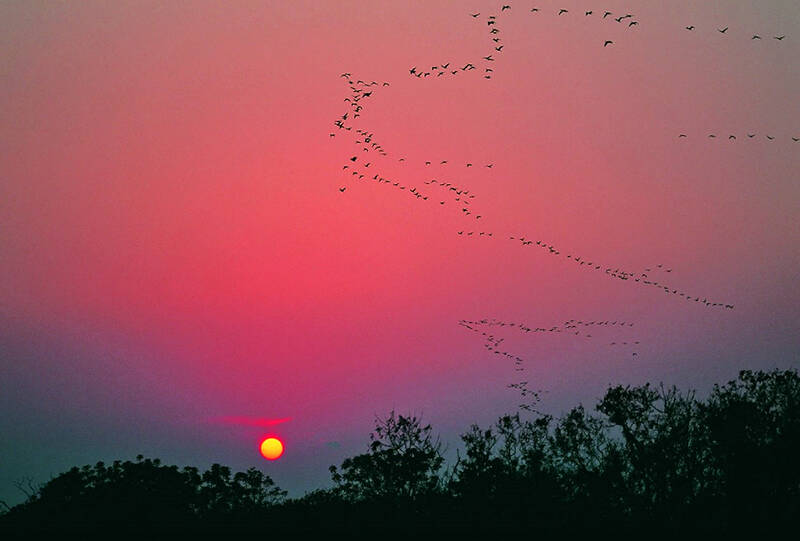
Kinmen National Park Visitor Center→ Jhongshanlin Recreational Area(including Chiang Ching-Kuo Memorial Hall and Old Rushan Fort (Rushan Rampart)→ Cyonglin Traditional Settlement(including Arch to Chastity, Tsai Family Ancestral Hall, Spirit Lion Statue, and the Underground Tunnel→ Anchi→ Guningtou Battlefield(including Guningtou Battle Museum, Old Western-style House at Beishan, Jhenwei Residence)→Shuangli Lake(including Beishan Spirit Lion Statue and Shueiwei Pagoda)→Cih Lake(watch the sunset at the Cih Causeway)
- Two day Tour
- Day 1
Airport→ Kinmen National Park Visitor Center→ Jhongshanlin Recreation Area(including Chiang Ching-Kuo Memorial Hall and Old Rushan Fort / Rushan Rampart)→Cyonglin Traditional Settlement(including Arch to Chastity, Tsai Family Ancestral Hall, Spirit Lion Statue, and the Underground Tunnel)→Lunch →Guningtou Battlefield(Guningtou War Museum, Old Western-style House at Beishan, Jhenwei Residence)→Shuangli Lake(including Beishan Spirit Lion Statue and Shueiwei Pagoda)→Cih Lake(watching sunset at the Cih Causeway)
- Day 2
Mt. Taiwun for hiking→ Shanhou Folk Culture Village→ Mashan Observation Post→ Lunch→ Jhaishan Tunnel→ Jhushan Traditional Settlement→ Oucuo Traditional Settlement
- Three day Tour
- Day 1
Airport→Tourist Center of Kinmen National Park→Jhongshanlin Recreational Area(including Chiang Ching-Kuo Memorial Hall and Old Rushan Fort / Rushan Rampart)→Cyonglin Traditional Settlement(including Arch to Chastity, Tsai Family Ancestral Hall, Spirit Lion Statue, and the Underground Tunnel)→Lunch →Guningtou Battlefield(including Guningtou Battle Museum, Old Western-style House at Beishan, Jhenwei Residence)→Shuangli Lake(including Beishan Spirit Lion Statue and Shueiwei Pagoda)→Cih Lake(watching sunset at the Cih Causeway)
- Day 2
Lieyu Area (Little Kinmen / Lesser Quemoy)(including Hujingtou Battle Museum, Sihwei Tunnel, Around-the-island Tank Road, and Lingshuei Lake)→Shueitou Traditional Settlement( Deyue Tower, Jinshuei Primary School, and Eighteen Roof Ridge)→ Lunch→ Wuntai Pagoda, and Syu-Jiang-Siao-Wo Inscriptions→ Gugang Lake→ Jhaishan Tunnel→ Jhushan Traditional Settlement→ Oucuo Traditional Settlement
- Day 3
Mt. Taiwun for hiking à Shanhou Folk Culture Village→ Mashan Observation Post→ Lunch→ Banyan Park→August 23 Artillery Battle Museum
Theme Trip
- Tour ofTraditional Settlements
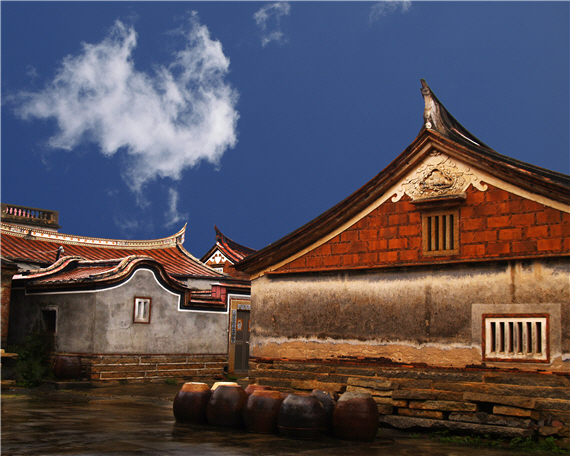
- Gugang Area—Shueitou, Chushan, and Oucuo
Guningtou Area—Nanshan and Beishan
Mt. Taiwun Area—Cyonglin
Mashan Area—Shanhou - Tour of Battlefields and Battle Museums
- Greater Quemoy:
Jhaishan Tunnel, Jhaishan Battle Village, Mt. Taiwun Cemetery, Wuwangzaijyu Inscription, August 23 Artillery Battle Museum, Guningtou Battle Museum, Old Western-style House at Beishan, Liguangcian General Temple, Mashan Observation Post.
Lieyu Area (Lesser Quemoy):
Badalouzih, General Fortress, General Temple, Shuangkou Battle Village, Hujingtou Battle Museum, and Around-the-island Tank Road. - Tour of Historical Sites and Cultural Heritages
- First-class historical site: Ciouliangong Cemetary (Ching Dynasty)Second-class historical sites: Wuntai Ancient Tower (Ming Dynasty), Syu-JianSiao-Wo Inscriptions (Ming Dynasty), Chenjhen Tomb (Ming Dynasty), Chenjian Tomb (Ming), Jhuzih Shrine (Ching Dynasty), Shueitou Huang Ancestral Hall (Ching Dynasty), Tsai Family Ancestral Hall (Ching)Third-class historical sites: Haiyin Temple (Sung Dynasty), Shihmen Gate (Ming Dynasty), Hanyingyungen Stele (Ming Dynasty), Luruoeng Mansion and Cemetery (Ming Dynasty), Kinmen General Military Office in Ching Dynasty (Ching Dynasty), Shueiwei Pagoda (Ching Dynasty), Jhenwei Residence (Ching Dynasty), Tsaipanlong Tomb (Ching Dynasty), Ciouliangong Cemetery (Ching Dynasty), Fonglianshanmumahou Hall (Ching Dynasty), Cyonglin Arch to Chastity (Ching Dynasty), Lee’s Mansion at Sishanchien (Ching Dynasty), Kueising Building (Ching Dynasty).
Last Updated: 2018-09-19
Visitor Safety
Published: 2009-08-12
Attention for visitors
- Advance reservation is needed to guarantee flight seat availability. Airline schedules tend to change easily due to weather conditions especially in spring.
- It is freezing in Kinmen in winter. Remember to bring warm clothing. There are large temperature differences between day and night in Taiwan. When doing night activities remember to keep warm.
- Due to many mine fields in Kinmen area, please do not enter restricted areas for your own safety. Most coastlines are still military restricted areas where tourists are not allowed to enter.
- Please respect local inhabitants when visiting the traditional houses and villages.
- Kinmen is a famous bird-watching spot. When observing them, please do not disturb
activities and destroy their habitats. - To maintain famous landscapes in Kinmen, please follow regulations and restrictions set by the Kinmen National Park.
Last Updated: 2018-09-20
Park Contacts
Published: 2009-08-12
Information of Visitor Center
| Location | Opening Hours | Contact Information |
|---|---|---|
| Rushan Visitor center | - | Tel: (082)313197 |
| Lie yu station Visitor center | - | Tel: (082)364401 Fax: (082)364406 |
| shuangli Visitor center | - | Tel: (082)313271 |
Last Updated: 2020-11-20
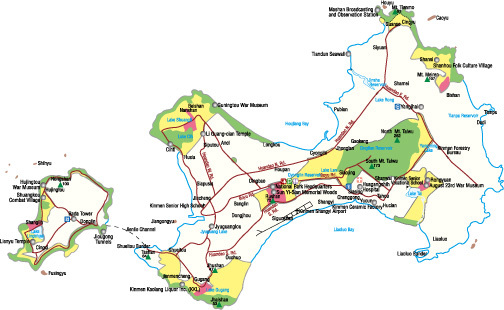
Map Of The Park
Published: 2009-08-12
Last Updated: 2018-09-19
How To Get There
Published: 1999-11-30
Transportation information
- Airline Schedules
- Bus Routes
- Car Renting
- Ship
| Name | Address | Phone |
|---|---|---|
| Da-sin Minibus-Renting Co., Ltd. | No.1, Lane 65, Mincyuan Rd., Jincheng Township, Kinmen County 893, Taiwan (R.O.C.) | (082)324128 |
| Fan-de Minibus-RentingCenter | No.4, Sinwudesinjhuang,Jinhu Township, Kinmen County 893, Taiwan (R.O.C.) | (082)334082 |
| Jin-ma Car-Renting Agency | No.1-1, Minsheng Rd., Jincheng Township, Kinmen County 893, Taiwan (R.O.C.) | (082)324518 |
| Guan-cheng Car-Renting Agency | No.7-7, Minzu Rd., Jincheng Township, Kinmen County 893, Taiwan (R.O.C.) | (082)323390 |
| Guan-jyun Minibus-Renting Agency | No.20, Sec. 1, Huandao W. Rd., Jincheng Township, Kinmen County 893, Taiwan (R.O.C.) | (082)372122 |
| Fu-cheng Car-Renting Co., Ltd. | No.200, Boyu Rd.,Jincheng Township, Kinmen County 893, Taiwan (R.O.C.) | (082)322177 |
| Jing-shengCar-RentingAgency | No.11-1, Sintsaishihchang,Jinhu Township, Kinmen County 893, Taiwan (R.O.C.) | (082)334322 |
| Ruei-sinCar-RentingAgency | No.1-1, Boyu Rd.,Jincheng Township, Kinmen County 893, Taiwan (R.O.C.) | (082)324147 |
| Departures Pier | Terminal Pier | Departure Timetable | ||||||
|---|---|---|---|---|---|---|---|---|
| Jiougong (Lesser Quemoy on Liehyu) | Shueitou(Greater Quemoy) | 07:00 | 08:00 | 09:00 | 10:00 | 11:00 | 12:00 | 13:00 |
| 14:00 | 15:00 | 16:00 | 17:00 | 18:00 | 20:30 | - | ||
| ※ Departing on the hour between 7 am to 6 pm, except for the last trip that departs at 8:30pm. | ||||||||
| Shueitou(Greater Quemoy) | Jiougong (Lesser Quemoy on Liehyu) | 06:30 | 07:30 | 08:30 | 09:30 | 10:30 | 11:30 | 12:30 |
| 13:30 | 14:30 | 15:30 | 16:30 | 17:30 | 18:30 | 21:00 | ||
| ※ Departing on the half-hour between 6:30am to 18:30pm, except for the last trip that departs at 9 pm. | ||||||||
Last Updated: 2018-09-20


