Derict to middle content area:::

:::

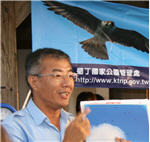 Profile of Yi-rong Cai
He had served in the Interpretation and Education Section of KNPH since summer 1985 till fall 2001, when he was transferred to Conservation Research Section.
He had presented or published 8 articles on birds since 1985 in domestic, cross-strait, and Asian seminars and periodicals. He has also been a daily news writer on KNPH, WBSP and Kt.Eagle websites over 10 years.
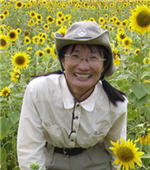 Profile of Chiung-yao Lin
She has served in the Interpretation and Education Section of KNPH since summer 1986.
Her publications include Invitation from the Mountain and the Sea (KNPH), Langchio History (PingTung Sisal culture and education development association), The Peninsula: Then and Now (KTNPH).
Glorious Cape Enters its 25th Year-First Stop of Conservation – Kenting
Speaking of Kenting, everyone thinks of its ocean, sunshine, sand beach, waves, music, and people.
Graduation trips, summer vacations, honeymoons…the happy times of many tourists are spent in the dreamlike landscapes of Kenting. This gifted paradise for vacation possesses not only the well-known tropical feel but also many wonderful stories worth recalling.
Environmental protection starts with Kenting
Who was so wise to keep Kenting away from the tidal wave of economic growth and environmental exploitation and build Kenting into the first national park in Taiwan 25 years ago?
At a time of economic take-off, industrial parks were built one after another. The beautiful land of Taiwan was sacrificed in exchange for wealth. Water was polluted. Factories were everywhere. Villas and hotels were built in scenic places. Over deforestation was serious in Kenting in 1977.
Good news was that then-premier Chiang Ching-kuo took professional advice and planned Kenting into a national park. But what is a “national park,” and how is it different from ordinary parks?
Graduation trips, summer vacations, honeymoons…the happy times of many tourists are spent in the dreamlike landscapes of Kenting. This gifted paradise for vacation possesses not only the well-known tropical feel but also many wonderful stories worth recalling.
Environmental protection starts with Kenting
Who was so wise to keep Kenting away from the tidal wave of economic growth and environmental exploitation and build Kenting into the first national park in Taiwan 25 years ago?
At a time of economic take-off, industrial parks were built one after another. The beautiful land of Taiwan was sacrificed in exchange for wealth. Water was polluted. Factories were everywhere. Villas and hotels were built in scenic places. Over deforestation was serious in Kenting in 1977.
Good news was that then-premier Chiang Ching-kuo took professional advice and planned Kenting into a national park. But what is a “national park,” and how is it different from ordinary parks?
To support the new concepts, the Kenting National Park Plan took effect in 1982 under the “National Park Law.” The commissioning of Kenting National Park Headquarters (KNPH) in 1984 was a new milestone in environment conservation.
“National park” has become part of Taiwanese life ever since.
“In the beginning, there were many misunderstandings and conflicts because no one wanted the new restrictions.” explained Technician Cai of KNP, who is also a guide and expert in ecological photography of birds. “However, we have been educating people that everyone is responsible for protecting the existing ecological resources regardless of the restrictions.” National parks are homeland utilization policies. KNP is developed exactly for the sake of environmental education, local development and sustainable management, in the hope of maximize the sustainable utilization of homeland.
Volunteer interpreters in national parks play an indispensable role. Interpreting for over 20 years, Cai has had many unforgettable experiences.
“National park” has become part of Taiwanese life ever since.
“In the beginning, there were many misunderstandings and conflicts because no one wanted the new restrictions.” explained Technician Cai of KNP, who is also a guide and expert in ecological photography of birds. “However, we have been educating people that everyone is responsible for protecting the existing ecological resources regardless of the restrictions.” National parks are homeland utilization policies. KNP is developed exactly for the sake of environmental education, local development and sustainable management, in the hope of maximize the sustainable utilization of homeland.
Volunteer interpreters in national parks play an indispensable role. Interpreting for over 20 years, Cai has had many unforgettable experiences.
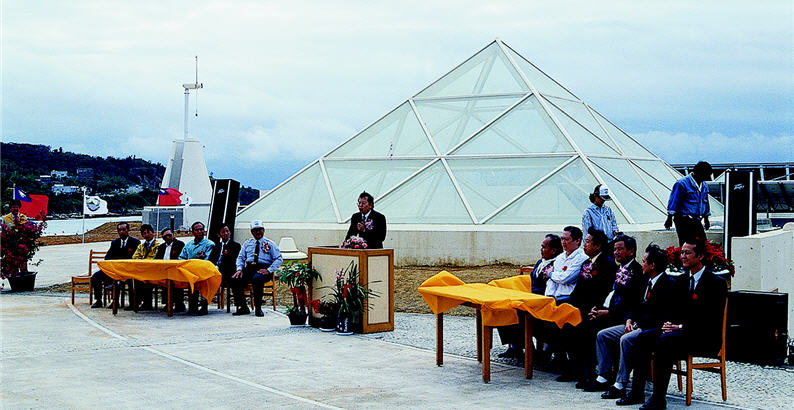
- upper: Jun. 24, 1992. Official commissioning of Siaowan Tourist Information Center. / Photo provided by KNPH
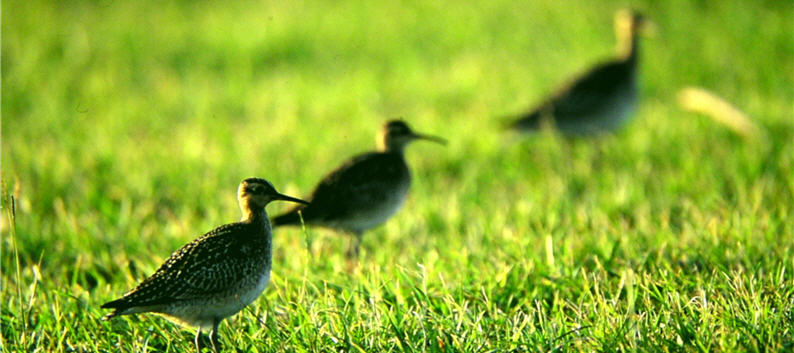
- lower: There are many species in Kenting area.KTNPH expects our nationals to advance in conservation and work harder to protect the natural environment. / Photo provided by KTNPH, taken by Bai-jyun Cai, Ching-hwa Wang, Jin-rong Syu
Inteview & Text/ Zih-ying Chen, Hsin-hua Lian
Translator/ Chunyi Cheng
Special thanks to Technican Yi-rong Cai and Ms. Chiung-yao Lin, Kenting National Park Headquarters
Photo provided/ Kenting National Park Headquarters
Translator/ Chunyi Cheng
Special thanks to Technican Yi-rong Cai and Ms. Chiung-yao Lin, Kenting National Park Headquarters
Photo provided/ Kenting National Park Headquarters
He says that he used to receive many postcards addressing him as “Robin Hood.” Without any info about the sender, the postcards shared personal travel notes in different countries. He did not know who the sender was but started to expect more postcards from other countries addressed to “Robin Hood.”
It turned out to be a tourist who once visited Kenting and was touched by Cai’s interpretations and thus decided to send travel notes from different places to Cai in Kenting.
“Experienced as I am, I still feel stressed every time I do interpreting. But positive feedbacks from tourists let me know that my interpretations were well heard.”
Interpreting Not Just a Job but a Mission
As enthusiastic about ecology as Cai, Ms. Chiung-yao Lin, who has worked for KNP for 23 years, truly loves Hengchun, her hometown. She could understand why people were against the idea of conservation and she empathized and communicated with the locals. “I don’t look at my job as a rigid task.
I was communicating with the residents out of the desire to ’make our hometown better,’” She said. With the trainings available at KNPH, people not only learned about only localized development but also had the opportunity to participate in professional conservation investigation.”
Lin is also an excellent interpreter. Her friendly intonation makes tourists listen. She also writes and her works often appears in guidebooks and photo albums. A modest person, she sees interpreting as a beneficial job that helps her learn how to respond, think, and listen to others.
It turned out to be a tourist who once visited Kenting and was touched by Cai’s interpretations and thus decided to send travel notes from different places to Cai in Kenting.
“Experienced as I am, I still feel stressed every time I do interpreting. But positive feedbacks from tourists let me know that my interpretations were well heard.”
Interpreting Not Just a Job but a Mission
As enthusiastic about ecology as Cai, Ms. Chiung-yao Lin, who has worked for KNP for 23 years, truly loves Hengchun, her hometown. She could understand why people were against the idea of conservation and she empathized and communicated with the locals. “I don’t look at my job as a rigid task.
I was communicating with the residents out of the desire to ’make our hometown better,’” She said. With the trainings available at KNPH, people not only learned about only localized development but also had the opportunity to participate in professional conservation investigation.”
Lin is also an excellent interpreter. Her friendly intonation makes tourists listen. She also writes and her works often appears in guidebooks and photo albums. A modest person, she sees interpreting as a beneficial job that helps her learn how to respond, think, and listen to others.
To many people, interpreting seems an easy task. Lin disagrees and quotes Director-General Yi-hou Lin of Construction and Planning Agency: “An interpreter is like a pilot, who looks decent to others while on the ground, but once onboard the plane he has to take charge of professional yet difficult tasks, including takeoff and landing, which is beyond the perception of those looking up at them from the ground.”
Plum Blossoms All over the Tropical Area
In Jan. 2009, KNP celebrated its 25th anniversary through all sorts of presentations, seminars and activities to promote public awareness of the value of natural resources.
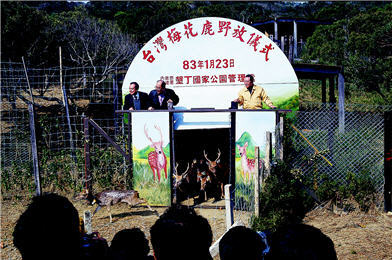
Among the events, the most noticeable is the free-ranging of Formosan sika deer (Cervus nippon taiouanus). To preserve this extinctive and exclusive breed of deer in Taiwan, the late Prof. Su-shan Gan emphasized the importance of the restoration of the deer.
KNPH has been restoring and free–ranging the deer since 1984, with only a few appearing during the early years. In 2007, one Formosan sika deer was spotted and caught on tape at Long-luan Lake. Now flocks of the deer can be seen everywhere in Sheding. It is the best reward for the efforts devoted to conservation.
The revitalization of Formosan sika deer is only one example. There are still many other precious natural assets that need to be protected by all of us. 25 years have passed but Kenting National Park remains strong and strides steadily for the next destination. Whatever the challenges may be, this glorious cape will carry the lasting dream for all Taiwanese.
KNPH hopes to see your efforts in conservation in the next 25 years and the next, and the next.
Plum Blossoms All over the Tropical Area
In Jan. 2009, KNP celebrated its 25th anniversary through all sorts of presentations, seminars and activities to promote public awareness of the value of natural resources.
Among the events, the most noticeable is the free-ranging of Formosan sika deer (Cervus nippon taiouanus). To preserve this extinctive and exclusive breed of deer in Taiwan, the late Prof. Su-shan Gan emphasized the importance of the restoration of the deer.
KNPH has been restoring and free–ranging the deer since 1984, with only a few appearing during the early years. In 2007, one Formosan sika deer was spotted and caught on tape at Long-luan Lake. Now flocks of the deer can be seen everywhere in Sheding. It is the best reward for the efforts devoted to conservation.
The revitalization of Formosan sika deer is only one example. There are still many other precious natural assets that need to be protected by all of us. 25 years have passed but Kenting National Park remains strong and strides steadily for the next destination. Whatever the challenges may be, this glorious cape will carry the lasting dream for all Taiwanese.
KNPH hopes to see your efforts in conservation in the next 25 years and the next, and the next.
He had served in the Interpretation and Education Section of KNPH since summer 1985 till fall 2001, when he was transferred to Conservation Research Section.
He had presented or published 8 articles on birds since 1985 in domestic, cross-strait, and Asian seminars and periodicals. He has also been a daily news writer on KNPH, WBSP and Kt.Eagle websites over 10 years.
She has served in the Interpretation and Education Section of KNPH since summer 1986.
Her publications include Invitation from the Mountain and the Sea (KNPH), Langchio History (PingTung Sisal culture and education development association), The Peninsula: Then and Now (KTNPH).
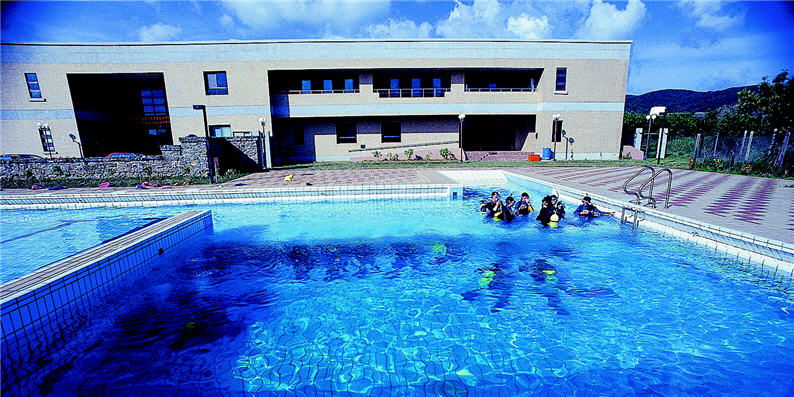
- upper: Jan. 1, 1992. Official commissioning of Nanwan Recreation Area./ Photo provided by KNPH
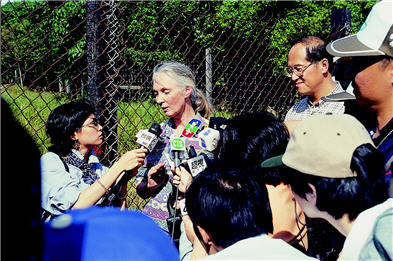
- center left: Oct. 2, 1997. Dr. Jane Goodall, mother of chimpanzee conservation visited Kenting./ Photo provided by KNPH
- center right: Jan. 23, 1994. The First free-ranging of Formosan sika deer./ Photo provided by KNPH


