
The Battle between Formosan Alder and Leaf Beetle-Keeping Tabs on Formosan Alder in Tataka Area in Yushan National Park
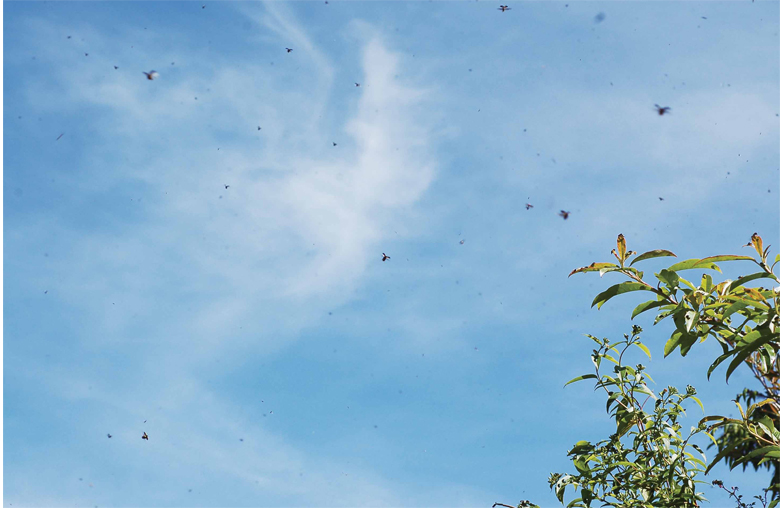
With years of service in Yushan National Park, I have been quite acquainted with the landscapes and life forms in the park. But in the Nature, changes could come up so fast that climate change, human activities, selfevolution of animals and plants, abnormalities in the Nature, when ignored or taken lightly, would lead to uncontrollable outcomes. The year 2008 has witnessed an ecological battle between the Formosan Alder and the Formosan Alder Leaf Beetle in Tataka area. What lesson can people learn from it through investigation?
The Crisis of Formosan Alder
Formosan Alder (Alnus formosana) is a member of the Alnus genus of the Betulaceae family. Native to Taiwan, the alders form the most dominant deciduous pure forests throughout mid-altitude mountains on the island. With the characteristics of being light-demanding and highly adaptable to harsh environments, they especially like to grow on sun-facing slopes of riverbeds and along newly built highways. They could be grown as ornamental trees; be used for windbreak, afforestation, and papermaking; as well as be medicinal, treating bleeding in a trauma and clearing the body’s internal heat.
Formosan Alder is seldom regarded as a precious wood used in Taiwan, but it widely contributes to soil stabilization on barren and collapsed lands. Soon after Typhoon Morakot ravaged Taiwan, Formosan Alder silently covered up the devastated area and helped with land restoration.
The alders have upright trunks reaching a maximum of 20 m with fuscous tree barks, often exfoliating when they age, and have rhizobia in root nodules. Their leaves are alternate with serrated margin in ovate or oblong shapes, about ten cm long. Their flowersare unisexual and monoecious, with male catkins and dark-red female spikes. Their cone-shaped fruits are developed from the whole pistillate inflorescence, two cm in length, with compressed and winged nutlets. They are widely distributed along New Central Cross-Island Highway from 112k to Tataka area.
- upper:The battle between Formosan Alders and Formosan Alder Leaf Beetles could serve as a lesson for humans to learn to cherish the Nature.
Text & Photo/ Bagkall Haivangang
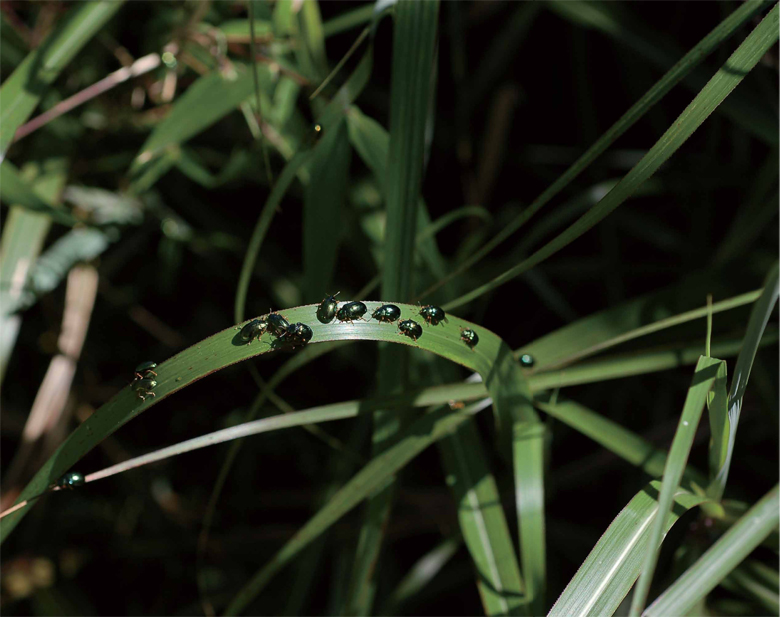
In early May, 2008, I noticed abnormal leaf loss at Tataka area in Yushan National Park (YSNP). Plants around that area were not supposed to shed astonishingly many leaves in May. After observing the trunks and the location nearby, I reckoned the trees were Formosan Alder. Seeing their leaves wither in a season which they were supposed to be luxuriantly green, I was very concerned.
Monitoring on the Threat
Leaves on the ground and on the fences were covered with countless wriggling bugs. Whenever the wind blew, numerous bugs on the trees fell onto me. I immediately took pictures of the leaf veins, the only leftover after the bugs’ feast, reported to YSNP Headquarters, consulted academics in this field, and requested Forestry Research Institute for an evaluation of possible impacts.Keeping Tabs on Leaf Beetle.
Soon it was confirmed that the culprit was Formosan Alder Leaf Beetle (Linaeidea formosana) . In response, we continued monitoring the damage caused on the Formosan Alder, and systematically collecting data on forest litterfall, including fallen leaves, every two weeks. We also checked with mountaineers to figure out the ranges and areas possibly inflicted by the Leaf Beetle: Tataka area (including New Central Cross-Island Highway), Nanzihsian River area, Shalisian River area, the east side and valley of Mt. Jade
West Peak, Chenyoulan River area, Shenmu River area, Alishan Highway, Mt. Nanhu area, and Mt. Hehuan area.
Keeping Tabs on Leaf Beetle
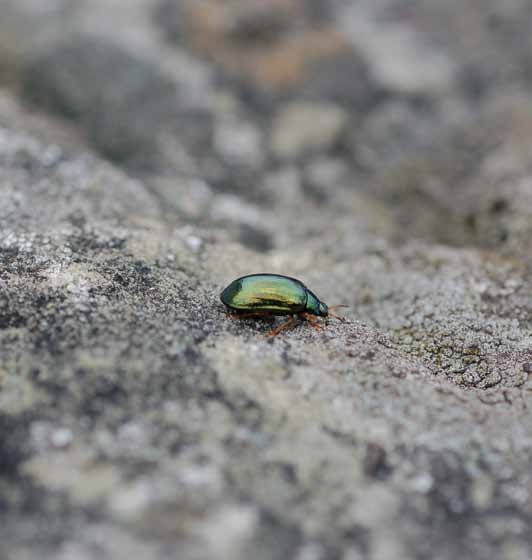
Formosan Alder Leaf Beetle is one of the major pests of Formosan Alder, with its larva and imago both feeding on new leaves and buds of the alders. Especially in nursery gardens, almost all leaves would suffer. The adult beetle comes in elliptic shape with beautiful shiny green color on the back. The beetle’s body is averagely 6.3 mm long for the male and 7.7 mm for the female. In a lifespan of about one month, the beetles show strong proliferation capability that a single female may lay 170 to 270 eggs during her lifetime.
Around mid-May 2008, such havoc had spread from the original range of 119k to 132k of Provincial Highway No. 21 in YSNP to further north of 138k, mostly in landslide areas. Even the roads, the walls, and the vegetation cover below the trees were occupied by the beetles. The alder’s leaves had turned brown and were falling in large quantities. Some of the trunks had also begun to wither. By the end of May, the beetles’ sphere of influence had expanded farther to 114k at lower altitude, 140k at higher altitude, and Tataka area.
- upper left :The Formosan Alder Leaf Beetles on the Formosan Alder.
- upper right:The adult Formosan Alder Leaf Beetle is elliptic in shape with a shiny color.
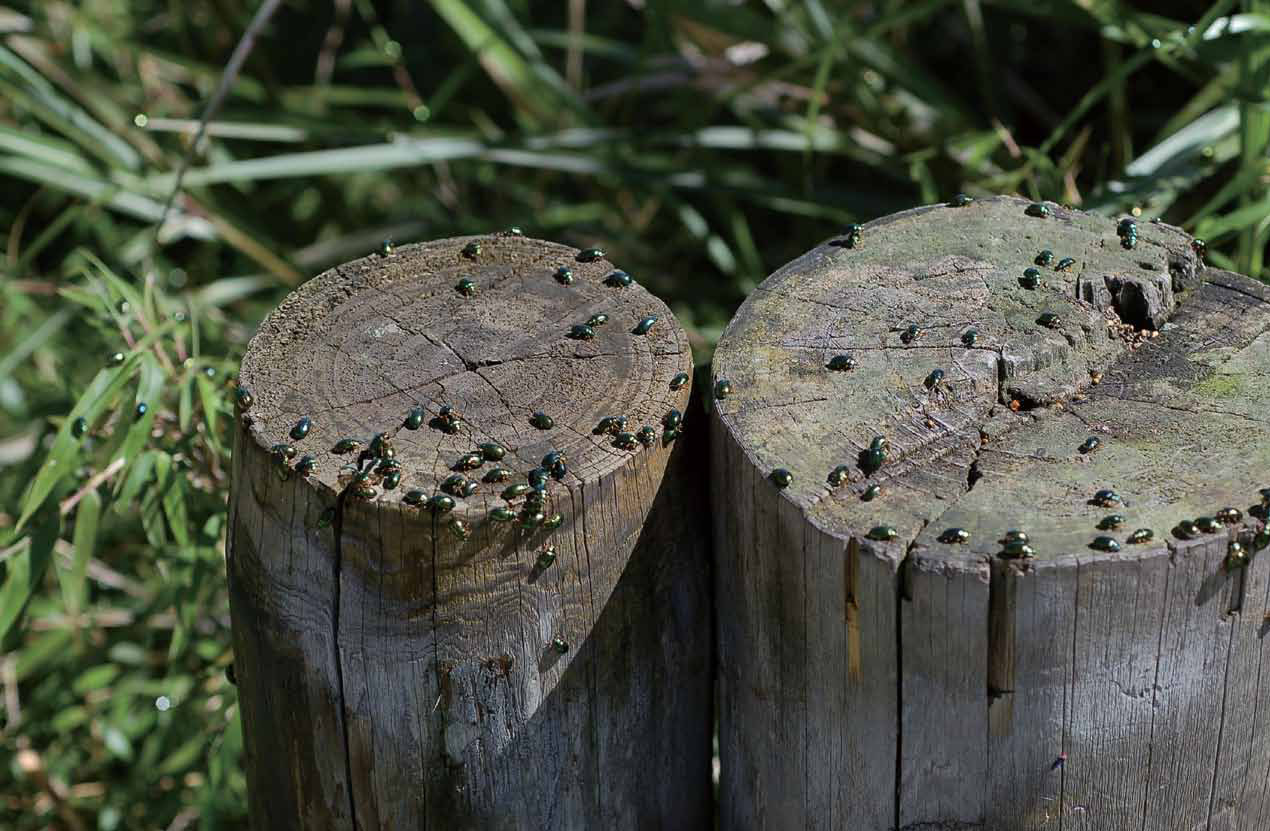
In June 2008, the whole mountain areas were ravaged by the beetles, including all the way along New Central Cross-Island Highway, Alishan Highway, and the drainage basins of Chenyoulan River, Nanzihsian River, and Shenmu River. The damage was much severer than my expectation. Fortunately, the number of sprouts of the alders seemed to be rising, and no other tree species were affected.
In July 2008, the Alder trees from 119k of New Central Cross-Island Highway to Tataka Recreation Area had been gradually recovering and were no longer withering or losing leaves. The trees eventually gained victory over the beetles in this battle.
I have been keeping observing the growth of the alders along the highway since 2008. The beetles are still present, but fortunately, beetle outbreak and abnormal leaf loss have never occurred again. Today, the alders along the highway are mostly dense and exuberant. Their vigorous vitality not only stabilizes the soil, but also preserves the whole forests and mountains, so the animals can live in peace.
Rule of Thumb: Cherish the Nature
Formosan Alder is a pioneer species that can easily grow on reclaimed lands or collapsed lands, and along highways. In primitive age, the alders were commonly used by
men in their daily lives to make fire, construct houses, fertilize soil, feed animals, and build bridges.
The survival of the alders has never been threatened; hence people always deem them as symbols of eternality and perseverance. This threat posed by the beetles indicates that things constantly change, and phenomena in the Nature do not follow absolute principles or rules.
A small observation of abnormal leaf loss in the beginning led to the unveiling of a leaf beetle outbreak from one highway to wherever the alders grew. Men usually assume that whatever happens, everything could be under control. As a result, men focus on looking toward the future, but overlooking the significance of small things that are taken for granted in everyday life.
If this simple phenomenon of fallen leaves had been ignored, the threat posed by the bugs might not have been identified in a timely manner and nor could the best solution have been provided to the park headquarters in effective ecological management.Once the most unexpected things happen, men could only surrender. The real meaning of cherishing the Nature does not begin when the environment is being destroyed or the species are endangered. By paying attention to every detail in life, we'll discover how treasurable the Earth truly is.


Bagkall Haivangang
With a Chinese name Hong-de Cyuan, he is currently the Chief of Tourism and Recreation Section in YSNP Headquarters, the very first aborigine serving this position in Taiwan’s national parks. He earned his Master’s degree from the Institute of Ecology of Providence University. He had conducted research in 2007 on the vegetation of Tataka Recreation Area, participated in the 3rd Conference of International Aboriginal Culture and Biodiversity, and directed the research project of Bunun ethnobotany of the Forestry Bureau. In 2007, his review paper on“ Education of Taiwanese Aborigines” drew wide attention in the media and in the UN.
- upper:Formosan Alder Leaf Beetles had turned into a threat to the survival of Formosan Alders.


