
About Our Ocean and Coasts-
About OurOcean and Coasts
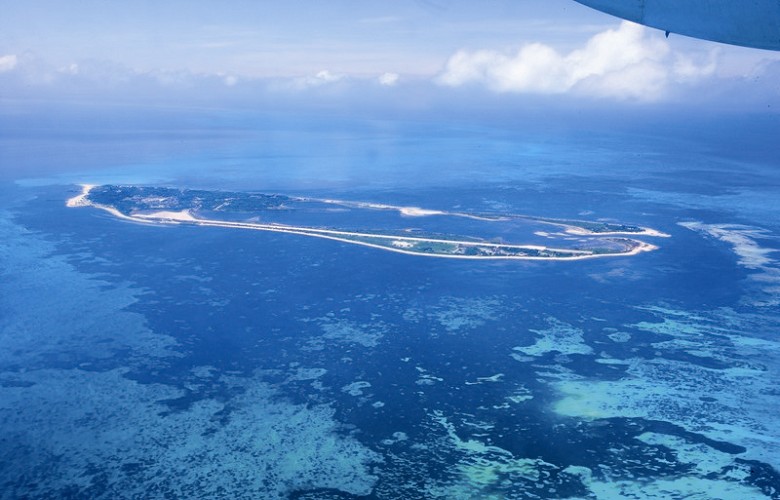
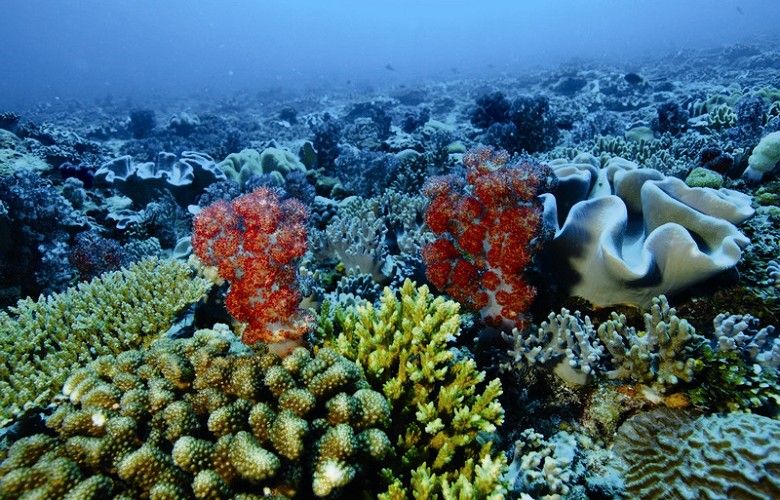
Overseeing the Dongsha Island in the vicinity of SouthChina Sea from above, you may find the sweeping,extensive dark green coral reefs in the seabed underneaththe clear, emerald seawaters. Coral thrives in clearseawaters with temperatures around 22~28ºC, and theDongsha Islands meet this requirement. Since there is awide variety of living organisms in the coral reef ecosystem,the ecosystem is hailed as the rainforest of the ocean.
Yet in 1998, both the El Nino phenomenon and globalwarming had contributed to an increase of 1~2ºC aroundthe western sea of Taiwan. At that time, a good number ofplaces across the globe witnessed the coral whitening anddying phenomenon, to which the corals of the Dongshacoastal areas, atolls, and lagoons are no exception. Withthe urgent appeal of scholars, Dongsha Atoll National Parkwas established in 2007 to protect the precious coral reefecosystem and beautiful marine sights in the neighboringsea areas.
The life of coral immensely impacts the life or death ofmany other living organisms. The temperature of thesea water is a key factor in determining whether coralwill maintain an energetic colorful forest or become awithering white forest.
Bleaching Rainforest of the Ocean
Seawaters flow across geographical regions and the marineecosystem; therefore, people shall view the phenomenonof global warming from macro-observation. Marine lifeis inclined to have lower tolerance to the fluctuation oftemperatures than the terrestrial life. Dai Chang-Feng,director of the Institute of Oceanography, National TaiwanUniversity said that the scope of temperatures of the landranges from below Celsius to nearly 50ºC, whereas thetemperatures of seawaters ranges from 0ºC to a little above30ºC, which manifests a higher stability of the ocean, andexplains why the marine life find it difficult to adjust to aslight change of sea water temperatures.
This is why the rise of 1~2ºC in 1998 means a fatal changeto marine life, and the coral along Kenting, Orchid Island,Green Island, Penghu, and Little Liuqiu had been seen ableaching epidemic, while roughly 500 square kilometers’of coral around the Dongsha’s Atolls (within a diameterof 25 kilometers) were dying. As the colors of coralscome from zoothanthellae, the number of zoothanthellaereduced due to the rise of seawater temperature or watercontamination, indirectly leading to the coral bleaching. If the environment continues to deteriorate, then all of thecoral will die, and the marine life living around the coralreefs will be uprooted as a result.
Because atolls are a comparatively closed system, and thesource of coral larvae are rare, this coupled with mankind’sinterference means its recovery can be slower. DongshaInternational Marine Research Station, an institutionexpected to be set up on the Dongsha Islands, withprofessional facilities to cultivate coral, will transfer thenewly developed coral to those coral reefs that have beendestroyed or maimed, and help revive them.
Outside of restoration by human endeavors, can coralmigrate toward suitable temperatures like terrestrialanimals? Experts have discovered the corals of Taiwan’s seaareas are moving north by roughly 1,000 km. For instance,the Pavona cactus, which was located as north as Yehliuhas now moved to Wakayama sea areas in Japan. If themigration is affected by global warming, it will need longtimemonitoring and research; yet Dai Chang-Feng saidthat the fact that the increase of seawater temperature leadsto coral bleaching is indisputable.
- upper:Dongsha Atoll / Marine National Park Headquarter
- lower:Colorful Dongsha Atoll / Marine National Park Headquarters
Article: Wu Li-Ping
Living in the Acidifying Seawaters
Acidification is another key factor affecting the life ofcoral. According to the survey conducted by scientists,a total of 30 million tons of CO2 can be absorbed byseawater around the world everyday. As seawater interactswith CO2, it produces carbon acids before dissolvinginto hydrogen ion and lowering pH value. Over thepast two centuries, the acid level of seawater has risenby 30%, marking a pinnacle in the last 55 millionyears. Acidification will cause the decrease of calciumcarbonate, a component constituted coral reefs. Sincethe 3-dimensional structure formed by coral groups isthe best haven for a great number of small living things;once coral begins to die, the entire ecosystem is facingcollapse too. And all kinds of fish, poriferan, coelenterate,mollusk, and crustacean and so forth, will be greatlyaffected. Acidification will do harm to the shrimp andshells, preventing the shells from functioning properly, andfurthermore influencing the marine system.
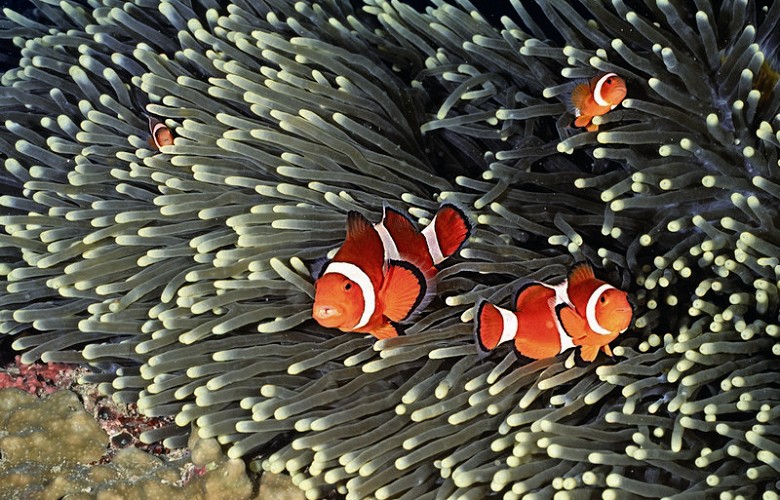
Clown fish, which live round the coral reef, have beenfound by the research fellows of the University of Cumbriato be nearing extinction as the result of illegal capturing and the excessive warming of seawater. This has also causedsudden deaths among the clown fish and sea anemonesthat coexist with them. Another finding indicates thatacidifying waters might damage the hearing of clownfish, which prevents them from responding to the soundsof their enemies, and become prey more often than everbefore.
Just as the prospect for clown fish seem dim, the migrationroute for mullets has changed as well. Around wintersolstice every year, swarms of mullets swim south fromthe Yangzi River’s mouth along the cold continent tothe seawaters of Southern Taiwan, where cold currentsand warm currents meet, to spawn. In the past fewyears, however, mullets swimming after ocean currentsstopped around Northern or Central Taiwan. Somescholars blamed this to a change of oceanic currents afterseawater warming, while Dai Chang-Feng considered awide array of other factors. The number of living thingsthat would be affected, or even put to extinction, outsideof the increase of temperature in seawaters, should beput into consideration; hence, at least ten years of longtermmonitoring and research will be needed in order to identify the culprits.
- upper:Amphiprion clarkia / Dongsha Atoll National Park Headquarters
Article: Wu Li-Ping
Migration Route Cannot Be Interrupted
Outside of inhabited corals or migrating mullets, manyspecies have had to migrate under the influence ofenvironmental changes. Compared to land areas, sea areasof Taiwan have unique geographic attributes, such asconcurrence of cold/warm currents, and cold flows maydecrease the water temperature to some extent. Thus,facing a future where global warming has started, it mightnot be necessarily detrimental if the migration of route isnot stopped abruptly.
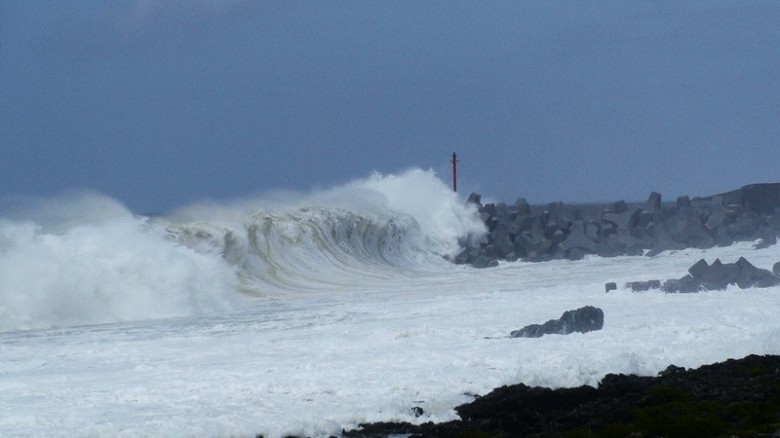
Human activity around the coastal areas greatly impedesthe migration of other animals. When the oceans receivethe melting ice water from poles and high mountains,especially from the expanse of Antarctic Ice Sheet, greatamounts of melted ice will lead to the increase in sea levelsand an expansion of sea areas over the world. Some peoplemight argue that the expansion of sea areas is an advantageto marine life, but Prof. Lee Ling-Ling said that the effectsof the increased sea level will not be as simple as we usedto imagine. As the levels of seawaters are elevating, thearchitectures and concrete blocks installed at coastal areaswill sink below sea levels and therefore become hindrancesto marine life.
Dai Chang-Feng said “the levels of seawaters are elevating,seawaters begin to erode coastal areas and the environmentof coastal habitats will undergo a massive changeaccordingly. At that time, lagoons will not be lagoonsanymore, and a sandy seabed won’t be a sandy seabedeither, which will lead to the disappearance of marine life”.
Migration routes might be interrupted by the effects brought by sea-level rise, and all humans can do is reducecarbon emissions to mitigate the speed of global warming.In the meantime, decreasing or forbidding any humanactivities in protected areas will be a key factor to facilitatemigration routes for wild life.
“If we can shoulder our responsibility and protectthe habitats well, then coral reefs may have suitableenvironment to grow, and Taiwan might have a goodchance of becoming a research center for coral study oneday.” Dai Chang-Feng said that as the sea temperaturesrise, the coral in Southern Taiwan will migrate north, andcoral from Indonesia may migrate to Southern Taiwan.If the migration route is not cut off, then there may be awider array of coral in Taiwan’s sea areas.
The executive authorities have everything to do withhabitat protection. Take Great Barrier Reef as an example.As one of the most important legacies in the world,originally only 4.6% was classified as no take zone. In2004, the Australian government sensed the significanceof protection and conservation, related laws were passedand the protective scope was expanded to 33.3% andships were severely forbidden to pass through this fragileecosystem.
The stones of those hills may be transformed into polishedgems. With abundant marine resources, Taiwan will facean ecosystem’s catastrophe or be elevated to a researchcenter of coral study in the future. It all depends on ourmindset and actions.
- upper:Concrete blocks along the coastline / Kenting National Park Headquarters
Article: Wu Li-Ping


