Derict to middle content area:::

:::



An Overlooked but Vital Part of the Natural World-Taijiang wetlands connect the world
Water is the reason that Earth alone among the planets is the abode of life. Only where there is water can there be life. After billions of years of evolution, Earth has transformed into a vibrant world brimming with life. Human civilization emerged where there was water, along Egypt's Nile, in the Fertile Crescent between the rivers of Mesopotamia, along India's Indus River, and along the Yellow River and Yangtze River of China.
Throughout history, natural resources, culture, and traditional industries forming the basis of people's livelihoods have been intimately connected with wetlands. Even today, the world's great cities have grown up near rivers, such as London's River Thames, Paris' Seine River, Vienna's Danube River, and Taipei's Danshui River. Wetlands are sources of water, and of life; life and civilization inevitably grow up around wetlands. A "wetscape" comprises a type of scenery that is quite different from landscape or a seascape.
Throughout history, natural resources, culture, and traditional industries forming the basis of people's livelihoods have been intimately connected with wetlands. Even today, the world's great cities have grown up near rivers, such as London's River Thames, Paris' Seine River, Vienna's Danube River, and Taipei's Danshui River. Wetlands are sources of water, and of life; life and civilization inevitably grow up around wetlands. A "wetscape" comprises a type of scenery that is quite different from landscape or a seascape.
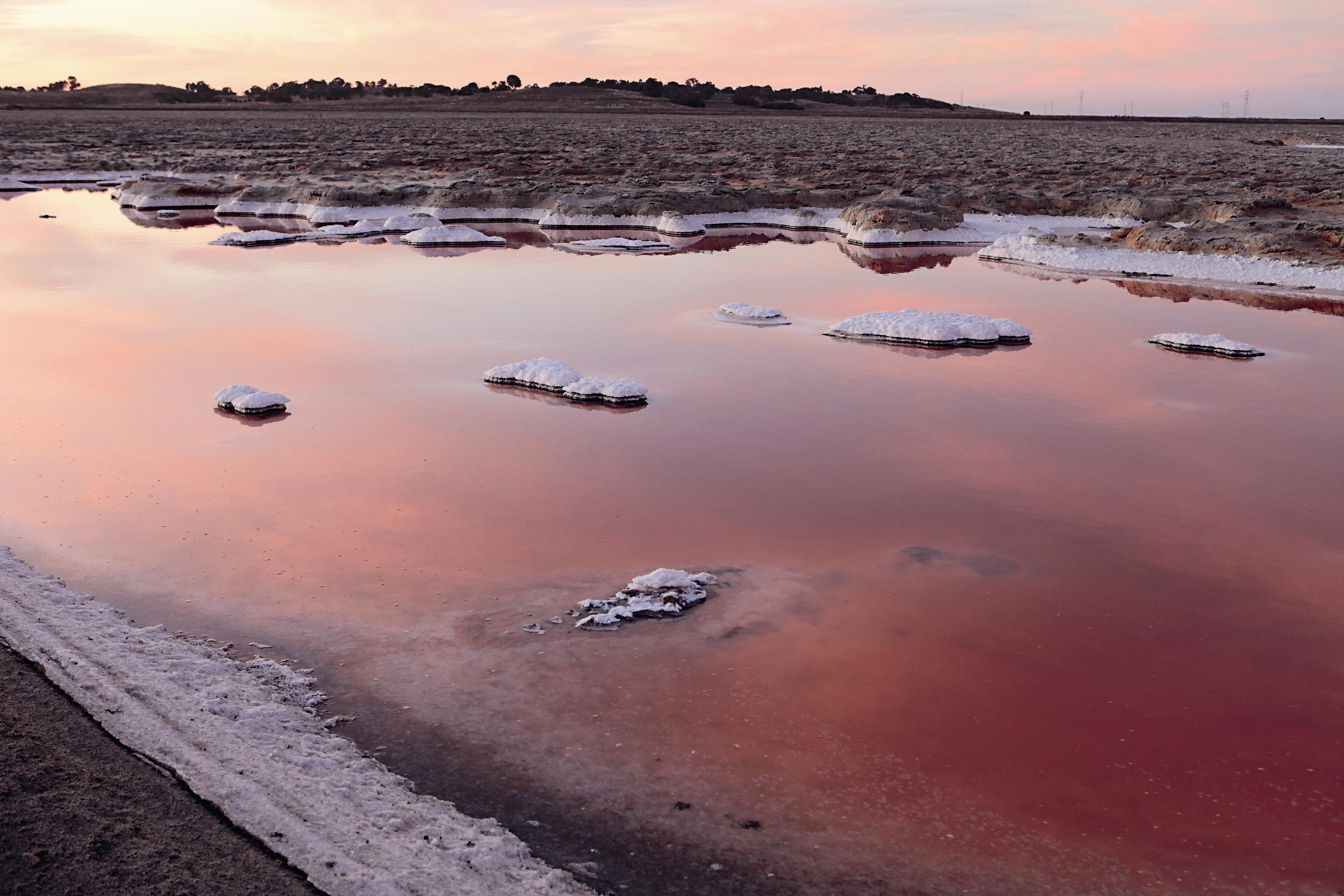
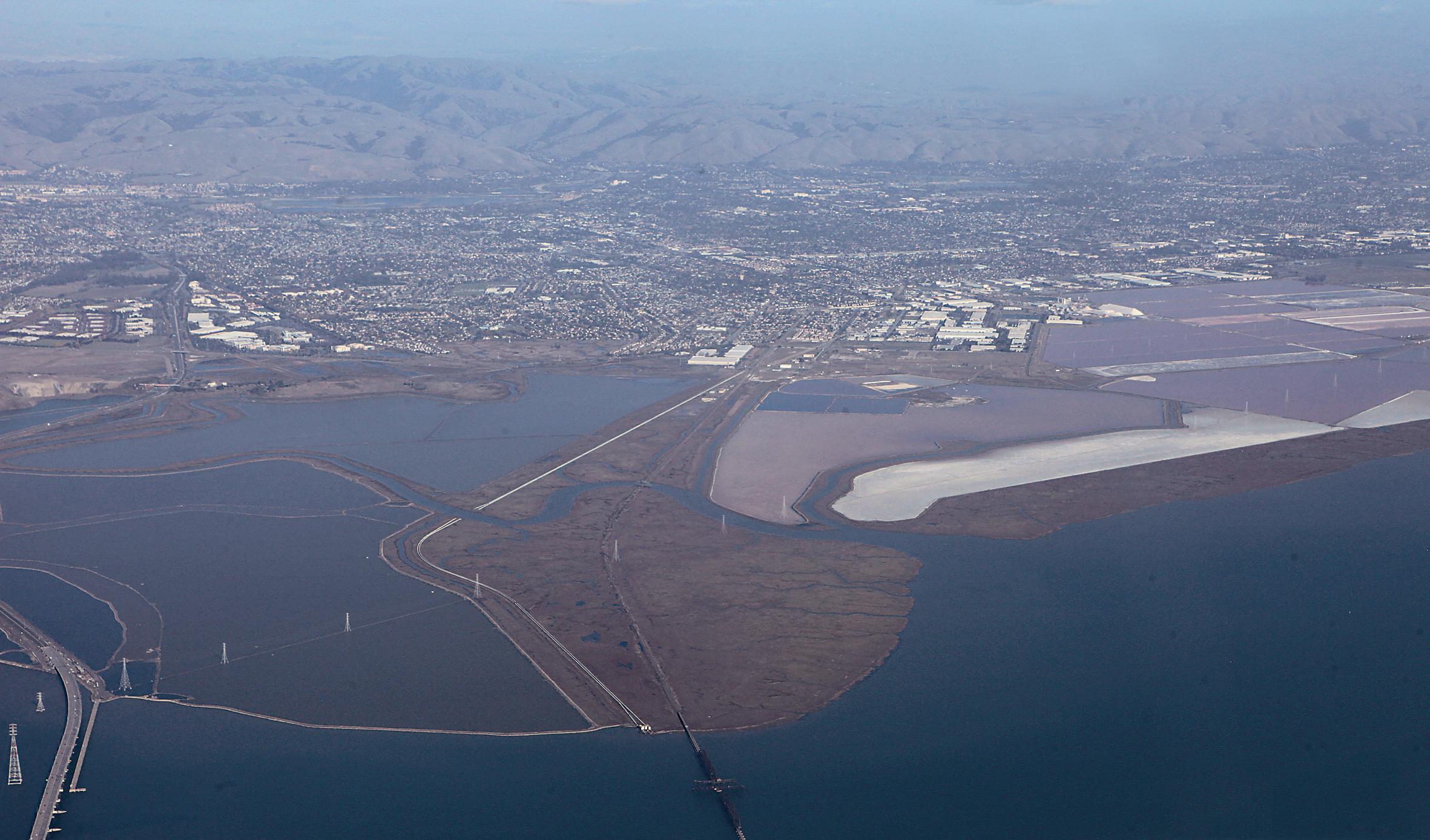
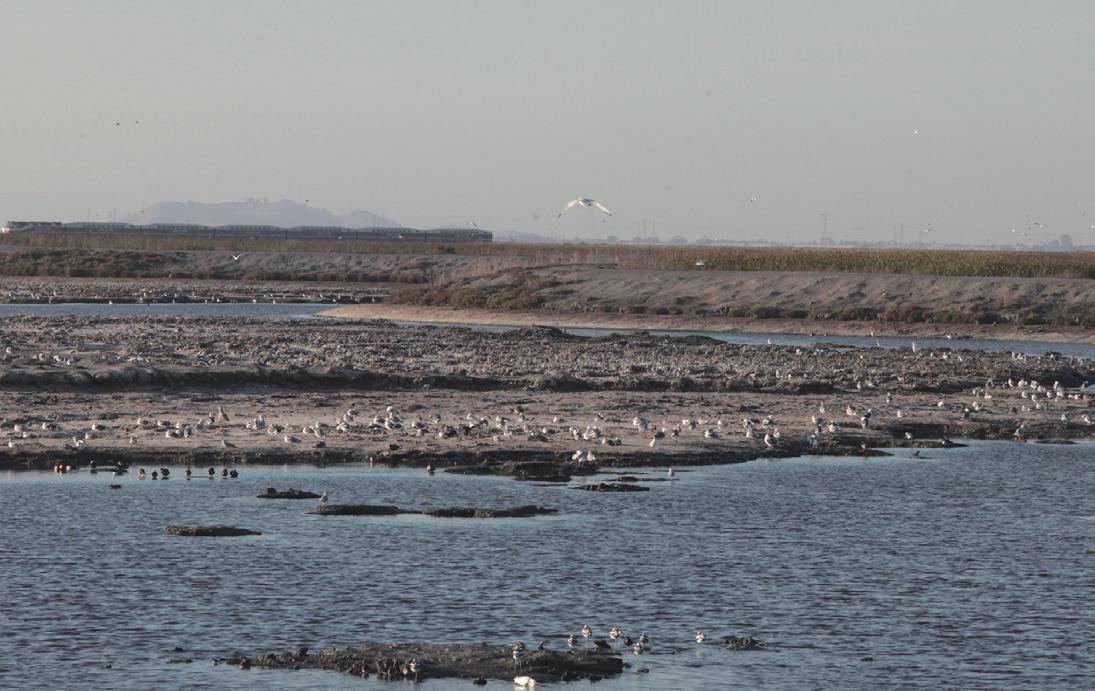
- The use of water gates has restored the salt fields of San Francisco Bay to salt marshes providing an important wildlife habitat.
The world's wetlands and wetlandsconservation
The world has approximately 514 million hectares of wetlands, which account for roughly 6% of the world's land area. But although mankind has long depended on wetlands, many kinds of human actions have also done great harm to wetlands.
Ramsar Convention, signed by 23 countries on February 2, 1971 in Ramsar, Iran, required signatories to draft conservation policies and conservation plans, perform research surveys, and engage in international cooperation to protect wetlands. Afterwards, UNESCO supervised the implementation of this convention. At that time, some developed "advanced" countries did not sign the Convention, including the Republic of China, which was then struggling to retain its UN seat. To date, 168 countries have signed the Ramsar Convention, 2,161 wetlands have been listed as "Ramsar sites" under the Convention, and February 2 has been designated World Wetlands Day.
The ultimate goal of Ramsar Convention is to protect important wetlands worldwide, develop an international wetlands network, protect the integrity and normal functioning of wetlands ecosystems, conserve global biodiversity, and help maintain human survival. The signatories to the Ramsar Convention have three main duties: maintaining "enlightened use" of wetlands, designate and protect at least one internationally-important wetland area, and engage in international cooperation.
The world has approximately 514 million hectares of wetlands, which account for roughly 6% of the world's land area. But although mankind has long depended on wetlands, many kinds of human actions have also done great harm to wetlands.
Ramsar Convention, signed by 23 countries on February 2, 1971 in Ramsar, Iran, required signatories to draft conservation policies and conservation plans, perform research surveys, and engage in international cooperation to protect wetlands. Afterwards, UNESCO supervised the implementation of this convention. At that time, some developed "advanced" countries did not sign the Convention, including the Republic of China, which was then struggling to retain its UN seat. To date, 168 countries have signed the Ramsar Convention, 2,161 wetlands have been listed as "Ramsar sites" under the Convention, and February 2 has been designated World Wetlands Day.
The ultimate goal of Ramsar Convention is to protect important wetlands worldwide, develop an international wetlands network, protect the integrity and normal functioning of wetlands ecosystems, conserve global biodiversity, and help maintain human survival. The signatories to the Ramsar Convention have three main duties: maintaining "enlightened use" of wetlands, designate and protect at least one internationally-important wetland area, and engage in international cooperation.
- left:Wetlands are a projection of our future, and clean and unspoiled wetlands are the sign of wise management.
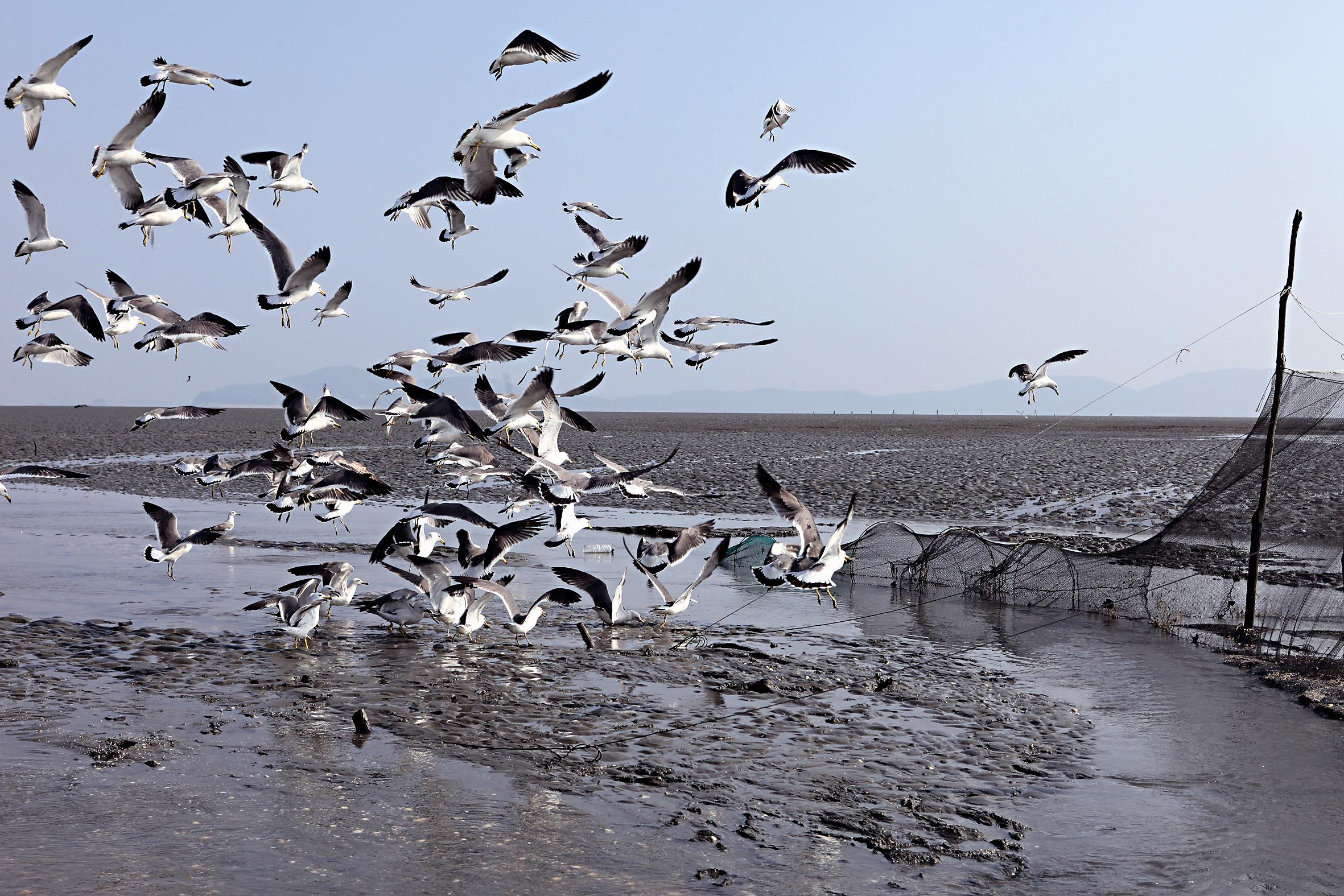
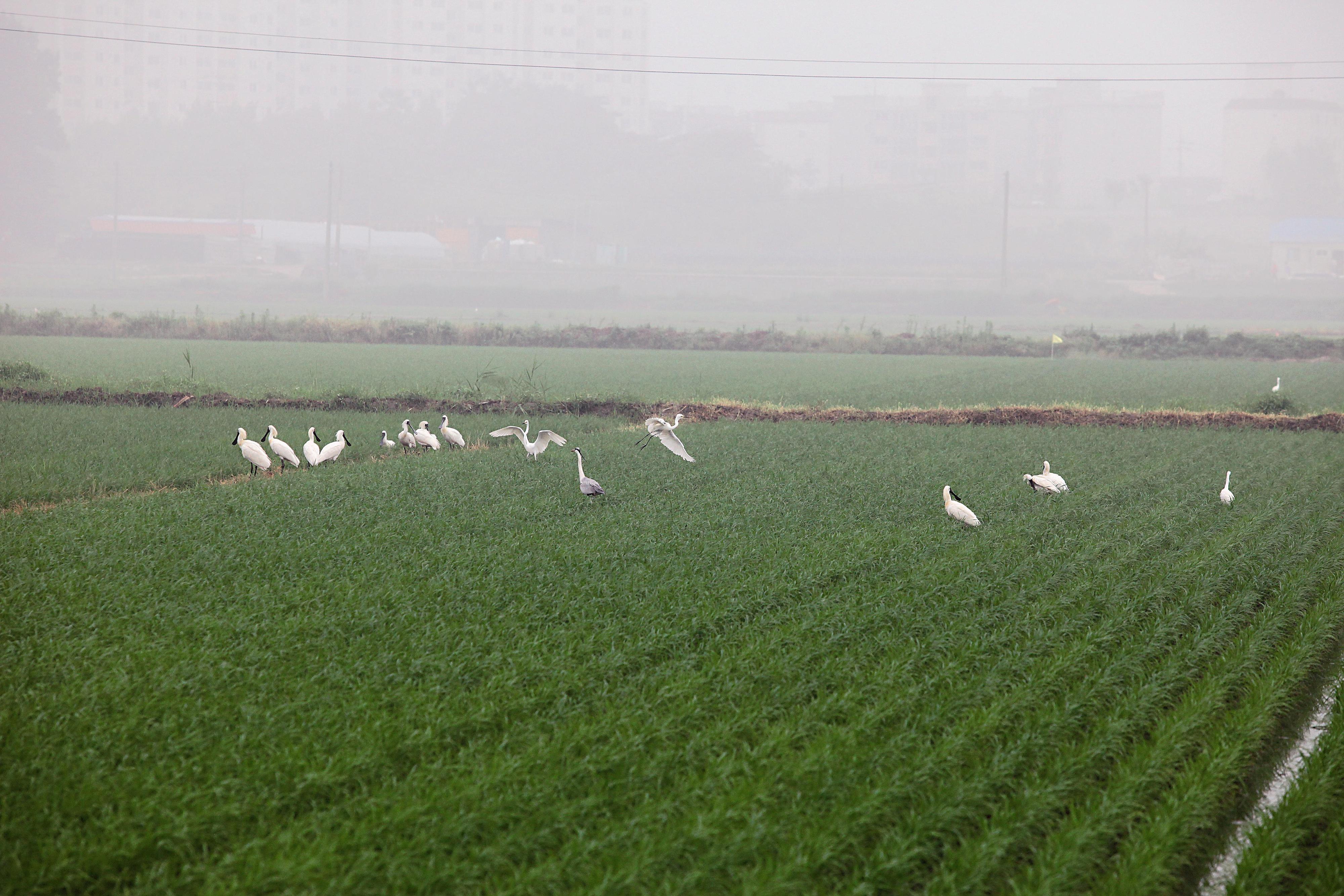
- right:Korea's Ganghwa Island has a large intertidal zone, and a flourishing ecotourism industry brings visitors to see the area's Black-faced Spoonbills. Ganghwa Island has established a cooperative relationship with Taijiang National Park.
Taiwan's wetlands
Although Taiwan withdrew from the UN in 1971 due to political factors, and has not signed the Ramsar Convention, it has put great effort into wetlands conservation work. Because wetlands have no clearly defined boundaries with aquatic and terrestrial areas, and because different branches of science have focused on different areas of wetlands research, there have always been different definitions of what comprises wetlands.
Ramsar Convention employs a broad definition of wetlands, which include marshes, damp areas, bogs, and aquatic areas that may be either natural or manmade, permanent or temporary, have stagnant or flowing water, and contain freshwater, brackish water, or saline water. This definition includes aquatic areas where the water depth does not exceed 6 meters at low tide. The definition includes narrowly-defined wetlands, and facilitates theprotection and management of areas constituting narrowly-defined wetlands and nearby aquatic and terrestrial areas.
Starting from 2006, Urban and Rural Development Branch, Construction & Planning Agency, Ministry of the Interior designated 75 nationally-important wetlands after a process consisting of several rounds of assessment and communication meetings. This has now been increased to 83 wetlands. These wetlands, which occupy a total of 56,860 hectares, are classified into three classes: 2 "international wetlands," 40 "national wetlands," and 41 "supranational regional wetlands."
Apart from the inclusion of various types of protected zones originally constituting wetlands, including wildlife preserves, nature reserves, important wildlife habitat, and forest reserves designated by the Council of Agriculture, and national parks designated by the Ministry of the Interior, the national wetlands extend the scope of protection to even more wetlands environment in originally non-protected areas. Apart from these nationally-important wetlands, Taiwan's paddy fields comprise the largest seasonal wetlands by area, and account for roughly 400,000 hectares; furthermore, salt-water and freshwater fish ponds account for approximately 40,000 hectares, and constitute wetlands with aquatic ecological environments.
The“National Parks and Green Network Conference-Towards ‘Green’ Taiwan”held in December 2007 issued a Taiwan wetlands conservation manifesto explaining the state of Taiwan's wetlands at that time: "We regarded natural wetlands as barren wilderness in the past, and subjected them to wanton misuse or abuse. Whenever there was a need for development, weunscrupulously filled or destroyed wetlands, causing countless wetlands in Taiwan to be destroyed, contaminated, or hydrologically ruined, with their living creatures left homeless.
As a result, the overall functions of Taiwan's wetlands were gradually degraded, weakened, and even deteriorated to an irretrievable state. In the face global wetlands conservation and climate change trends, Taiwan cannot stand on the sidelines, and must do its part for wetlands conservation and restoration. We must actively conserve wildlife in accordance with the Fundamental Environmental Protection Act, ensure biodiversity, and protect forest, lagoon, and wetlands environments, maintaining a diverse natural environment."
Thanks to the concerted efforts of government, academic institutions, and the public, the Legislative Yuan passed the Wetland Conservation Act on June 18 this year, and the president publicly announced the Act on July 3. In its introduction in Article 1, the Act declares: "this Act has been drafted expressly in order to preserve wetlands' natural functions such as flood detention, maintain biodiversity, and promote ecological conservation and enlightened use." This is a very important milestone in Taiwan's wetlands conservation efforts.
Although Taiwan withdrew from the UN in 1971 due to political factors, and has not signed the Ramsar Convention, it has put great effort into wetlands conservation work. Because wetlands have no clearly defined boundaries with aquatic and terrestrial areas, and because different branches of science have focused on different areas of wetlands research, there have always been different definitions of what comprises wetlands.
Ramsar Convention employs a broad definition of wetlands, which include marshes, damp areas, bogs, and aquatic areas that may be either natural or manmade, permanent or temporary, have stagnant or flowing water, and contain freshwater, brackish water, or saline water. This definition includes aquatic areas where the water depth does not exceed 6 meters at low tide. The definition includes narrowly-defined wetlands, and facilitates theprotection and management of areas constituting narrowly-defined wetlands and nearby aquatic and terrestrial areas.
Starting from 2006, Urban and Rural Development Branch, Construction & Planning Agency, Ministry of the Interior designated 75 nationally-important wetlands after a process consisting of several rounds of assessment and communication meetings. This has now been increased to 83 wetlands. These wetlands, which occupy a total of 56,860 hectares, are classified into three classes: 2 "international wetlands," 40 "national wetlands," and 41 "supranational regional wetlands."
Apart from the inclusion of various types of protected zones originally constituting wetlands, including wildlife preserves, nature reserves, important wildlife habitat, and forest reserves designated by the Council of Agriculture, and national parks designated by the Ministry of the Interior, the national wetlands extend the scope of protection to even more wetlands environment in originally non-protected areas. Apart from these nationally-important wetlands, Taiwan's paddy fields comprise the largest seasonal wetlands by area, and account for roughly 400,000 hectares; furthermore, salt-water and freshwater fish ponds account for approximately 40,000 hectares, and constitute wetlands with aquatic ecological environments.
The“National Parks and Green Network Conference-Towards ‘Green’ Taiwan”held in December 2007 issued a Taiwan wetlands conservation manifesto explaining the state of Taiwan's wetlands at that time: "We regarded natural wetlands as barren wilderness in the past, and subjected them to wanton misuse or abuse. Whenever there was a need for development, weunscrupulously filled or destroyed wetlands, causing countless wetlands in Taiwan to be destroyed, contaminated, or hydrologically ruined, with their living creatures left homeless.
As a result, the overall functions of Taiwan's wetlands were gradually degraded, weakened, and even deteriorated to an irretrievable state. In the face global wetlands conservation and climate change trends, Taiwan cannot stand on the sidelines, and must do its part for wetlands conservation and restoration. We must actively conserve wildlife in accordance with the Fundamental Environmental Protection Act, ensure biodiversity, and protect forest, lagoon, and wetlands environments, maintaining a diverse natural environment."
Thanks to the concerted efforts of government, academic institutions, and the public, the Legislative Yuan passed the Wetland Conservation Act on June 18 this year, and the president publicly announced the Act on July 3. In its introduction in Article 1, the Act declares: "this Act has been drafted expressly in order to preserve wetlands' natural functions such as flood detention, maintain biodiversity, and promote ecological conservation and enlightened use." This is a very important milestone in Taiwan's wetlands conservation efforts.
- The intertidal zone around Jianghua Island is rich in fish and shellfish, and provides good foraging habitat for the Black-faced Spoonbill and other waterfowl.
According to the definition in the Ramsar Convention, wetlands include a diverse range of environments. The Minnan language spoken in Taiwan originally used an evocative character pronounced "di" that expressed the concept of "water on the earth" for wetlands, but later switched to the character "nan." Many place names inTaiwan use one or the other of these characters, including Ditou Harbor, Caodi, Shuinan, and Danan, and all of these places were wetlands in the past.
Taiwan's wetlands include saltwater and freshwater areas, and anoxic and oxygenated areas; biological succession may be early or mature; the bottom may consist of mud, sand, or rocks of different sizes; plants may consist of herbaceous plants, woody plants, or mangrove; water may be flowing or stagnant; and the water level may vary on a seasonal or hourly basis. Wetlands in Taiwan include coastal mudbanks and salt marshes; estuary lagoons; lowland lakes, ponds, and watercourses; mountain ponds and bogs; stream wetlands; artificially-created wetlands such as rice paddies, terraced fields, the pond and canal irrigation system on the Taoyuan terrace, and more than ten thousand ponds and reservoirs created by local people in the past to store water for agriculture; and the salt fields, intertidal zone oyster farms, and saltwater fish ponds along Taiwan's southwest coast.
These wetlands not only serve human purposes, but allowed the coexistence of large number of species. For instance, the Black-faced Spoonbill (Platalea minor ) forage in Taiwan's mud flats and fish ponds during the winter months. The flooded fields of Guantian in Tainan County not only produce water caltrops, but also provide an important habitat for the rare Pheasant-tailed Jacana (Hydrophasianus chirurgus). The highly endangered Striped slender frog (Rana taipehensis ) was once common in the rice fields and ponds of the Taipei basin; nowadays, however, because of the indiscriminant use of pesticides, it is found only in a small number of irrigation ponds.
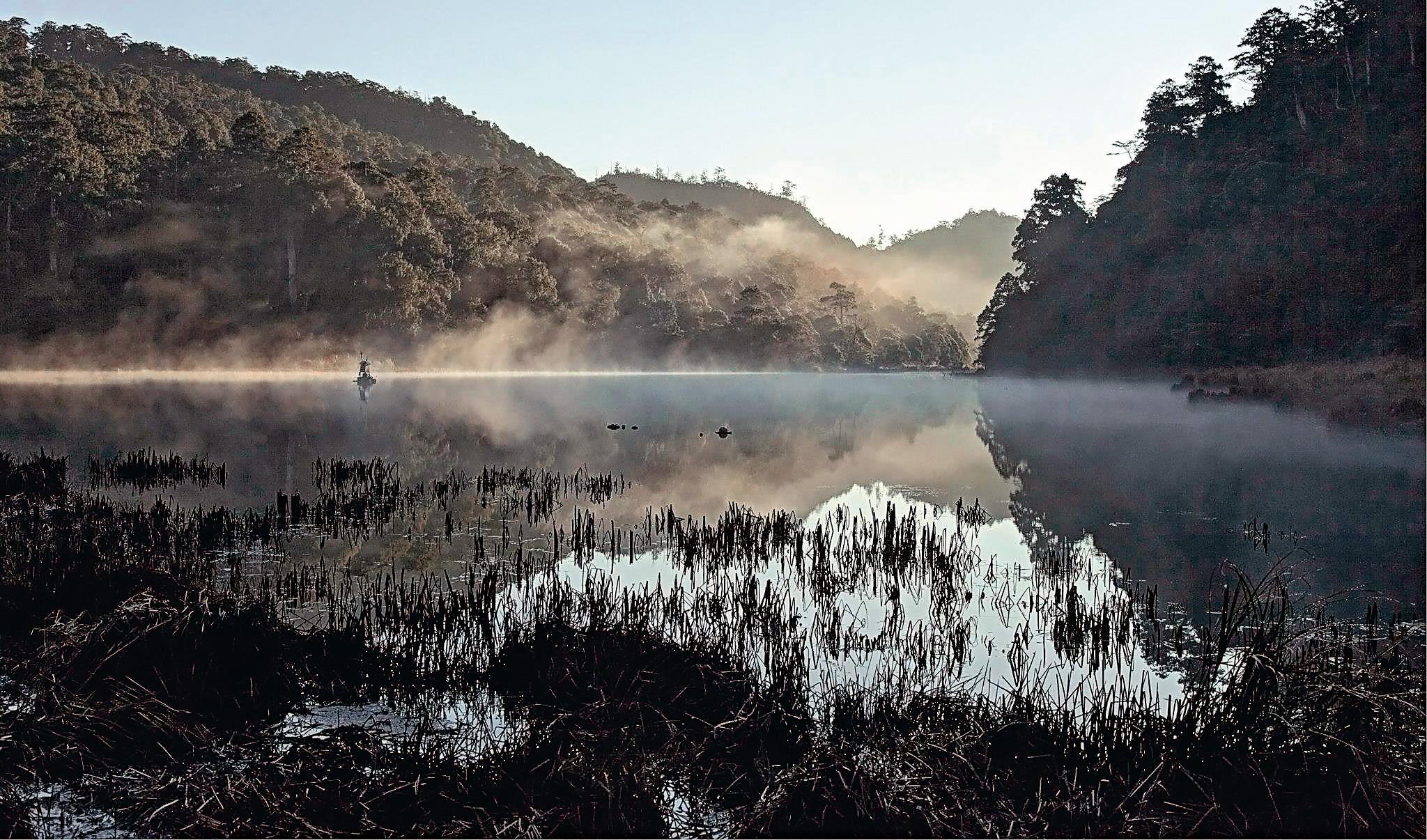
Although Taiwan once had expansive, interconnected terrestrial wetlands, which provided the livelihood of countless inhabitants, today's wetlands are much reduced in size and highly isolated. As a result, almost every inland wetland has its unique ecological features. For instance, critically - endangered quillwort (Isoetes taiwanensis ) grows only around Menghuan Lake on Yangmingshan National Park. Yuanyang Lake is located in a primeval cypress forest, and is subject to the damp northeast monsoon wind; enveloped by clouds and mist year-round, the lake supports many rare aquatic plants. Southern Taiwan's Shuanggui Lake contains many protected species; believed by the indigenous Rukai and Paiwan tribes to be the sacred home of their ancestral spirits, this lake is surrounded by taboos and is an integral part of traditional indigenous culture.
The goal of international wetlands conservation is to ensure that humans coexist with wetlands. Wetlands protection efforts in Taiwan,including campaigns undertaken by government and private parties, are gaining strength and momentum. Nevertheless, economic development does not often take ecological coexistence into consideration, which is a never-ending source of conflict. Many people still do not understand why we are protecting large areas of useless "wasteland" at the expense of the great benefits of development. Wetlands are certainly not desolate wastes, however, and they in fact have the world's highest biological productivity. In addition, wetlands provide a buffer zone between land and water, and are nature's water purification organs.
The history of economic development in Taiwan can also be considered the story of wetlands' decline and struggle for survival. As land development has vied with protection, wetlands have vanished, but also sometimes increased. Fortunately, as natural wetlands have gradually disappeared, awareness of the need for conservation has emerged among the public, and many artificial wetlands have been created for the purpose of flood detection, education, species restoration, or for scenic beautification. Some of these man-made wetlands have proceeded along the path of biological succession, given rise to thriving ecosystems, and have almost completely become a part of the pre-existing natural environment.
Taiwan's wetlands include saltwater and freshwater areas, and anoxic and oxygenated areas; biological succession may be early or mature; the bottom may consist of mud, sand, or rocks of different sizes; plants may consist of herbaceous plants, woody plants, or mangrove; water may be flowing or stagnant; and the water level may vary on a seasonal or hourly basis. Wetlands in Taiwan include coastal mudbanks and salt marshes; estuary lagoons; lowland lakes, ponds, and watercourses; mountain ponds and bogs; stream wetlands; artificially-created wetlands such as rice paddies, terraced fields, the pond and canal irrigation system on the Taoyuan terrace, and more than ten thousand ponds and reservoirs created by local people in the past to store water for agriculture; and the salt fields, intertidal zone oyster farms, and saltwater fish ponds along Taiwan's southwest coast.
These wetlands not only serve human purposes, but allowed the coexistence of large number of species. For instance, the Black-faced Spoonbill (Platalea minor ) forage in Taiwan's mud flats and fish ponds during the winter months. The flooded fields of Guantian in Tainan County not only produce water caltrops, but also provide an important habitat for the rare Pheasant-tailed Jacana (Hydrophasianus chirurgus). The highly endangered Striped slender frog (Rana taipehensis ) was once common in the rice fields and ponds of the Taipei basin; nowadays, however, because of the indiscriminant use of pesticides, it is found only in a small number of irrigation ponds.
Although Taiwan once had expansive, interconnected terrestrial wetlands, which provided the livelihood of countless inhabitants, today's wetlands are much reduced in size and highly isolated. As a result, almost every inland wetland has its unique ecological features. For instance, critically - endangered quillwort (Isoetes taiwanensis ) grows only around Menghuan Lake on Yangmingshan National Park. Yuanyang Lake is located in a primeval cypress forest, and is subject to the damp northeast monsoon wind; enveloped by clouds and mist year-round, the lake supports many rare aquatic plants. Southern Taiwan's Shuanggui Lake contains many protected species; believed by the indigenous Rukai and Paiwan tribes to be the sacred home of their ancestral spirits, this lake is surrounded by taboos and is an integral part of traditional indigenous culture.
The goal of international wetlands conservation is to ensure that humans coexist with wetlands. Wetlands protection efforts in Taiwan,including campaigns undertaken by government and private parties, are gaining strength and momentum. Nevertheless, economic development does not often take ecological coexistence into consideration, which is a never-ending source of conflict. Many people still do not understand why we are protecting large areas of useless "wasteland" at the expense of the great benefits of development. Wetlands are certainly not desolate wastes, however, and they in fact have the world's highest biological productivity. In addition, wetlands provide a buffer zone between land and water, and are nature's water purification organs.
The history of economic development in Taiwan can also be considered the story of wetlands' decline and struggle for survival. As land development has vied with protection, wetlands have vanished, but also sometimes increased. Fortunately, as natural wetlands have gradually disappeared, awareness of the need for conservation has emerged among the public, and many artificial wetlands have been created for the purpose of flood detection, education, species restoration, or for scenic beautification. Some of these man-made wetlands have proceeded along the path of biological succession, given rise to thriving ecosystems, and have almost completely become a part of the pre-existing natural environment.
- upper:Yuanyang Lake is hidden in mist and cloud all year-round. Many rare aquatic plants thrive in this typical mountains lake-type wetlands. Photograph by Liu Si-yi
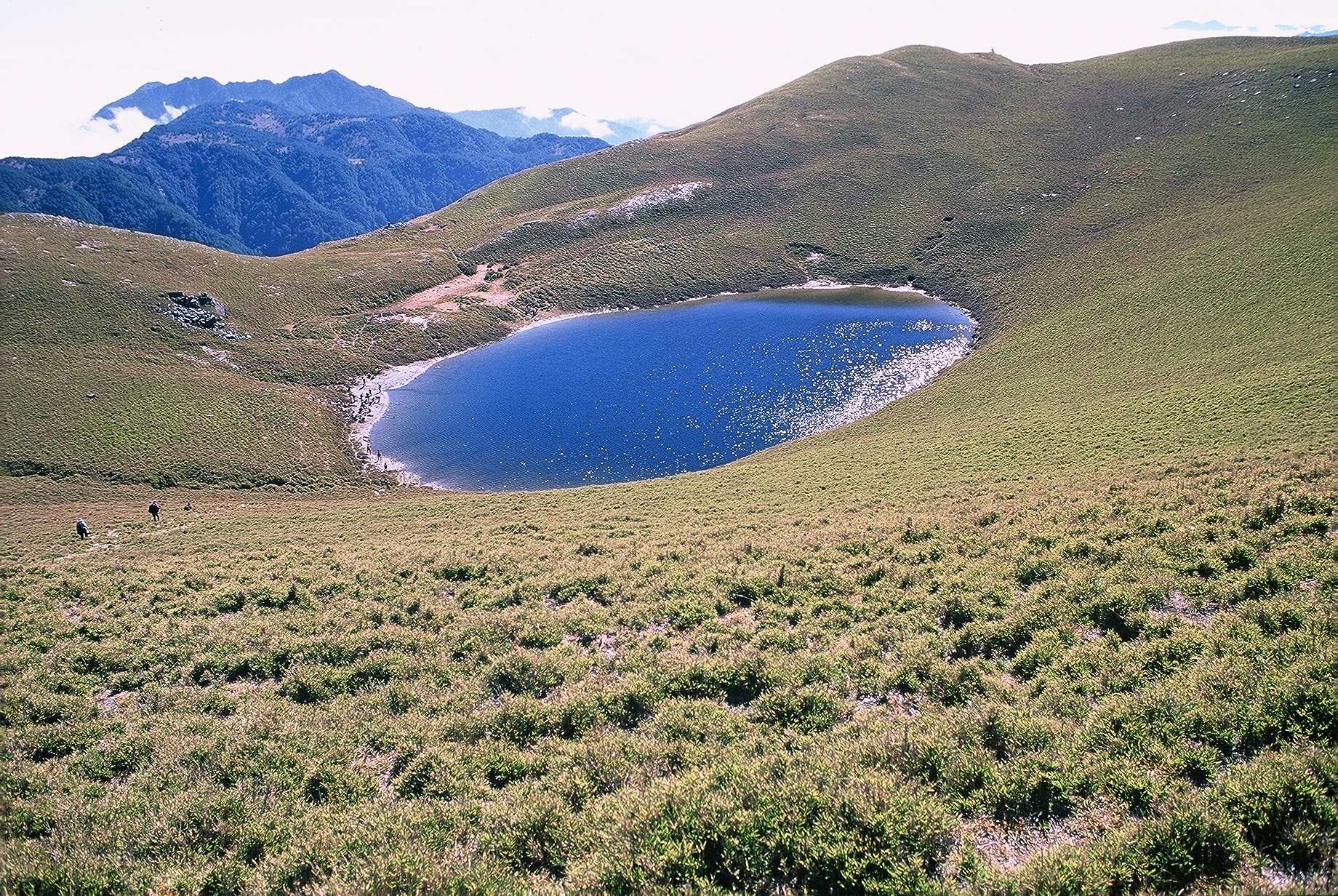
- lower left:Jiaming Lake is a high-altitude wetland located at an elevation of 3,000 meters in Taiwan's Central Mountain Range.
- lower right:Salt fields were formely a wetlands environment closely linked with human activities.
Wise, sustainable use of Taijiang wetlands
The broad alluvial coastal plain of southwestern Taiwan adjoins a gentle continental shelf, and has many Creek and rivers flowing westward into the sea. At the intersection of land and sea, where currents are gentle and nutrients abundant, there are countless wetland areas consisting of estuaries, lagoons, sandbars, marshes, and tidal flats.
We can see from an old map made in 1700 that the location of Taijiang National Park has long been a place of wetlands and lagoons formed by the estuaries of the Zengwen and Yanshui rivers. Because of the area's strategic location, it formed Taiwan's political and international trade hub during the age of exploration. The area of Taijiang National Park encompass four major wetlands, which include international importance wetlands— the Zengwen Estuary Wetlands and Sicao Wetlands—and national importance wetlands—the Qigu Salt Field Wetlands and Yanshui Estuary Wetlands.
The Black-faced Spoonbill, which winters in this area, is one of six species of currently surviving spoonbills and is the rarest species. The Englishman Robert Swinhoe observed the Blackfaced Spoonbill at Danshui in 1863, and left the earliest written record of this species. One hundred and fifty years later, the number of spoonbills wintering in Taiwan has been growing steadily, and are mostly found near the estuaries of the Zengwen and Yanshui rivers, which now constitutes Taijiang National Park and the adjacent area. This area hosts the world's largest overwintering population of Black-faced Spoonbills, which account for close to 60% of the total global population.
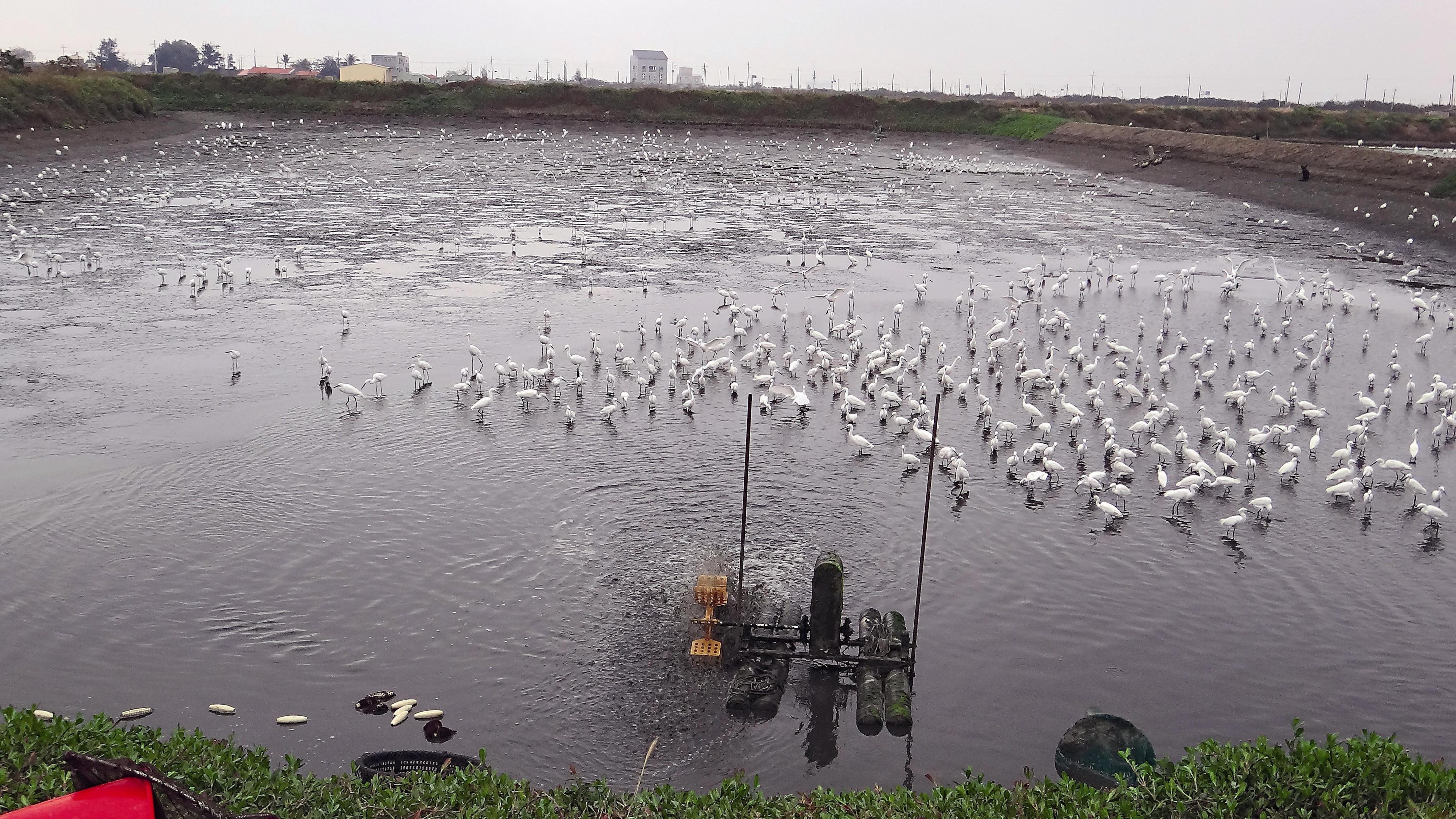
Large amounts of organic matter and nutrient salts are derived from these two large river basins, and the spoonbills are attracted to the tidal flats and shallow waters in the estuaries, where they can find abundant, varied food resources. In addition, for hundreds of years, milkfish have been raised in shallow ponds that dot the coastal plain. After the fish are harvested in the fall, the ponds are usually left idle for a time, which makes them available for Black-faced Spoonbills passing the winter in Taiwan, and they provide the birds with an excellent foraging habitat.
During the part of the year when the spoonbills are not in Taiwan, the Taijiang National Park Administration allows local fishermen to apply to continue their existing fishing activities in the core ecological protection area constituting the spoonbills' main habitat. These activities, which include digging for Venus clams, hard clams, and razor clams, are performed in cooperation with academic researchers, who monitor catch weight and adjust the shellfish season accordingly. This use of the area's resources by humans and spoonbills during different seasons is a good example of enlightened, sustainable utilization.
Traditional shallow-water pond milkfish farming represents a response to the silting up of the extensive lagoons that once formed an inland sea in this area. The ancestors of the area's population excavated fish ponds in the harsh coastal environment, and dug ditches to obtain seawater. The ponds are ordinarily no more than 60 cm in depth. Under the intense summer sun, the milkfish feast on algae existing naturally in the ponds and grow to maturity. When fall comes, the fish farmers quickly harvest the plump fish before the chill winds of winter, when the fish may die of cold. After the harvest, the fish ponds are allowedto recuperate, and the residual water and bottom mud nurture small fish and shrimp that provide food for the wading spoonbills that happen to spend the winter in the area before flying back to their breeding grounds around early April during the next year.
While humans enjoy the succulent milkfish, the spoonbills use the empty ponds, showing how people and nature can coexist harmoniously along the southern Taiwan coast. For several hundred years, the people of the Tainan area have raised and subsisted on milkfish, and their diet linked them with these wetlands and migratory bird habitat in a "match made in heaven." The shallow fish ponds that dot the landscape are used for roughly half of the year to raise fish, and provide a source of food to overwintering birds during the remainding months.
The broad alluvial coastal plain of southwestern Taiwan adjoins a gentle continental shelf, and has many Creek and rivers flowing westward into the sea. At the intersection of land and sea, where currents are gentle and nutrients abundant, there are countless wetland areas consisting of estuaries, lagoons, sandbars, marshes, and tidal flats.
We can see from an old map made in 1700 that the location of Taijiang National Park has long been a place of wetlands and lagoons formed by the estuaries of the Zengwen and Yanshui rivers. Because of the area's strategic location, it formed Taiwan's political and international trade hub during the age of exploration. The area of Taijiang National Park encompass four major wetlands, which include international importance wetlands— the Zengwen Estuary Wetlands and Sicao Wetlands—and national importance wetlands—the Qigu Salt Field Wetlands and Yanshui Estuary Wetlands.
The Black-faced Spoonbill, which winters in this area, is one of six species of currently surviving spoonbills and is the rarest species. The Englishman Robert Swinhoe observed the Blackfaced Spoonbill at Danshui in 1863, and left the earliest written record of this species. One hundred and fifty years later, the number of spoonbills wintering in Taiwan has been growing steadily, and are mostly found near the estuaries of the Zengwen and Yanshui rivers, which now constitutes Taijiang National Park and the adjacent area. This area hosts the world's largest overwintering population of Black-faced Spoonbills, which account for close to 60% of the total global population.
Large amounts of organic matter and nutrient salts are derived from these two large river basins, and the spoonbills are attracted to the tidal flats and shallow waters in the estuaries, where they can find abundant, varied food resources. In addition, for hundreds of years, milkfish have been raised in shallow ponds that dot the coastal plain. After the fish are harvested in the fall, the ponds are usually left idle for a time, which makes them available for Black-faced Spoonbills passing the winter in Taiwan, and they provide the birds with an excellent foraging habitat.
During the part of the year when the spoonbills are not in Taiwan, the Taijiang National Park Administration allows local fishermen to apply to continue their existing fishing activities in the core ecological protection area constituting the spoonbills' main habitat. These activities, which include digging for Venus clams, hard clams, and razor clams, are performed in cooperation with academic researchers, who monitor catch weight and adjust the shellfish season accordingly. This use of the area's resources by humans and spoonbills during different seasons is a good example of enlightened, sustainable utilization.
Traditional shallow-water pond milkfish farming represents a response to the silting up of the extensive lagoons that once formed an inland sea in this area. The ancestors of the area's population excavated fish ponds in the harsh coastal environment, and dug ditches to obtain seawater. The ponds are ordinarily no more than 60 cm in depth. Under the intense summer sun, the milkfish feast on algae existing naturally in the ponds and grow to maturity. When fall comes, the fish farmers quickly harvest the plump fish before the chill winds of winter, when the fish may die of cold. After the harvest, the fish ponds are allowedto recuperate, and the residual water and bottom mud nurture small fish and shrimp that provide food for the wading spoonbills that happen to spend the winter in the area before flying back to their breeding grounds around early April during the next year.
While humans enjoy the succulent milkfish, the spoonbills use the empty ponds, showing how people and nature can coexist harmoniously along the southern Taiwan coast. For several hundred years, the people of the Tainan area have raised and subsisted on milkfish, and their diet linked them with these wetlands and migratory bird habitat in a "match made in heaven." The shallow fish ponds that dot the landscape are used for roughly half of the year to raise fish, and provide a source of food to overwintering birds during the remainding months.
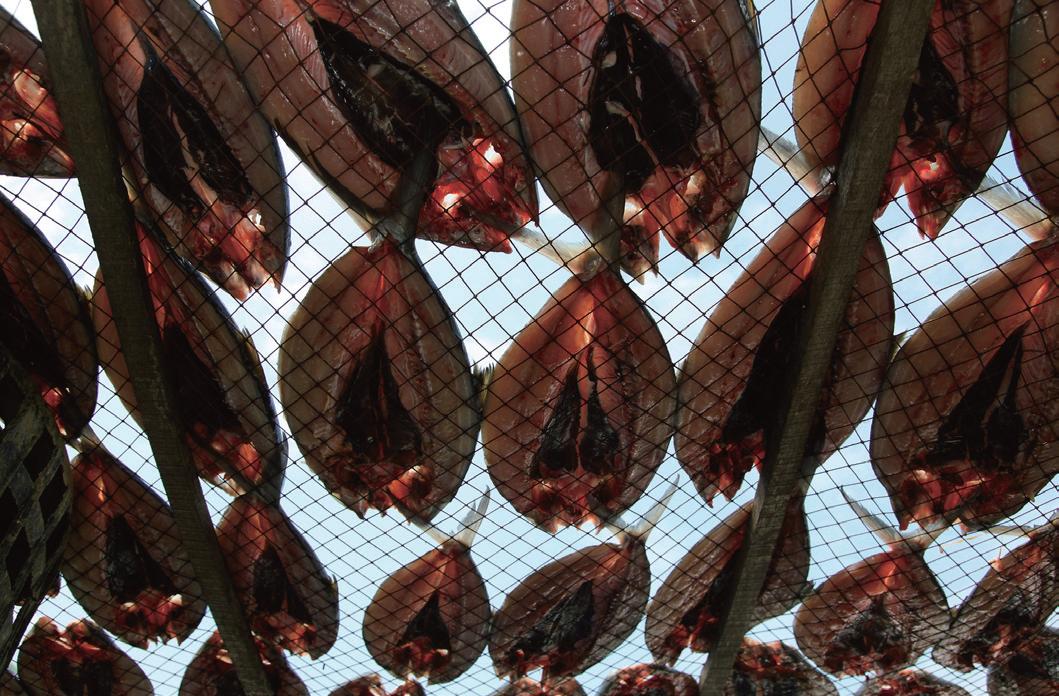
- upper left:Dried Milkfish in Longshan Village. Photograph by Chen Ji-peng
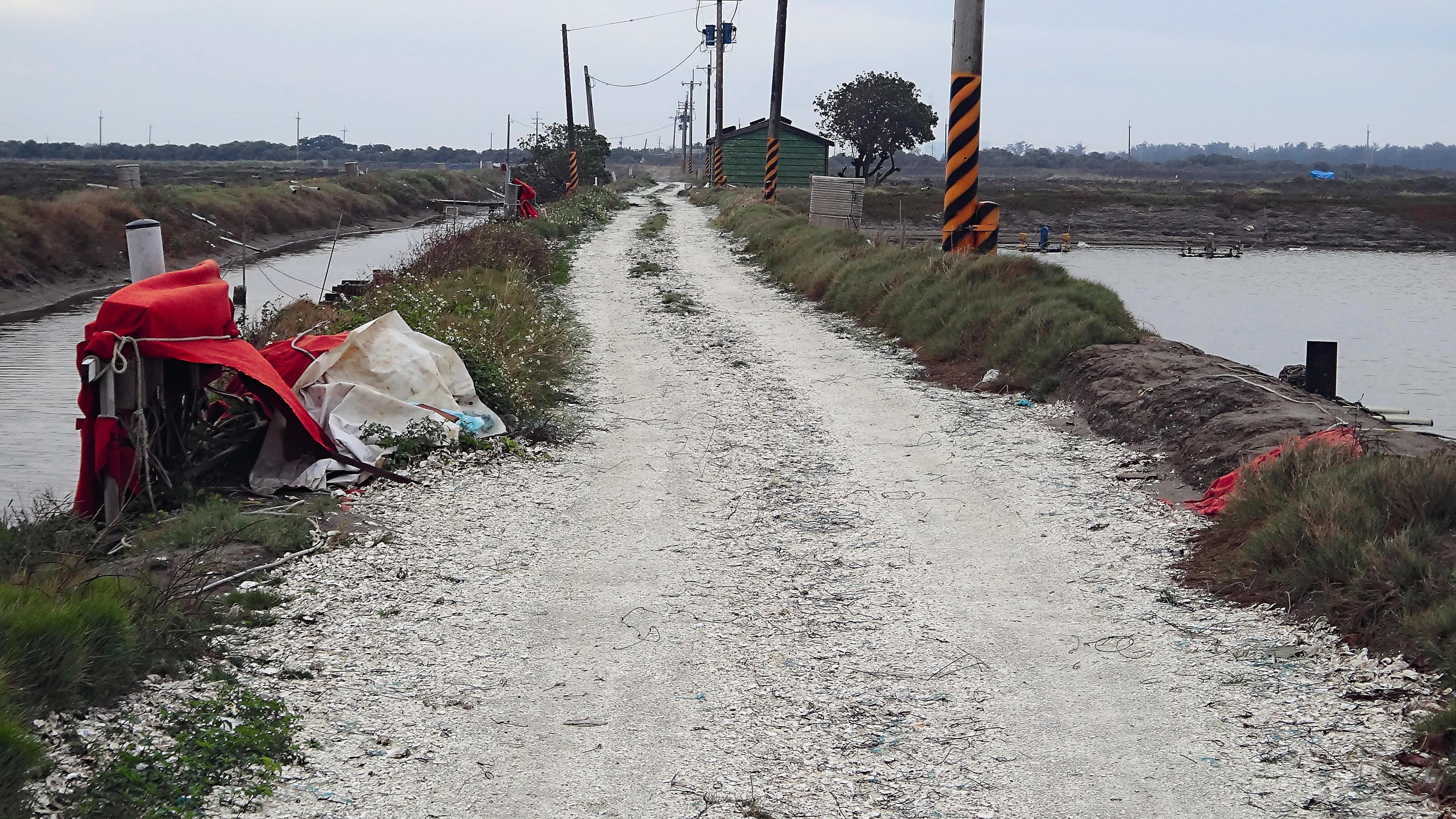
- upper right:Calcium ions released during the rain from the roads paved withoyster shells return to the fish ponds, recycling resources andmaintaining the fish pond ecology at the same time.
- lower left:Taijiang National Park is working with local fishermen to keep thewater level low in fish ponds after the fish have been harvested,which helps waterfowl forage.
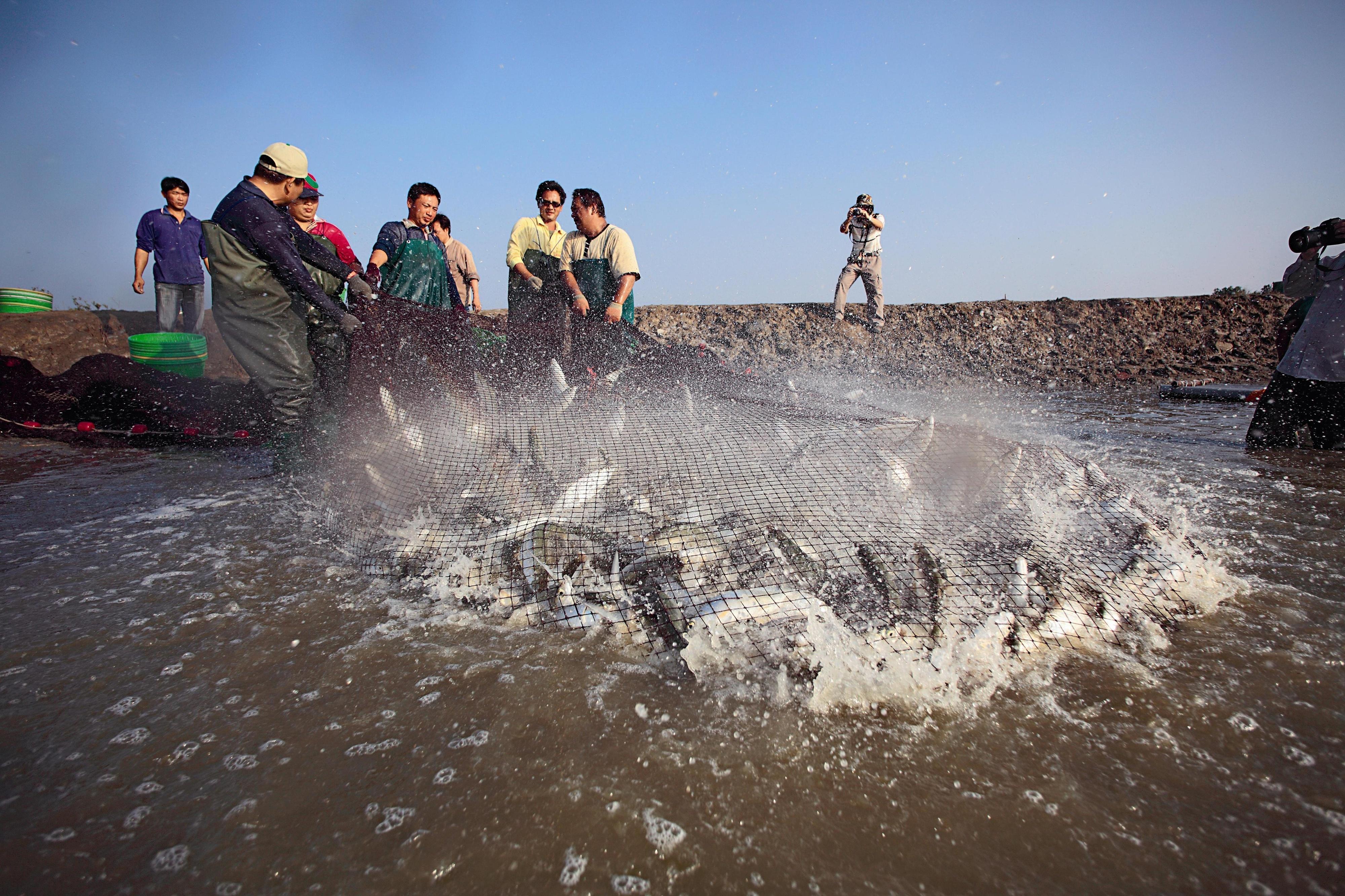
- lower right:Wetlands are highly productive ecosystems. This photographshows a bumper harvest of milkfish in the Taijiang area.Photograph by Lee Chen-kuang
A partnership between humans and nature
Taijiang National Park is currently cooperating with National University of Tainan and local fishermen in maintaining the traditional extensive saltwater shallow-pond farming of milkfish, which also preserves the fish ponds that serve as winter habitat for spoonbills. In recent years, many fishermen have switched to farming grouper, which fetches a higher price, but grouper ponds are deeper, and the fish are raised intensively all yearround. Since the Black-faced Spoonbill is a wading bird, it cannot forage in deep-water fish ponds. As a result, the Taijiang National Park Administration encourages fishermen to continue to raise natural, healthy milkfish using the traditional shallow-pond method.
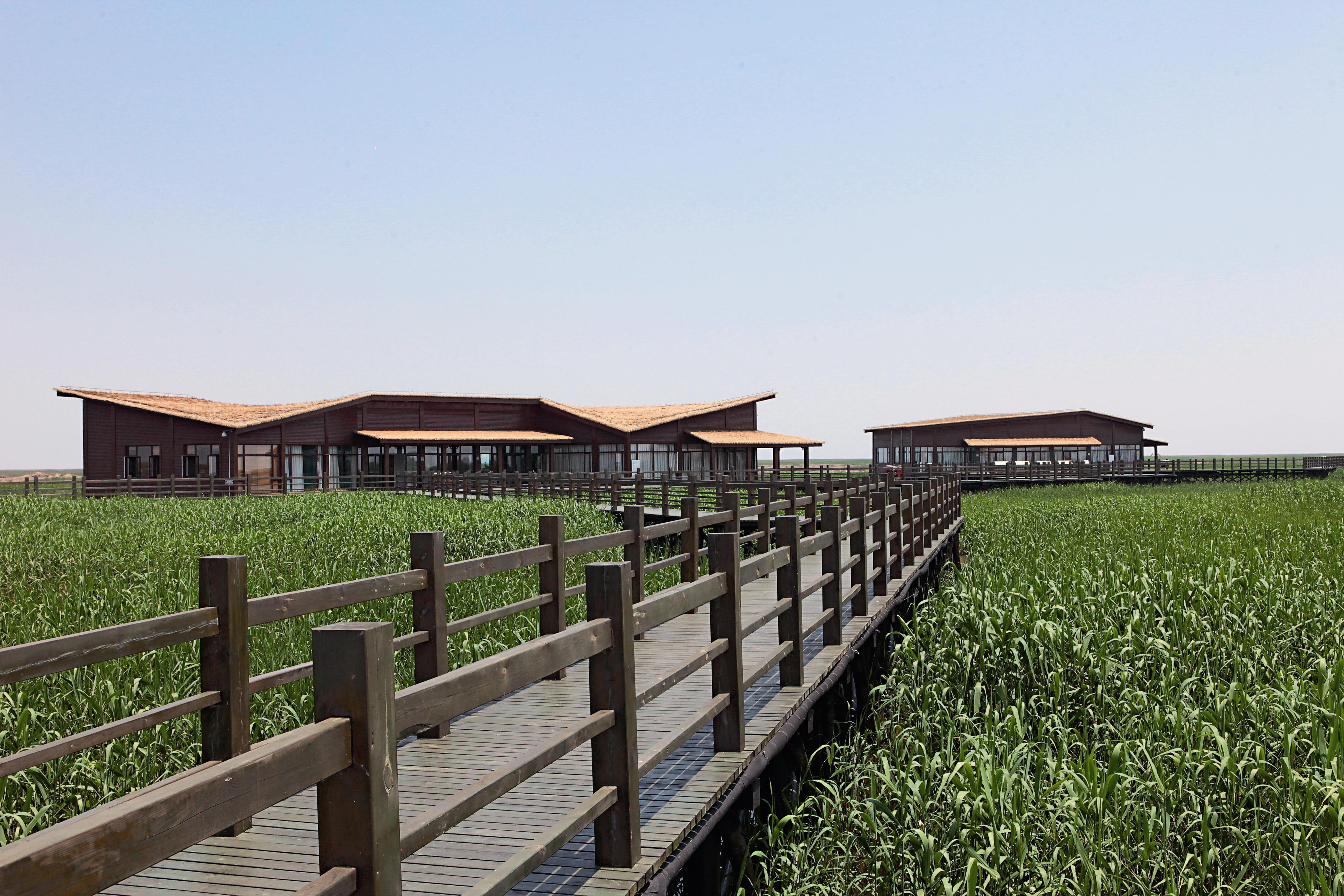
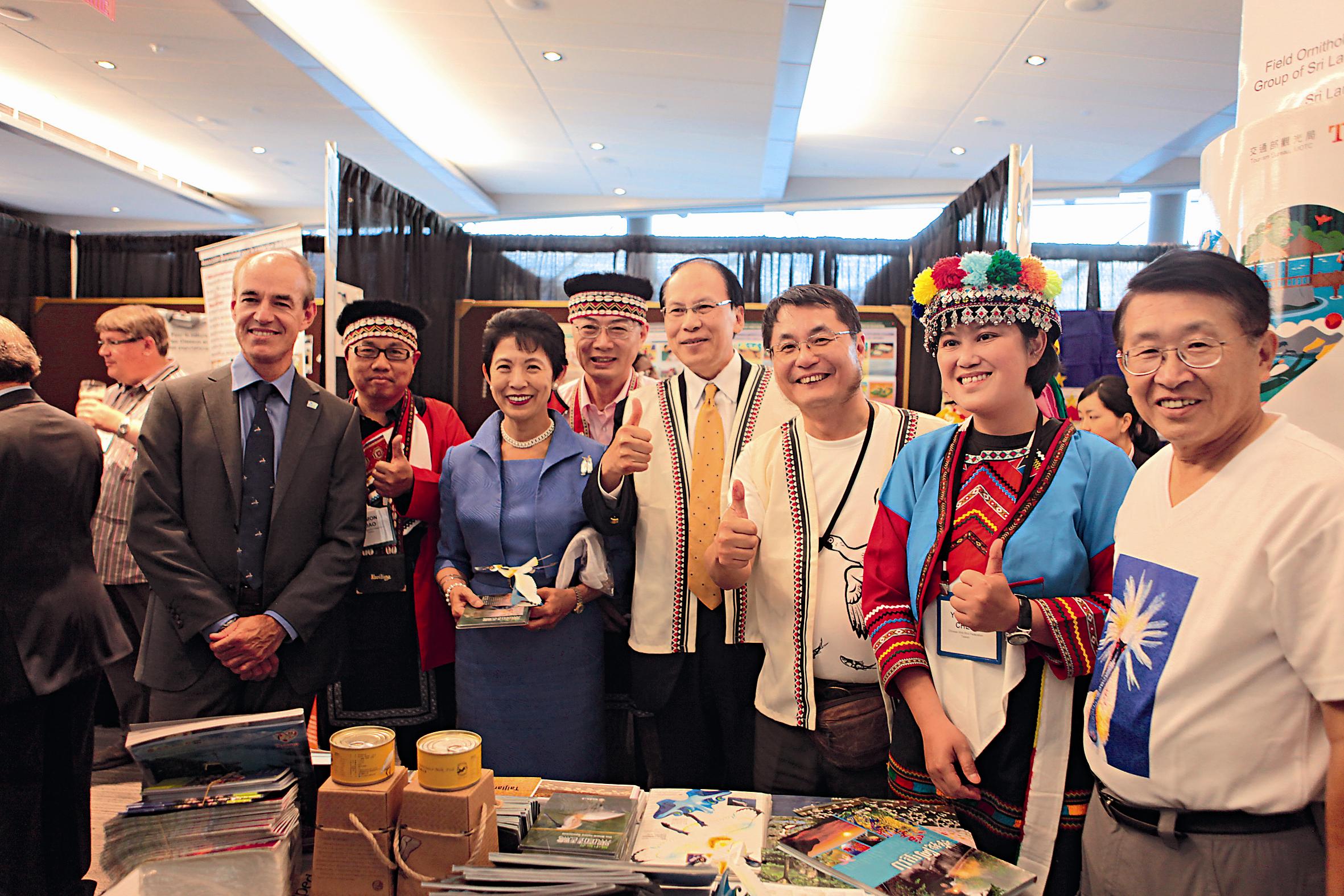
The resulting milkfish is an eco-friendly product, and canned "Black-faced Spoonbill Brand Milkfish" has been introduced and uses milkfishraised in "spoonbill-friendly fish ponds." We hope that the national park's image as a promoter of conservation will raise enhance the value of traditional fish products, and encourage fishermen to participate in the Black-faced Spoonbill conservation campaign. Apart from holding marketing/tasting sessions for innovative dishes made using "Black-faced Spoonbill Brand Milkfish," Taiwan has also promoted this concept via the 2012 Rio+20 UN Conferenceon Sustainable Development, America's Everglades National Park, Chongming Dongtan Birds Nature Reserve near Shanghai, Korea's Ganghwa Island, and the Taiwan booth at the recent World Congress of BirdLife International.
Taijiang National Park is currently cooperating with National University of Tainan and local fishermen in maintaining the traditional extensive saltwater shallow-pond farming of milkfish, which also preserves the fish ponds that serve as winter habitat for spoonbills. In recent years, many fishermen have switched to farming grouper, which fetches a higher price, but grouper ponds are deeper, and the fish are raised intensively all yearround. Since the Black-faced Spoonbill is a wading bird, it cannot forage in deep-water fish ponds. As a result, the Taijiang National Park Administration encourages fishermen to continue to raise natural, healthy milkfish using the traditional shallow-pond method.
The resulting milkfish is an eco-friendly product, and canned "Black-faced Spoonbill Brand Milkfish" has been introduced and uses milkfishraised in "spoonbill-friendly fish ponds." We hope that the national park's image as a promoter of conservation will raise enhance the value of traditional fish products, and encourage fishermen to participate in the Black-faced Spoonbill conservation campaign. Apart from holding marketing/tasting sessions for innovative dishes made using "Black-faced Spoonbill Brand Milkfish," Taiwan has also promoted this concept via the 2012 Rio+20 UN Conferenceon Sustainable Development, America's Everglades National Park, Chongming Dongtan Birds Nature Reserve near Shanghai, Korea's Ganghwa Island, and the Taiwan booth at the recent World Congress of BirdLife International.
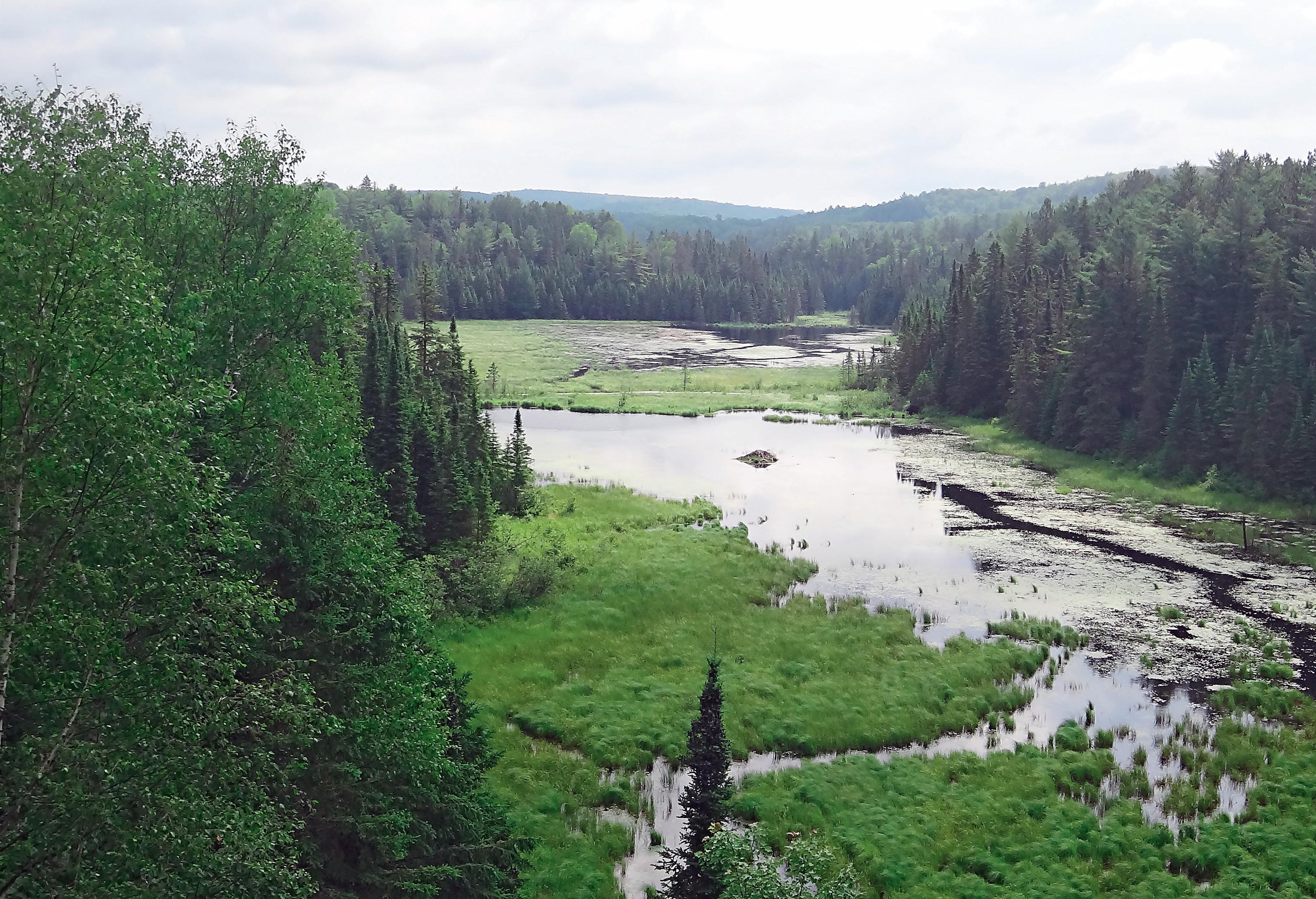
- upper left:Wetlands landscape in Algonquin provincial park, Ontairo, Canada.
- upper right:In 90th World Congress, The New BirdLifeInternational Chairman, former JordanianMinister of Environment, Khaled Irani (center)lavished praise on Taiwan's conservationachievements. PhotographcTaijiang NationalPark
- lower left:In 90th World Congress, Japan's Princess Tsuguko of Takamado, the honorary chairwoman of the BirdLife International congress, visits the Taiwan booth with Dr Marco Lambertini, Chief Executive of BirdLife. PhotographcTaijiang National Park
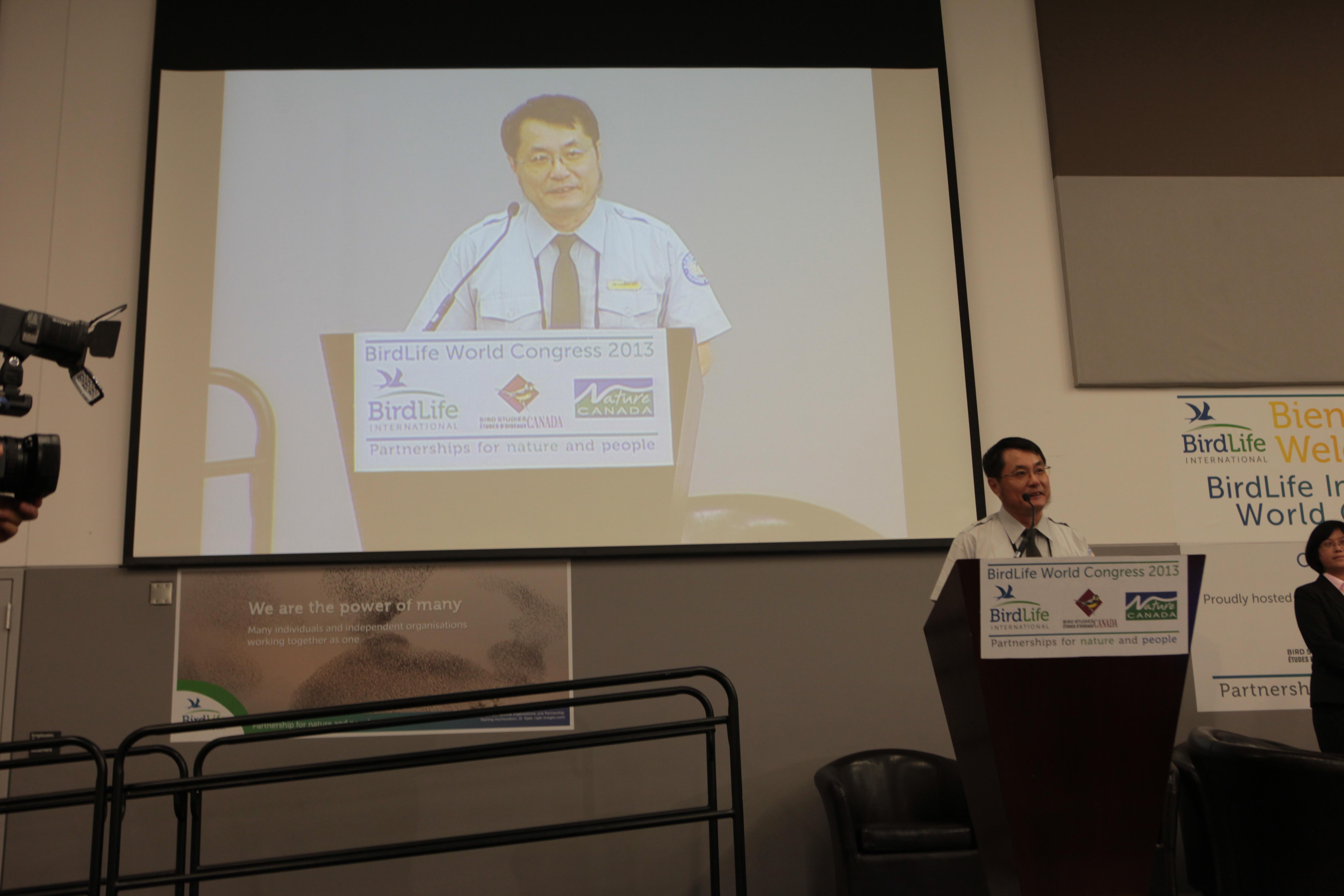
- lower right:The author gives a speech thanking the congress on behalf of Taijiang National Park, National Construction & Planning Administration, MOI for the international conservation awards. PhotographcTaijiang National Park
Wise use of wetlands wins international conservation awards
BirdLife International held its 90th World Congress in Ottawa, Canada on June 17 of this year. Apart from electing regional chairpersons and deputy chairpersons, this once-every-five-years event also held forums, discussed global and regional issues concerning bird conservation, and held workshops on various topics in order to promote international cooperation. Striving to achieve partnership between humans and nature, BirdLife International is currently building on its vigorous recent efforts to investigate issues affecting the natural environment and human survival and sustainable development.
More than 600 experts, scientists, and representatives of birding associations in numerous countries shared and exchanged their bird conservation experiences at the congress, while renewing regional and global partnerships. Topics of discussion included invasive species, conservation of tropical rain forests, mangrove, biodiversity, climate change, marine environments, world important bird areas (IBA), nature and human development, reduction of fisheries bycatch, conservation of migratory birds's flyways, conservation of ecological hotspots, citizens scientists, wind power, and use of biomass energy.
The honorary chairperson of congress's, Japan's Princess Tsuguko of Takamado, bestowed the International Conservation Achievement Award on three agencies in Taiwan—Taijiang National Park, Construction and Planning Agency, Ministry of the Interior; Council of Agriculture, Executive Yuan, Forestry Bureau; and Tainan City Government. This honor recognizes the dedicationand effectiveness of efforts made by various parties to conserve the Black-faced Spoonbill over the years.
The reason this conservation campaign in Taiwan stood out from similar efforts made in many of the 121 member states is that a firm partnership has been established between the Black-faced Spoonbill and local coastal residents. Thanks to the wisdom passed down by our ancestors, we have been able to overcome many conflicts and obstacles posed by economic development, and progressively learn how to devise sustainable conservation strategies benefiting both people and nature, which is just the "partnership between humans and nature" comprising Birdlife's ideal.
The author would like to express gratitude to Birdlife International for its affirmation of Taiwan's waterfowl and wetlands conservation, and also thank Taiwan's NGOs and government agencies for their teamwork and dedicated efforts. Furthermore, I would also like to mention the contributions of former Mayor Hsu and County Chief Su, as well as the hard work done by scientists and the willingness to compromise on the part of companies and their owners. The passage of the Wetland Conservation Act on June 18, 2013 underscored Taiwan's determine to implement species and habitat conservation, further sustainable development, and promote coexistence with nature. Finally, I would like to express the gratitude of many in Taiwan that Birdlife International's decision to hold its 100th anniversary congress in Taiwan in 2023 has obtained a enthusiastic response from the representatives in attendance.
After attending the Congress, Liu Chih-kung, the representative of Taipei Economic and Cultural Office in Canada noted: "Today's event wakes up humanity. When we are searching for short-term gains, we should actually be focusing our attention on the long-term future of society and the world. After we have destroyed the environment, the price we will have to pay will exceed our meager transient gain a million-fold. This is indeed worthy of pondering."
Complying with world conservation trends, Taiwan's national parks have embraced the evolution of people's thinking by taking traditional culture and history, natural resources, biological industries, and the relationship between life, production, and the ecology into consideration. These national parks to not try to set themselves apart from the human world, but rather seek tomaintain local sustainable use in keeping with natural rhythms. This is in keeping with the spirit of caring for Nature fostered at the 2010 Nagoya UN Convention on Biological Diversity.
Since Taijiang National Park was founded at the end of 2009, the park has ensured that the spoonbills have sufficient sources of food, performed satellite monitoring of spoonbill habitat, recorded the birds' reproduction, movements, and areas along their overwintering route, conducted a spoonbill census, held international conferences, and engaged in cooperative conservation measures with other countries where the Black-faced Spoonbill lives.
Conserving the Black-faced Spoonbill also has the advantage of protecting the surrounding environment. The spoonbill is a flagship species, and also an umbrella species: Protecting the Black-faced Spoonbill also protects other waterfowl sharing the same habitat, including herons, ducks, and snipe, and further protects wetlands and the human environment. Prior to the establishment of Taijiang National Park, 60 explanatory meetings were held to emphasize the partnership between humans and nature, and the national park has striven to foster partnerships between businesses, residents, and nature.
The international acclaim for Taiwan's Blackfaced Spoonbill conservation work has obtained is actually start of even greater responsibilities for the Taijiang National Park and other central and local government agencies. "We hope to employ conservation of the Black-faced Spoonbill and wetlands as a means of adopting international norms, and we look forward to increasing our international visibility and influence," said Taijiang National Park Director Lu Deng-Yuan when thepark administration was first established. Since it was founded, the national park has relied on its basic ecological database, conservation and research projects, ecosystem monitoring, and protection of wildlife food sources to attain international conservation standards.
BirdLife International held its 90th World Congress in Ottawa, Canada on June 17 of this year. Apart from electing regional chairpersons and deputy chairpersons, this once-every-five-years event also held forums, discussed global and regional issues concerning bird conservation, and held workshops on various topics in order to promote international cooperation. Striving to achieve partnership between humans and nature, BirdLife International is currently building on its vigorous recent efforts to investigate issues affecting the natural environment and human survival and sustainable development.
More than 600 experts, scientists, and representatives of birding associations in numerous countries shared and exchanged their bird conservation experiences at the congress, while renewing regional and global partnerships. Topics of discussion included invasive species, conservation of tropical rain forests, mangrove, biodiversity, climate change, marine environments, world important bird areas (IBA), nature and human development, reduction of fisheries bycatch, conservation of migratory birds's flyways, conservation of ecological hotspots, citizens scientists, wind power, and use of biomass energy.
The honorary chairperson of congress's, Japan's Princess Tsuguko of Takamado, bestowed the International Conservation Achievement Award on three agencies in Taiwan—Taijiang National Park, Construction and Planning Agency, Ministry of the Interior; Council of Agriculture, Executive Yuan, Forestry Bureau; and Tainan City Government. This honor recognizes the dedicationand effectiveness of efforts made by various parties to conserve the Black-faced Spoonbill over the years.
The reason this conservation campaign in Taiwan stood out from similar efforts made in many of the 121 member states is that a firm partnership has been established between the Black-faced Spoonbill and local coastal residents. Thanks to the wisdom passed down by our ancestors, we have been able to overcome many conflicts and obstacles posed by economic development, and progressively learn how to devise sustainable conservation strategies benefiting both people and nature, which is just the "partnership between humans and nature" comprising Birdlife's ideal.
The author would like to express gratitude to Birdlife International for its affirmation of Taiwan's waterfowl and wetlands conservation, and also thank Taiwan's NGOs and government agencies for their teamwork and dedicated efforts. Furthermore, I would also like to mention the contributions of former Mayor Hsu and County Chief Su, as well as the hard work done by scientists and the willingness to compromise on the part of companies and their owners. The passage of the Wetland Conservation Act on June 18, 2013 underscored Taiwan's determine to implement species and habitat conservation, further sustainable development, and promote coexistence with nature. Finally, I would like to express the gratitude of many in Taiwan that Birdlife International's decision to hold its 100th anniversary congress in Taiwan in 2023 has obtained a enthusiastic response from the representatives in attendance.
After attending the Congress, Liu Chih-kung, the representative of Taipei Economic and Cultural Office in Canada noted: "Today's event wakes up humanity. When we are searching for short-term gains, we should actually be focusing our attention on the long-term future of society and the world. After we have destroyed the environment, the price we will have to pay will exceed our meager transient gain a million-fold. This is indeed worthy of pondering."
Complying with world conservation trends, Taiwan's national parks have embraced the evolution of people's thinking by taking traditional culture and history, natural resources, biological industries, and the relationship between life, production, and the ecology into consideration. These national parks to not try to set themselves apart from the human world, but rather seek tomaintain local sustainable use in keeping with natural rhythms. This is in keeping with the spirit of caring for Nature fostered at the 2010 Nagoya UN Convention on Biological Diversity.
Since Taijiang National Park was founded at the end of 2009, the park has ensured that the spoonbills have sufficient sources of food, performed satellite monitoring of spoonbill habitat, recorded the birds' reproduction, movements, and areas along their overwintering route, conducted a spoonbill census, held international conferences, and engaged in cooperative conservation measures with other countries where the Black-faced Spoonbill lives.
Conserving the Black-faced Spoonbill also has the advantage of protecting the surrounding environment. The spoonbill is a flagship species, and also an umbrella species: Protecting the Black-faced Spoonbill also protects other waterfowl sharing the same habitat, including herons, ducks, and snipe, and further protects wetlands and the human environment. Prior to the establishment of Taijiang National Park, 60 explanatory meetings were held to emphasize the partnership between humans and nature, and the national park has striven to foster partnerships between businesses, residents, and nature.
The international acclaim for Taiwan's Blackfaced Spoonbill conservation work has obtained is actually start of even greater responsibilities for the Taijiang National Park and other central and local government agencies. "We hope to employ conservation of the Black-faced Spoonbill and wetlands as a means of adopting international norms, and we look forward to increasing our international visibility and influence," said Taijiang National Park Director Lu Deng-Yuan when thepark administration was first established. Since it was founded, the national park has relied on its basic ecological database, conservation and research projects, ecosystem monitoring, and protection of wildlife food sources to attain international conservation standards.
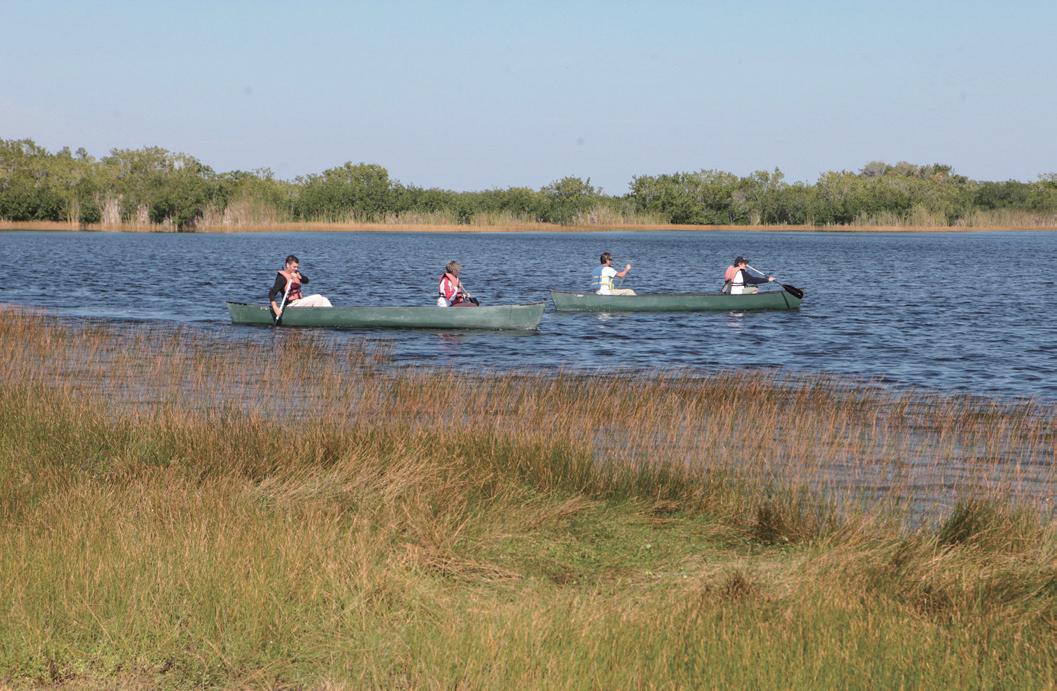
- upper left:Visitors can picnic within the Everglades Park , and take part in trips through publicly-accessible areas.
- upper right:The Everglades visitor center has pushed-button interpretive exhibits.
- lower:San Francisco Bay Commuter trains passing through the salt marshes do not disturb the birds. This area is an example of how conflict between human development and nature can be minimized.

International cooperation
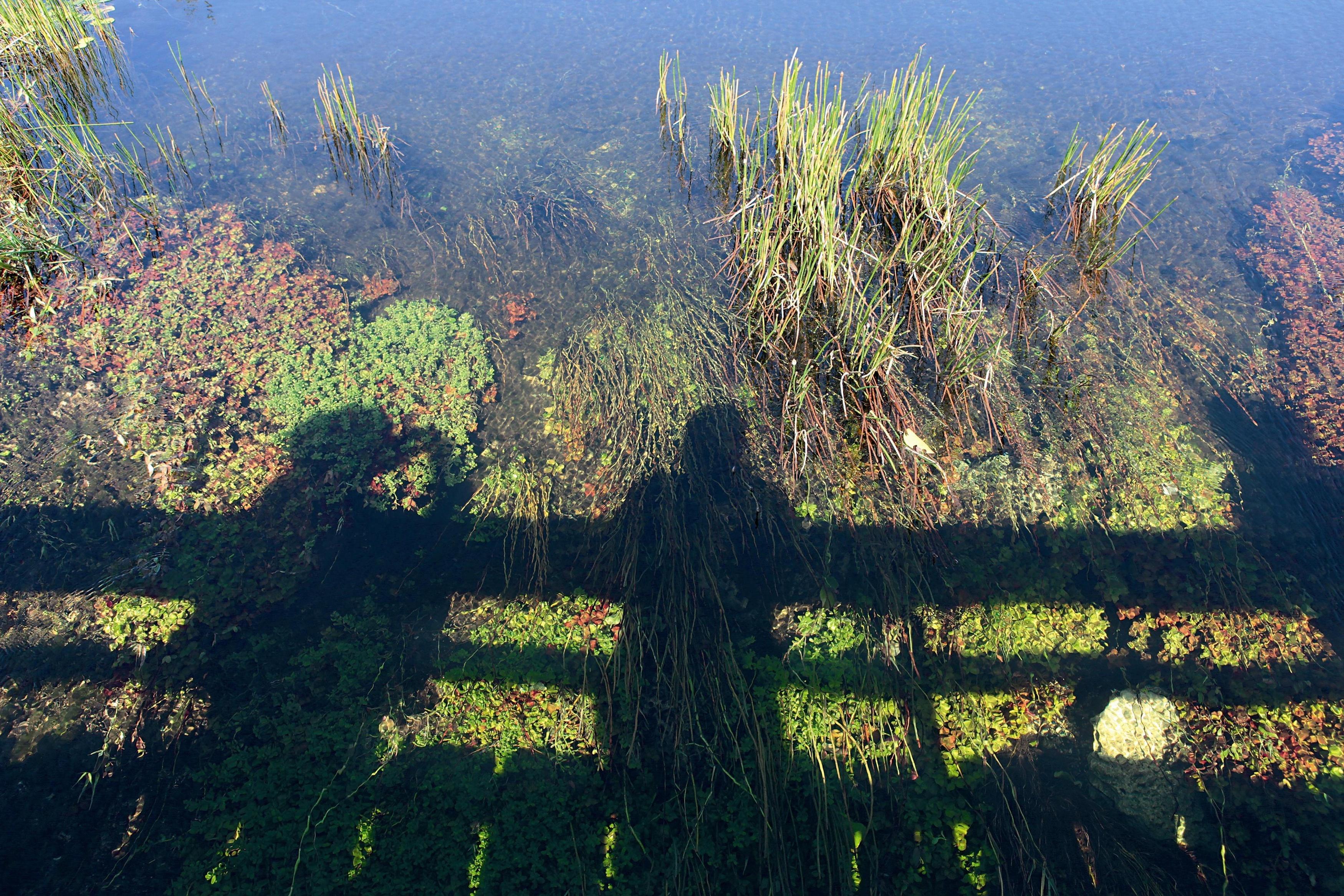
Thanks to its acquisition of management experience concerning different types of wetlands worldwide, Taijiang National Park's wetlands restoration efforts, research, and conservation measures will be even more effective through international cooperation and mutual visits. When visiting Florida's National Everglades Park, the author noticed how clear is the water flowing through the nearly-flat Everglades, which reminds us how wetlands have a natural purification function and can absorb organic matter such as ammonia nitrogen and nitrates.
The Everglades visitor center has pushed-button interpretive exhibits and a self-guided trail. The author was able to interact directly with interpretive personnel, gaining an understanding of the wetlands ecology, and was also able to see a wild alligator safely from a close distance. Visitors can picnic in the park, and take part in interpretive canoe trips through publicly-accessible areas. This reminds us that tourism and recreation are one of the important functions of a wetlands national park.
After long being abandoned, the salt fields and salt marshes of San Francisco Bay are now under new management, and water gates are used to control the water level and transform salt fields back into salt marshes. Birds have returned, and the area is now important waterfowl conservation habitat, as well as serving as a major environmental education center. Commuter trains passing through the salt marshes do not disturb the birds, which reveals that the effectiveness of management measures. This area is an example of how conflict between human development and nature can be minimized.
Canada possesses the world's largest wetlands area. Although Canada's conservation policies are different from those of small and densely-populated Taiwan, its management strategies have the same ultimate goals. Ontario's Algonquin Provincial Park occupies approximately 8,000 square kilometers, and contains countless lakes and wetlands surrounded by conifer forests. The park offers extensive interconnected trails and canoe routes, enabling canoeists and campers to get in touch with nature.
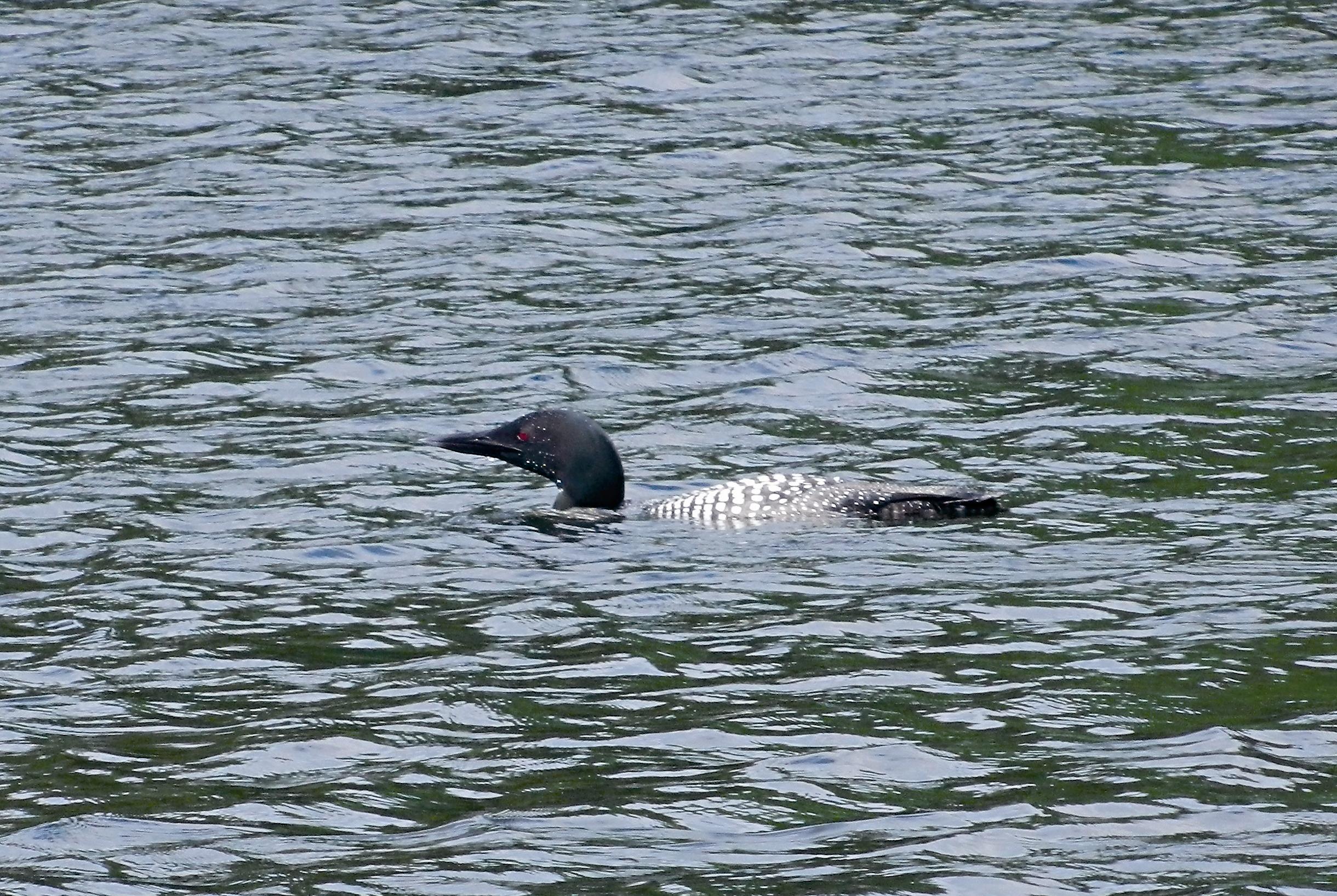
The landscape in Canada is completelydifferent from Taiwan. Canadian park employees and volunteers have been very active in managing the park, and great emphasis is placed on ecological interpretation. The park's volunteer system is especially effective. The common loon (Gavia immer), which is the provincial bird of Ontario and a symbol of wetlands birds and habitat, has been placed by the Canadian government has placed this on its one-cent coin, where it serves as ever-present reminder of the importance of wetlands and waterfowl conservation.
Chongming Dongtan Birds Nature Reserve is listed as a Ramsar site, and its personnel have engaged in mutual visits with their counterparts at Taijiang National Park. The rice fields of Korea's Ganghwa Island also have many Black-faced Spoonbills, which may have a different ecological niche and living habits than the spoonbills in Taiwan, and a small nearby uninhabited island is an important Black-faced Spoonbill breeding area. The cooperative relationship between Taijiang National Park and its counterpart in Korea has focused on Black-faced Spoonbill research and satellite tracking, as well as habitat management measures and policies aspects such as budgets and environmental education.
Thanks to its acquisition of management experience concerning different types of wetlands worldwide, Taijiang National Park's wetlands restoration efforts, research, and conservation measures will be even more effective through international cooperation and mutual visits. When visiting Florida's National Everglades Park, the author noticed how clear is the water flowing through the nearly-flat Everglades, which reminds us how wetlands have a natural purification function and can absorb organic matter such as ammonia nitrogen and nitrates.
The Everglades visitor center has pushed-button interpretive exhibits and a self-guided trail. The author was able to interact directly with interpretive personnel, gaining an understanding of the wetlands ecology, and was also able to see a wild alligator safely from a close distance. Visitors can picnic in the park, and take part in interpretive canoe trips through publicly-accessible areas. This reminds us that tourism and recreation are one of the important functions of a wetlands national park.
After long being abandoned, the salt fields and salt marshes of San Francisco Bay are now under new management, and water gates are used to control the water level and transform salt fields back into salt marshes. Birds have returned, and the area is now important waterfowl conservation habitat, as well as serving as a major environmental education center. Commuter trains passing through the salt marshes do not disturb the birds, which reveals that the effectiveness of management measures. This area is an example of how conflict between human development and nature can be minimized.
Canada possesses the world's largest wetlands area. Although Canada's conservation policies are different from those of small and densely-populated Taiwan, its management strategies have the same ultimate goals. Ontario's Algonquin Provincial Park occupies approximately 8,000 square kilometers, and contains countless lakes and wetlands surrounded by conifer forests. The park offers extensive interconnected trails and canoe routes, enabling canoeists and campers to get in touch with nature.
The landscape in Canada is completelydifferent from Taiwan. Canadian park employees and volunteers have been very active in managing the park, and great emphasis is placed on ecological interpretation. The park's volunteer system is especially effective. The common loon (Gavia immer), which is the provincial bird of Ontario and a symbol of wetlands birds and habitat, has been placed by the Canadian government has placed this on its one-cent coin, where it serves as ever-present reminder of the importance of wetlands and waterfowl conservation.
Chongming Dongtan Birds Nature Reserve is listed as a Ramsar site, and its personnel have engaged in mutual visits with their counterparts at Taijiang National Park. The rice fields of Korea's Ganghwa Island also have many Black-faced Spoonbills, which may have a different ecological niche and living habits than the spoonbills in Taiwan, and a small nearby uninhabited island is an important Black-faced Spoonbill breeding area. The cooperative relationship between Taijiang National Park and its counterpart in Korea has focused on Black-faced Spoonbill research and satellite tracking, as well as habitat management measures and policies aspects such as budgets and environmental education.
- upper:Canadian one-cent piec.
- lower:Canada has placed the loon on its one-cent piece, reminding citizens of the importance of wetlands. The photograph shows a Canadian onecent piece and a loon in Algonquin Park.
Concluding remarks
Taijiang National Park plans to further promote wetlands environmental education in conjunction with schools, conduct a homeland protection circle project, and team up with the local public to jointly implement habitat protection. These efforts will be the key to the conservation and sustainable use of Taiwan's wetlands.
Within the park, many NGOs and individuals have selflessly contributed to spoonbill conservation work. Looking ahead to the future, the park hopes that local residents, fishermen, and members of the next generation will become partners in conservation, and voluntarily adopt fish-farming practices that are friendly to the environment. We should preserve the wisdom of our ancestors and continue to preserve and nurture a healthy environment in which the myriad living things can coexist with humanity. I believe we can coexist in harmony with wetlands, and in fact be ideal partners.
Taijiang National Park plans to further promote wetlands environmental education in conjunction with schools, conduct a homeland protection circle project, and team up with the local public to jointly implement habitat protection. These efforts will be the key to the conservation and sustainable use of Taiwan's wetlands.
Within the park, many NGOs and individuals have selflessly contributed to spoonbill conservation work. Looking ahead to the future, the park hopes that local residents, fishermen, and members of the next generation will become partners in conservation, and voluntarily adopt fish-farming practices that are friendly to the environment. We should preserve the wisdom of our ancestors and continue to preserve and nurture a healthy environment in which the myriad living things can coexist with humanity. I believe we can coexist in harmony with wetlands, and in fact be ideal partners.
- upper:The rice fields of Korea's Ganghwa Island provide a habitat for the Black-faced Spoonbill.
- lower:The salt fields and salt marshes of San Francisco Bay.
About the author - Huang Kuang-ying
Chief of the conservation department at Taijiang National Park. Ph.D. in Ecology and Evolutionary Biology from National Taiwan University. M.S. in Fisheries and Wildlife from Michigan State University.


