
Taiwan's High-Elevation Reptiles and Amphibians Thrive in the Chill-
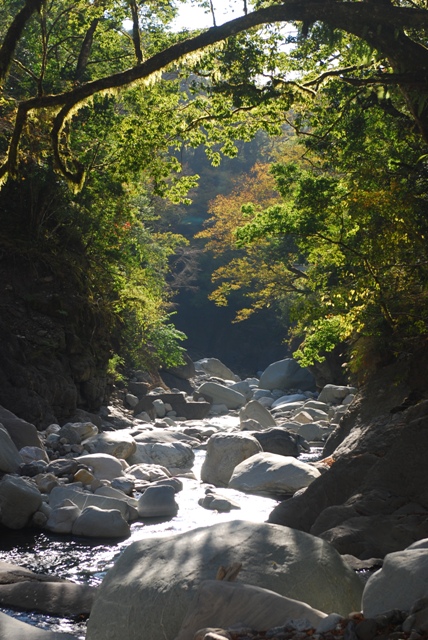
As the dawn mist disperses, the sunlight penetrates the cold, damp air and forest branches, turning the landscape a golden yellow, and the song of distant Taiwan Laughing Thrush (Garrulax morrisonianus ) echoes in the tranquil air. Here, in Taiwan's high mountains, we see endless ridges and vast arrow bamboo prairies. Because the region is the scene of active tectonic movements driving mountains higher, the small island of Taiwan has 258 peaks more than 3,000 m in elevation, including East Asia's highest summit—Mt. Jade. When the advance of the ice sheets during the Ice Age caused sea level to drop, Taiwan was connected with China and the Ryukyu Islands, allowing many northern species to migrate to Taiwan. After the glaciers retreated, many of these animals withdrew to high-elevation mountain areas. This is why Taiwan, which currently possesses a subtropical climate, nevertheless contains many high-latitude species that are adapted to sub-arctic and temperate climates. This is a highly distinctive feature of Taiwan's biological geography.
The green elf of the arrow bamboo thickets
The high mountains have a harsh climate; the sunlight is intense during the daytime, and the strong UV radiation can quickly cause sunburn in unwary visitors. After night falls, the temperature plummets, and the temperature difference between night and day exceeds 10°C. The chill of the night makes visitors shiver. When winter cold fronts pass through the area, the mountain peaks will be shrouded in a layer of pure white snow overnight, and the roads become impassable for vehicles not equipped with chains. It's very hard to imagine that a number of amphibians and reptiles live in this uninviting environment. Unlike mammals and birds, which can rely on a high level of metabolic activity to maintain their body temperature within a narrow range, reptiles and amphibians are ectotherms, which means that their body temperature is restricted by conditions in the external environment. So how do these animals survive in the cold of the high mountains? Some research results have indicated that high-elevation reptiles and amphibians have evolved distinctive physiological and behavioral adaptations to lowtemperature environments. For instance, compared with low-elevation pit vipers, mountain-dwelling Taiwan Mountain Pitviper (Trimeresurus gracilis) seek out a relatively low-temperature environment in winter; without the stimulation of low temperatures, these snakes have poor follicular development, affecting their reproduce. These physiological mechanisms and adaptations have a direct influence on the geographical ranges of these species, and they are most comfortable at higher elevations. Furthermore, because of their long-term isolation and continuing evolution, most of the reptiles and amphibians living in the high moun tains a re endemic to Taiwan . The establishment of Yushan, Taroko, and Shei-Pa national park has given these rare and vulnerable species a protected environment in which they can survive without disturbance. Let's pay these high mountain reptiles and amphibians a visit, and get to know them better!
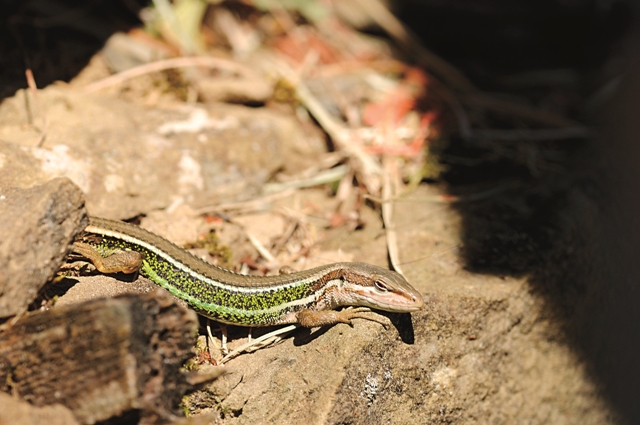
As their name suggests, grass lizards ordinarily prefer to live in open, grass-grown. For its part, the high-elevation grass lizard Takydromus hsuehshanensis is endemic to Taiwan, and is only found in the mountain areas of northern and central Taiwan. Takydromus' main habitat consists of arrow bamboo thickets and scree slopes on sunny southfacing mountainsides. When the sun is out, the lizards can often be seen basking in the sun in open areas or furtively darting through the shrubs as they search out insects for their breakfast.In size, Takydromus is somewhat larger than grass lizards living at lower elevations. Unlike most grass lizards in Taiwan, which have obvious ridges on their abdominal scales, the belly scales on Takydromus are very smooth, which can enhance its ability to absorb heat by pressing its belly against rocks warmed by the sun, enabling it to maintain a high level of metabolic activity. This may be another characteristic evolved to adapt to a cold high-elevation environment. And while low-elevationgrass lizards commonly spend the night sleeping amidst patches of grass, Takydromus would be frozen solid during the icy mountain nights if it copied this practice, and therefore does not behave in this way, but avoid in the crevice and cave.
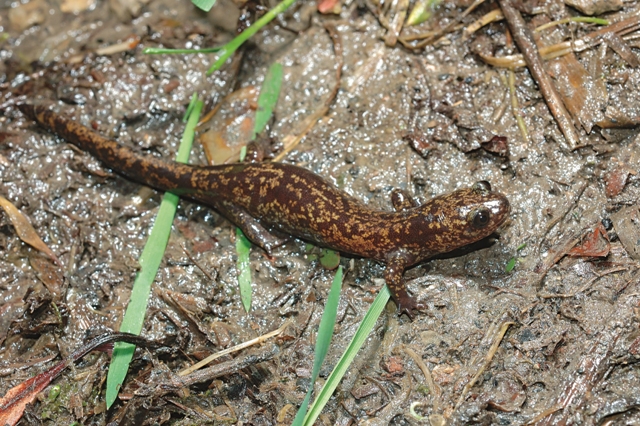
- upper:Salamanders are mostly found in the understory of medium- and high-elevation virgin conifer and broadleaf forests; they are usually found in shady, damp places near mountain streams, and can be seen on stream-side rocks or clay.
- lower left:This grass lizard (Takydromus hsuehshanensis ) has stuck its head out from a patch of arrow bamboo as it basks in the sun. Warmed by the sunlight, it has even closed its eyes
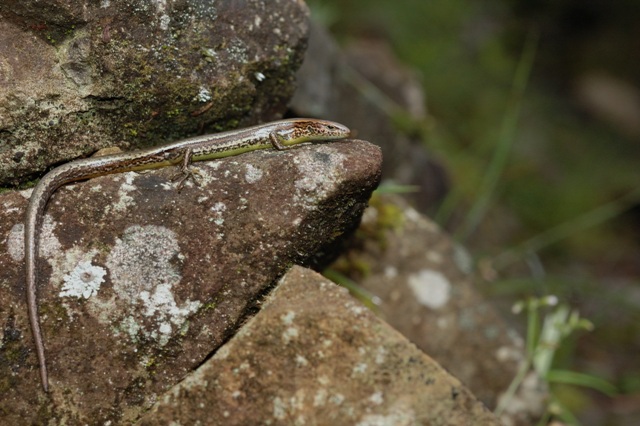
- lower right:Although the Taiwan alpine skink (Sphenomorphus taiwanensis ) is diminutive in size, it poses tough problems for taxonomists.
A taxonomic hodgepodge
The Taiwan alpine skink (Sphenomorphus taiwanensis ) is a kind of small lizard belonging to the skink family. Unlike Takydromus, this small lizard prefers to live in damp environments, such as among mulch-cover in forests or under stones orfallen logs. While naturalists previously believed that the range of this species was limited to high-elevationareas between 2,000 and 3,000 m, the skink has since been found living on Mt. Lala at an elevation of 1,500 m. Although Taiwan alpine skink is quite ordinary in appearance, a close look reveals that the lizard's glossy dorsal scales appear yellowish brown in some individuals and almost copper green in others. This suggests that there is great variability and considerable genetic variationbetween individuals, and indicates that there is ahigh likelihood that some populations actually constitute undiscovered new species! If recently developed molecular biological techniques are used in conjunction with past research on morphological characteristics, research on the taxonomy of these lizards may become a fertile and insightful area of study in the future.
The only diurnal viper
Among the several species of vipers living in Taiwan, the Taiwan Mountain Pitviper (Trimeresurus gracilis ) lives at the highest elevations. Although other vipers are nocturnal, cold mountain nights are certainly not a suitable time for the activities of an ectothermic species. In order to adapt to a high mountain environment, these snakes have become the only diurnal (day-active) vipers in Taiwan. Apart from being one of only a small number of the Viper to be active in the daytime, Vipers is also sometimes found in groups basking in the sun together. Furthermore, Vipers' use of a viviparous reproductive strategy in which its young are born fully formed lets it avoid the problem of lower viability of offspring resulting from exposure of eggs to a cold environment. The Taiwan Mountain Pitviper also needs different foods at different points in the growth process: The young snakes mostly eat alpine skinks, while the adults dine on rodents and shrews. This has the advantage of avoiding competition for food among immature and adult snakes, increasing the species' survival opportunities.
A knack for storing toad venom
The tiger keelback (Rhabdophis formosanus ) is a keelback snake distinguished by the black, yellow, and orange checkerboard pattern of its scales , which makes i t noticeably more conspicuous than other high-elevation species. In yet another honor for Taiwan, its colorful appearance and large, bright eyes led to its selection by Australia's Perth Mint as the emblematic figure on the coin produced to commemorate the Year of the Snake in 2013. These snakes are also quite distinctive in terms of behavior and physiology: For instance, when it encounters its natural enemies, the tiger keelback will expand its ribs, flattening its body and making it look larger. It may also rear up like a cobra, and this aggressive posture may also deter its enemies. This snake also has a rather unusual physiological characteristic: The tiger keelback chiefly eats amphibians, especially toads. When it has eaten a toad, the tiger keelback will store the toad's venom in a gland on its neck, and it may later secrete this venom to deter enemies when it feels threatened. There have been past cases of farmers in mountain areas who got the snake's secretions in their eyes, causing inflammation of the conjunctiva and cornea. The tiger keelback is also one of a very small number of vertebrates that can store toxins from their food and use it for selfdefense.
Goose bumps of the toad
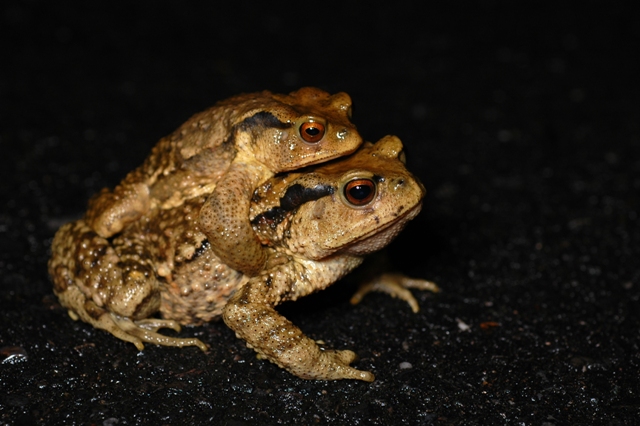
Taiwan has two kinds of toads: While the Asian common toad (Duttaphrynus melanostictus ) s most common at low elevations, the Central ormosa toad (Bufo bankorensis ) ranges from oastal areas to high mountains at an elevation of ,000 m. This toad is the largest amphibian in aiwan, and is quite abundant. If you notice a black ass of tadpoles in a stream, more than likely they re the offspring of the Central Formosa toad. Most rogs and toads sing to find mates, and the song of he Asian common toad is a familiar sound from any people's childhoods, but the Central Formosad seldom makes any sound. Only when a male oad is mistakenly embraced by another male to dwill it make a "gou-gou-gou" sound to remind the ther toad that it is "hugging the wrong person!" In ddition, although it has been mentioned that toads ave toxin, they do not readily secrete this toxin. As result, if you encounter a toad in the wild, you cangently touch its rough skin, and observe this plain and simple amphibian close up.
Stream-side contests of strength
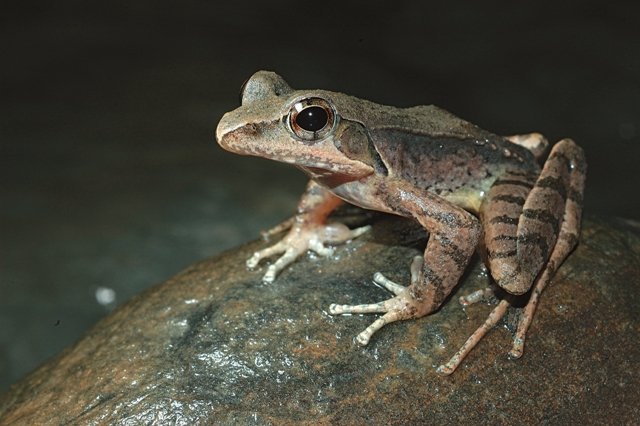
Sauter's Brown Frog (Rana sauteri ) is one of small number of amphibians able to live at an elevation of over 3,000 m. Large numbers of these frogs congregate by the edges of streams during the breeding season (usually in fall for lower-elevation populations, and in summer for high-elevation populations). Each male frog occupies a stone, and one typically first sees that each stone has one or two frogs, each sitting straight upright. Because of the relatively large ratio of male to female frogs, the male frogs try to seize every opportunity to mate with the relatively less numerous frogs. When the breeding season gets underway, many "contests of strength" occur as the male frogs try to win the right to mate with factor frogs by overpowering their fellow males.
In addition, because they mostly breed in streams, these frogs have many special habits and structures connected with the stream environment. For instance, because the sound of a rushing stream may easily overwhelm the sound of a frog singing, Sauter's Brown Frog—like the Central Formosa toad—does not rely on its call to find mates. And because of the force of the water in rushing mountain streams, Sauter's Brown Frog has enlarged toe-tips able to get a firm grip on slippery rocks. These frogs' tadpoles have structures similar to sucking disc allow them to get around without being washed away by the water; these tadpoles are even able to climb onto large rocks by following the fissures in stones in turbulent creeks.
- upper left:The Central Formosa toad (Bufo bankorensis ) is the largest amphibian in Taiwan, and is common along streams at all elevations.
- upper right:Sauter's brown frogs (Rana sauteri ) appear in large numbers along streams in the breeding season.
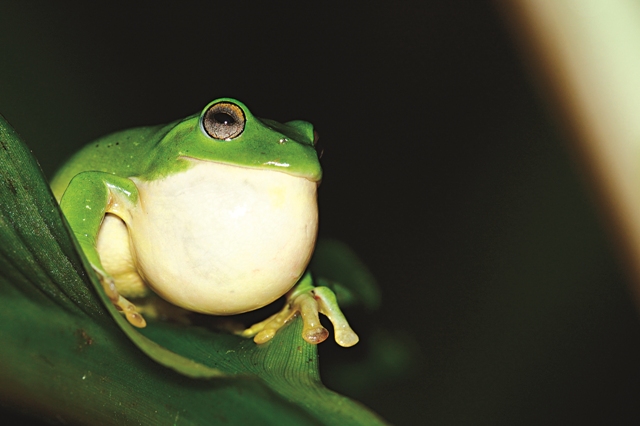
- lower left:Moltrecht's green tree frog (Rhacophorus moltrechti ) is one of a small number of frogs that can be heard at night at medium elevations and above.
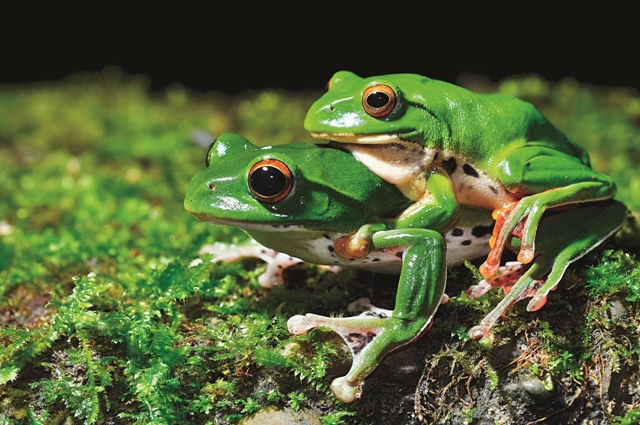
- lower right:Breeding season of Moltrecht’s green frog (Rhacophorus moltrechti ) is long, from early spring to autumn.
A living emerald gem
Among the five species of green tree frogs found in Taiwan, Moltrecht's green tree frog (Rhacophorus moltrechti ) is present at the broadest range of elevations, and can be found from the lowlands to the high mountains. These tree frogs sing loudly both day and night, and their love song sounds like a resonant "gua-er, gua-er, gua-guagua guagua-gua." While most frogs lay their eggs in water, this type of green tree frog has highly unusual reproductive strategy. After mating, the female frogs carry the male frogs on their backs as they search for a suitable location, which is usually a stem or branch near water. Afterwards, both the male and female frogs produce a foamy mass to hold their eggs. The surface of this mass soon hardens, keeping the fertilized eggs with them from drying out or being eaten by some predator. After the tiny tadpoles hatch, they secrete an enzyme to dissolve the foam, fall into the water below, and begin their new life.
What is a "Salamanders"?
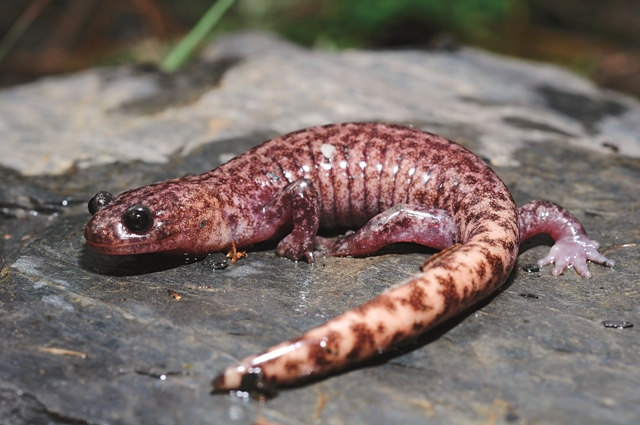
There are some relatively uncommon and rather secretive small creatures that have a long tail like a lizard, but bear the Chinese character for "fish" in their names. These unfamiliar animals are salamanders, and like the Formosan landlocked salmon and Taiwan beech, they are also relics of the Ice Age. Because of the sound of their Chinese name, people may a s k , "Huh? What ' s a salamander?" when they first hear the word for salamander. These salamanders are actually a kind of amphibian, and are closely related to the more commonly-known found in the West.
Taiwan contains five species of salamanders, and all live at high elevations. These salamanders consist of the northernmost Taiwan lesser salamander (Hynobius fuca ) , the Taiwan salamander (H. Formosanus ) and Sonan' s salamander (H. Sonani ) of the mountains of central Taiwan, the Glacial salamander (H. Glacialis ), which is found only around Mt. Nanhu, and the widely-distributed Alishan salamander (H.Arisanensis ). Because salamanders are typically denizens of the temperate zone, subtropical Taiwan is the southernmost limit of their range in the northern hemisphere. Due to the intense sunlight and high level of evaporation in the mountains, salamanders, which have no effective mechanisms for retaining moisture, are unquestionably highly vulnerable. As a result, all species in Taiwan are nocturnal, and spend the day hiding in under rocks or logs or in holes in the soil. Because these hidden places usually have a very stable environment, with largely constant humidity and temperature, they provide salamanders with an ideal habitat. While many people believe that salamanders live in the water, in fact they only enter the water during their breeding season, which occurs in late winter and early spring. Salamanders' egg pods usually contain only a dozen or more embryos, which is a far cry from the myriads of eggs produced by frogs. Salamanders' tadpoles have visible external gills, and grow their forelegs before their hind legs.
Warming and potential threats
In 2012, Shei-Pa National Park established a salamander ecology center at Guanwu. Apart from actively studying laws protecting salamanders and striving to restore their habitat, this center also provides visitors with a fun educational environment ensuring that people go away with better understanding of reptiles and amphibians living in the high mountains. Furthermore, the ecology center has an even more important goal, which is to enlighten people concerning the looming threats faced by these rare creatures, and even by all mankind.
As everyone knows, the Earth is currently warming. Global warming, along with the extreme climate conditions that accompany this warming, is a severe problem that faces all living things living in the world. Some people might wonder if organisms living on the tundra or in other especially harsh environments might actually be better off in the wake of a warming climate. In fact, however, the effects of warming are unpredictable, and may cause populations of some species to increase rapidly or fall rapidly, which may disrupt the ecological balance and cause the collapse of ecosystems. Taking medium-/high-elevation species as an example, the effects of warming may include excessively high temperature during the summertime (directly causing the death of certain organisms), insufficiently low temperature in the winter (disrupting normal reproductive cycles), and changes to the local water cycle (changes in amount of rainfall or water from mist). The combined result of these effects may be to cause dramatic changes in mountain plant communities. In addition, reptiles and amphibians are ectotherms, and cannot regulate their body temperature as easily as endotherms such as mammals and birds, which leads many people to assume from a human-centered perspective that "endotherms are more advanced." However, ectotherms have adopted an energyconservation strategy, and can take advantage of microhabitats in their environment to precisely regulate their body temperature in order to meet their current needs. From a biological perspective, ectotherms are not defective, and are "as good as" endotherms. However, even if they had an even better biological design, ectothermy may be fatal flaw in the face of rapid global warming. In addition, most amphibians have only very limited ability to migrate; as a consequence, when the temperatures in their environment fluctuate dramatically, there is a significant chance that certain species of amphibians will vanish.
Apart from climate change, the struggle for space between humans and the environment has always posed a nearly insoluble problem. In central Taiwan, mountain areas have been widely developed for vegetable fields, fruit orchards, tea plantations, and tourist guesthouses, which has constantly challenged the ability of this region to withstand pressure. Ceaseless mountain road construction or widening projects catering to visitors who habitually drive right to their destination have gradually fragmented originally continuous wildlife habitat, forcing animals to take great risks when crossing roads bearing heavy traffic. For instance, it has been reported that a protected Chinese leopard cat (Prionailurus bengalensis ) was hit by a car and killed on the Miaoli County freeway section. And if a nimble cat can be killed like this, how much more likely that slowly crawling amphibians will end up as roadkill.
In spite of this situation , it is very praiseworthy that some of the national parks have begun to address this problem. For instance, in order to reduce animal deaths on park roads, Yangmingshan National Park has not only designed underpasses allowing animals to cross roads, but has also put up signs reminding motorists to watch out for Collard Scops owls (Otus bakkamoena ) flying low across roads. In Kenting National Park, which boasts the world's greatest crustacean diversity, large numbers of Cardisoma hirtipes land crabs leave the land and return to the sea to lay their eggs during their fall breeding season. Kenting National Park Headquarters has not only held a "Land Crab Protection Slogan Contest" activity, but also put the winning slogan—"Land crabs may be out, please go slow"—on roadside signs reminding drivers to carefully avoid hitting land crabs. The Park Headquarters has implemented traffic controls and lane reductions along Highway 26 near Siangjiao Bay to protect these rare and vulnerable organisms. We are pleased to see these outstanding efforts to express love and respect for Nature, and we hope that these ideas can be extended to even more places.
About the author
Wang Jen-chieh
Graduated from the Graduate Institute of Life Sciences, National Taiwan Normal University; currently serving as a temporary assistant at the National Museum of Natural Science. Wang has participated in numerous wildlife surveys, and has investigated the research topic of the taxonomy of Taiwan's small lizards.
Chi Chung-hao
Graduated from the Graduate Institute of Life Sciences, National Taiwan Normal University; currently serving as secretary of the Society of Subtropical Ecology
Lin Szu-min
Graduated from the Department of Physics, National Tsinghua University; studied freshwater fish during graduate school, and began researching reptiles and amphibians while in a Ph.D. program. Currently serving as an associate professor in the Department of Life Sciences, National Taiwan Normal University, and is a volunteer in the Raptor Research Group of Taiwan and other private conservation groups.

- upper left: Salamanders are extremely secretive, and are very sensitive to changes in the environment. It is expected that they will be one of the first victims of long-term ongoing climate changes
- upper right: Salamanders are a highly diverse group of high-elevation amphibians. The photograph shows a Taiwan salamander
- lower: Kenting National Park urges local to help protect land crabs. Photograph©Kenting National Park


