
The Diverse but Fragile Mountains of Formosa-
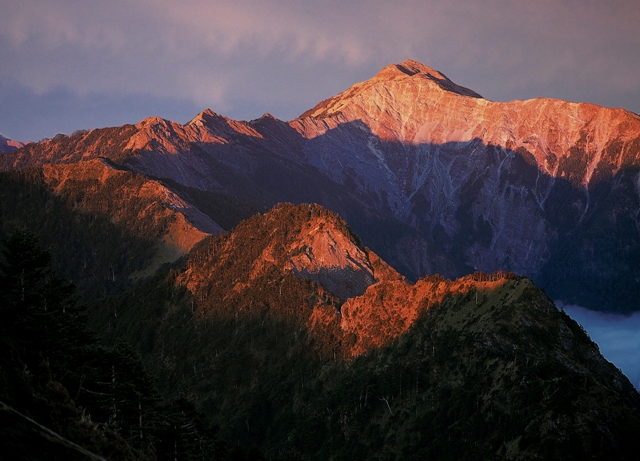
After more than a decade of mountain hiking, I have tried many of Taiwan's highest mountains. If I was to merely list all the mountain trails that I have taken, that probably wouldn’t be enough to induce people to test their physical limits and actually climb those towering peaks. Perhaps my compulsion to visit Taiwan's high places comes from wish to escape the hustle and bustle of ordinary life, commune with nature, recognize my true self, and understand the relationship between humans and nature.
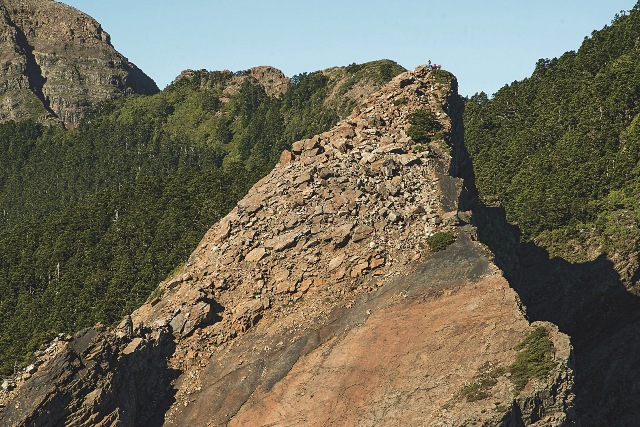
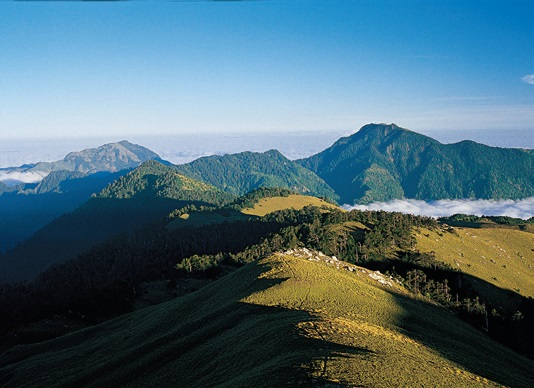
- The stunning and stretching Siangyang Great Precipic.
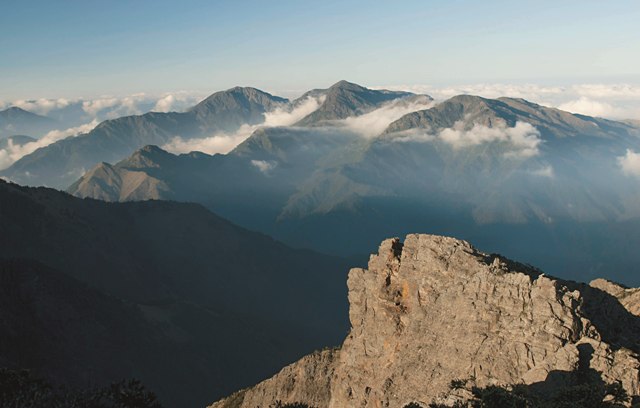
As everyone knows, the natural environment restricts human behavior and industrial activities, while human actions will change the natural environment.
It can be easily seen from a map of the world's population that most people live in places where the land is flat, climate conditions are favorable, and the water supply is adequate. Starting around the m i d d l e o f t h e 2 0 t h c e n t u r y, t h e r a p i d industrialization of numerous emerging nations led to a surge in material abundance and improvement in quality of life. Coupled with improvements in medical care, this led to a rapid increase in the world's population, and entailed much greater human demand for yours natural resources. As a result, the scope of human development gradually spread from areas with relatively level land and plenty of water to less accessible, or less easily developed, marginal lands. Mountainsides relatively close to urban areas were the first to be developed, and were followed by many high mountain areas.
Major mountain ranges are frequently the source of large rivers, which in turn provide the vital water resources to countless people living in downstream low land areas. The most important river of the Indian subcontinent—the Ganges— originates in the world's highest mountain range— the Himalayas. The Ganges traverses India's heavily populated Indo-Gangetic Plain, and ultimately reaches the sea in Bangladesh. Water from this great river sustains a vast number of the more than 1.2 billion people in India—second only to China in terms of population and also a great nation with an ancient history—along with 150 million people in Bangladesh, the world's most densely populated major country (not including smaller, mostly urban countries). In Taiwan, which has less than 1% of the land area of the Indian subcontinent, the Dajia River originates in the vicinity of Mt. Hehuan and flows into the Deji Reservoir, which provides water to more than two million people in the Taichung urban area. These examples show the close dependence of people's lives on mountain ranges. When the high mountain environment is developed and altered, this process can have a huge influence on the lives of people living in downstream areas. As a consequence, we must strive to understand the ways of Mother Nature if we are to grasp and facilitate the role of mountains in maintaining human life.
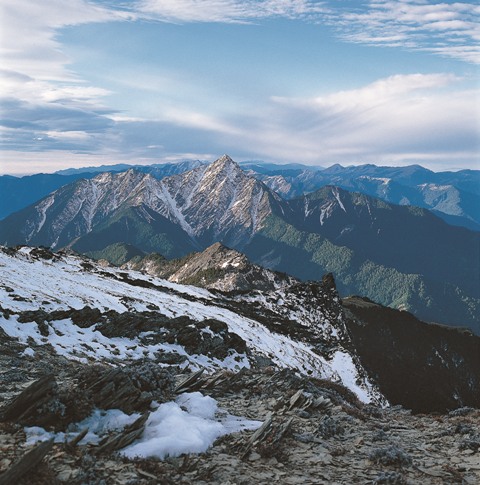
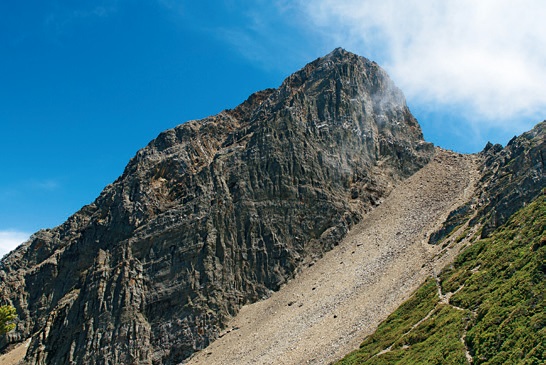
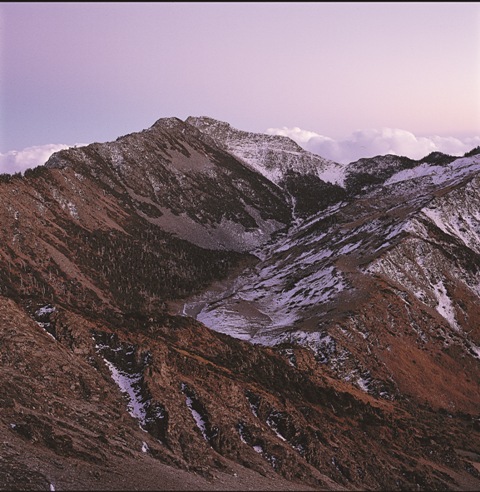
- upper:One of Taiwan Quintuple Mountains , Mt. Siouguluan is the highest point on the Central Mountain Range. Composed mostly of slate, this mountain is steep and majestic.
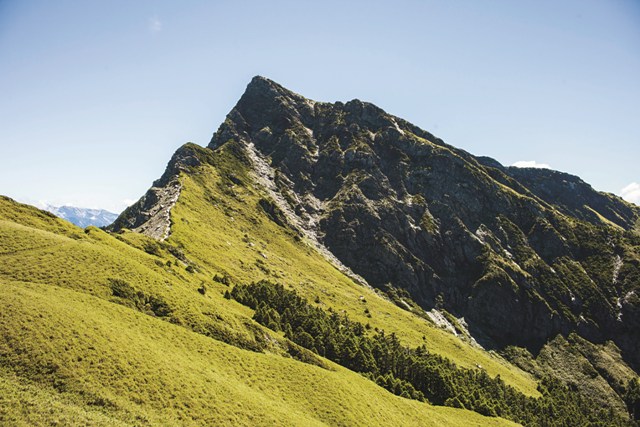
- lower left:Known as the "sharpest peak in Formosa," Mt. Zhongyangjian.
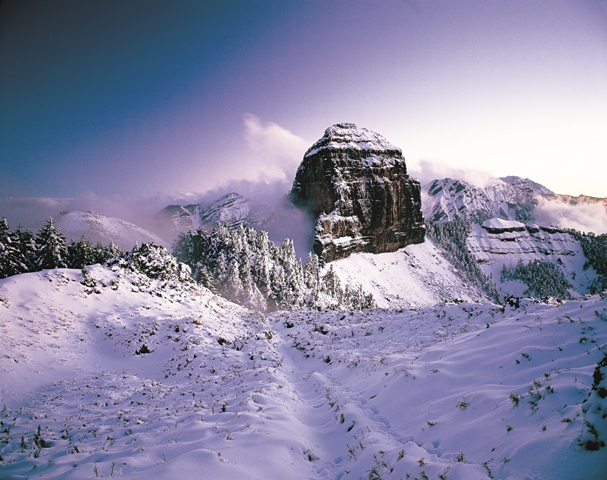
- lower right:Mt. Dabajian is located in the Mt. Xue Range, and is noted for its dramatically protruding summit. The peak is surrounded on all sides by cliffs of bare rock, and its cold, awe-inspiring appearance has led to its being dubbed the "strange peak of the century."

The collision of the Eurasia and the Philippines Sea plates has led to the rise of the towering mountains that cover much of the island of Taiwan. Five major mountains systems form Taiwan's spine, and provide the source and catchment areas of the island's major rivers.
Taiwan's three mountainous national parks contain many of the island's Taiwan Centuple Mountains. Thirty of these lofty summits are located in Yushan National Park, 27 are located in Taroko National Park, and 19 are in Shei-Pa National Park, and the three national parks thus account for three fourths of the Taiwan Centuple Mountains. The so-called " Taiwan Quintuple Mountains and Three Triple Sharp Peaks" consist of the five mountains Mt. Jade, Mt. Xue, Mt. Siouguluan, Mt. Nanhu, and Mt. Beidawu, together with the majestic peaks of Mt. Zhongyangjian, Mt. Dabajian, and Mt. Dafenjian. Apart from Mt. Beidawu, all of these mountains are located within national parks.
Yushan National Park is famous for the grandeur of its mountain scenery, and 96.4% of the park's area is over 1,000 m in elevation. For their part, 85.6% and 99.1% of the area of Taroko National Park and Shei-Pa National Park has an elevation of over 1,000 m. These typical mountain national parks cover much of the Central Mountain Range and Mt. Xue Range, and contain the upstream areas of some of Taiwan's most important watersheds. By protecting the Taiwan's forests and river systems, these parks help sustain the island's approximately 23 million people. At the same time, the parks play a key role in protecting geological, topographic, and geographical features, along with the numerous species, habitats, and ecosystems found in these places.
- upper:Taiwan Centuple Mountains
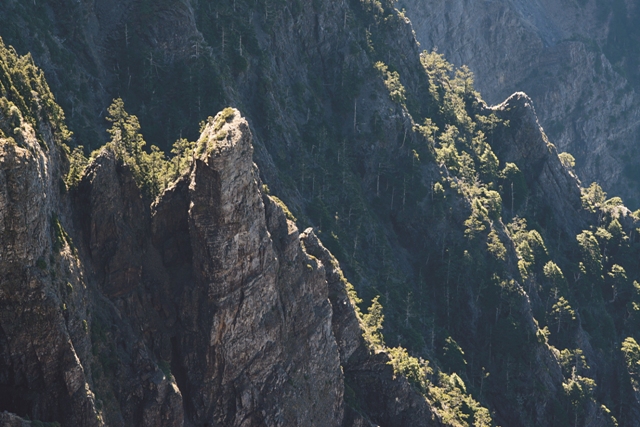
- lower:Mt. Sumida is located in the middle of the Holy Ridge, and the precipitous Sumida Cliff is a key section of the Holy Ridge route.
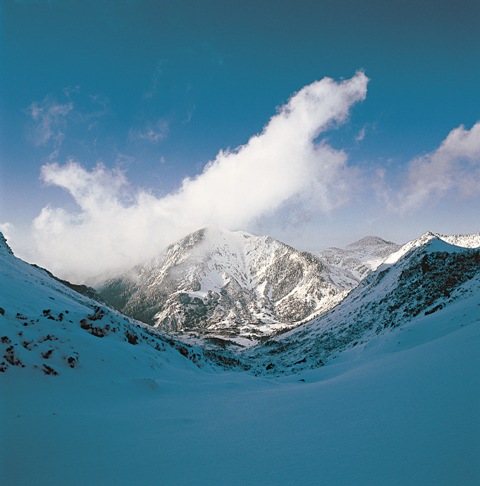
The scenery in the mountains is beautiful and majestic, and the spectacular upland typography is breathtaking. Generally speaking, mountains have varied landforms. Geologists are now unanimous in the opinion that Mt. Jade, Mt. Xue, and Mt. Nanhu bear the signs of post glaciers.
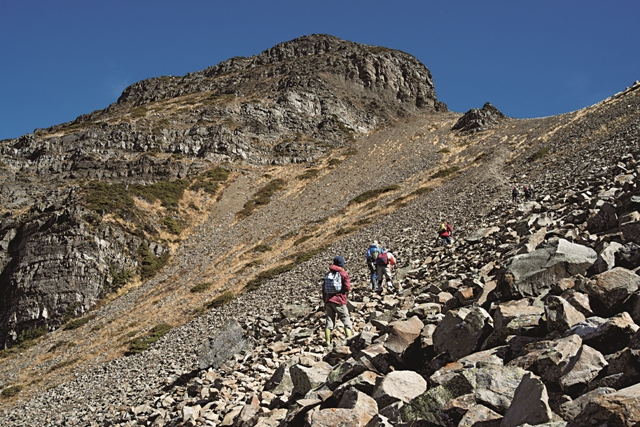
Located between mountains and the sea, Taroko National Park is famous for its varied scenery, and is much loved by hikers and students of nature. It is known internationally for its spectacular gorge, which has been eroded through marble and features amazingly steep, tall walls. With some of the most distinctive folded terrain in Taiwan's high mountains, Mt. Pintian features layers of sandstone and shale thrust up during the Penglai orogeny. Reaching the surface, these lightly metamorphism rocks were eroded by mountain streams into their current shape. Cirques are landforms created by glacier erosion, and typically take the form of U-shaped valleys. Taiwan's high mountains preserve many traces of glaciers that existed during the last Ice Age, including cirques, aretes, glacial boulders, glacial striations, and moraines. Of these features, the Glacial Cirque No.1 on Mt. Xue is the best preserved. Many relict species from the Ice Age still survive in Taiwan, including gymnosperms such as the Yushan juniper (Juniperus squamata ) and other species akin to those still living in the Himalayas. Many o f t h e s e s p e c i e s s u r v i v e i n t h e h a r s h environment of high ridges and wind-blasted mountain slopes, where they form sprawling brake and resemble bonsai tended by Nature. Scree slopes are common in Taiwan's mountains, and the high peaks above 3,600 m typically consist of unstable scree slopes, bare rock, and detritus fields. These features, formed by the weathering of rock, are most visible in the areas around Mt. Jade and Mt. Qilai.
The Mt. Nenggao – Mt. Andongjun ridge has Taiwan's largest grass-covered land, as well as alpine lakes t h a t provide a charming embellishment to the mountain scenery. These natural lakes provide water to the wildlife, and are also an important water source for hikers. But because these alpine lakes have selfcontained aquatic ecosystems, they are easily altered by external contaminants.
The background factors affect ing the evolution of Taiwan's mountain topography include the climate and geology. From the perspective of natural history, plate tectonics, and Taiwan's location, the i s l a n d ' s high mountains have many unique characteristics. The forms of Taiwan's mountain landscapes also h i n t the f o r ces that shaped the i s lan d ' s topography, and Taiwan's geographical location controls its climate.
- upper left:The cirque on Mt. Nanhu is the largest in the area. This peak is the highest source of the Dajia River.
- upper right:Mt. Jade Main Peak consists of large scree slopes.
- lower left:The western ridge of the main peak of Mt. Xue consists of large scree slopes.
- lower right:Mt. Tarokoda."
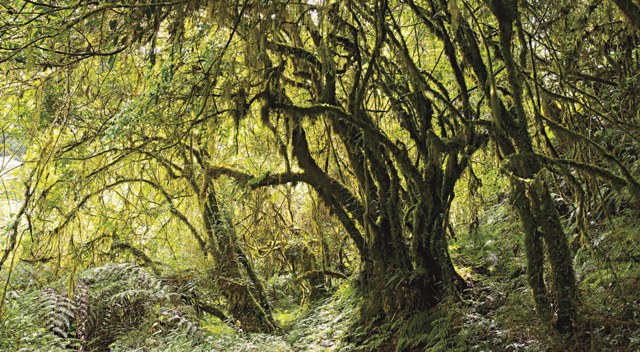
The great differences in elevation that prevail in Taiwan's mountains have led to dramatically differences in climate at different altitudes. The varied habitats created by these climates harbor a wealth of flora and fauna. Taiwan is located at the boundary of the tropical and subtropical zones, and more than one-third of the island's area is at an elevation of over 1,000 m. Due to the steep slopes and great differences in elevation, it is possible to go from sea level to an elevation of nearly 4,000 m in a horizontal distance of only 100 km. As a consequence of this topography, Taiwan simultaneously possesses tropical, subtropical, and temperate climates at different altitudes.
The mountains' different climate zones nurture distinctive species and ecosystems that have adapted to the local climate. In addition, differences in local environmental conditions, including differences in slope, differences between windward and leeward mountainsides, and differences between ridges and valleys, lead to variations in soil thickness, amount of moisture available to plants, and amount of sunlight, resulting in a wide range of microclimates and growing conditions. Another effect of this situation is that very different types of vegetation may be found growing within a small area in the mountains, creating a mosaic of different landscapes. Because of this, in spite of its small area of only 36,000 square kilometers, Taiwan provides enough room for the survival of highly diverse flora and fauna, including many species endemic to Taiwan. The rich and varied biodiversity of Taiwan's ecological environment highlights the needed for active conservation measures.
But although Taiwan's high mountains contain a wide range of habitats and great species diversity, the relatively low temperatures in the mountains imply that little energy is available for use by living organisms. As a result, the rate of ecological succession is relatively slow, and if habitats are disturbed, they may need a long time to recover. It is likely that, due to the current process of global warming, species living at lower elevations will move to higher elevations as their original habitat becomes uncomfortably warm. And as species migrating upward move into higher elevation areas, they will occupy habitat originally home to highelevation species, and species originally living at high altitude may become extinct when they can no longer continue to move up. For instance, research in Taiwan has found that extreme climate conditions caused by global warming have ravaged the habitat of the Taiwan Shovel Jaw Carp (Varicorhinus barbatulus ) living in the Nanzihsian River. As a result, the Deep-body Shovel Jaw Carp (Varicorhinus alticorpus ), which prefers relatively low elevations and has a high population recovery rate, has extended its range upstream into the highelevation habitat of the Taiwan Shovel Jaw Carp, posing a serious threat to the latter's survival.
Another example involves Taiwan's cloud forest zone. Many endemic species live in Taiwan's cloud forest, which is located in a band at mediumhigh elevations, and is characterized as an ecological island and a transitional ecotone. The cloud forest can thus be considered an island within an island. As the climate changes, organisms that are originally adapted to life in the cloud forest may suffer a major impact. Such large and valuable trees as the cypress, cypress (Chamaecyparis ), and Taiwan Incense-cedar (Calocedrus formosana Florin ) grow within the cloud forest zone at elevations of 1,300-2,600 m. Many of these trees were logged during the Japanese colonial period and early Kuomintang period, wreaking havoc on the cloud forest ecology, and recent environmental changes and the effects of global warming have had a further impact. As a result, whole populations of millennium-old giant trees have collapsed in the space of an eye blink due to logging. The people of today enjoy natural r esour ces that have accumulated over thousands of years; even if we begin reforestation today, how many generations will it take before cypress seedlings grow into forest giants again?
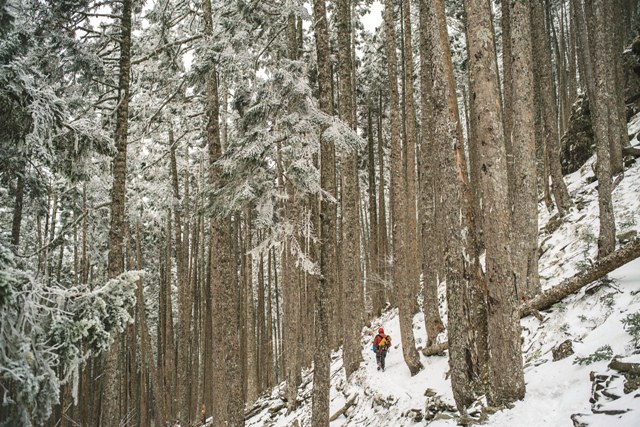
- upper:Geologically, Taiwan's high mountains are composed of fragile sedimentary rock. In the past, extensive forest cover, including large expanses of cloud forest, shielded these towering peaks from the effects of erosion.
- lower left:The Qilai N. Peak is under the jurisdiction of the Taroko National Park Headquarters. Seen from Mt. Hehuan, this peak looks huge and black in the sunlight. This imposing and treacherous mountain is known as "Black Qilai.
- lower right:The ridge of the main peak of Mt. Xue.
Apart from the major environmental changes brought by global warming, the typhoons that strike Taiwan on and almost annual basis have perhaps the greatest impact on the island. The Western Pacific Ocean and East Asia is one of the global regions with the highest frequency of tropical cyclones, and the many typhoons that strike the Philippines, Taiwan, China, and Japan every year take a huge toll in lives and economic losses. According to past meteorological statistics, an average of 3.7 typhoons hit Taiwan each year. As a consequence, typhoons have played a major role in shaping Taiwan's terrestrial ecosystems, and affect the composition, structure, and succession of species in many ecosystems. Typhoons are another reason that Taiwan's forest ecosystems are different from those in other tropical and subtropical regions where typhoons are rare or absent.
Year in and year out, typhoons have steadily altered the natural environment in Taiwan's mountain areas. When a typhoon approaches or crosses land, powerful winds and torrential rains strip vast amounts of leaves and branches from plants; the quantity of foliage removed by typhoons may be equivalent to his much is one half of a years' worth of fallen leaves. This removal of leaves impacts ecosystems by lessening the amount of nutrition available to organisms. In addition, due to the increase in fallen leaves and dead wood, and loss of leaves able to absorb carbon dioxide, forest ecosystems may cease to act as carbon sinks, and instead function as carbon sources. For instance, the amount of leaves and branches stripped from trees when the cypress forest ecosystem on Mt. Qilan in northeastern Taiwan is hit by typhoons has been estimated to be more than 70% of the average annual loss of leaves and twigs. In addition, the loss of branches and leaves from the natural broadleaf forests of central Taiwan in typhoons has been estimated to contribute 60% to annual losses. The loss of leaves and branches will change the structure of the forest canopy, affecting the amount of light reaching the understory.
While typhoons can deal a heavy blow to ecosystems in a very short time, they may also be helpful to forests over a long time span. Because there are typically few gaps in the canopy of Taiwan's tropical and subtropical forests, very little light reaches the understory. As a consequence, due to insufficient light, seedlings often cannot survive to become a new member of the canopy. By creating more gaps in the forest canopy, typhoons increase the amount of light penetrating to the forest floor; this helps seedlings to grow, promoting the ecosystem's natural succession.
Research has verified that the large gaps in the forest canopy formed by passing typhoons increase light at lower levels of the forest. This enhances the forest's overall photosynthetic efficiency, and promotes the ability of the forest to sequester carbon dioxide from the atmosphere. Taiwan is located in the monsoon belt, and there are significant seasonal differences in rainfall. Typhoons occurring in the summer and fall can bring copious amounts of precipitation, providing water circulation by ecosystems, and refilling reservoirs with water that can be used during the dry season, which lasts through the winter and spring. While years with few typhoons may spare Taiwan from death and destruction, they may also cause worry about insufficient rainfall, which may reduce the amount of water available to households, farms, and industry during the dry season. So while typhoons may constitute major natural disasters, they also have a positive impact on the ecological environment, and provide an indispensable source of water resources.
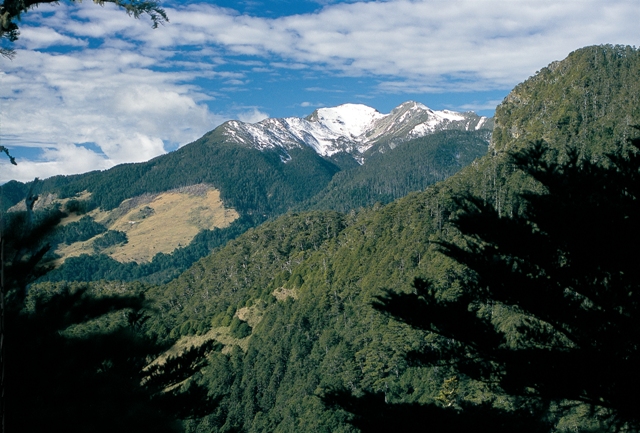
- upper:Taiwan fir (Abies kawakamii ) forest of Mt. Xue is the highest in Taiwan, called Black Forest.
- lower:The main peak of Mt. Xue and Glacial Cirques.
Apart from blows dealt by nature, human disturbances also pose grave threats to alpine ecosystems. Human disturbances range from local development, such as farming in Taiwan's high mountains, to boundary-spanning impacts, such as air pollution caused by the burning of fossil fuels in China's southeast coastal areas, which i s transmitted over long distances to Taiwan.
Changes in the utilization of mountain land may affect the nutrient cycle in mountain ecosystems. For instance, the large-scale use of nitrogen fertilizer in agriculture can increase the flux of nitrous oxide (N2O) from the ground into the atmosphere. Nitrous oxide is 300 times more potent a greenhouse gas than carbon dioxide, and can significantly increase global warming. Furthermore, excessive amounts of nitrogen entering the soil from use of fertilizer will cause soil acidification, which will affect forest health and even reduce forest growth. In addition, soil erosion will wash nitrogen fertilizer into streams, increasing the nitrogen concentration of surface water and groundwater. This w i l l cause eutrophication of downstream reservoirs, polluting water resources.
Taiwan's urban areas and consumers are chiefly located along the island's western coastal plain and in inland basins. Although the inconvenient transportation in mountain areas means that most mountain agricultural products cannot compete with lowland products responding to strong demand from urban consumers, highelevation, cool-climate vegetable production areas have expanded steadily. The bare, eroded mountain slopes commonly seen in Taiwan are the most obvious signs of the large-scale destruction caused by mountain agriculture.
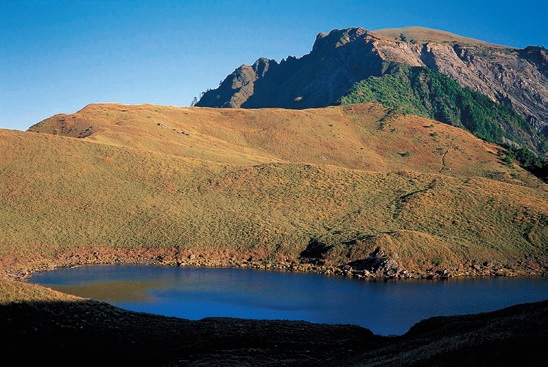
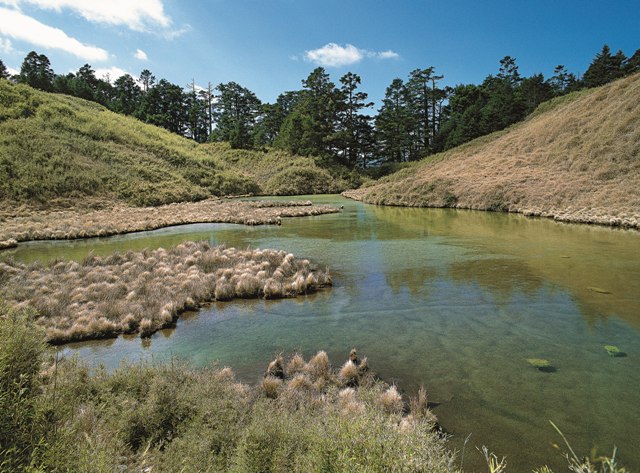
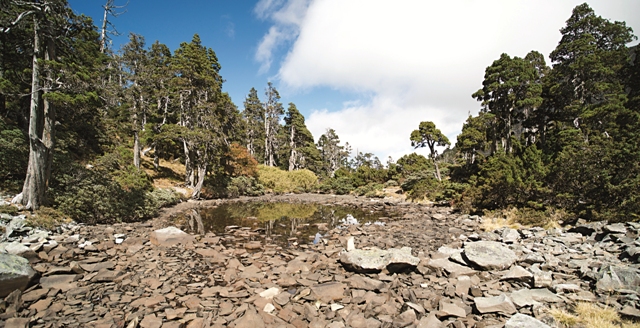
- left:One of the Mt. Nenggao - Andongjun ridge alpine lakes - Baishih Pond.
- right:One of the Mt. Nenggao - Andongjun ridge alpine lakes - Tunlu Pond.
Taiwan's beautiful yet fragile mountain ecosystems are full of unique and sensitive natural resources. From the perspective of biodiversity, due to their complex typography, isolation, and special climatic conditions, mountain environments, especially cloud forest zones, provide excellent conditions for the preservation and speciation of relic species. Taiwan's mountains contain many unique endemic species, and approximately one quarter of the species found there are not found anywhere else in the world. In addition, the genetic characteristics of the remaining three quarters of mountain species are unique in many ways.
Since they encompass expansive mountain areas, Yushan, Taroko, and Shei-Pa national parks play important roles in mountain ecological conservation and management, and they preserve the primeval national scenery, native flora and fauna, unique ecosystems. The establishment of protected areas in the mountains to protect ecosystems and habitat maintaining biodiversity is an essential duty of the national parks. Apart from habitat conservation, which is the most effective means of maintaining biodiversity, for many years the national parks have engaged in long-term ecological research. The national parks have established long-term ecological research stations, set up permanent sampling areas, and collected and maintain basic data needed for biodiversity preservation and focal management work. For instance, after establishing a "black bear monitoring team" in 1996, Yushan National Park Headquaters has strengthened research on black bear biology since 1998. This national park has continued to implement research projects on the ecology of the Taiwan black bear and human-bear interaction, while drafting black bear conservation measures and ecological interpretative information. Taroko National Park Headquarters has performed longterm monitoring of alpine plants on Mt. Hehuan since 1994, and its research has verified that climate warming is currently affecting Taiwan's alpine ecology. Research on this subject will continue in the future. Shei-Pa National Park Headquarters has monitored the status of the Formosan Landlocked Salmon since 1994, and has performed continuous long-term monitoring of water quality in Qijiawan Creek, which has provided reference data for ex situ conservation.
In addition, the national parks are actively establishing protected zones where human disturbance is forbidden, engaging in restoration of endangered species such as the Formosan Landlocked Salmon restoration work, performing long-term monitoring of the results of conservation, relying on community participation to strengthen environmental communication, effectively managing protected zones, and doing their utmost to promote conservation of biodiversity. These national parks hope to monitor global warming and environmental changes, preserve natural resources that can produce warming, established models of greenhouse gas reduct ion and adaptation, implement environmental education, and enlist the talents of the community and public in addressing global warming. The national parks also provide the public with recreation, mountain climbing, and hiking options.While recreational pressure inevitably has unpredictable impacts on the ecology and environment, the national parks are actively promoting mountain ecotourism, and educating the public in how they can reduce their impact on the natural environment. The national parks also hope to promote reverence for the mountains and nature and correct mountain-climate attitudes through the establishment of mountain-climbing schools.
- upper left:Lake Cui is Taiwan's highest mountain pond. Located below a scree slope on the west ridge of the main peak of Mt. Xue, the lake is a source of the Da-an River.
- upper right:The cirque on Mt. Nanhu is located on the east side of the main peak. Enclosed by high ridges, the cirque is like an oval valley.
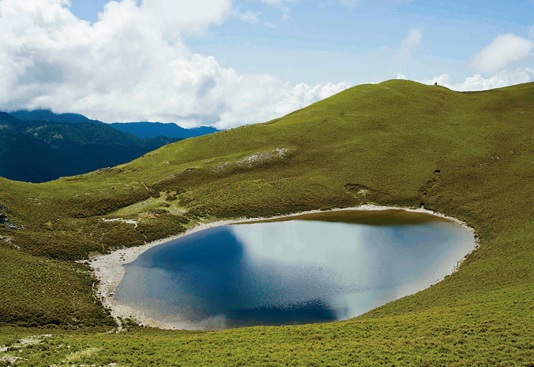
- lower left:Jiaming Lake.
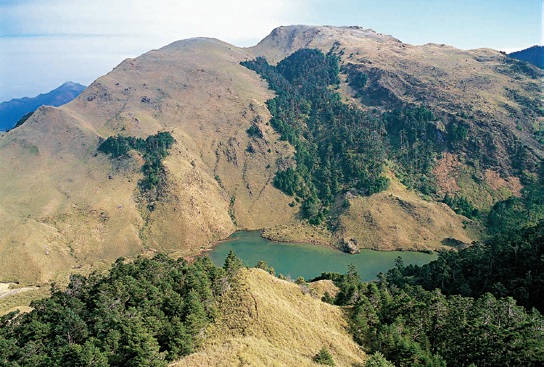
- lower right:One of the Mt. Nenggao - Andongjun ridge alpine lakes - Wanli Pond."
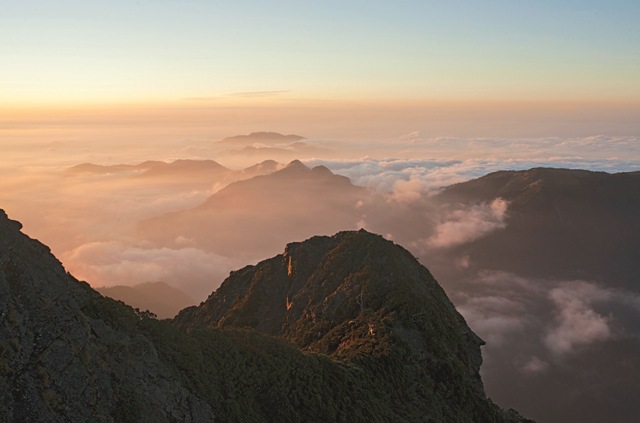
Humans and all living things are the products of tens of millions of years of evolution. Although Laozi said, "Heaven and earth are indifferent; to them all creatures are considered straw dogs," and Nature is not especially concerned about any one person, nor do the mountains love certain mountain climbers, hikers nevertheless love to travel over mountains and valleys, treading under the blue sky, climbing every peak, and learning more about themselves with every mountain they climb. Undertaken in this spirit, our survey of mountain ecology gained an understanding of Nature's diversity and fragility; but we also appreciated her moving beauty,
Due to their harsh climate and fragile geological conditions, high elevation areas are difficult to restore once they suffer damage. That mountain ecosystems are able to maintain stability in the face of natural events such as earthquakes and typhoons must be attributed to the resilience of the mountains and forests. Now the national parks encompassing one-fourth of Taiwan's mountainous backbone preserve vast expanses of mountain environment from destruction. We hope that current conservation results will let people see that sustainability of the natural environment is a necessary precondition to continued economic development. We also hope that conservation models developed within the national parks can be extended to other conservation areas outside the national parks, while maintaining a focus on areas of mountain biodiversity, and we believe that there will be more resources and support for conservation work in the future. All mountains are irreplaceable. We must rely on our deep concern and concrete actions to cherish and preserve the environment and
- Mt. Le is located in the Jialishan Range.


