
Tempered by the time-Taroko's unwavering commitments for thirty years
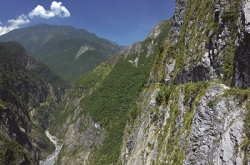
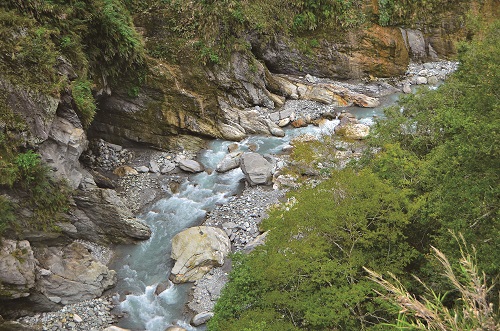
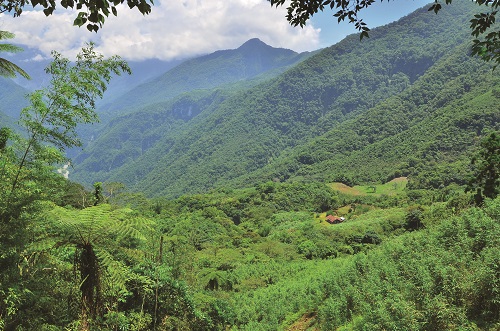
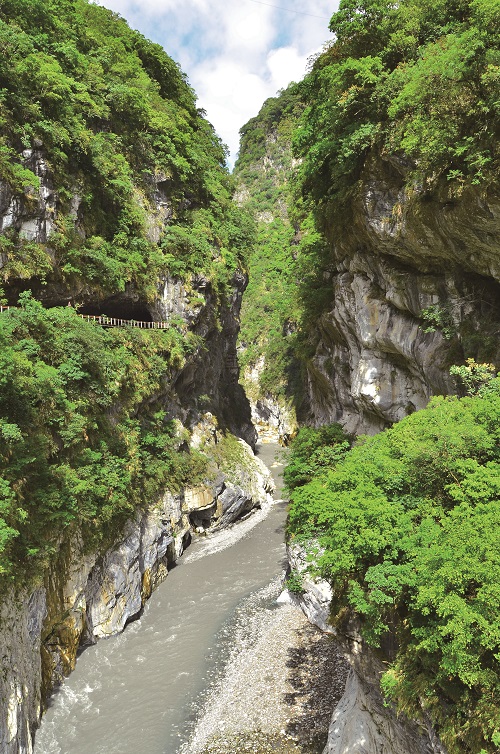
Taroko National Park’s glories start with the cascading Liwu River between Mt. Hehuan and the north peark of Mt. Qilai. Two soaring peaks in the Central Mountain Range. The result of tectonic processes, the geology, and scenery, of Taroko National Park (TNP) is exquisite. Meandering rivers descend from the frigid to subtropical climes, supporting a rich ecological diversity and preserving traces of human habitation. TNP has found a foothold in this sublime yet variable, bold yet delicate, resilient yet fragile realm of mountains and rivers, due to thirty years of dedication to coexisting peacefully with nature, as well as a commitment to forging links with the traditional culture. Crashing tirelessly against the incredible rocks of the soaring peaks, the Liwu River is an inspiration to the hardworking individuals at the park headquarters, reminding us to be vigilant and never to forget out founding ideals.
Information
Taroko National Park Basic Information
Founded in/ 1986.11.28
Park area/92,000 hectares
Territorial administration/Taichung City, Nantou County, and Hualien County
Major rivers/Liwu River, Sanzhan River; the upper reaches of the Dajia River, Zhuoshui River, and Hualien River
Climate/From subtropical to polar
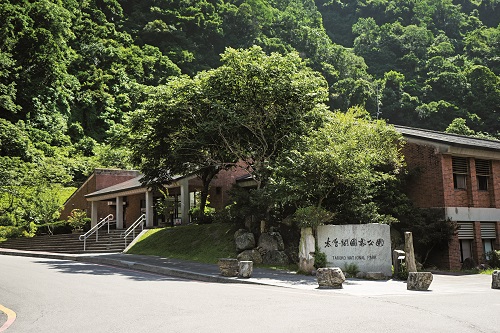
Revisiting the Past, Creating History
Taroko National Park (TNP) was established on November 28, 1986. However, before its founding, TNP faced several national planning hurdles, Taiwan Power Corporation (Taipower)’s Liwu River Hydropower Project and the Formosa Plastics Corporation’s Chongde Industrial Area Cement Extraction Project. Preservation was pitted against development in advance of the founding of TNP, but Taiwanese society had come to value ecological preservation. The founding of TNP was not only a milestone in national park history, but also an environmental turning point, towards preservation.
TNP spans Hualien, Taizhung and Nantou counties, with the greatest altitude gain of any national park in Taiwan, from sea level to 3,742 meters at the top of Nanhu Mountain. A short 80 kilometers on the Central Cross Island Highway takes you from a low altitude to an elevation of over 3,000 meters above sea level, and from a sub-tropical to a frigid or polar climate. Such climatic conditions support rich biodiversity, with over 1,500 animal species and 2,000 plant species. When you reflect on the trials and tribulations the TNP has endured, you will feel that the preservation of this magnificent realm of mountains and rivers has not come easy.
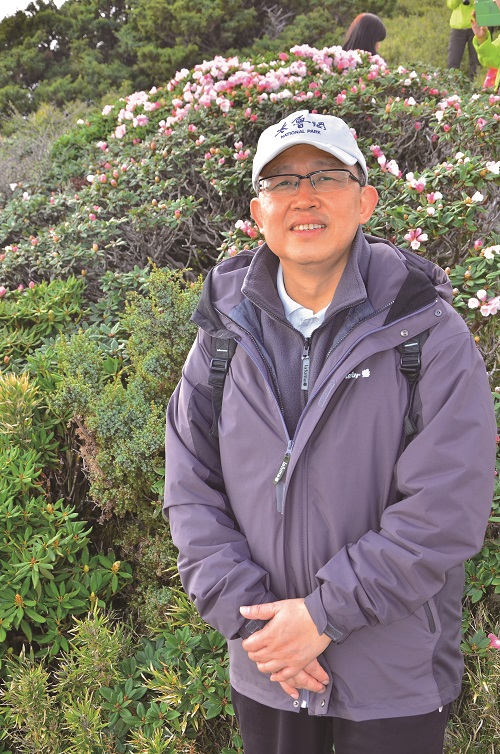
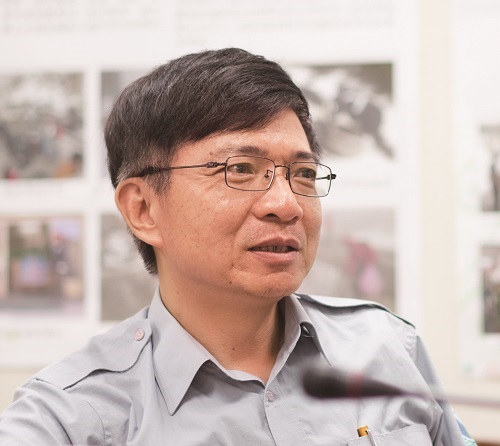
Director Mo-Lin Yang
The initial focus following the founding of TNP was surveying park resources; while in the past decade we have focused on monitoring. A national park’s responsibility is to protect the land within its boundaries. In addition to ecology, Taroko also has the world class scenery of the Liwu River gorge. In addition, its cultural resources are significant. Members of the Taroko Tribe live here and practice their distinctive culture. The passing down of cultural tradition is another important task for TNP.
What TNP has preserved makes it a good site for field research. As for visitors, we hope TNP can play a role in environmental education, so that even more people know about and participate in environmental protection. For the past thirty years, many colleagues, NGOs, volunteers, specialists and scholars, and local residents have been reaping excellent results.
Major Events of Establishment
1935
The Japanese Governor General’s Office delineates territory for the Tsugitaka- Taroko National Park.
1979
Ministry of the Interior in charge of planning the TNP.
05.1976
According to the Executive Yuan’s Taiwan Area Comprehensive Development Plan, the Taroko area was to be designated a national park.
05.20.1984
The National Park Planning Commission at the Ministry of the Interior reviews and passes a proposal for the territory of the TNP.
11.28.1986
TNPH was established.
12.26.1986
The Formosa Plastics Corporation Chongde Industrial Area Cement Extraction Project is terminated.
01.18.1987
The Council for Economic Planning and Development of the Executive Yuan resolves to put the Liwu River Hydropower Project on hold.
05.20.1988
The Taroko National Park Police Corps is established.

Director Emeritus Kuo-Shih Hsu
Planning for TNP involved much deliberation. Mining rights for over 10,000 hectares of land along the Suao-Hualien Highway (Provincial Highway No. 9) had been allocated. Taipower wanted to build a hydroelectric dam on the Liwu River, whileFormosa Plastics Company wanted to mine cement in the Chongde area (just north of the mouth of the Taroko Gorge). These two interests had a big impact on the founding of the TNP, especially the Liwu River hydroelectric dam project. It was a major national infrastructural project with an estimated budget in excess of 10 billion NTD. At the time the Premier was Yu Guohua (Yu Kuo-hua), the Minister of Economic Affairs Chao Yao-tung. After fielding opinions from many quarters, they decided to put on hold the two aforementioned projects in order to maintain the ecological integrity of the national park habitat and the vision for the national development of eastern Taiwan. After these two projects were shelved, TNP was officially established on November 28, 1986. Later, as the TNPH strove to defend stance on conservation, the two projects were officially terminated.
From Conservation to Information Integration
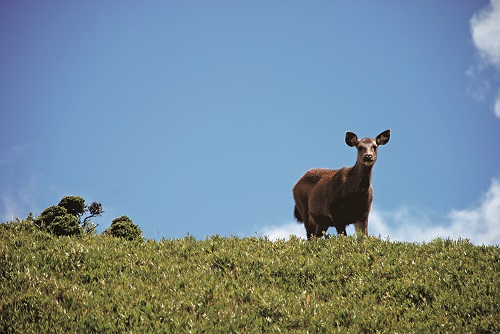
As for the basic information and knowledge needed for conservation, the headquarters surveys, monitors, and integrates, turning the results of survey research to turn into conservation strategies. Of the research projects the headquarters executes or commissions, long-term monitoring projects like global climate monitoring as well as cross-boundary research projects like the research on the Taiwan sambar deer are central. They demonstrate our commitment to the long-term monitoring of ecological trends as well as our vision in resolving ecological conservation problems. This spirit of dedication is even more important in an age of climate change on a global scale.
In terms of environmental action, the headquarters is firmly committed to prioritizing habitat conservation, maintaining the integrity of habitat in the park, and gradually excluding inappropriate development. Thus, TNPH has spent many years negotiating with mining operations inside TNP. Originally there were 33 mining areas in TNP, but they have reduced over the years, and finally in 2008 mining in TNP was banned, with compensation for mining companies.
In terms of the commitment to habitat conservation, the greatest reward may be nothing else than seeing flora and fauna reproducing and thriving in TNP. And when word comes that we discover a new species like the Mustela formosanus, discovered in 1999,,or like the Kerivoula spp., discovered in 2006, the headquarters knows that it has done a good job of protecting the park territory to let these new species that have never been recorded before survive and be discovered.
Cultural assets are also important. TNPH actively commissions research plans like the Liwu River Basin Cultural Development Project, to construct a context for cultural development in the entire Taroko area. The objects of cultural conservation are not just contemporary tradition as practiced by indigenous people, but also includes important sites all over the park, sites new and old, where the Taroko Tribe were active, to forge more wide-ranging cultural links.
With the evolution of the idea of ecological conservation, the headquarters keeps updating its facilities in TNP to respond to world environmental protection trends. For instance, dry toilets on the main peak of Mt. Hehuan, the use of renewable resources in mountain dwellings. Many high mountain areas use renewable energy and equipment, which energetic volunteers shoulder and take up on foot, completing arduous journeys to replace old equipment. Thus TNPH that hikers appreciate the equipment when they use it.
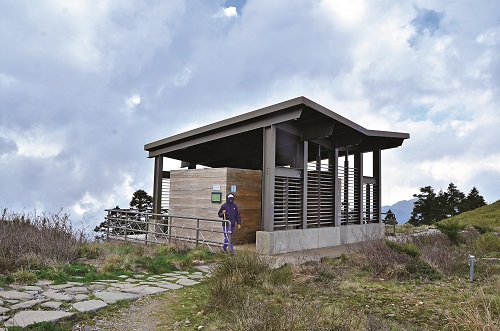
Eco-toilet on Mt. Hehuan Main Peak / provided by TNPH
Director Mo-Lin Yang
Making conservation a priority requires an understanding of the current situation, so ecological resource surveying is a foundation for everything. Next comes ongoing monitoring. Now the TNPH has entered the third phase – integration: building smart platforms. We hope to discover interrelationships among climate change, environmental change and species change, requiring the accumulation of data over the long term. We anticipate undertaking a three-year first-stage smart platform integration project from 2016.Through the data integrated from the smart platforms over the long term, we can focus on specific factors and indicator species (environmentally sensitive species) in specific habitats and supplement video camera, auto-cam and environmental condition (such as temperature and humidity) measurement devices to understand how the behavior of the indicator species changes as a result of changes in environmental conditions (whether the behavior is reinforced or attenuated). This year we have chosen the Lotus Pond as the habitat and the bat as the indicator species, both of which we assume to be more conspicuously impacted by climate change. It is hoped that the case described above can allow us to build a basic framework for planning smart platforms that can be revised in the future. Moreover, the results of the analysis of the integrated data may become the basis for adjustment of ecological conservation strategy.
Major Events of Conservation
10.25.1989
On Mt. Qilai, the no. 2 and 3 Success Forts Ridgeline cabins for stranded hikers were completed with emergency solar powered indicator lamps.
07.1990
16 solar powered indicator lamps were installed on the Baiyang Trail.
11.1990
An emergency solar powered cabin was built in the Nanhu U-shaped valley.
11.27.2002
The Industrial Technology Research Institute (ITRI) was commissioned to install the first “microbial dry public toilet” at Wuling, the highest point on the Mt. Hehuan highway.
06.24.2004
The TNPH bought over 30 hectares from Meiyuan, Zhucun, and Lotus Pond for a planned native plant eco-park.
06.03.2005
The TNPH “Build and Integrate a National Biodiversity Database and Informational Website Project” won a sustainability award, the “Execution of Sustainable Development Action Plan Award”.
10.28.2006
Construction finishes on the eco-toilet on the main peak of Mt. Hehuan.
08.01.2007
Collaborated with the Meifeng Farm to carry out alpine plant species restoration on the main peak of Mt. Hehuan, successfully transplanting 36 species over 3 years.
12.28.2009
Commissioned Prof. Wang Ying to carry out Cervus unicolor swinhoei habitat research with GPS collars.
05.24.2014
Installed a wind-powered generator for the Yunling Cabin
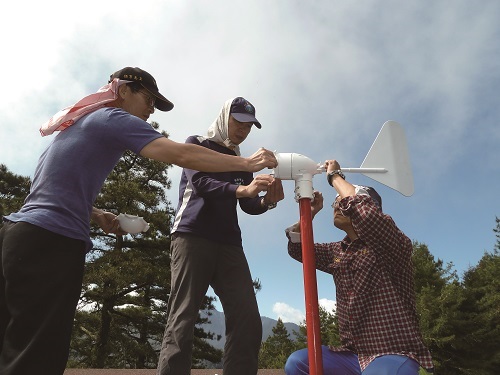
Setting the wind power equipment on Yuleng Cabin / Chin-Yu Tsai (provided by TNPH)
Director Emeritus Kuo-shih Hsu
A national park is a place for permanent research, monitoring and conservation. From the beginning the TNPH had several main principles. First that resources had to be comprehensively surveyed, and samples understood. Research had to be solid. The resources in each area had to be comprehensively surveyed to discover many interesting questions. Permanent plots had to be observed over the long term to observe any changes; global climate change, after all, takes time to verify.
Environmental education strives to engage with different groups
When TNPH was just founded, it immediately renovated an existing warehouse located in a place called Lushui, in order to found the Lushui Exhibition Hall (December 24, 1987), in the hopes that when visitors come to TNP they can immediately get the most important environmental information. Later on four other important service centers were established in TNP: the Taroko Visitor Center, the Buluowan Service Station, the Tianxiang Service Station, and the Mt. Hehuan Service Station. They all serve the purpose of environmental education. In terms of the approach to displaying environmental information, the headquarters keeps upto-date, including stationary displays, panoramic 360° amphitheaters, interactive touch screen displays, all of which employ the latest display technology.
TNPH in January 1992 established an environmental education team, and in the same year in February held activities for school age students. In addition to inviting students living in TNP to participate in planning and environmental education activities. Not only does TNPH invite school-age children elementary school from Hualian County but also gets guides to leave TNP and enter different school campuses to offer environmental education courses directly to students. In so doing, they truly realize the ideal of instilling the value of conservation in young minds.
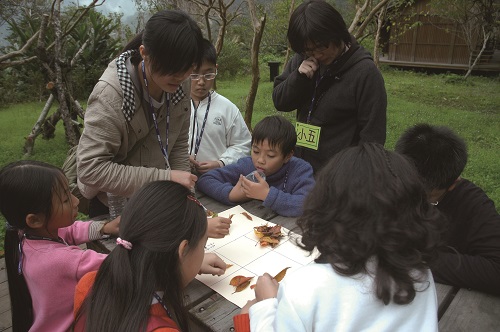
School age student environmental education activity / provided by the TNPH
The interaction between people and the environment is also an important emphasis for the headquarters in environment education. And environmental education and cultural preservation for indigenous peoples living in TNP is even more important for deliberation and planning. Thus, TNPH has held many handicraft instruction teaching activities, led by elders in each indigenous group who pass skills down to the younger generation. In addition there are important audiovisual and print publications, such as ”Music Taroko” to record the cultural customs of the Taroko Tribe, which won a bronze medal at the 46th WorldFest-Houston International Film & Video Festival. In 2016 a book was published called “Brave Taroko”, in which legend is used as a lens on the traditional culture of the Taroko Tribe. This book has become a teaching aid for environmental education.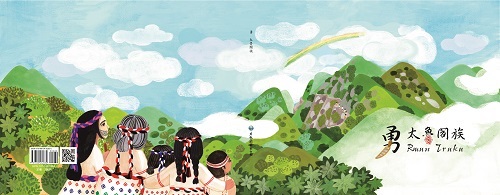
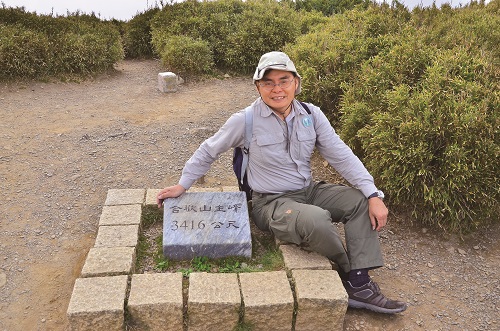
Senior Guide Mao-Yao Lin
From when I entered TNPH to work as a guide I realized that if I didn’t have a basis of knowledge I wouldn’t be able to use accessible language to convey it to others. All research reports TNPH commissions are nutrients and foundations for our explanations. After getting off work I will take a stack of reports home and read them carefully. I hope to grow by following in the footsteps of scholars and experts, continuously expanding my knowledge and working ever harder to be a bridge. I aim to let the public understand the beauty of the environment through my explanations of natural ecology.
Major Events of Environmental Education
01.20.1993
“Atayal and Amis Song and Dance” screening in the 360 degree amphitheater in the Buluowan Service Station.
01.09.1995
Held an “Understanding National Parks” activity, sending personnel to 15 elementary/junior high schools in Xiulin Township to offer classes.
06.01.1995
Buluowan Atayal Handicraft Exhibit Project completed.
11.04.1995
An Atayal Traditional Culture Workshop was attended by 40 aboriginal junior high school students.
11.16.2002
The “Humanity and Nature,” “Environmental Education,” and the “Ecological Recreation” exhibits at the Taroko Visitor Center are opened.
12.14.2005
Taroko Area Student Environmental Education Activities – guides are sent to 18 elementary schools to offer classes attended by 2,784 students.
12.13.2012
TNP got the “environmental education facilities certification”.
05.19.2016
Taroko Landscape, the first microfilm produced by the TNPH wins the honor of a Platinum Prize for Dramatic Film at the 49th WorldFest-Houston International Film & video festival.
Director Mo-Lin Yang
We see the visitor center as an important starting point for environmental education, because it is the starting point for visitors to TNP. Another starting point is virtual, our website. There is much information and knowledge on the website, so that people who want to visit have the opportunity to get to know the culture and natural ecology of the TNP. When visitors enter a hiking trail, the first portal of environmental education is the explanatory sign. Scanning the QR Code of a sign calls up important information about the position on the trail and the neighboring environment. Depending on the location in space and time, the TNPH selects different modes of environmental education.
For school age children we hope to attract them to TNP and we offer courses in environmental education in schools for students unable to come to the park. Volunteers take wall charts to elementary schools, which they leave there for a week after the visit. Publication is another important part of environmental education. In terms of introduction to trails, there is a book called “Come for a Walk in Taroko”. This year we published a translation of the essential contents of this book for international visitors. For children we offer picture books and CDs/DVDs so that by reading with their parents children can root important concepts a young age. Lately we have tried to turn data from research and monitoring over the long term into popular science publications, hoping to share scientific research results with the public. We will turn the published data into e-books and put them on our website to that important environmental educational values can become more widespread. Of course, all our objectives are essentially one; we hope that after understanding natural and cultural ecology everyone can cherish and maintain the environment.
Partnerships need standing in the other people’s shoes
In the process of the development of TNP, we have to thank for supports of the National Park Police, volunteers, scholars and specialists who quietly undertake research work, NGO groups that provide oversight and write mission papers, units that adopt hiking trails, as well as residents of TNP.
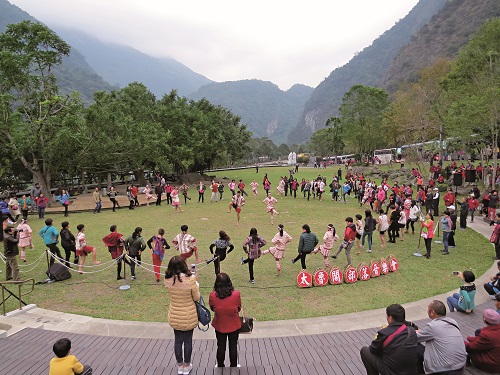
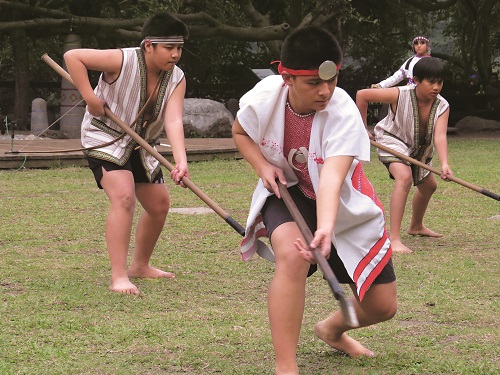
To the National Parks, volunteers are like a group of reliable friends with whom we grow. In the National Parks, volunteers can fully express the passion they feel for natural conservation, as well as their enthusiasm for communicating and sharing. What volunteers deserve from the headquarters is solid skills training, as well as room to bring their talents into play. Thus, the headquarters has planned several training programs aimed at the elderly, high school students, and ‘little guides’ in elementary school. These courses are aimed at allowing volunteers to grow through environmental maintenance and environmental education. Among the volunteers there is this group that serves as a bridge between the environment and the public, while at the same time linking the headquarters and community partners, connecting traditional culture with in depth tourism. This is a group of indigenous guides. The training program invited tribal elders, professors from National Dong Hwa University, and guides from the TNPH to attend classes together. Their efforts are of great benefit to the passing on of tribal village culture and to attracting young people living in the cities back to the village.
In 2001 cultural workers in the tribe as well as elders were invited to serve as lecturers to offer 15 cultural workshops for the colleagues at the TNPH to let indigenous culture be realized at the levels of management and operation. In 2002, the Taroko National Park Indigenous Cultural Development Advisory Committee was established, and in 2010 the National Park Area Indigenous Tribal Area Resource Joint Management Committee met for the first time and has been meeting ever since every six months. These are all innovations within the existing administrative structure with a view to long-term promotion and joint management of local indigenous resources.
/ provided by TNPH
Major Events of Partnerships Consolidation
06.24. 2000
The first Alpine Volunteer Ranger Training is held for 80 people. On August 2, 2000, on-site training began.
08.13. 2001
National Park Tribal Village Map Workshop held.
12.27. 2001
“The book Bringing People Back – Local Participation and Natural Resource Management”, taking tribal village maps as a way of highlighting the ecological conservation model of local participation.
01.08. 2002
The Ta ro k o N a t i o n a l P a r k Indigenous Cultural Development Advisory Committee is founded to collaboratively discuss the passing down of indigenous culture and establish the objectives of “intersubjectivity, coexistence.”
02.12. 2003
Indigenous Guide Training held.
03.2004
The TNPH promotes an eco-tour project in the Dali/Datong tribal villages, assisting the community in establishing a community association and promoting and developing ecotours.
05.29. 2004
The TNPH promotes trail adoption. The Taipei County Mountain Association, Pingtung Mountain Climbing Club, Tianxiang Youth Activity Center adopt the Nanhu, Qilai, Huoran Pavilion and Baiyang trails respectively.
10.28. 2010
The TNPH held the first National Park Area Indigenous Area Resources Joint Management Committee meeting.
12.30. 2010
The Tse-Xin Organic Agriculture Foundation is commissioned to assist the Xibao community transition from conventional farming to organic farming.
Director Mo-Lin Yan
For the cultivation of community partners, we basically cooperate with residents out of empathy. In Xibao Village, for instance, conventional agriculture was mostly practiced at a subsistence level. But does conventional agriculture accord the environmental objective of TNP? Thus in 2010, the TNPH commissioned the Tse-Xin Organic Agriculture Foundation to provide guidance. A professional team took up residence in Xibao to facilitation promotion, but the most important issue was opening up marketing channels. Now most households farm on contract to stabilize income. Last time I went to the village I had a conversation with a young farmer. I asked him why he was willing to come back to the village to farm after living in the city. He said, first because he liked working in his hometown, and his current income was pretty good, and it was good for his health and that of the land. In addition to vegetables in Xibao, there are peaches from Luoshao, which I understand were shipped to Taipei for sale last year and were sold out in under an hour. Friendly farming practices require marketing channels. In addition, the TNPH holds village cultural markets on weekends, all in the hope that we can open up marketing channels for residents.
The local residents can identify with TNP management principles. We also consider many other developmental possibilities for the residents, with the precondition of environmental conservation. In 2004, the headquarters began helping residents of Datong and Dali tribal villages to develop ecological tourism, in the hopes that the results of their efforts to protect their home environment can translate into economic benefit.The TNPH colleagues have really worked hard to build partnerships. Of course it is necessary for community residents to understand that environmental conversation and economic benefit can be win-win.
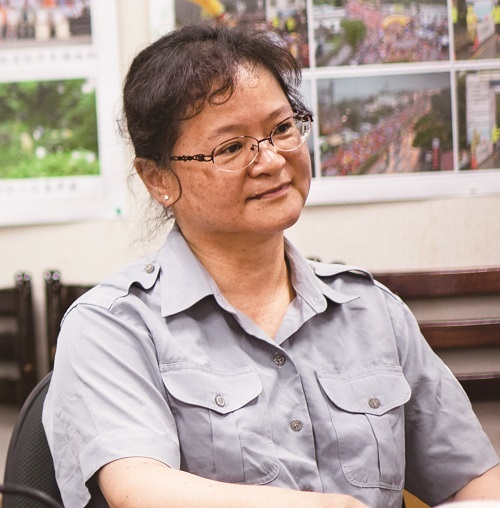
I remember one time I made an appointment to do an evening open air screening, but there was a downpour at dusk. I was torn, because the rain would make the screening impossible. I hesitated. But then I thought that the villagers would be waiting for me, so I braved the rain. There was no screening but I built trust with the locals, because to them personal agreements are really important.
Dividing traffic streams ensures high recreational quality
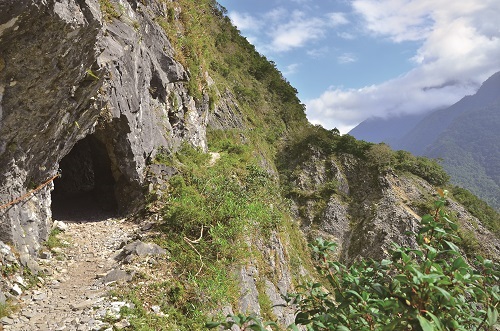
In 1989 TNPH submitted an application to the Executive Yuan, which was passed, for the Central Cross Island Highway Taroko-Tianxiang Road Improvement and Landscape Maintenance Project, receiving 1.40254 billion over three years, to improve transportation over the Central Cross Island Highway in stages. Several important tunnels on the Cross Island Highway were drilled or rerouted in this period. This work was undertaken in order to divide pedestrian and vehicle traffic, protecting visitor safety, maintaining traffic flow and raising recreational quality. The separation of pedestrian and vehicle traffic in the Jiuqudong, separate pedestrian and car lanes in Yanzikou tunnel. These measures avoid competition for road space and prevent traffic jams. All of the above were management strategies that were realized through the improvement project.
In 2015, TNP set a record with 6.6 million visitors. Every year during the Chinese New Year festival on the Central Island Highway or at Mt. Hehuan during the snow season, crowds can suddenly converge on an area, greatly exceeding the recommended usage limit for the road. How can we, on the precondition of the core value of not disturbing the ecological environment, use management strategies to reduce impact on the environment and maintain recreational quality? The TNPH has always worked hard to answer this question.
During Chinese New Year’s Festival in 2001, the headquarters instituted traffic control on the Central Cross Island Highway from Taroko to Tianxiang, and collaborated with the Hualian Leisure Travel Association to bring out fare-based park charter buses. In that period, 9,000 visitors paid the fare to take the trip. But over the years, visitor numbers have increased greatly every year. In 2002 traffic control was instituted for the snow season on Mt. Hehuan. With traffic dispersion and flexible control. In addition we took into account issues like visitors getting altitude sickness or being unable to adjust to the cold, so we have added first aid or information service facilities.
In addition, the headquarters has also considered strategies to guide traffic and divide pedestrian and vehicle traffic. According to differences in ecological sensitivity within TNP, we have applied different degrees of crowd dispersal, and have used hiking paths and explanatory facilities as to guide traffic, reducing the impact of visitor volume on the environment.
Major Events of Recreational Quality Promotion
01.17. 1989
Submitted the Central Cross Island Highway Taroko-Tianxiang Road Improvement and Landscape Maintenance Project.
01.04.1998
The Taroko National Park Bus offers service for the first time.
01.25.2001
During the Chinese New Year’s Festival, traffic control was instituted on the Taroko- Tianxiang section of the Central Cross Island Highway and charter busses were brought out, serving about 9,000 visitors.
06.06.2001
Yanzikou Tunnel construction commences, with plans for two tunnels, Yanzikou and Lehang, and to build the Danlu Bridge, a total distance of 1348 meters. Construction ended on June 1, 2007, and the old road was converted into a dual-use scenic route for pedestrian and vehicle traffic.
01.01.2002
Traffic dispersal/control instituted during the snow season on Mt. Hehuan. Traffic dispersal/flexible control was adopted, allowing vehicles to pass in limited numbers.
09.14.2002
Three short trails around the Taroko Terrace are completed. Some sections are accessible.
11.16.2002
The first Music Festival is held in the Taroko Gorge at Buluowan.
1.28.2002
Mt. Hehuan Service Station comes into use. It is responsible for maintaining facilities in the area and providing visitor information, first aid and other services.
08.26.2008
The Zhuilu Old Road is provisionally opened to a limited number of visitors, who are required to apply for permits to enter. On May 5, 2009 the trail is officially re-opened.
The Central Cross Island Highway is the point of greatest concentration of visitors to TNP. In order to raise recreational quality, TNPH instituted a separate streams project, which means that in the environments permitting more facilities we installed infrastructure to divide streams of visitors – keeping foot traffic separate from vehicle traffic. And visitors on in-depth tours, such as hiking the Zhuilu Old Road or climbing Mt. Nanhu, we have are applying volume control to protect the ecological environment and meet the needs of hikers.
In the past few years, as is well known, TNP has faced recreational pressure. Because of tour arrangements, visitors mostly arrive in TNP from 3 to 6 pm, and they mostly congregate on the visitor center, Skadang, and the Eternal Spring Shrine. The shrine is so small there is no space for a parking lot, which causes jams along the way. The headquarters therefore arranged with the county government and the township office, to plan a temporary parking lot, whereby after dropping visitors off at the shrine, tour busses park in the lot, giving drivers a chance to rest and shut off their busses. When the tourists have finished, the bus goes to pick them up. The temporary parking lot was finished in January of this year, and since then there have been no more traffic jams on the Central Cross Island Highway. Of course, the headquarters communicated with tour operators in advance, because understanding and cooperation was key.
When TNP was first established, three recreational core areas were planned. One was the entrance to the gorge, and because the environmental conditions there were excellent. It was hoped that TNP could focus recreational development there. The second was Tianxiang, which could have lodging and restaurant services. Third, Mt. Hehuan was suitable low intensity high mountain activities, ecological displays, and lodging. These three core areas all had traffic links and hiking trail links. Planning three core areas was based on the consideration of dispersing visitor volume.
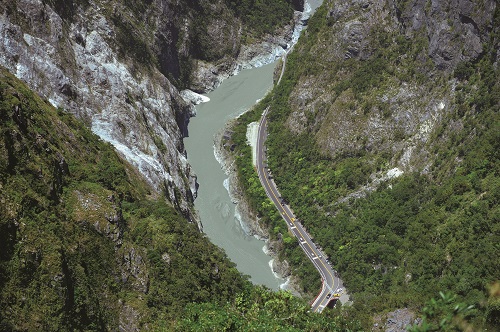
Because there are 27 of the hundred highest mountains in Taiwan within TNP, many hikers visit. To ensure hiking safety, our first hope is to complete hiking trails and signs to reduce the number of hikers getting lost. In terms of trails, environmental park rangers as well as the volunteer groups that adopt a hiking route carry out regular maintenance. For many years the headquarters has continued to hold Hiking Schools in north, central, south and east Taiwan.
In the past two years, with the increase in the number of visitors, we have considered how to protect the ecological and cultural environments (such as insisting on controls on visitor volume in areas with historical artifacts or ecologically protected areas). We have also, at a few important sites, have added measures to enhance visitor safety. The falling stone facilities at Yanzikou are a good example. We hoped to reduce the risk of disaster at its source, so high up in the gully we installed nets to catch falling stones as early as possible. About halfway up, where rocks peel off due to natural erosion, we have installed protective umbrellas to catch falling stones. After a heavy rain or an earthquake, open contract agents carry out scraping, getting rid of loose rocks to raise tourist safety.
Reducing disasters requires prevention
Confronting the need to raise recreational safety, the headquarters has gone through different periods. In 1989 the Central Cross Island Highway Taroko-Tianxiang Road improvement and Landscape Maintenance Project took advantage of improvements and pedestrian/vehicle management to assure recreational safety. With the evolution of the notion of environmental management, the scope for protective engineering projects has diminished. Now we accommodate the environment with more flexibility.. The falling rock nets at key sites on the Central Cross Island Highway, as well as falling rock umbrellas, have enhanced recreational safety without environmental disturbance.
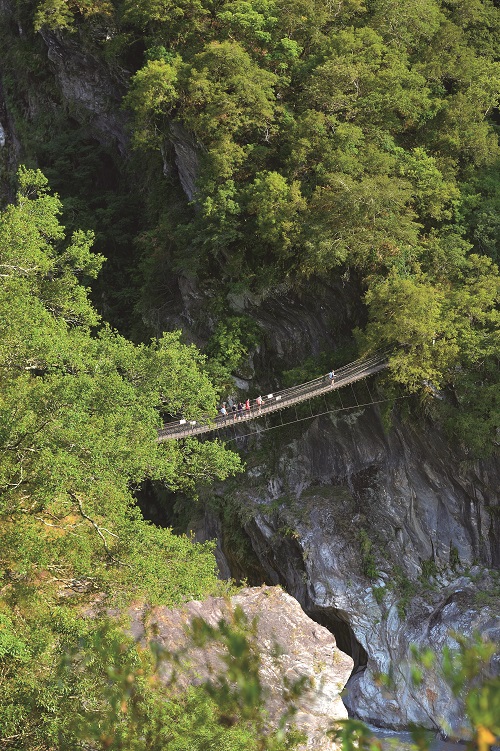
But now Director Yang has proposed a core value guiding natural disaster protection: reducing disasters requires prevention.. Thus, control, guidance, separate streams for pedestrian/vehicle traffic are not only strategies to increase recreational quality but are also ways of raising recreational safety. The headquarters has always maintained that for engineering projects, if you do not have to do it don’t do it. In any case you must consider how to do it in as inconspicuous a way as possible. This year, the planning and design has been completed and work has been contracted out for the rebuilding of the Shanyue Suspension Bridge, which may be the largest project the headquarters has undertaken in recent years. The logic behind the suspension bridge is to not only divide recreational streams but also raise visitor safety. The suspension bridge existed in the Japanese colonial period on the Hehuan Ridge Route, and has retained its original position and name. When the suspension bridge visitors is complete, visitors will be able to proceed from Buluowan across the bridge to Badagang and then walk down to Yanzikou, forming a complete walking route. This will avoid overconcentration of visitors in the gorge area where the recreational risk is higher.
Visitors to TNP or mountain climbers have to be aware that the sublime environment contains unforeseeable risks. We hope that visitors will respect the recommendations and rules for recreational safety.“When visiting remote areas or going on long treks through high risk areas, visitors have to be even more vigilant and gather all the relevant information before they set out, training their bodies, and preparing the necessary gear. Only by accurately understanding where risk might lie can we avoid it and reduce the occurrence of injury.”Senior Park Ranger Yong-Chun Wang (Nobu) talked about the safety of mountaineering.
Major Events of Recreational Safety Improvement
05.12.1992
Qilai Villa solar powered prefab emergency mountain cabin was completed.
06.02.1993
For a solar powered wireless communications system research project, testing was carried out from the 2nd to the 6th at each of the high mountain base stations in the park.
04.15.2002
In August, 2000, the doctor Chen Yijie (Chen Yichieh) was climbing the east ridge of Mt. Qilai. She got stuck in the area by Typhoon Bilis. Her father Chen Yingzhou thanked the rescuers and donated money for Chenggong Cabin on Mt. Qilai, which was completed on April 15.
03.12.2004
Six days of snowy ground rescue training is carried out for park rangers by the TNPH in the Mt. Hehuan area and on the north peak of Mt. Qilai.
04.27.2005
Disaster relief, fire-fighting, medical assistance and first aid exercises were held in at the Buluowan Service Station and in the Taroko Terrace for employees and servicemen completing alternative military service.
05.26.2009
Corporate and civic groups donate 2,100 safety helmets to ensure visitor safety.
07.07.2009
The TNPH takes out public liability insurance for the park area, so that visitors who suffer natural damage can submit an insurance claim.
12.24.2010
Three large falling rock umbrellas are completed at the eastern entrance to the Jiuqudong Trail, which, according to testing, can protect visitors from 100 kilogram falling rocks.
(EnvironmentMaintenance Section)
(Conservation and Research Section)
Always True to Our Founding Ideals
We never thought we could track the pulse of the world on a cell phone on the road. How are we to face the challenges of this age? Director Yang said, “ First, caring for this piece of land, convinced that sustainability and conservation, our original commitments, are the best ways of responding to change. Next, facing the challenge of extreme weather. The issue here is environmental protection. In conducting surveys, monitoring, and building smart platforms, we hope to go in new directions with knowledge as our guide. Of course, the increase in visitor numbers is another challenge. We must first persevere in protecting the areas that should be protected. In areas where environmental conditions allow recreational use, we will continue to raise the quality of our service. With technological advances, many issues can be handled quickly. As long as we are sure of our policy guidelines and behavioral norms. However, caring for the land and local residents requires in-depth and long-term efforts. How can we properly protect our core humanistic values in an era of rapid social change? This is more important. ”
“TNP is 30 years old. Without the selfless giving of this team of earnestly dedicated colleagues, we would never have enjoyed the success we enjoy today. Finally, I hope that every colleague who is set on staying at his post can maintain his enthusiasm, for as long as we have enthusiasm we can discover many new things to work hard for, and in the process we can release happy energy. As well, we need to become more specialized, but must not remain at the level of in-depth knowledge or learning. Rather, we must in the process of service consider from an expert perspective the environment, visitors, and local residents. This requires the establishment of knowledge sharing channels (empowerment, explanation, exhibition), the simplification of administrative procedures and specific expert interventions. I hope my colleagues will never forget that the headquarters contains many experts who are not widely known. There are people who study plants, and animals. There are engineers and environmental education specialists. Any time we make a decision there are many colleagues we can talk it over with, colleagues who can help us analyze problems from different perspectives and support one another. In addition, we have to keep on absorbing new knowledge, especially because of rapid social change:we now live in an internationalized society, in which only by absorbing new knowledge can we have the opportunity to innovate. My final point is extremely important: no matter how busy we are, we have to attend to our health. ” Director Yang exhorted.
“I transferred here in 2015 from the Marine National Park Headquarters, and started to understand how hard my colleagues work in the mountains by walking the Zhuilu Old Road and the north peak of Mt. Hehuan. The hard work they do isdifferent from each other. I just feel privileged to work in a national park and bring my strengths into play.” Director Yang said sincerely.


