
Moving forward with Phenological Research-
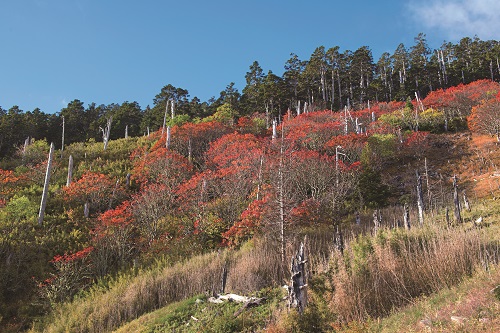
Flowers bloom and fade, life thrives in spring and hibernates in winter; people can always notice the changing of seasons from the physiological phenomenon or behavioral activities of plants and animals. The activities and phenomena of these creatures are like a constant understanding of nature. Basing on these accumulated wisdom and experience, people cultivate according to the season, live their lives following the times, and even developed many unique cultural activities.
“Hanami”, the viewing of cherry blossoms, is an important Japanese tradition, and is also the highlight of many local cultural industries and tourist activities. Because the blooming time of cherry blossoms follows the latitude and advances to the north, plus we have learned that there is a considerable correlation between full bloom time and meteorological data, the Japanese Weather Bureau has been giving out “cherry blossom front” forecast since the 1950s base on the accumulated cherry blossom records and meteorological data throughout these years. From the technical standpoint, it is inputting the current meteorological data using the mechanism model speculated by records from previous years, to predict the flowering time of cherry blossoms throughout Japan. However, in 2010, the Japanese Weather Bureau announced that they no longer would make cherry blossom predictions, because the climate change has disturbed the flowering time of cherry blossoms. This tradition is now carried out by civil organizations.>
Flowering annually in the spring is actually a kind of phenological phenomenon of cherry; the knowledge base needed for predicting the flowering time is phenology. But what phenology covers, in fact, is far more than just predicting when the best time to view cherry blossoms is. When facing global climate changes, what kind of new vision can this knowledge give us?
Not as simple as it looks
“Phenology” is the physiological and behavioral representation of species influenced by the seasonal (periodic) variations. The reasons for these changes may be due to the different development stage of a species or a cycle of its biological clock; it may be stimulated by the external environment, or caused by interaction with other animals. Since ancient times, some phenomena are already well-known by people, such as flowers bloom when spring arrives, leaves fall when autumn wind blows, migratory birds travel back and forth following the seasonal changes, and animals breed or hibernate base on the variation of time. In agriculture, it is also a very common and well-established tradition to refer to the solar terms to estimate the proper duration of the crop and predict the approximate harvest time. From this we can see that the performance of phenology and people’s living environment is closely related.
The flowering, fruit bearing, and leaf dropping of plants, as well as migration, brooding, and hibernation of animals are the most obvious phenological phenomena. But phenology, in fact, can also be as delicate as the emergence of leaves, the development of flower buds, the changing in animal diets, molting, and even changes of physiological factors not observable to the naked eye, such as hormonal changes and so on. However, when recording phenological phenomena, detailed “time” record is an indispensable element.
We can also presume if the phenological performances are significantly different from the past, then what kind of impact will it cause to the ecosystem? For example, if the time of leaf emergence is delayed, will the plant’s annual growth rate decrease? Will the shortening in flowering time or reduction in fruit yield limited the food source of certain animals? Will the advance or delay of the breading season affect the successful reproduction rate, and threaten the survival of a certain species? Or will the changes in the migration time and route of migratory birds bring any alterations in their travel or survival rate? Because of the complexity of the ecosystem, many effects are not straightforward, and even the consequences will not immediately emerge.
As far as human life is concerned, in addition to understanding the operating mechanism of the ecosystem, phenology research can also help us make better use of local natural resources. In general, primary industries which include agriculture, forestry, livestock and fishery sectors are most vulnerable to phenology; but if phenological phenomena are seriously disturbed, it may too endanger the survival of mankind in the near future. There are also many phenological phenomena that are seemingly not directly related to human life, but in the intertwining ecosystem network, it may still be regarded as a warning sign for changes in the overall ecological environment. Therefore, long-term monitoring of phenological phenomena is a very important task.
National Parks are gradually accumulating the power of knowledge
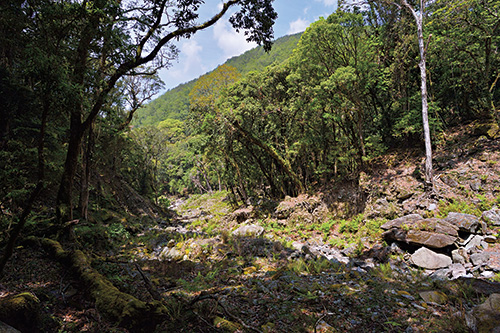
In preserving terrestrial ecosystems, areas in National Parks are relatively more intact compare to other places in Taiwan. This is because under the protection of National Parks Law, these areas have escaped large-scale human disturbance and are rich in bio-diversity, which made them suitable areas for long-term phenology researches. In recent years, each National Park Headquarter has commissioned academic institutes to carry out animal and plant phenology studies within its jurisdiction, and to this date has accumulated considerable results. In the following paragraphs, we will share with you some phenology research results from Shei-Pa, Taroko, and Yushan National Parks, which are located in the high-altitude mountain regions.
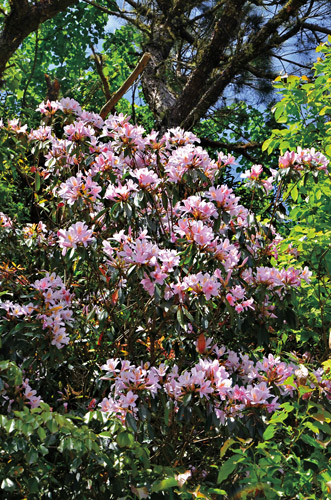
Plants are the foundation of ecosystem
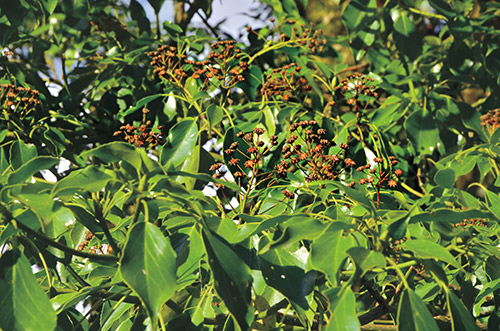
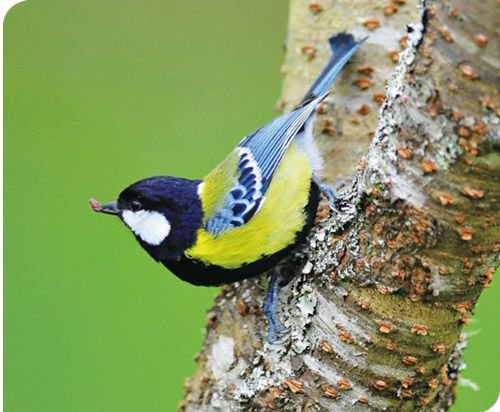
Plants often play the role as the beginning of a food chain. They supply the food chain in many ways, such as their leaves provide foliage source, their flowers supply nectar, their fruit and fallen leaves are also nutrition sources for many animals. All of these life phenomena are necessary for plants to continue their species and are highly related to seasonal changes. However, besides their seasonal correlation, there are in fact still many details that can be observed further. “Time of occurrence (point)” and “duration of time (line)” are both important aspects of phenolog y. Yushan National Park has asked Providence University to do phenological studies along the Nantzuhsienhsi trail; after two years of monitoring, they discovered in general, leaf growth begins at late winter and early spring, and reaches the peak in late April; but the leaf emergence phenomenon of local plants can still be divided into several different types depending on their annual number of leaf emergence, duration of time, and characteristics of peak leaf emergence. In addition, the flowering phenomenon can be distinguished by the flowering season and initiation time of flower bud; the fruit setting phenomenon can be differentiated by the fruiting season and the duration of time from fruit set to fruit drop; and even the changing of leaf colors (leaves turning from green to yellow and red) all the way to leaf fallen of deciduous trees have distinct seasonal sequences Birds such as white-tailed robin (Cinclidium leucurum), Taiwan bush-warbler (Locustella alishanensis), and golden parrotbil (Suthora verreauxi) in Yushan National Park are also discovered moving to higher elevations and making it their breeding grounds, and leave in the winter non-breeding season, returning to the lower altitude to pass the winter. Coal tit (Parus ater), white-whiskered laughingthrush (Trochalopteron morrisonianum), white-browed bush robin (Tarsiger indicus) and alpine accentor (Prunella collaris) would only adjust their vertical elevation distribution slightly between winter and summer and do not completely change their distribution areas. This indicates the range and time course of various birds’ altitudinal migration behavior are different; but some birds, like the Taiwan fulvetta (Alcippe cinereiceps), hardly have any obvious altitudinal migration behavior, they simply change their way of life in response to the arrival of winter. Furthermore, a few species such as white-eared sibia (Heterophasia auricularis) and green-backed tit (Parus monticolus) would instead move upwards toward higher altitudes during winter. Scholars speculate white-eared sibia’s migration to higher altitudes is somewhat related to their feeding on the abundant Taiwan Stranvaesia (Stranvaesia niitakayamensis (Hayata) Hayata) winter fruits. Greenbacked tit may migrate to mix in with other birds in the winter in order to improve their foraging efficiency. depending on the species.
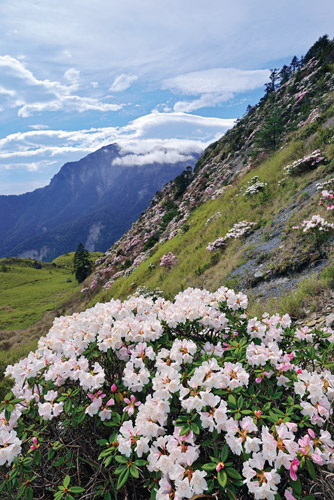
Commissioned by the Taroko National Park, National Dong Hwa University discovered the same kind of plant may have different phenological performances in different altitudes. For example, although the flowering times of Narrow-leaved Nanmu (Machilus pseudolongifolia Hayata), Taiwan Rhododendron (Rhododendron latoucheae Franch. & Finet), and Weelstamen tree (Trochodendron aralioides Sieb. & Zucc.) are about the same in different altitudes, Taiwan Cherry (Prunus campanulata Maxim.), Taiwan Loquat (Eriobotrya deflexa (Hemsl.) Nakai), and Alishan Hornbeam (Carpinus kawakamii Hayata ) would present significantly different flowering times in different altitudes. All these studies allow us to have a glimpse of the phenological changes in the forest’s ecosystem, which is far more remarkable, far more detailed than just simply describing it as spring, summer, fall and winter.
Animals move with the seasons
To mammals and birds, many species have migratory behaviors that move in and out following the seasons. This includes the thousand miles flight of migratory birds, as well as the altitudinal migration of many resident birds and mammals in Taiwan’s mountain regions.
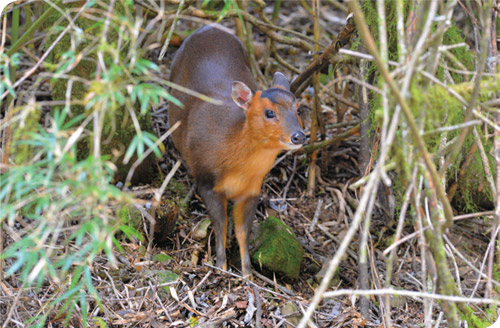
For example, the three major large mammals, Formosan Muntjac (Muntiacus reevesi micrurus), Taiwan serow (Naemorhedus swinhoei) and Formosan rock macaque (Macaca cyclopis), in Shei-Pa National Park, all have seasonal altitudinal migration behaviors. Among them, the distribution of Reeves's muntjac can go all the way up to 3,500 meters above sea level during summer, and then move out of this region when winter comes; the main activity area for Taiwan serow is at altitudes above 2,500 meters, but they would appear in lower elevations during summer; Formosan rock macaque, on the other hand, would increase their activity in higher altitudes during winter. This shows that although the activity areas of these three species changes with the season, their patterns are very different.
As for the birds, collared bush robin (Tarsiger johnstoniae), yellow-bellied bush warbler (Horornis acanthizoides), Eurasian Wren (Troglodytes troglodytes), Taiwan rosefinch (Carpodacus formosanus) and alpine accentor (Prunella collaris) in Shei-Pa National Park would leave their high altitude breeding grounds in the winter, and reappear the following spring. Their time of departure and return varies with species and habitat; for the same species, researchers noticed that groups located in higher altitudes seem to need more time to migrate for winter.
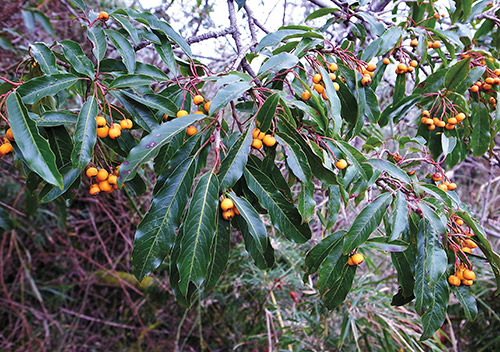
Birds such as white-tailed robin (Cinclidium leucurum), Taiwan bush-warbler (Locustella alishanensis), and golden parrotbil (Suthora verreauxi) in Yushan National Park are also discovered moving to higher elevations and making it their breeding grounds, and leave in the winter non-breeding season, returning to the lower altitude to pass the winter. Coal tit (Parus ater), white-whiskered laughingthrush (Trochalopteron morrisonianum), white-browed bush robin (Tarsiger indicus) and alpine accentor (Prunella collaris) would only adjust their vertical elevation distribution slightly between winter and summer and do not completely change their distribution areas. This indicates the range and time course of various birds’ altitudinal migration behavior are different; but some birds, like the Taiwan fulvetta (Alcippe cinereiceps), hardly have any obvious altitudinal migration behavior, they simply change their way of life in response to the arrival of winter. Furthermore, a few species such as white-eared sibia (Heterophasia auricularis) and green-backed tit (Parus monticolus) would instead move upwards toward higher altitudes during winter. Scholars speculate white-eared sibia’s migration to higher altitudes is somewhat related to their feeding on the abundant Taiwan Stranvaesia (Stranvaesia niitakayamensis (Hayata) Hayata) winter fruits. Greenbacked tit may migrate to mix in with other birds in the winter in order to improve their foraging efficiency.
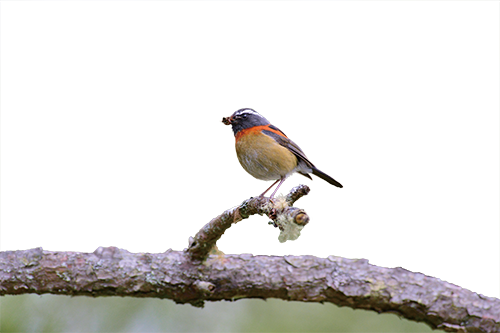
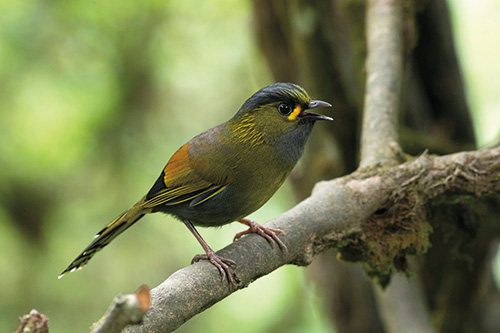
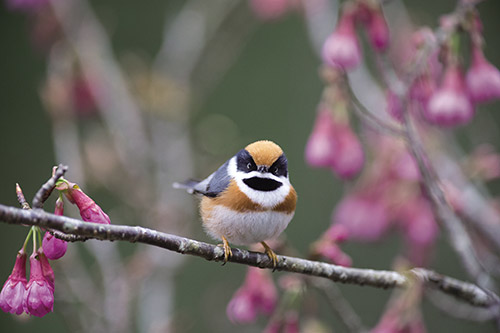
Banding records from Taroko National Park indicated although red-headed Tit (Aegithalos concinnus) can appear all year round in high altitude areas, mid-altitude recordings would significantly increase in winter. Taiwan liocichla (Liocichla steerii) would only appear in high altitude areas during summer, and only appear in midaltitude areas during winter. From this we can see that different species of birds would present different models of altitudinal migration behavior.
Sometime researchers would fish out some unexpected findings from the phenological record data. Dusky warbler (Phylloscopus fuscatus) was originally considered to be a rare transit bird or winter migratory bird in Taiwan, but records of its activity during summer was found in 2015 in the banding records from Taroko National Park’s Hehuanshan farm. Coincidentally, yellow-browed warbler (Phylloscopus inornatus), which is considered as an uncommon winter migrator y bird in the Phylloscopidae family, was sighted for the first time in June and July of 2011 in the Sheishan mountain region, and seems to be gradually establishing a stable summer population in the following years. This indicated besides the local seasonal altitudinal migratory birds, there are also many noteworthy phenological problems in other long-distance migratory birds.
The use of science and technology to assist in analysis
When undergoing phenological observations, the research team sometimes will also simultaneously collect meteorological factors at the time point, and use statistical methods to do correlation analysis on each year’s phenological performance and that particular year’s meteorological factor. In general, annual differences are mostly related to that year’s temperature factor, such as the flowering behavior, animal distribution area, time and range of altitudinal migration mentioned in previous paragraphs. From this, it can also be predicted that global warming will most likely cause major impacts on the phenological phenomena in Taiwan’s mid to high altitude mountain regions and even affect the distribution range of species.
Because phenology research requires fixed time and fixed point observation, traditional research method, especially in data collection, is extremely labor dependent. Therefore, if we can use automatic monitoring instruments to assist, in addition to saving manpower, we can also extend the task of observation into many time periods that were unattainable before.
National Dong Hwa University has attempted to use photography techniques as an instrument to record the flowering process, and use photo chromatographic analysis as a phenological recording tool. Preliminary analysis results are already gathered from tree species that have more obvious changes on the tree crown’s appearance and color due to flowering; but for the tree species that do not have obvious flowering colors, it is still difficult to use this method on them to record and interpret. In time, there may be an opportunity for this kind of fixed point fixed time photography recording method be used on sample trees to complement with the results from human observations.
In animal studies, automatic infrared camera is a technique already widely used by the academic. It can avoid interference cause by the appearance of the research personnel, long-termly document animal’s movement, and save on research labor costs. In these commissioned research cases, some scholars also used fixed point audio recording equipment to record bird activities. But due to audio recording can only document certain group of birds that likes to sing and whose calling is easy to recognize, plus there is the calling differences in mating and non-mating season have to be considered (some birds will even stop singing during non-mating season), as well as voice interference from human activities, insect chirping, and weather factors, the interpretation is highly labor dependent; therefore, sound recording can only be used as one of the assisting research tools.
Phenological research discovers the truth of gender
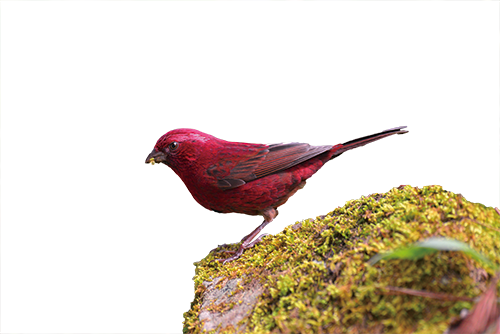
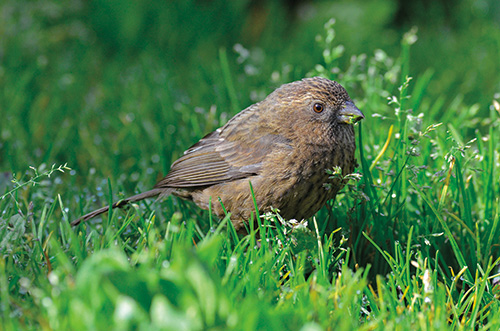
Taiwan rosefinch (Carpodacus formosanus) is an endemic species that is generally distributed in Taiwan’s high-altitude regions. In the past, people believed that those with brown feathers are female and those with wine red feathers are male. But later in DNA gender identification tests, we discovered that many brown feathered individuals are actually male. After repeatedly recording banding information and phenological studies, scholars have finally figured out the truth: both male and female Taiwan rosefinch birdlings have brown feathers, where the male birdlings would change their feather color into wine red the following year, and the time they change the color of their feather is around October!
Whether it is the photographic analysis of the flowering phenomenon or audio recording of bird sounds mentioned above, presently they are operated and assembled by the research members themselves who mostly uses commercially available products, so there is still room for improvement in the specialization and reliability aspects, not to mention data interpretation still rely heavily on manpower. Nonetheless, these attempts are of great significance for exploring suitable equipment and improving the efficiency of future studies.
“A terrace of nine stories high starts from a soil piled; a journey of a thousand miles begins with a single step." The first step of long-term phenological monitoring is to start setting up observation records. After having the first year’s records, we can continue to add on data from the coming years and compare them. Phenological performance seems to be the same every year, nothing but just repeating themselves again and again, but in fact we can still find miner to major differences in their time course or intensity. If we compare the records from different years and see if there has been any significant changes in the phenological performance long-termly, we can then discover more in-depth information and analyze the pattern of changes.
Some phenological performance may be stable for many years, some may show a short-term rotation cycle of bumper harvest and poor harvest year; some may be continuously moving toward a certain direction, some may be difficult to determine a consistent change pattern from the limited human observation. There is also an interlocking relationship among the phenological phenomena of different species. Therefore, by comparing their annual changes, not only can it help us get a better understanding on the relationship between the species, but even may attempt to use their time differences as a predictive tool. If we can further combine each year’s phenological data with the environmental data and find out the connection between the two, then we can understand better on the impact of the environment on phenology, and predict the phenological changes that may happen in the context of future global climate change and develop a response method.
After accumulating years of phenological observation data and finding the connection between environmental factors, we can gradually determine the impact mechanism of the environment on animals and plants, and try to establish a model to predict future phenological changes. These models need constant verification for them to become more accurate. In the National Park related commissioned studies, some scholars have already proposed preliminary concepts of using flowering and bird sighting predictions for the use of recreational activities. However, the verification and calibration of these prediction models need large amount of annual sample data to serve as basis, therefore, they currently are still in the trail phase. But in the future, perhaps through years after years of database accumulation, the prediction would become more pragmatic, and could be extended onto many more applications.
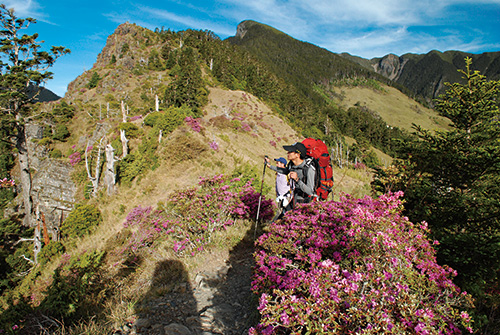
In the research field of phenology, the longer the data is accumulated, the more detail we can analyze the significance behind the information. But the job of longterm phenological recording is not as easy as one may think. The existing observation records accumulated throughout the years may be relatively simple on the observed items because of the technical limitations in the early years. Observation items that had not been carried out at the time cannot be filled afterwards because the time has passed. Phenological observations that are currently in progress may also be affected due to consolidation or abolition of research institutes, funding and labor constraints, or even habitat suffering from unexpected destruction, so we cannot predict how many years they can last. Nevertheless, the effort to extend the “timeline” is extremely important.
Global climate change is currently an important issue for mankind. It can be imagined that climate change will have an impact on most phenological phenomena. But if we want to determine the direction and magnitude of the affected changes, we have to depend on solid phenological knowledge and well-proven predictive models. Although current research results still have quite some distance to go, we must keep on moving forward one step at a time to get closer to this goal.
About the Author
Jer-haur Li
Graduated from Institute of Plant Biology, National Taiwan University, Jer-haur Li enjoys writing and publishes articles
occasionally.


