
Crescent Moon over the Gorge-The Fourth Generation Shanyue Suspension Bridge
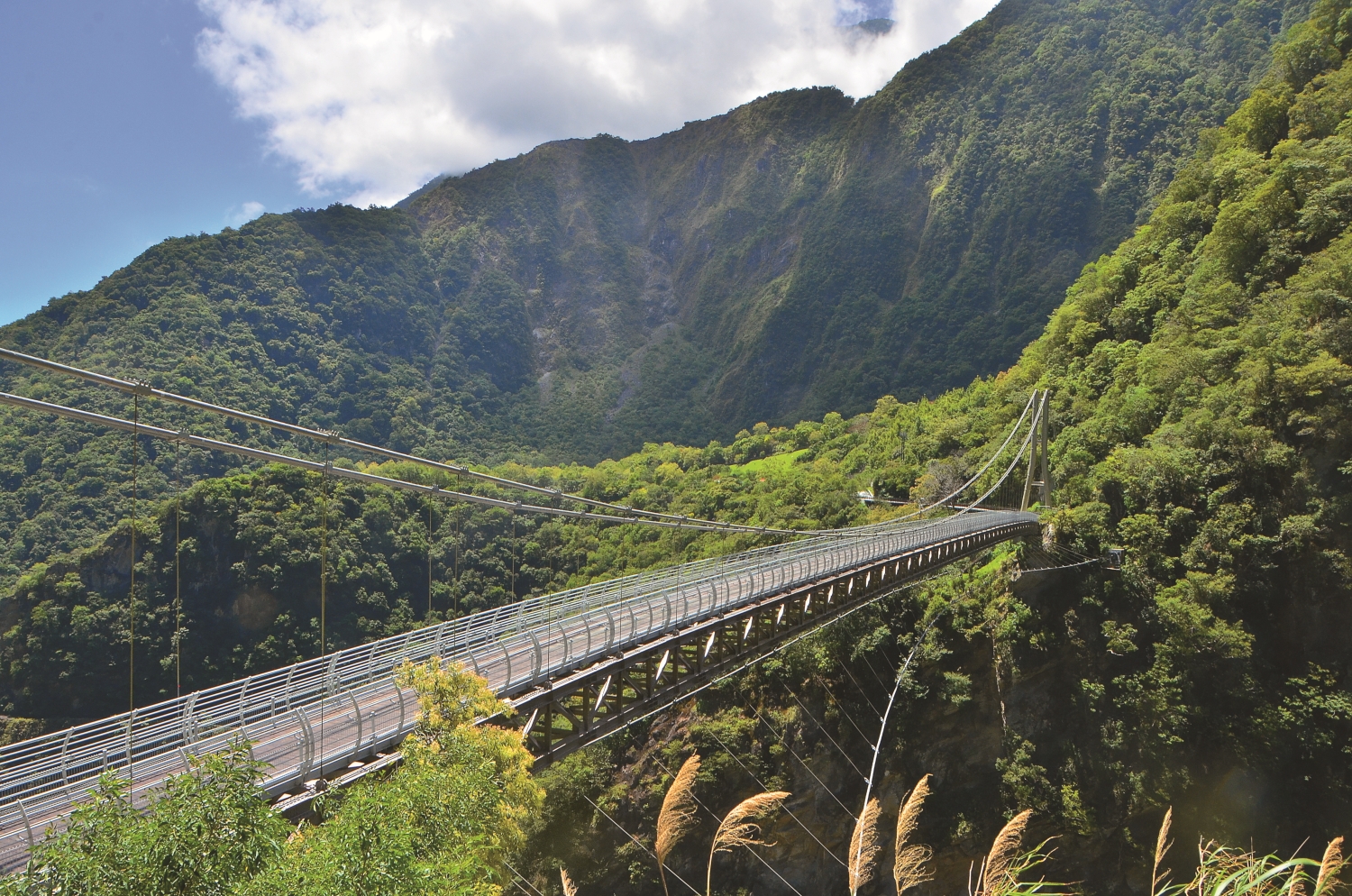
welcomes tourists with a whole new look. / Photo by Mao-Yao Lin
Crescent Moon over the Gorge -The Fourth Generation Shanyue Suspension Bridge
Article / Mei-Yun Tso
On August 12, 2020, a joyful event was happening in Taroko National Park. The steep mountain cliff seemed especially tall under the blue sky; the rapid water appeared greener under the clams of the cicadas. Even the sky and the earth seem to be freshened up by specialists. They felt extraordinarily refreshing and grand, just to welcome the fourth-generation Shanyue Suspension Bridge to once again appear before the eyes of the world with its stunning appearance.
Since 1914, the Shanyue Suspension Bridge has connected the natural strongholds of Taroko National Park. For hundreds of years, she has witness of Japanish colonial Period and gold rush dreams. During the most sinister and beautiful times of Taroko, she was always there.
On the day when the new bridge was first opened, the elderly residents of Hualien Veterans’ Home arrived in wheelchairs. The children from Sipao Elementary School and Zenlight Children's Home walked happily and steadily crossed the bridge. They became the first members setting foot on to this new generation of Shanyue Suspension Bridge, witnessing this historic moment with the mountains and water.
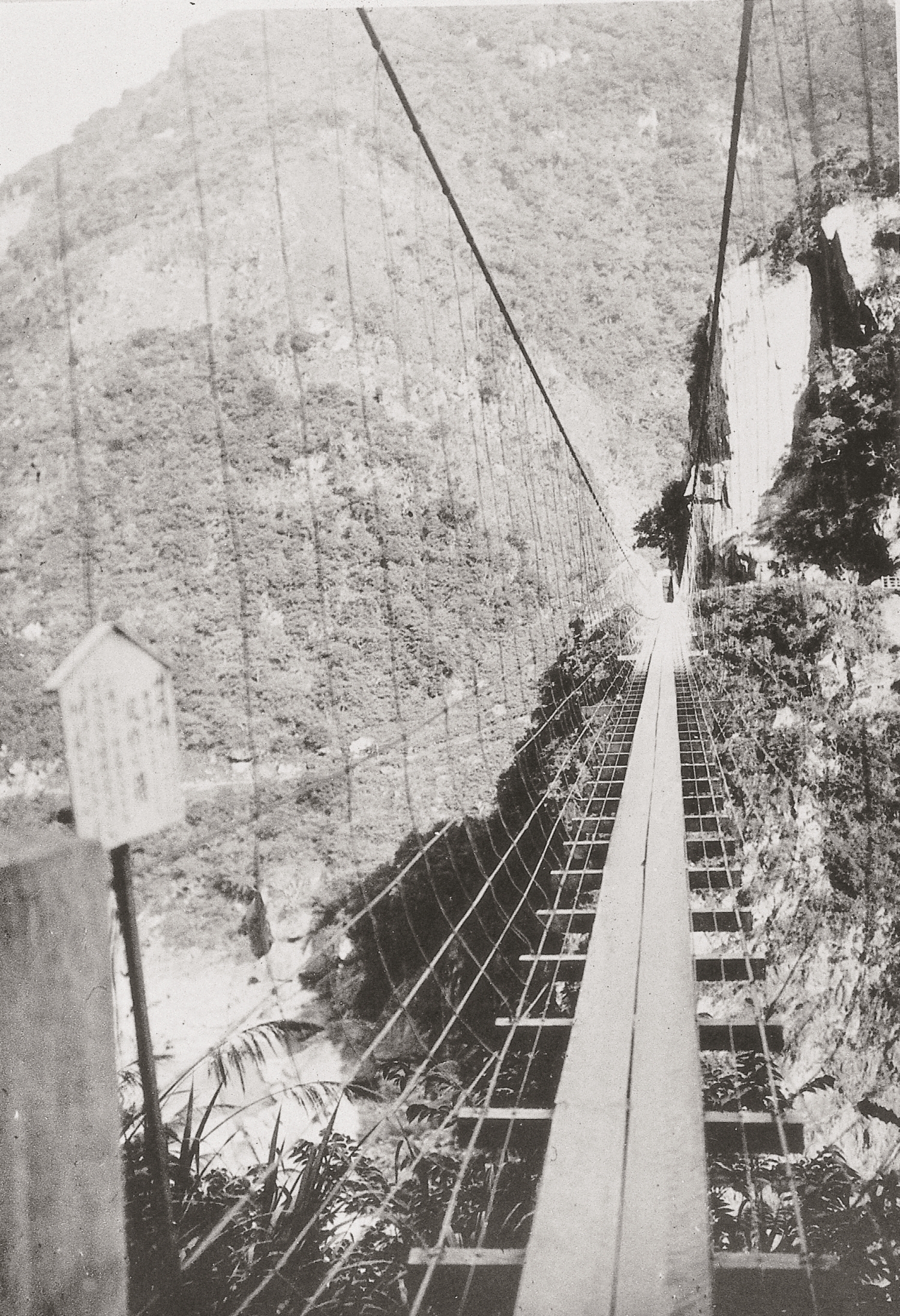
standing at the north bank looking south. / Provided by Taroko National Park Headquarters
Century of tortuous bridge-building history
The Taroko Gorge is magnificent and precipitous. It has attracted thousands of people from all over the world to come and visit over the past hundred years. The tall mountains and deep waters make human beings fe el extremely small. Only when standing on a narrow bridge connecting mountain to mountain is it possible to be able to have a dialogue with the steep mountain cliff.
The Shanyue Suspension Bridge is the longest and highest among the many suspension bridges in Taroko Gorge. It also has a long history. The story starts with the bloody battle of Taroko. To go deep into the tribes and cross the natural strongholds, the Japanese colonial government built difficult and dangerous mountain trails. To cross the gorges that were cut into nearly vertical walls by the Liwu River, they had to erect cable bridges over the river valleys for traveling.
Sakuma Samata, the fifth Governor- General of Taiwan during the Japanese Colonial Rule period, launched the “Taroko Battle” in 1914. He entered the mountains and forests with a strong force to eliminate the Truku people who resisted the rule under the defense of the natural strongholds. Due to the huge disparity in force, the Japanese army obtained control very quickly and launch a "five-year governing plan of the aborigines".
In order to govern the Truku tribe, roads have to be opened to go deep into the mountains. Therefore, the pioneers led by Masa Umezawa completed the “Xinchengnei Taroko Road” from Xincheng to Tianxiang in 1915 in seven months, getting through to the originally isolated valley and forest.
After the Xinchengnei Taroko Raod entered into the gorge, the marble rock layers on both sides of the Liwu Valley stretched on for several kilometers. The construction crew forsook the original “high-detour route” and replaced it with horizontal shortcuts, opening roads when encountered mountains and building bridges when meeting water. The first generation of the Shanyue Suspension Bridge came about in this situation.
The Shanyue Suspension Bridge has been rebuilt several times in the past hundred years. If you want to know its life stories during this period, you can cross the abutment from the south side to the north side and read all about it on the information board: The first-generation bridge was built in 1914 (the third year of the Taisho era), it was 154 meters long and was built for the colonial regime to govern the aborigines; the second-generation bridge was 190 meters long, and the distance between the bridge surface and the river valley was 75 meters, further apart than the previous generation. It was completed on December 20th in 1930 (the fifth year of the Showa era). Just 10 years after the new bridge was built, the foundation of the bridge was damaged during the construction of the “Gold Production Road” in 1941 (sixteenth year of the Showa era), and the third generation of the Shanyue Suspension Bridge was rebuilt 100 meters upstream.
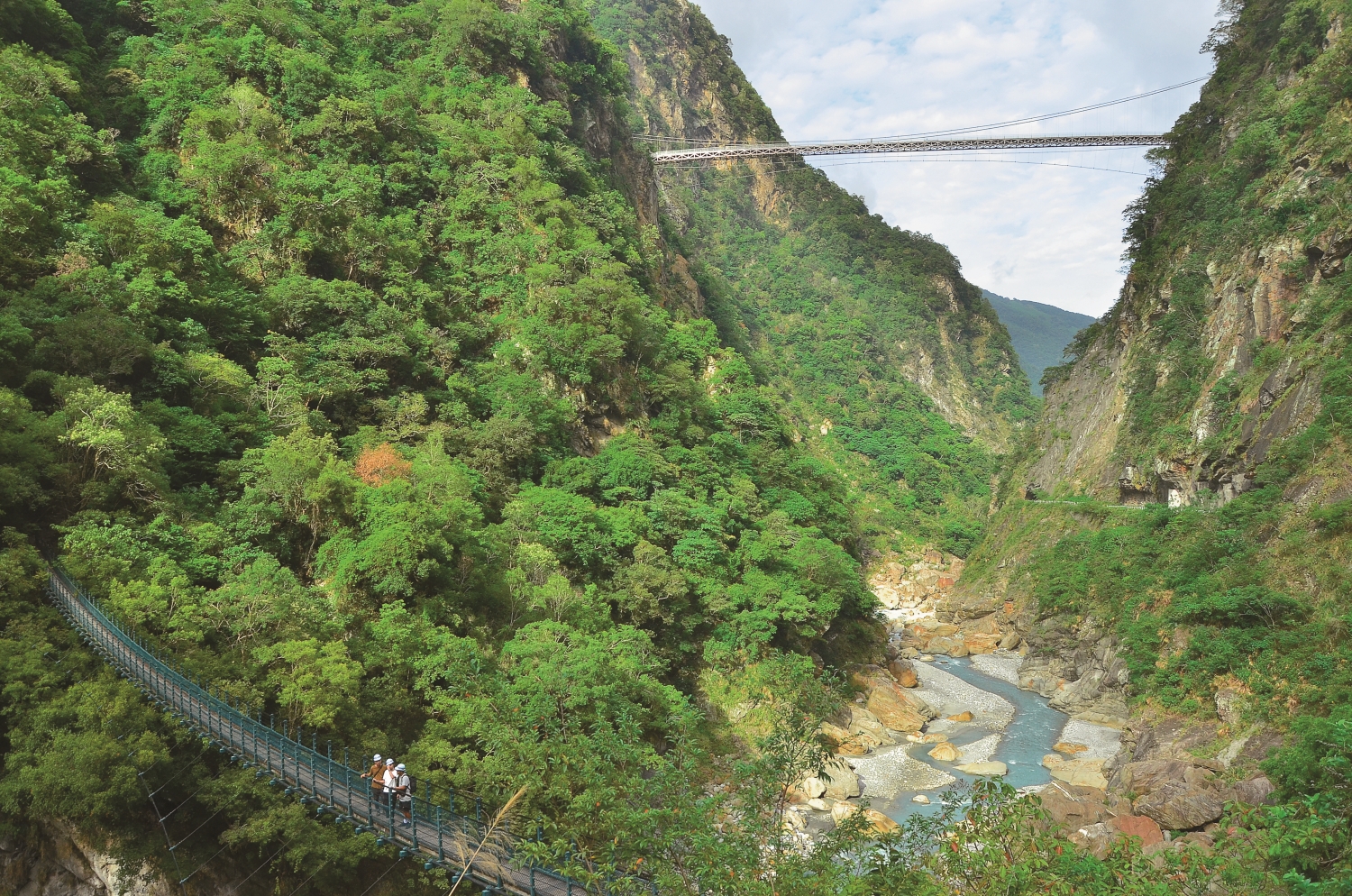
downhill from the entrance of the Yanzikou. / Photo by Mao-Yao Lin
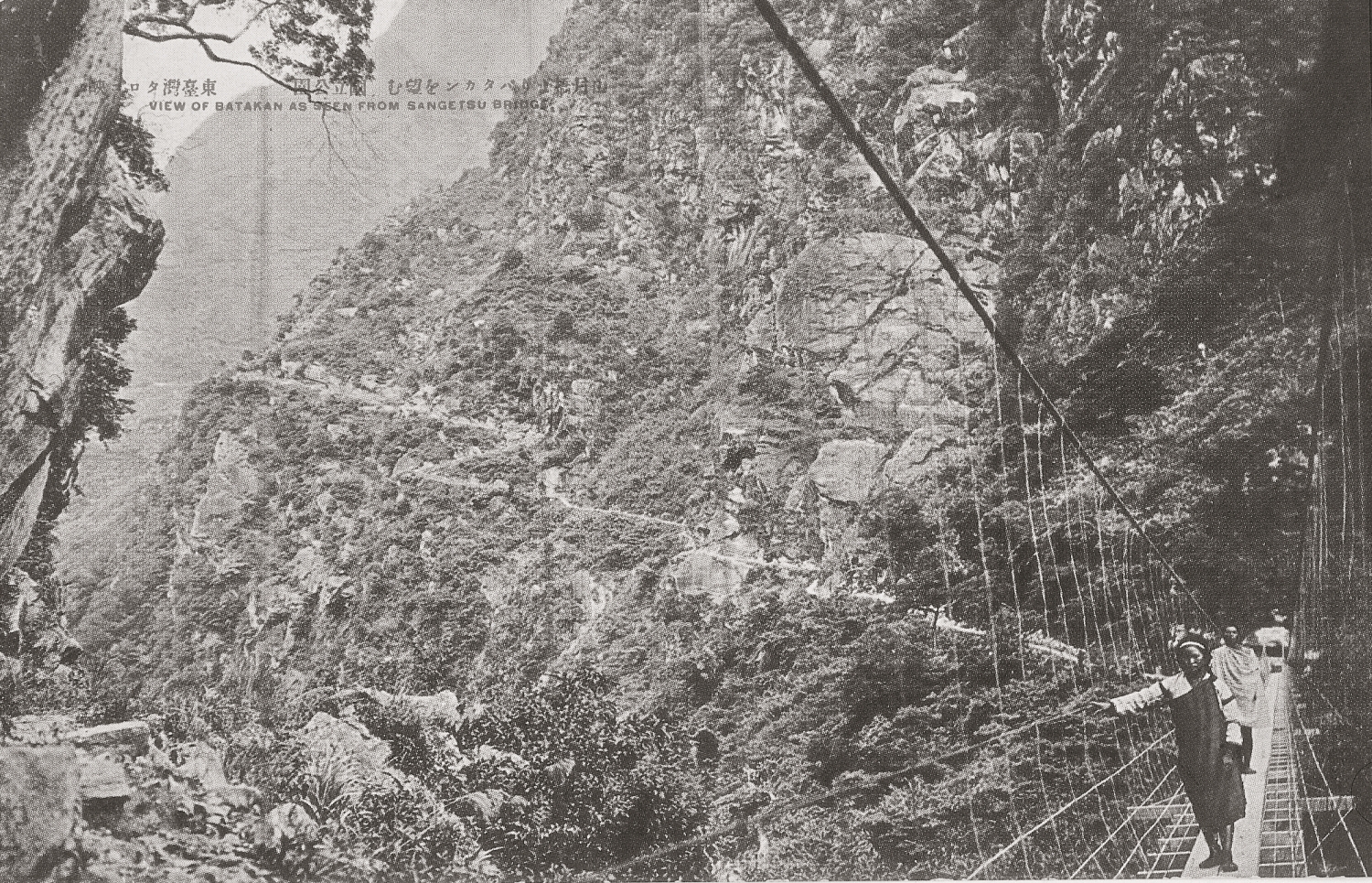
standing at the south bank looking north at the lightning-shape trail. /
Provided by Taroko National Park Headquarters
Changed into a welcoming trail
Few people knew about this, but Taroko has a gold mining history. It turned out that during the Japanese Rule period, technician Ogasawara di scovered that Taroko Gorg e contained a large amount of placer gold. At the end of World War II, the Japanese government was financially exhausted due to the war, so they decided to build the “Gold Production Road”, extending the road to Tpdu (today’s Tianxiang). But during the construction, the foundation of the Shanyue Suspension Bridge was damaged and the bridge was forced to be closed down.
Shanyue Suspension Bridge connects Buluowan and Badagang. Af ter crossing the Shanyue Suspension Bridge from Buluowan, there is a long Z-shaped steep slope, which the Japanese called the “Lightening Trail”.
Shanyue Suspension Bridge is also known as the bridge of resignation. It is so long and so high above. when walking on it, it would shake vigorously, and the deep gorge below is often daunting. Therefore, it was dubbed as the bridge of resignation by the patrols stationed in the deep mountain tribes during the Japanese Rule Period.
But in the eyes of tourists, the Shanyue Suspension Bridge is a different scenery. Taroko Gorge was selected as one of the “Eight Views of Taiwan” in 1927 and caused a boom in tourism.
At that time, the Shanyue Bridge was the longest cable bridge in the gorge. People enter Shanyue Suspension Bridge from Buluowan, and connects to is the tortuous “Lightning Trail”. After passing the Z-Shaped trail, they would arrive at Badagang.
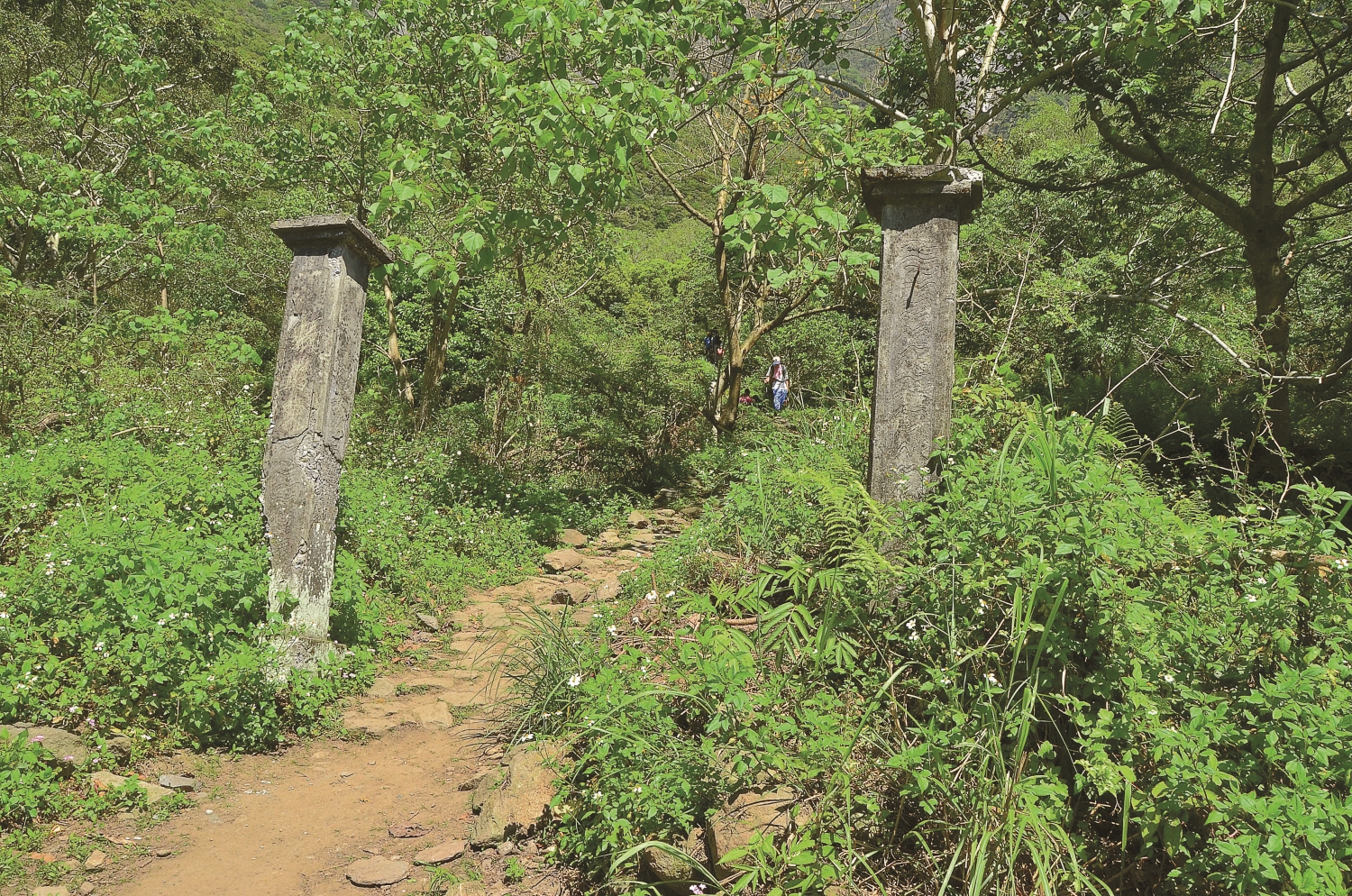
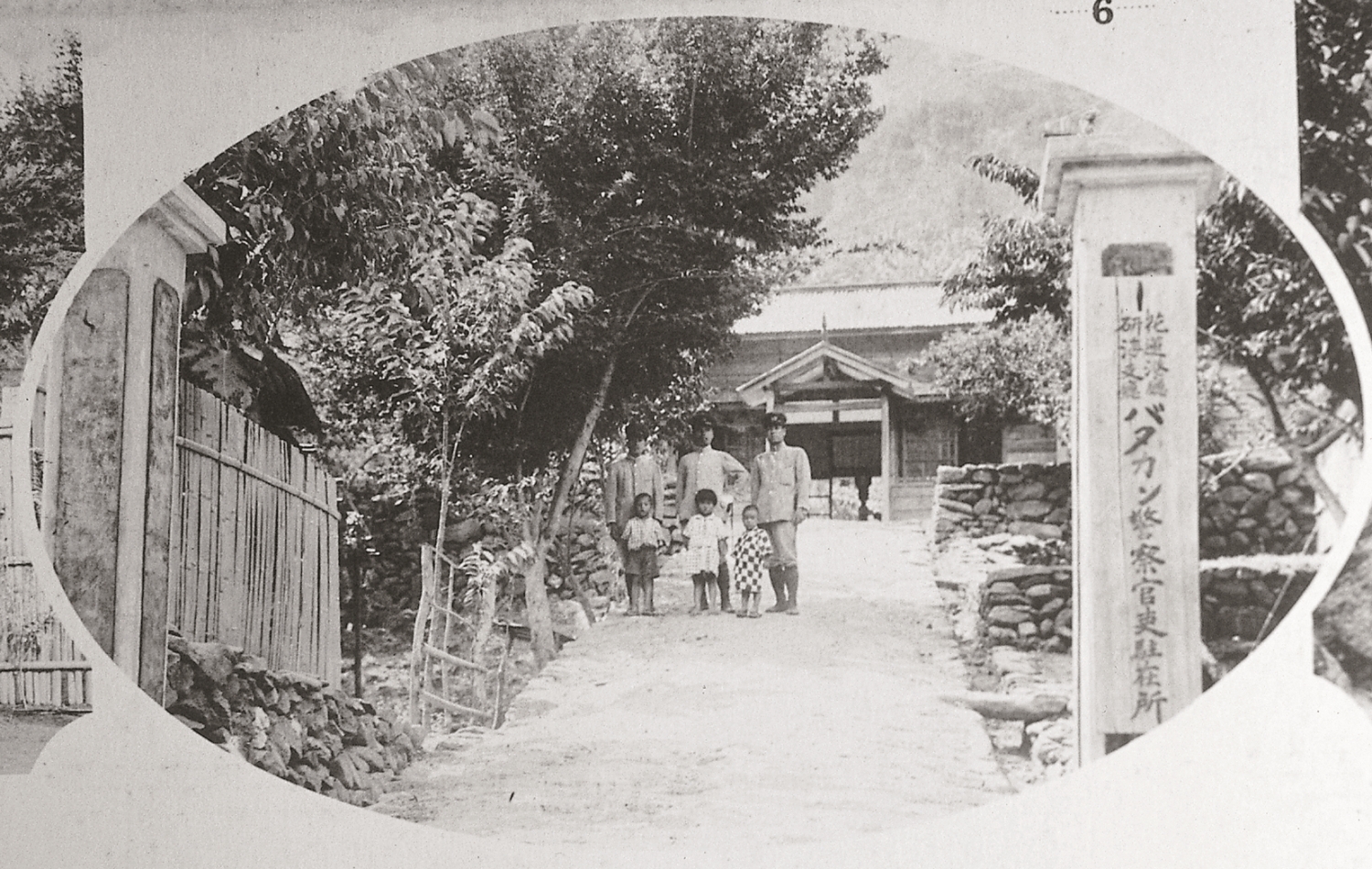
Provided by Taroko National Park Headquarters
Due to the increasing number of tourists and the high demand for travel-related facilities, Badagang was home to the Badagang Police Station, the Badagang Club (accommodation hotel ), the Aborig inal Children Education Center, and the Aboriginal Product Exchange Station, thriving at that time. A large number of cherry trees were also deliberately planted in Badagang. When they bloom, Badagang was covered by a sea of pink flowers, making it a famous tourist attraction for cherry blossom viewing.
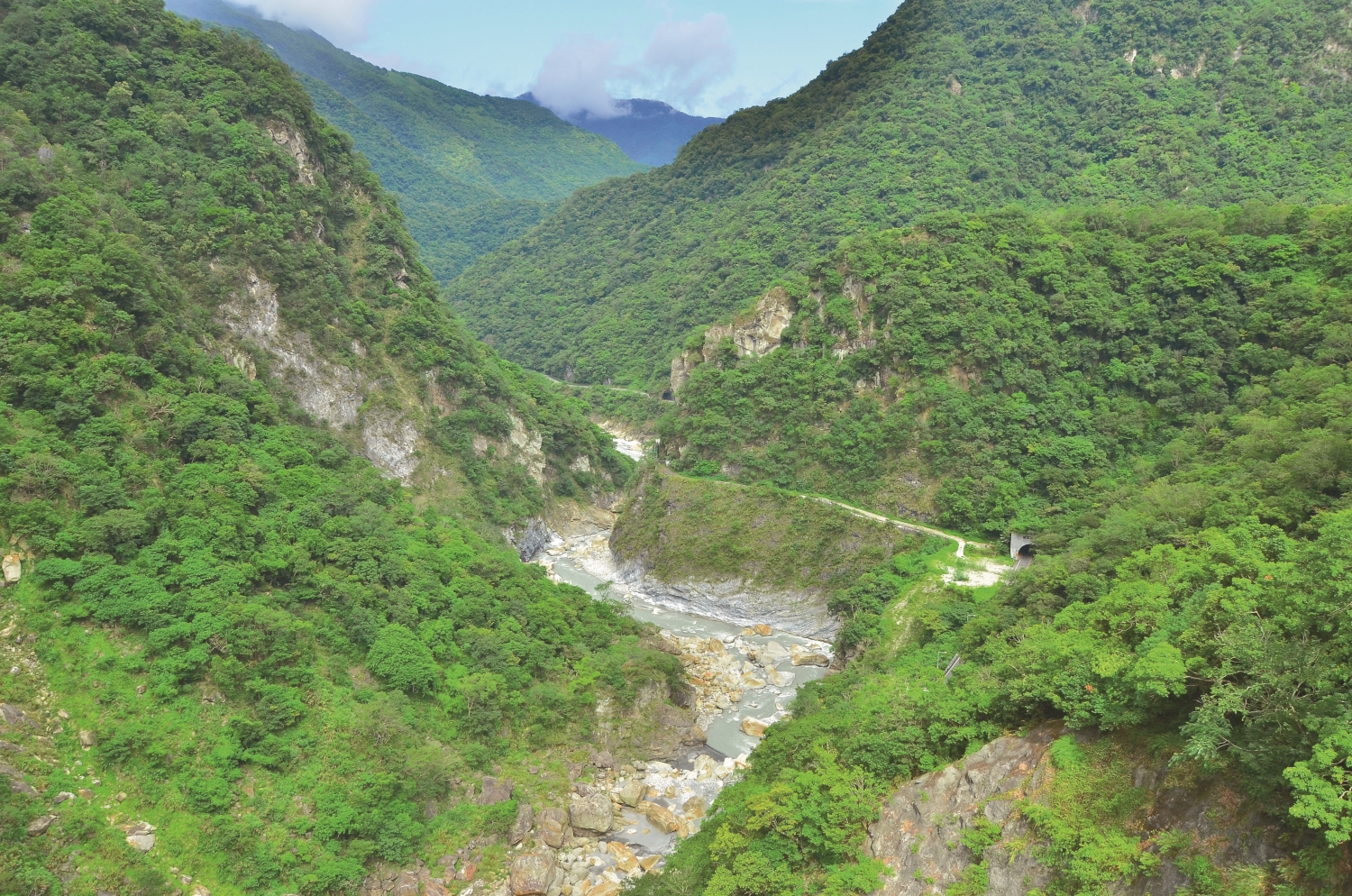
the lightning trail is hidden in the woods on the left. / Photo by Mao-Yao Lin
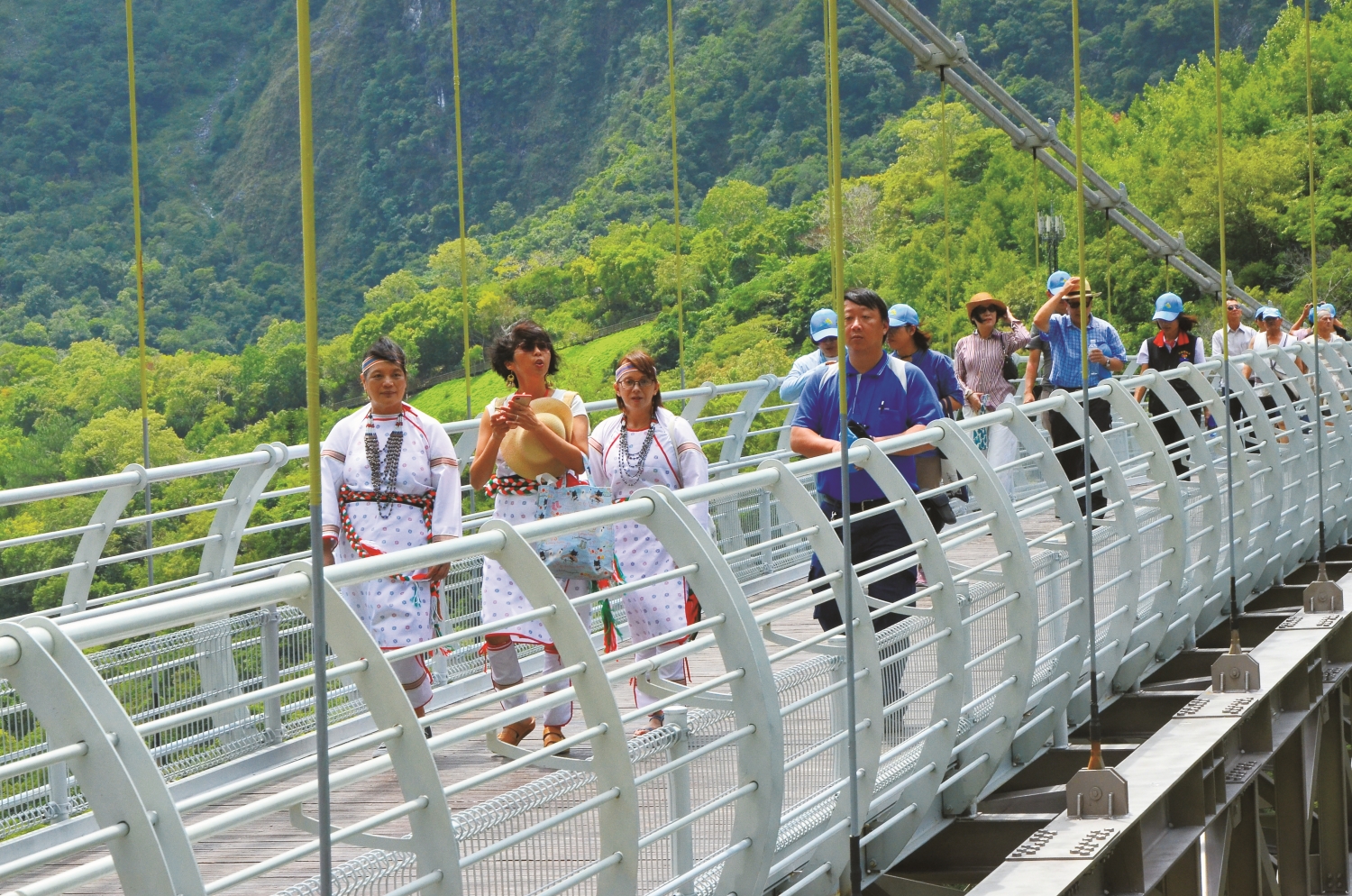
the Shanyue Suspension Bridge together. /
Provided by Taroko National Park Headquarters
The new bridge construction is recognized
After the third-generation Shanyue Suspension Bridge was destroyed, the first director of the Taroko National Park Headquarters, Hsu Kuo-Shih, started the reconstruction of the fourth-generation new bridge right away because of its special historical status and function. The construction began in 1988, but due to geological problems that could not be overcome by engineering technology, the work was suspended halfway, and this shutdown lasted over 30 years.
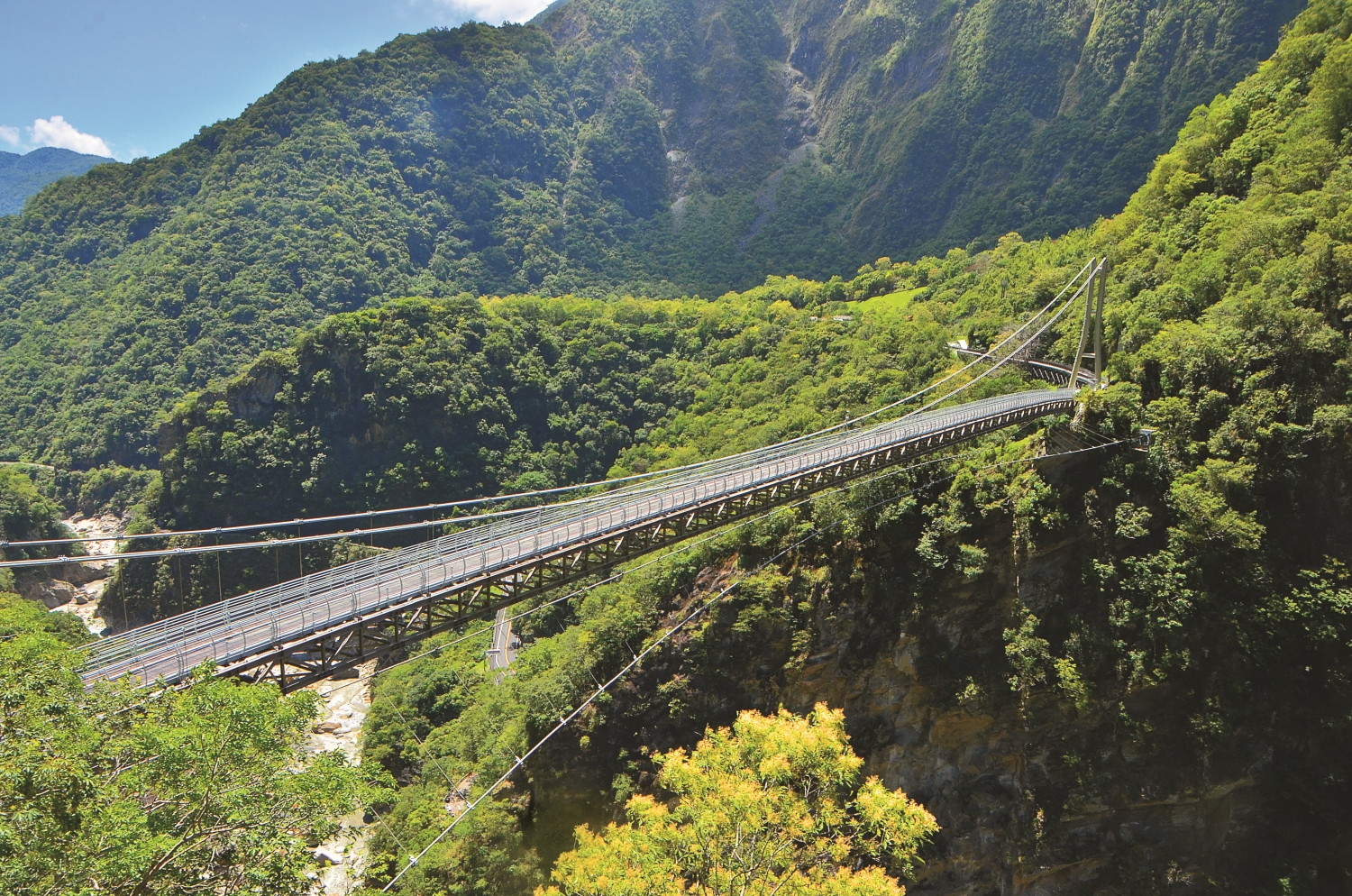
The Shanyue Suspension Bridge sits more than 150 meters above the valley, and the bridge is close to 200 meters long. One can imagine how difficult it is to construct the fourth-generation bridge. After 2 years and 9 months of construction, it is finally completed. The quality of the new bridge in both the design stage and construction period has been highly recognized and has already been awarded the 2018 Occupational Safety and Health Excellence Award and the 2019 Public Construction Golden Quality Award.
Hanging between the cliffs, the guardrails and suspension cables on both sides of the Shanyue Suspension Bridge steadily anchor the bridge, the moon-shaped bridge tower supports the well-proportioned bridge body, and the suspension bridge seems even more charming against the mountain and clouds. Walking on the bridge looking into the distance, the sky high above and the vast land in the distance is very refreshing. However, the towering mountains set off how tiny people are between heaven and earth, making people feel in awe. Looking down at the Liwu Valley 150 meters below, the rapid water forcefully rushes eastward.
The day before the opening ceremony of the new bridge, typhoon Mekkhala struck, and the outer weather systems caused heavy rain in many places across Taiwan. Although Hualien had only intermittent light rains, the hazy weather still made people worry about it. Surprisingly, the next day turned out to be bright and sunny, sweeping away the gloom, making the green mountain even greener, and giving perfect light for the stage of the opening ceremony. At the beginning of the ceremony, Truku pastor Jiru.Haruq held his hands up in front of the moon-shaped tower of the Shanyue Bridge, singing in ethnic language, “Although Formosa is small, it is full of ingenious creations of the Creator. This is the homeland I love with all my life.” The Qilai Chorus, composed of people from the Truku tribe, sang “Taiwan is my love” and "Remembering my homeland" with the accompaniment of thousands of cicadas. The moving, resounding voice echoed among the valley, and the harmonious sound touched everyone present even if they did not understand the Truku language.
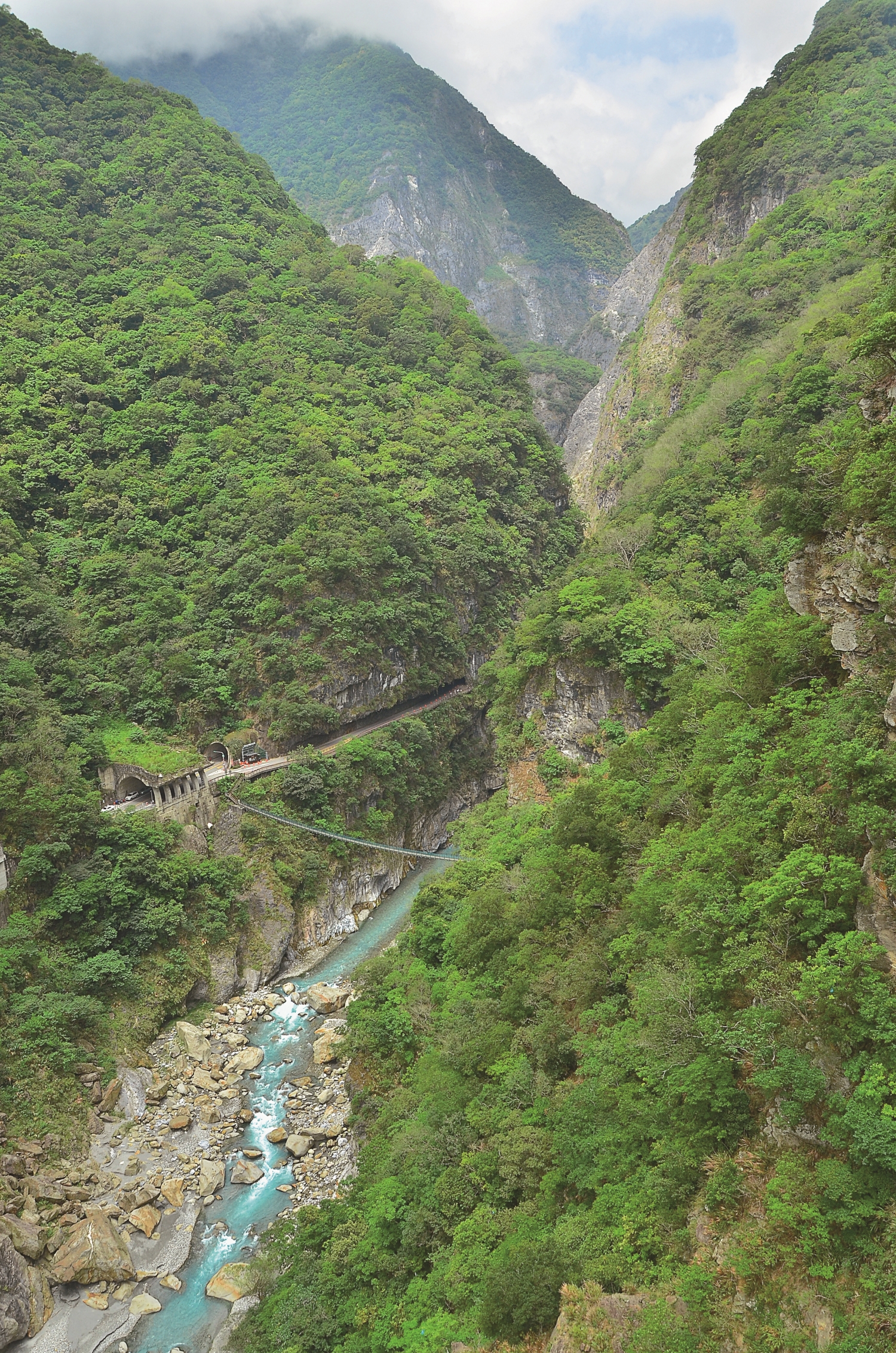
Photo by Mao-Yao Lin
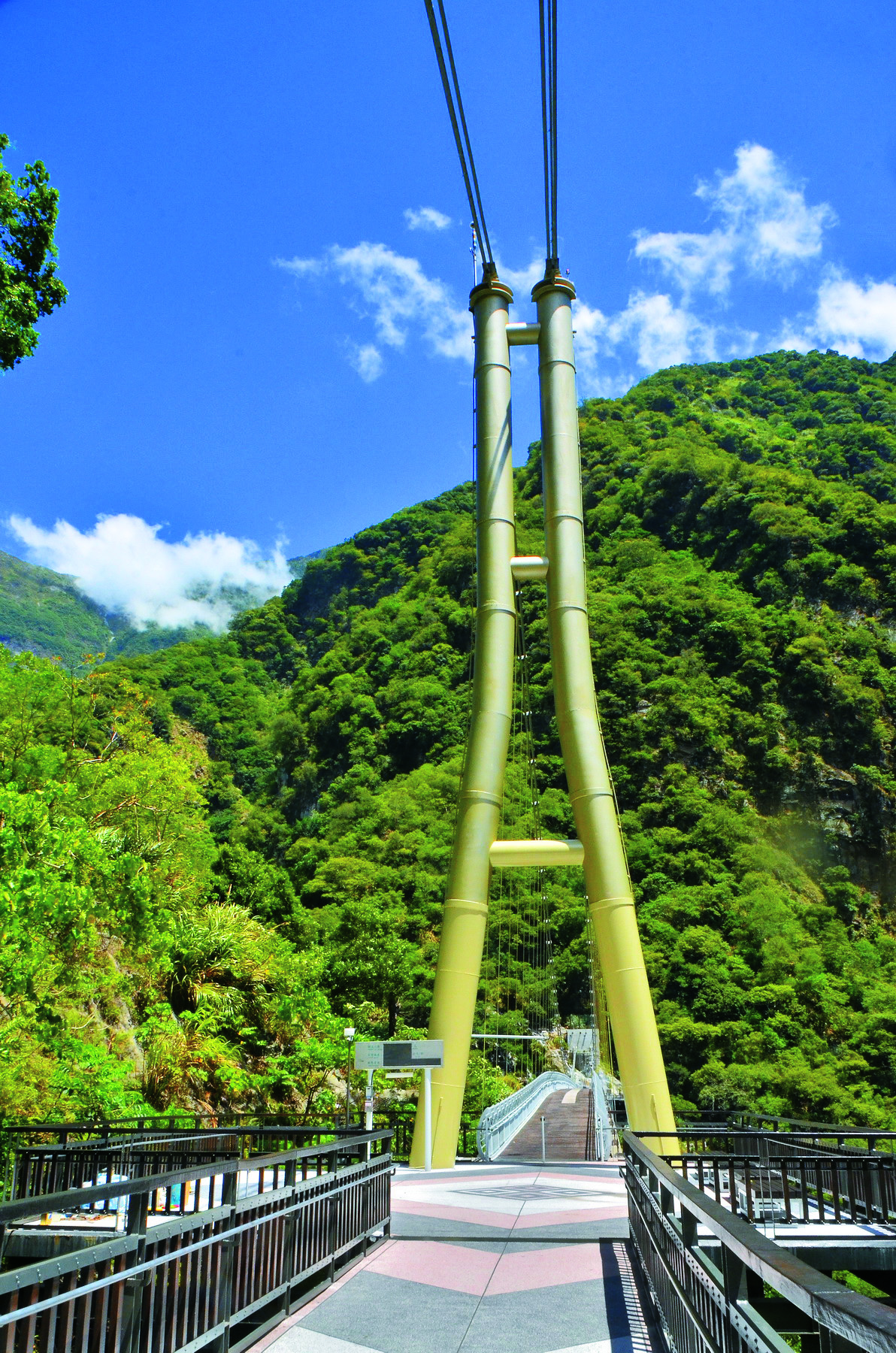
“moon”. / Provided by Taroko National Park Headquarters
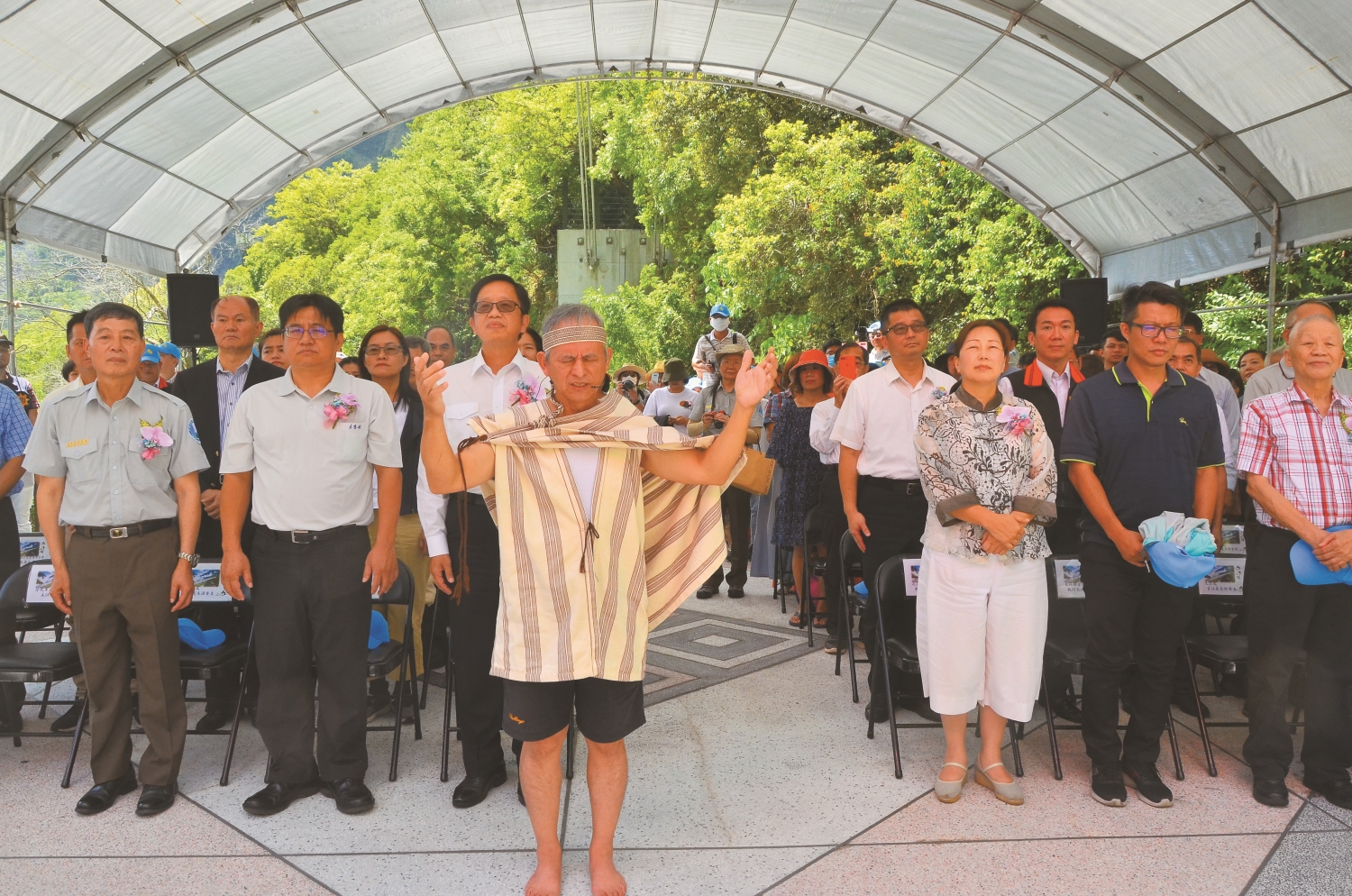
Director of the Taroko National Park Headquarter Yu Deng-Liang welcomed the many distinguished g uests. Admini strative Deputy Minister of the Ministry of the Interior Chiu Chang-Yueh, Director-General of the Construction and Planning Agency Wu Hsin-Hsou, Mayor of Hualien County Hsu Chen-Wei, and Executive Director of Eastern Taiwan Joint Ser vices Center Executive Yuan Hong Zong-Kai, took the stage to give speeches and expressed their blessings for the completion of the Shanyue Suspension Bridge, and thanked Yonglin Engineering Consulting Company who designed and super vised and Xing yuhui Construction Company who did the construction for their hard work. With the concerted efforts of everyone, this difficult task was finally completed.
Deputy Minister of the Ministry of the Interior Chiu Chang-Yueh said that the completion of the fourth-generation Shanyue Suspension Bridge is of great significance. In addition to its historical and policy importance, it is also expected to diver t approximately 5 to 6 million Taroko tourists each year to Buluowan. Deputy Minister Chiu said that Premier, Executive Yuan Su Tseng-Chang announced the policy of opening up forests last year. In the future, the government will check and organize the trails and mountain houses, and return the forests to the people with transparent and open information. The Shanyue Suspension Bridge was once an important link for the Truku tribe. The newly completed fourth-generation bridge sits high above with an extensive view. Standing on the bridge is like standing on the shoulders of the Taroko giant. It is a safe and suitable place for family travel.
Although retired, the first director o f th e Ta roko Nat i ona l Pa rk Headquarters Hsu Kuo-Shih who first proposed to rebuilding the Shanyue Suspension Bridge over 30 years ago, has also personally attended the opening ceremony that day feeling emotional when witnessing this dream come true.
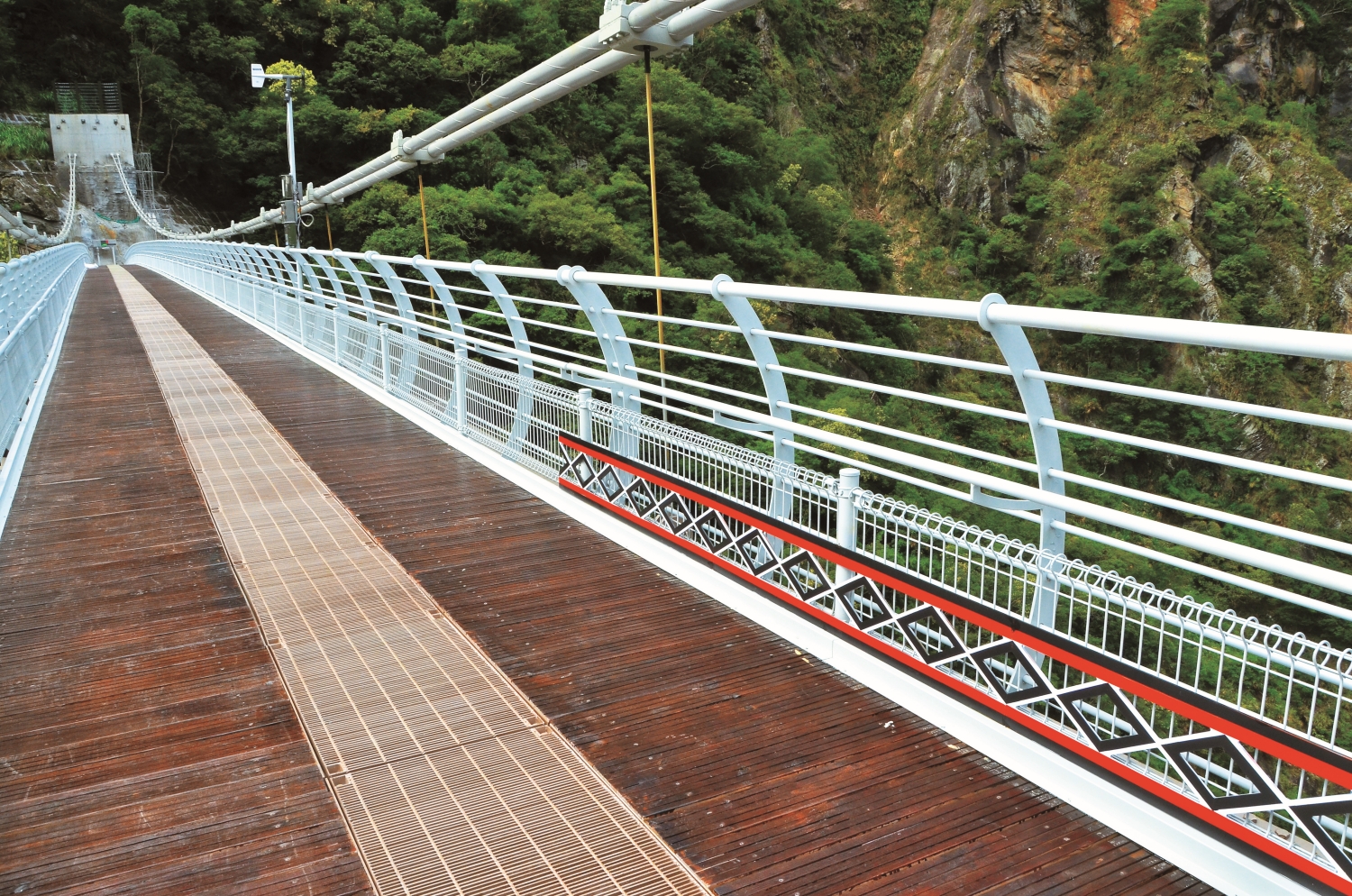
the Shanyue Suspension Bridge. / Photo by Mao-Yao Lin
Accessible design allows everyone to enjoy the unparalleled scenery
The fourth-generation Shanyue Suspension Bridge adopts an accessible design. The bridge deck is 2.5 meters wide allowing wheelchairs and strollers to pass on the bridge. In order to disperse the strong wind through the valley, there is a long grille in the middle of the bridge deck. The water and rocks of Liwu River can be seen through the thin grille lines. It can disperse the wind and reduce the shaking of the suspension bridge, which is a great engineering idea.
The new bridge cost more than 130 million dollars to build. The main structure is made of two main anchors and one bridge abutment poured in high-strength concrete, plus a 180-degree rotatable anti-wind cable seat and cable. These advanced engineering technologies allow the stability of the bridge to be greatly improved.
Through wind tunnel tests, the stability of the bridge body was evaluated, and the results showed that: "Under the 500-year return period wind speed, the displacement response of the bridge body did not cause damage to the bridge." This means that the bridge engineering is very sound, but the engineering technician Wu Chong-Jun said, no problem caused to the bridge structure does not mean that people will be safe. If the wind and rain are too heavy, although the bridge can stand stably, people may be swept away by strong winds. Therefore, a wind indicator is installed at the bridge tower, and the bridge will be closed for traffic when the wind exceeds level 8.
The Taroko National Park Headquarters reminds the public: Do not run on the bridge, do not open an umbrella, hats must have straps, and it is forbidden to use aerial cameras in the local area. Safety first, then you can enjoy the invincible 360-degree view of beautiful Taroko.
Make an appointment to board the bridge
In order to disperse the tourists, there is a limitation on the number of people that are allowed to enter the newly completed fourth-generation Shanyue Bridge at the beginning of its operation. Only 800 people are allowed per day and have to sign up in advance. There are four time slots at 9 o’clock, 11 o’clock, 13:30, and 15:30 a day, with 200 openings per time slot. The time to stay on the bridge is limited to 45 minutes, and a dedicated guide will explain the ecolog y of the canyon and the history of the suspension bridge. Since 16 Oct. 2020, there are 250 openings per time slot (1000 opening Per Day).
Director-General of the Construction and Planning Agency Wu Hsin-Hsou believes that this indicates people’s high expectations for the suspension br idg e . Taroko Nat iona l Pa rk Headquarter Director Yu Deng-Liang said that the quota will be gradually adjusted in the future so that more visitors can experience the beauty of the Shanyue Suspension Bridge. At present, the trail on the north side after crossing the bridge has not been repaired yet. Therefore, people must turn back after crossing the Shanyue Bridge. The Tarako National Park Headquarters will continue to organize the trails of the Badagang and Zhuilu Ancient Roads nearby the suspension bridge, and build a more complete trail system to reappear the glory days of Badagang.
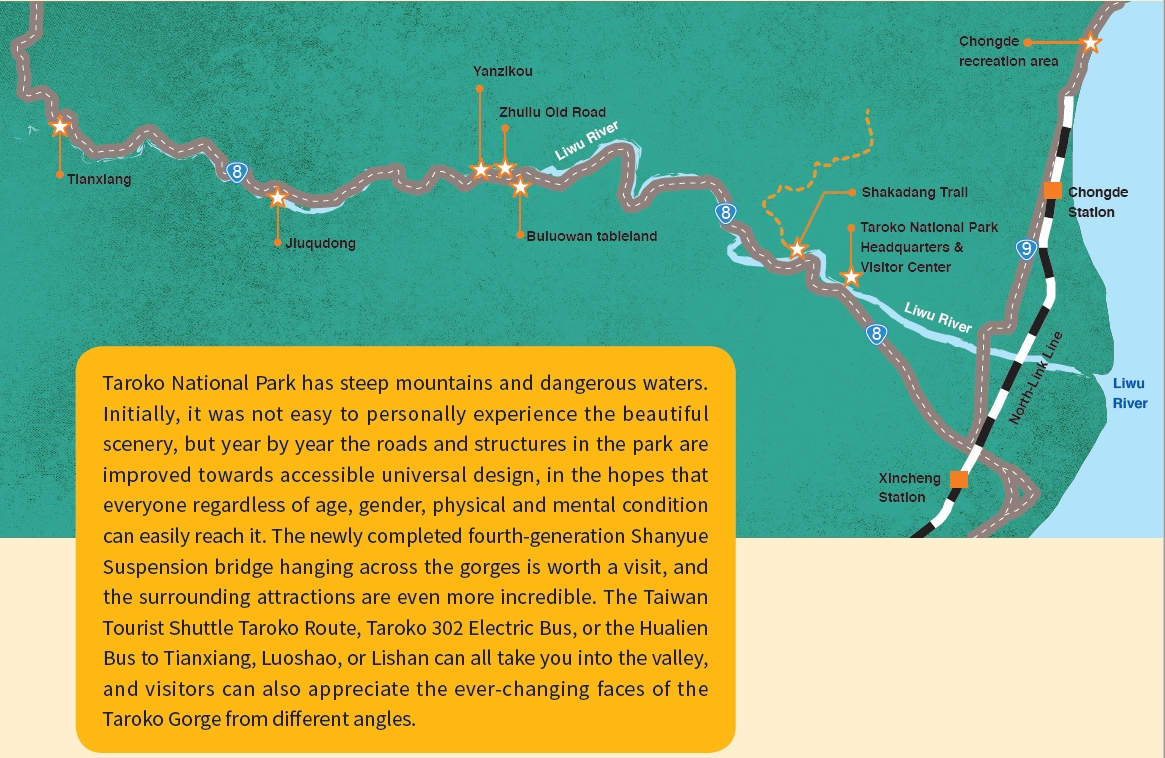
Take a friendly travel -Follow the Guide
Taroko National Park has steep mountains and dangerous waters. Initially, it was not easy to personally experience the beautiful scenery, but year by year the roads and structures in the park are improved towards accessible universal design, in the hopes that everyone regardless of age, gender, physical and mental condition can easily reach it. The newly completed fourth-generation Shanyue Suspension bridge hanging across the gorges is worth a visit, and the surrounding attractions are even more incredible. The Taiwan Tourist Shuttle Taroko Route, Taroko 302 Electric Bus, or the Hualien Bus to Tianxiang, Luoshao, or Lishan can all take you into the valley, and visitors can also appreciate the ever-changing faces of the Taroko Gorge from different angles.
Transportation :Taiwan Tourist Shuttle Taroko Route
Route :Hualien Railway Station to Tianxiang
Hualien Railway Station → Qixingtan →Taiwan Railway Xincheng Station →Taroko →Taroko National Park Headquarters → Shakadeng → Buluowan → Yanzikou → Jiuqudong → Heliu Camping Area → Lushui → Tianxiang
For more Information :https://www.taiwantrip.com.tw/line/19?x=4&y=1
TransportationTaroko 302 Electric Bus
Route :Xincheng Railway Station to Tianxiang
Taiwan Railway New Town Station→ Liiko Hotel→ Asia Cement Factory→ Kale → Fushi→Taroko→Taroko National Park→Shakadang→Creekside→ Yanzikou→ Cihmu Bridge→ Heliou Camping Area→ Lushui→Tianxiang
For more Information:https://www.taroko.gov.tw/zh-tw/Tourism/Traffic
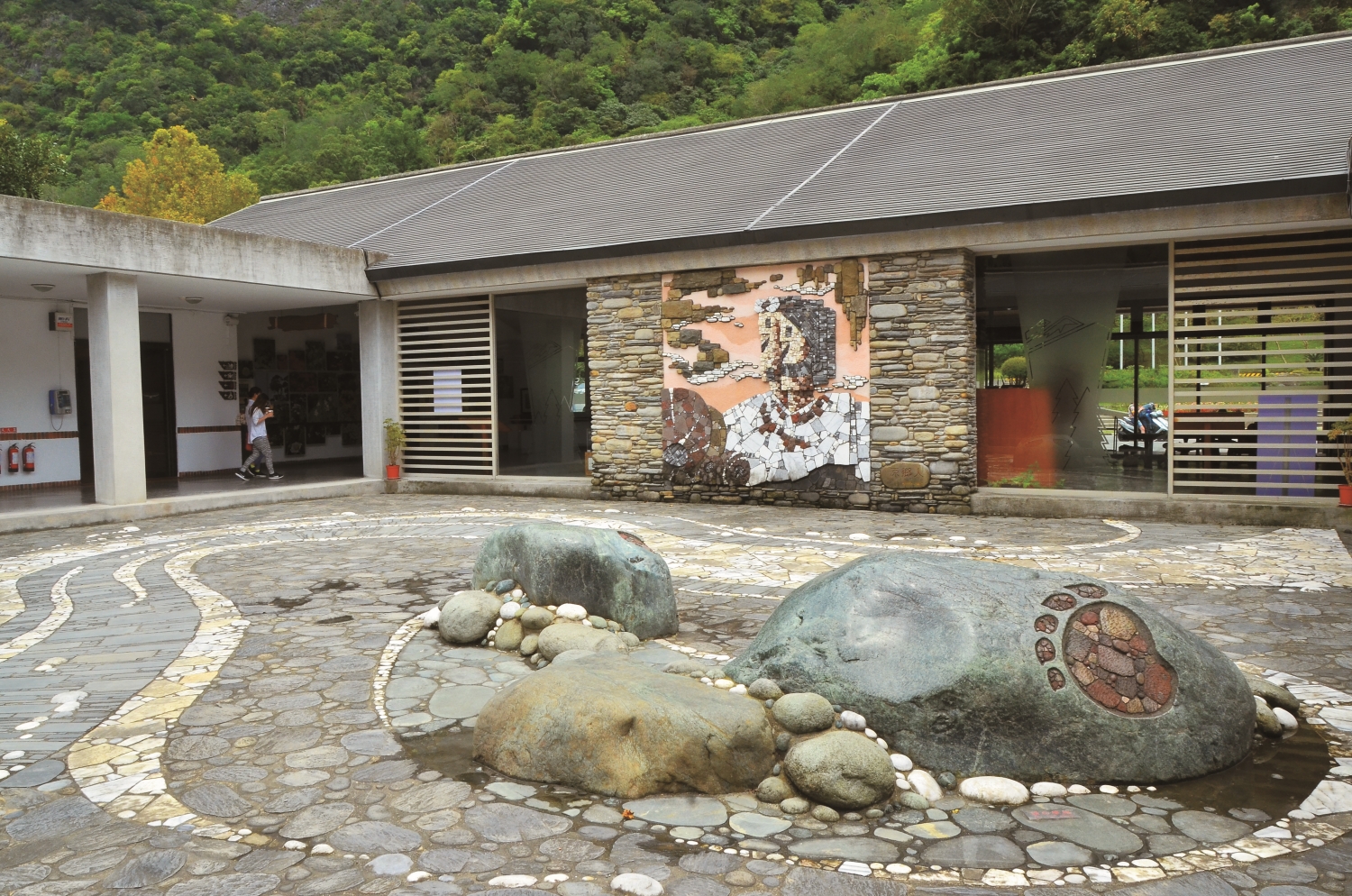
Taroko Visitor Center
The Taroko Visitor Center, located at the intersection of Suhua Highway and Central Cross-Island Highway, is the starting point for entering Taroko Gorge. It has a 3-hectare flat terrace with trails and viewing platforms. The exhibition hall of the Visitor Center has diverse themes , inc lud ing the Ecological Recreation Center, Children's Environmental Education Center, and Human and Nature Center.
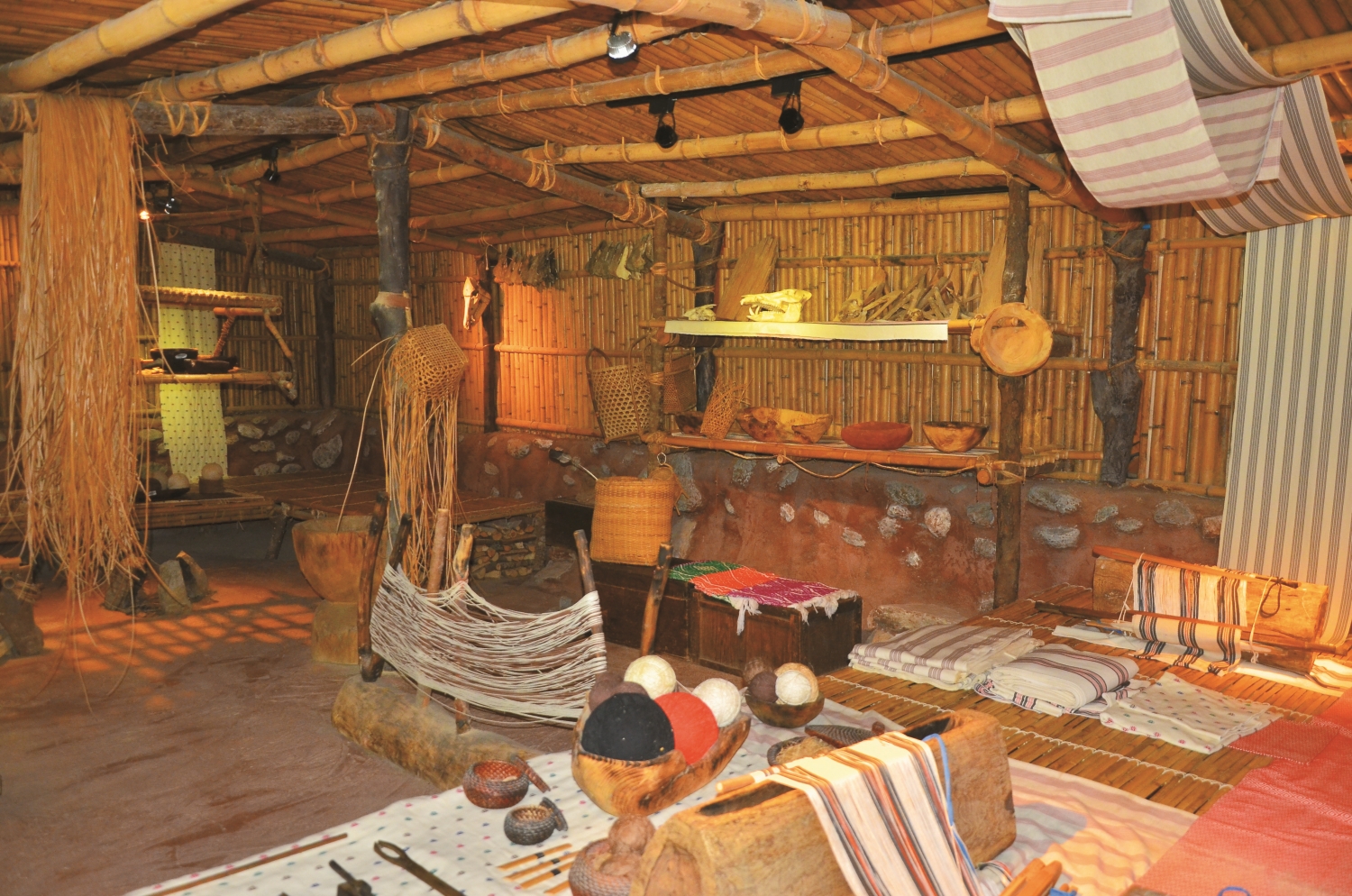
Buluowan Terrace
The Buluowan Terrace is a double-layer river terrace at the lower reaches of the Liwu River. It was originally a settlement where the Truku tribes lived. The service station is located on the lower platform, and the “Truku Tribe Handicrafts Exhibition” is planned to showcase the skills of weaving and rattan. The accessible Meander Core Trail on the lower platform goes around the Meander Core Park, overlooking east to the creek dam and west to the Shanyue Suspension Bridge, with a panoramic view of the gorge landscape.
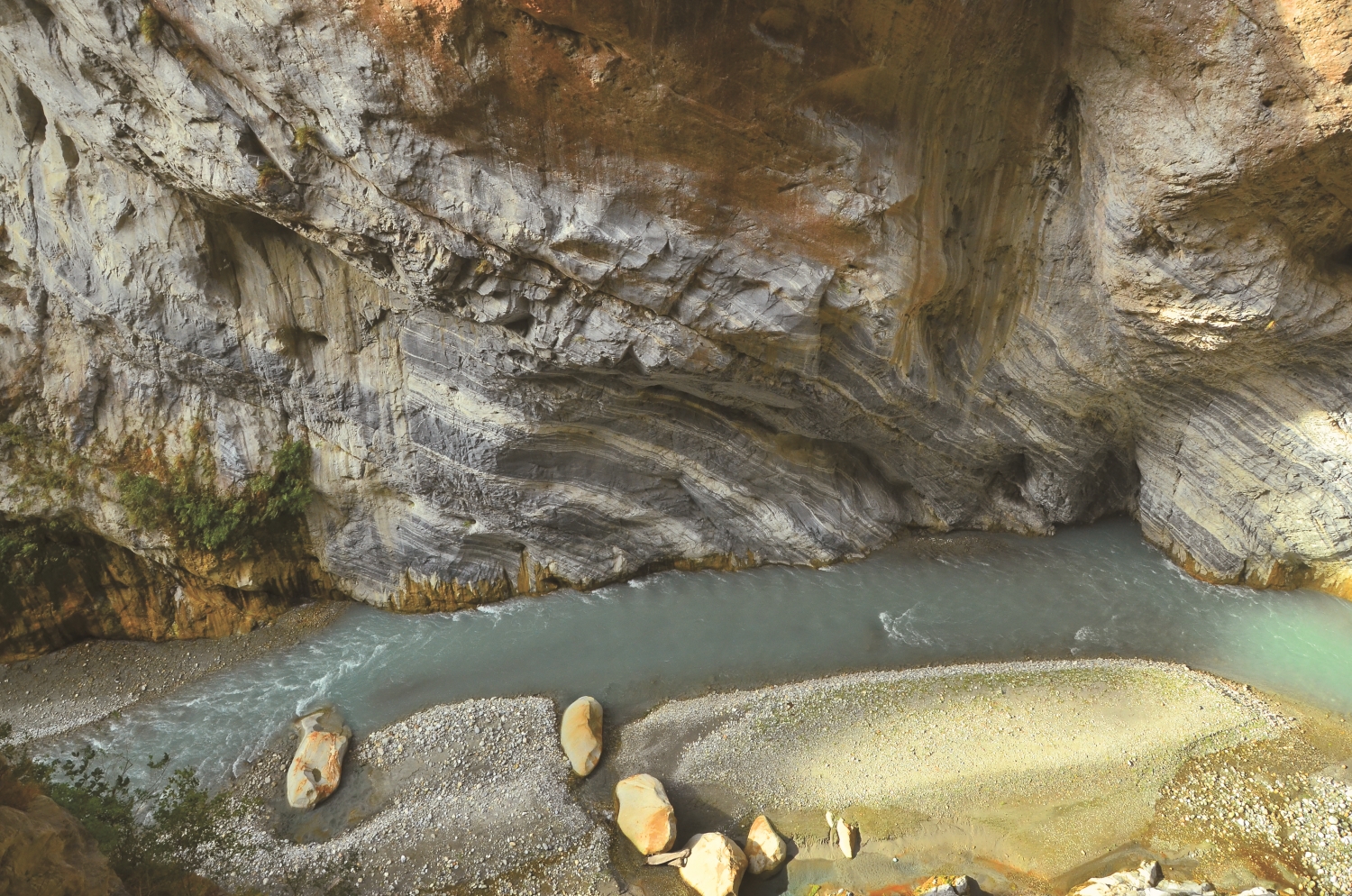
Yanzikou
The gorge along the Central Cross-Island Highway leading to Yanzikou is even more steep and precipitous. The scenery along the way from Yanzikou to Jinheng Bridge is spectacular, and landforms including canyons, potholes, and springs can be seen all at once. Looking up across the river along Yanzikou and Jiuqudong is the precipitous Zhuilu Cliff. The Zhuilu trail on the cliff is the remnant of the Hehuan Historical Trail and is currently the most popular hiking trail in the park.
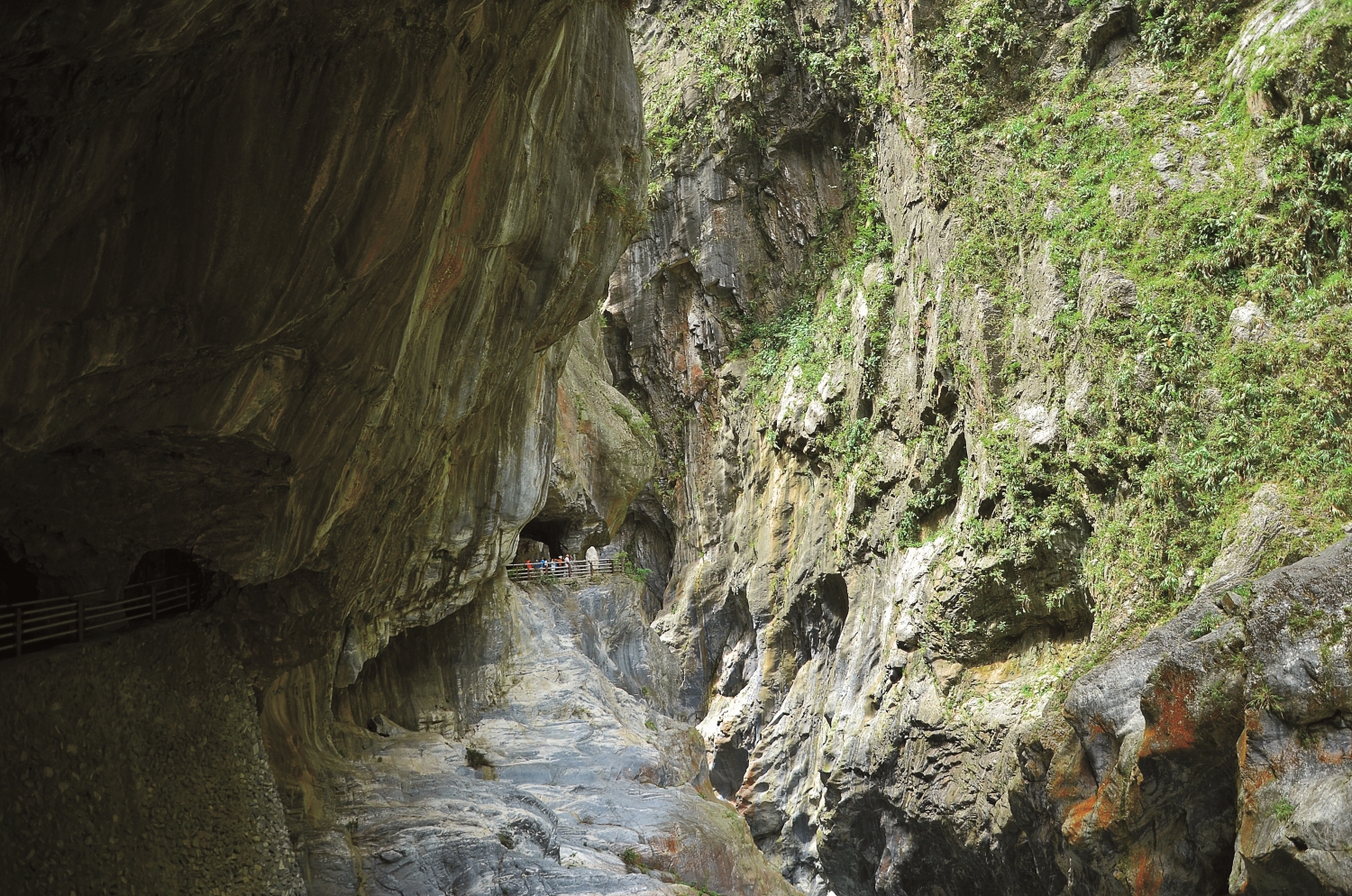
Jiuqudong
Jiuqudong, which means tunnel of nine turns, is one of the most elite sections of Taroko Gorge. The trail is 700 meters long and has to double back when reaching the end. In addition to the canyon, the faults, joints, folds, and other formation on the marble wall, the Lithophytes that grows on the cliff are all key points worth observing. The wide and gentle path is a popular recreational trail and outdoor geological classroom.
About the Author ︱Mei Yun Tso
Graduated from the Graduate Institute of Conservation of Cultural Relics and Museology, Tainan National University of the Arts, Tso worked as a reporter for the China Daily News and press contact for the National Museum of Taiwan Literature. Now she is a freelance writer and image worker.


