
The Diverse Faces of Taiwan’s Alpine Forests-
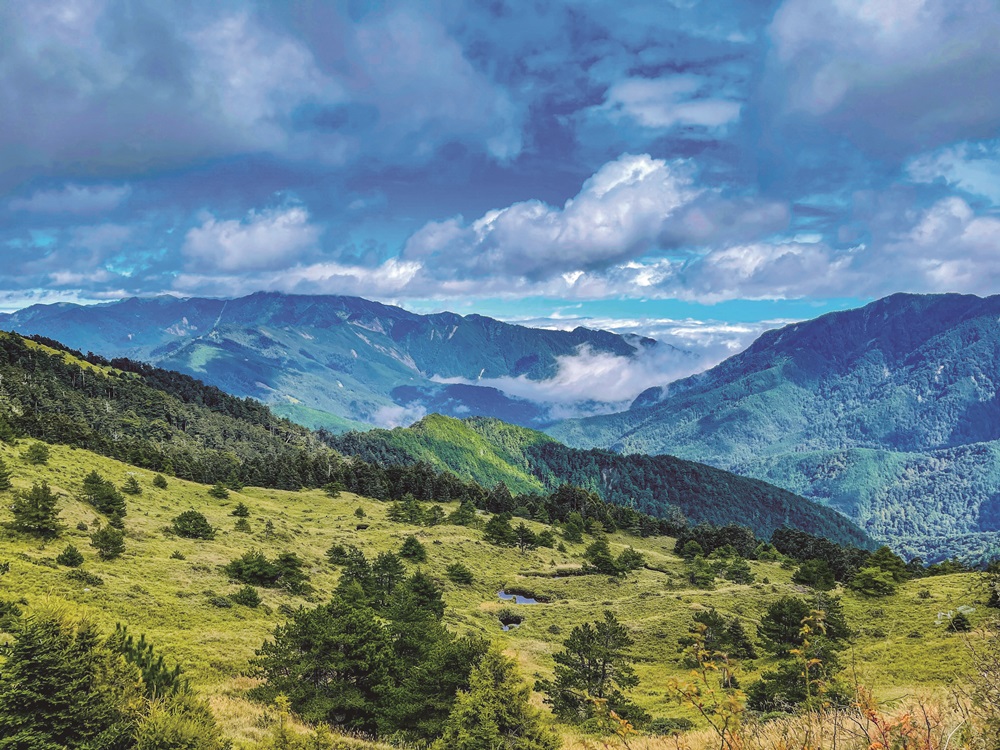
Author / Huang Chun-Han
Interviewee / Yushan National Park Headquarters, Division of Conservation Research, Director Kuo Chun-Fen
Yushan National Park Headquarters, Tataka Visitor Center, Researcher Yin Li-Min
Yushan National Park Headquarters, Tataka Visitor Center, Researcher Yin Li-Min
Taroko National Park Headquarters, Educational Instructor Chen Shu-Pao
Shei-Pa National Park Headquarters, Xuejian Management Station, Director Pan Chen-Chang
More people have begun yearning to be closer to nature since COVID-19 became the new normal 2 years ago. Nature has a healing power that comforts the fatigue and anxiety of both body and mind. Taiwan enjoys a forest cover rate of nearly 60%, meaning if people are willing they can approach nature at any time.
Investigations of travel trends have found that people are more willing to spend the effort to understand Taiwan’s animal and plant ecology as well as care about ecological issues in this era of living with the pandemic; therefore, national parks operating with the goal of ecological conservation have become the focus of the public’s travels.
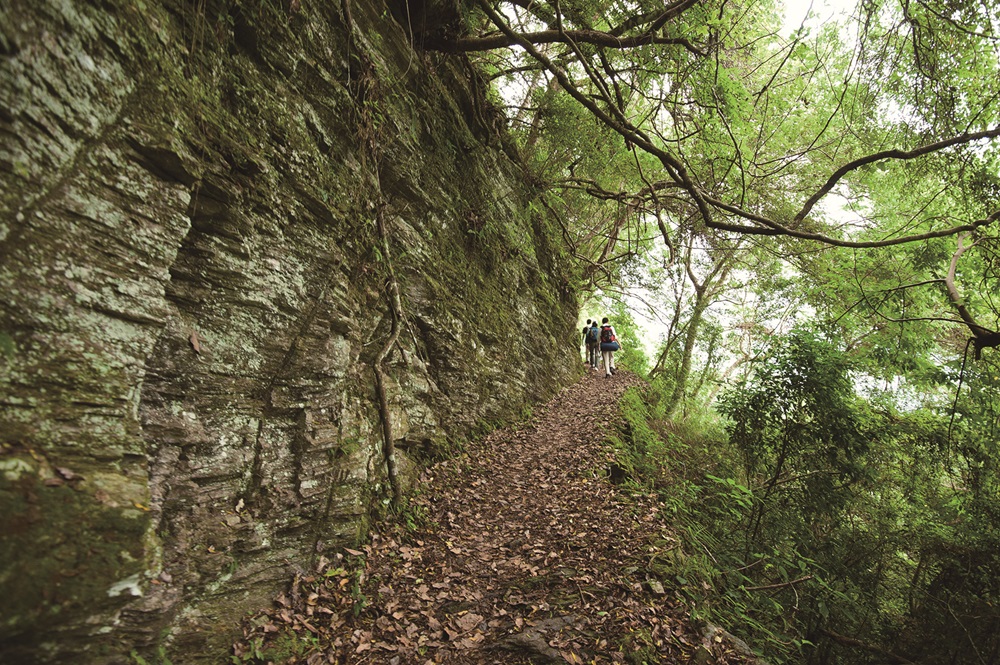
Alpine national parks where the mountains stand tall and landscapes are diverse have always been loved by our nation’s citizens. Currently, alpine national parks in Taiwan include Yushan, Taroko, and Shei-Pa; their alpine environments are representative of Taiwan, featuring both amazing views and diverse ecosystems. Each year, hiking trails above an altitude of 2,000 meters attracts visits from countless lovers of nature.
Statistics from the Ministry of the Interior show that more than 7 million visitors travel to Yushan, Taroko, and Shei-Pa National Parks each year, accounting for more than 30% of all visitors to national parks. Why are alpine national parks such as Yushan, Taroko, and Shei-Pa able to attract a stable number of tourists? The answer lies in each park’s excellent conservation policies that are able to preserve and maintain intact ecological environments; their unique alpine forests and views causes many to return due to nostalgia.
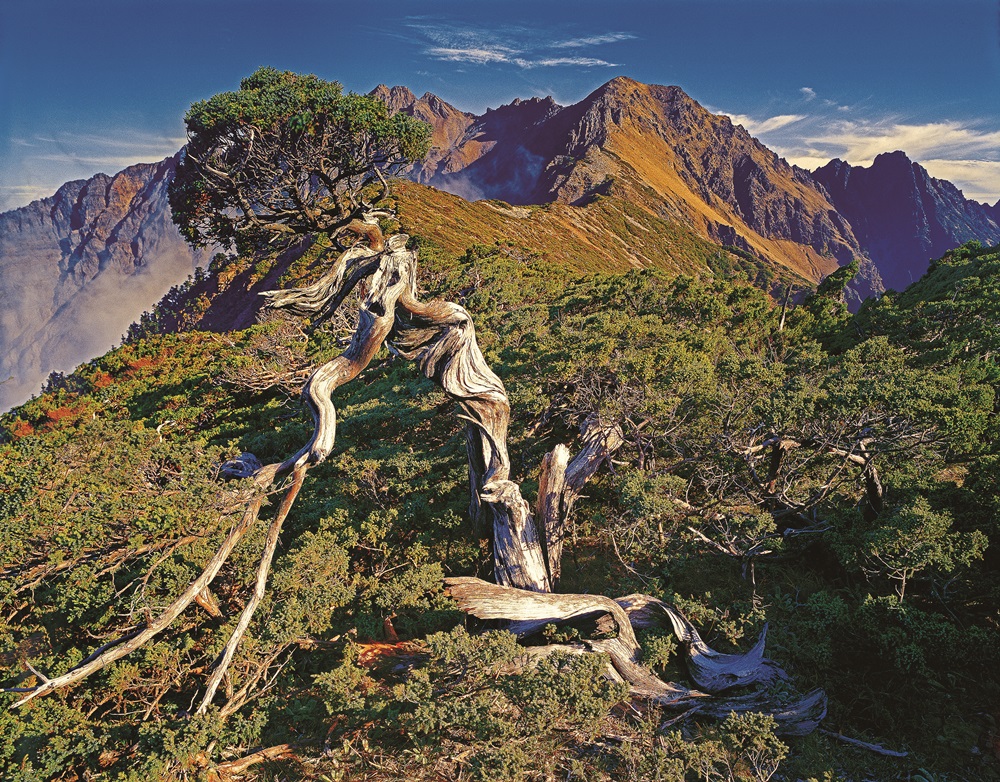
Yushan National Park spans both sides of the central mountain range and more than 2/3 of the park is above an altitude of 2,000 meters. The terrain changes vastly from Lakulaku Valley, which is 300 meters to Yushan’s main peak, at 3,952 meters; this results in a region with diverse and clearly layered vegetation. Whether walking through the Walami Trail (altitude 700-1,800 meters) in the east, Nanheng Road (altitude 1,000-2,700 meters) in the south, Tataka Recreation Area (altitude of 2,600meters) in the northwest, or Yushan Peak Trails (altitude above 3,000 meters), the varying altitudes present different types of landscapes.
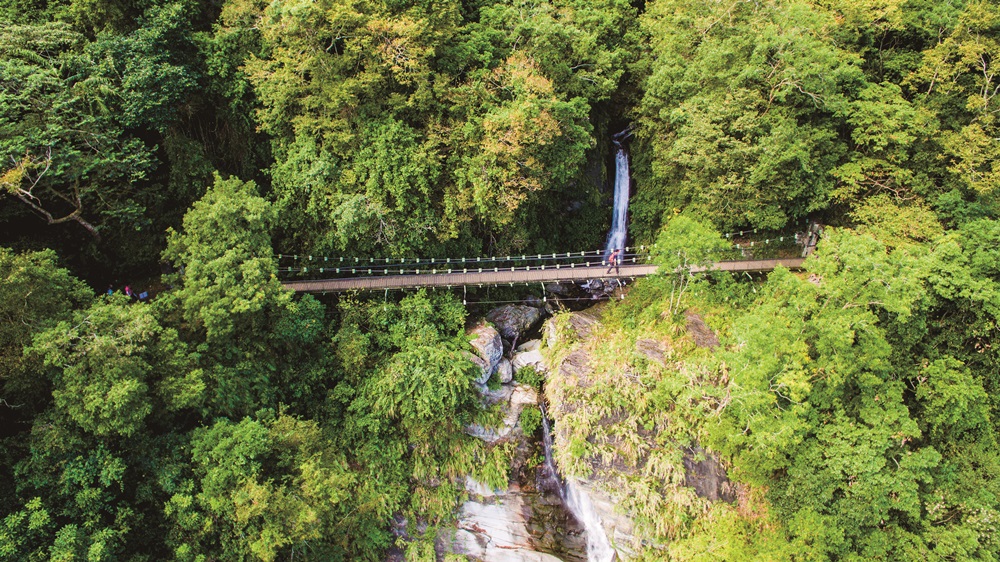
Yushan National Park Headquarters Division of Conservation Research Director Kuo Chun-Fen provided further details. The low altitude forests in the park’s east region consists mainly of evergreen broad-leaf forests but follow the Walami Trail to higher altitudes and you’ll see Japanese blue oak, narrow-leaved machilus, Taiwan walnut, and both Chinese and Japanese fir planted for forestation during the period of Japanese rule.
If travelingfrom northwest’s Tataka to Yushan Peak Trails, you’ll pass mixed forests of coniferous and broadleaf that consist mainly of Taiwan hemlock and Taiwan spruce, including plants such as red-hairy azaleas, Yushan canes, and alpine silver grass. At the West Peak Observatory (White Wood Forest) which is above 3,000 meters, you’ll see forests consisting mainly of Taiwan hemlock and Taiwan white fir; travel upwards to the Great Cliff and forests are mainly formed by Taiwan white fir.
After passing Paiyun Lodge and arriving at the region above 3,600 meters, you’ll see low shrubland that consists mainly of single-seed junipers.
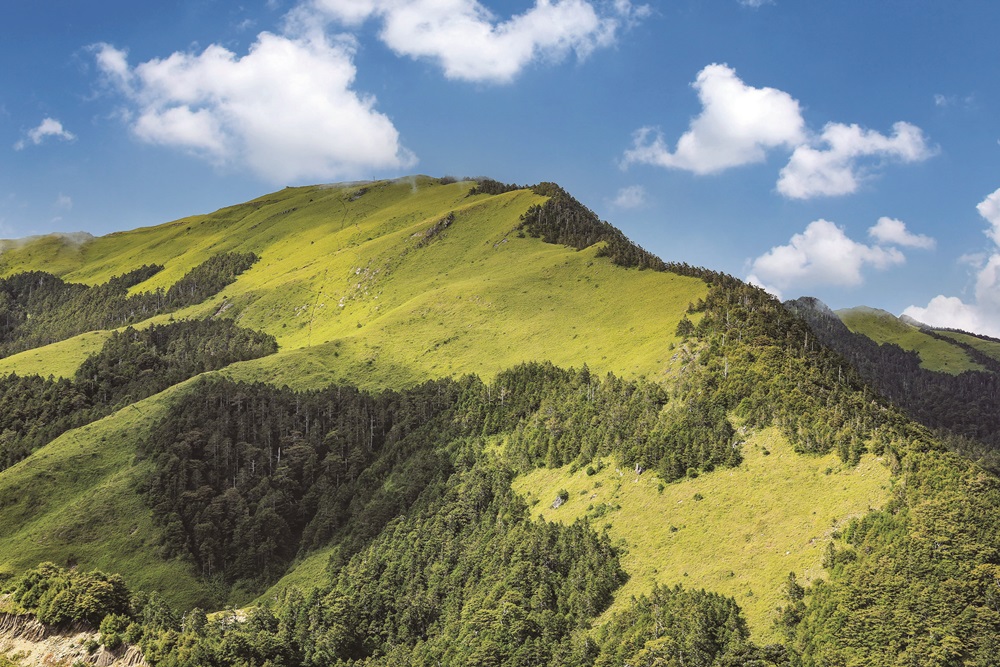
Taroko National Park – A Paradise within the Embrace of Mountains
Tarako National Park, with more than 4 million visitors annually, is the most popular out of the 3 alpine national parks due to its ease of accessibility. The park’s unique allure is closely related to the unique style of its environments.
The large northern and southern peaks stand at a massive height of more than 3,400 meters and are natural barriers which form the paradise that is Taroko. The high mountains of this paradise restricts interactions between species both in and outside of the mountain, causing the land to be home to a large amount of endemic species that form their own unique ecosystem.
Additionally, the intense altitude variations of this region have resulted in the diverse forests of Taroko. From Liwu River outlet near the center with the lowest altitude at 0 meters to the peaks above 3,000 meters such as Qilai Mountain in the south and Nanhu Mountain in thenorth, we are able to observe forests alternating from the Tropic of Cancer to the polar circle within a short horizontal span of 4 kilometers.
Mountain obstacles and an intense height difference have given birth to the rare beauty of Taroko. When discussing the uniqueness of Taroko, park guide Chen Shu-Pao speaks with both sensuality and eloquence.
She states that beginning from the low altitude Shakadang Trail, you can observe vegetation formed mainly by ficus-machilus; in addition to hauil fig trees, hayata figs, and konishi figs, you can also see the beautiful Taiwan giantreed sway with the wind along the lime cliffs.
After passing through Ci’en, we enter the region above an altitude of 2,000 meters where forests become a mix of coniferous and broadleaf trees such as Taiwan spruce and Taiwan hemlock. Starting from this height, forests are in the fog belt; afternoons are often filled with dense fog, creating a poetic scene.
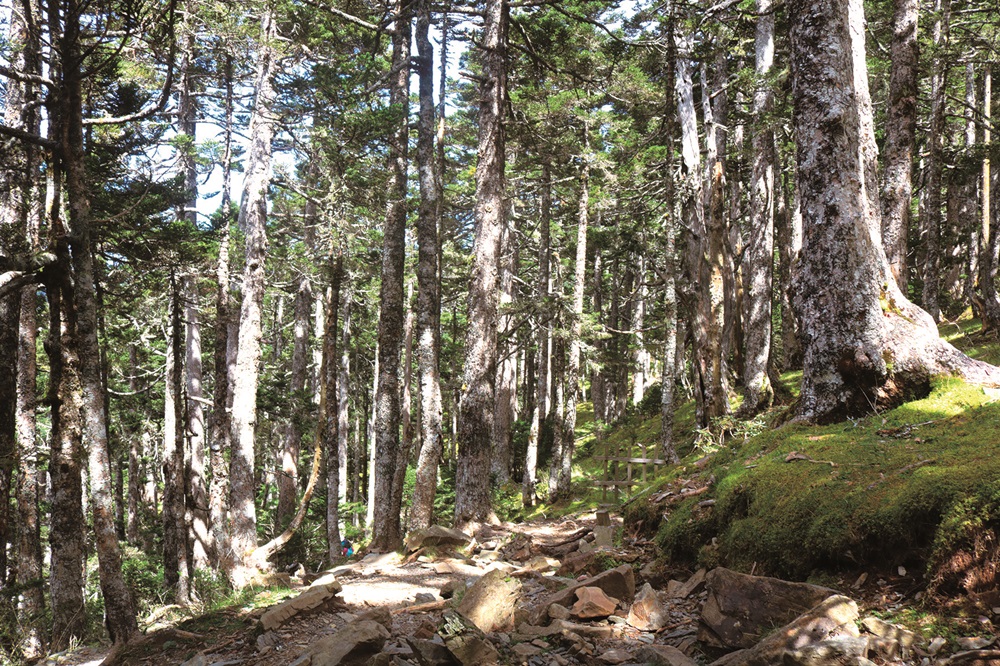
Traveling up past Dayuling is the alpine region above 3,000 meters which includes the Mt. Hehuan Main Peak and Xiaoqilai, a region with an average annual temperature of less than 8 Celsius and harsh survival conditions. The alpine plains landscape of this area mainly consists of Yushan cane and other alpine plants such as Taiwan white fir and single-seed juniper. On the other hand, Nanhu Cirque is a glacier ruins that contains a large number of rare plants within Taroko National Park; it’s an extremely precious plant habitat.
The short journey allows appreciation of ecological changes in low, medium, and high altitudes; being able to observe such a high number of unique endemic species is a huge reason for the international allure of Taroko.

Alpine soundscape of Hehuanshan
Recorded by: Soundscape Association of Taiwan, Fan Chin-Hui
Audio Identi_cation: Taiwan Wild Bird Federation, Secretary General Lu Yi-Wei, International Bird Guide, Hung Kuan-Chieh
Species: 00:00 Formosan Laughing Thrush, 00:09 Taiwan Bush Warbler, 00:22 White-browed Bush Robin, 00:32 Yellow-bellied Bush
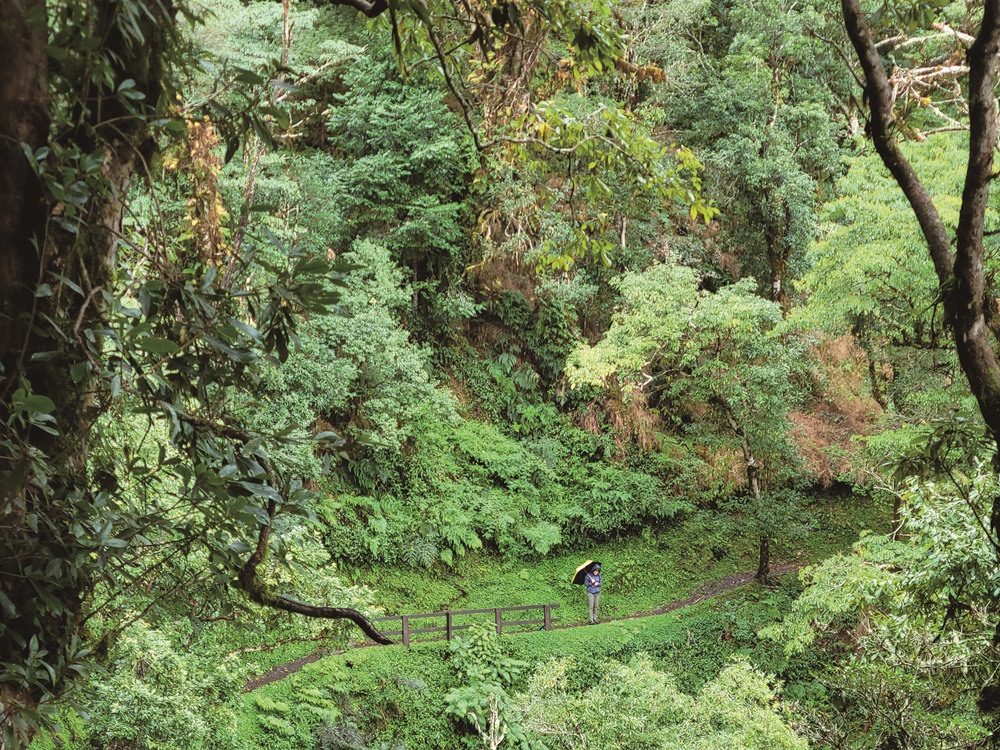
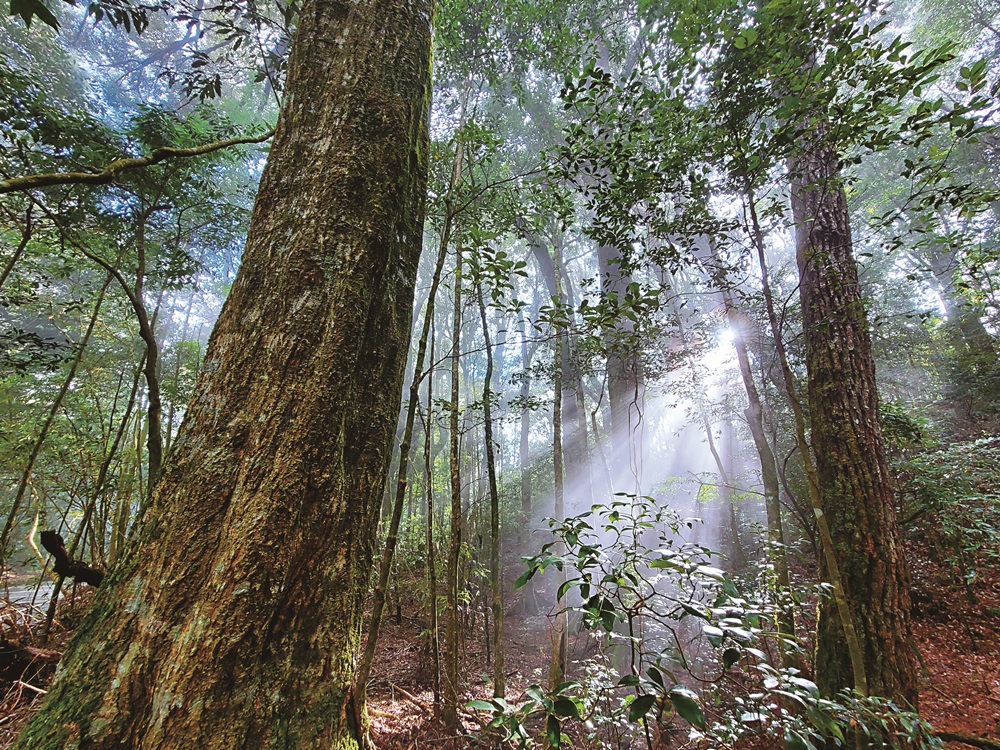
Shei-Pa National Park, located west of the Central Mountain Range, contains 51 mountains above 3,000 meters; it contains the holy ridgeline which boasts breathtaking scenery that’s loved as the paradise for many mountaineers.
The abundant forest resourceshave nurtured many rare plants and animals with flora such as broadleaf forests at low altitudes, coniferous forests at mid-high altitudes, and alpine cold plains. The park’s excellently planned recreation areas such as Wuling, Xuejian, and Guanwu allows tourists to tour various ecosystems with breathtaking scenery while experiencing the mystical changes of the mountains.
Wuling National Forest Recreation Area is at an altitude of approximately 1,700 meters and was originally a farming region that was later converted for forest conservation; the existing crop and fruit fields were gradually transformed into a forest park area. As such, the area contains farmland, artificial forests, and natural mixed forests of broadleaf and coniferous trees.
Guanwu Recreation Area sits at mid-altitude and is where coniferous and broadleaf forests intersect. Long ago, it used to be an important logging zone due to valuable resources such as cypress; after many afforestations, ithas become a forest spectacle with natural, secondary, and artificial forests. This area is located at an altitude of 2,000 to 2,500 meters with an environment that is consistently overcast and damp. It is a classic fog forest belt with high fern coverage; the bottom layer of cypress forests is often populated by Dunn’s plagiogyria and Henery’s monachosorum.
Xuejian Management Station Director Pan Chen-Chang expressed that compared to afforestation areas, Xuejian Recreation Area has retained more of the natural sceneries of mid-altitude broadleaf forests. Advantageoustree species primarily based in the beech family and laurels such as long-leaf chinkapin (Castanopsis carlesii) often grow to massive trees in this area, which is also Xuejian’s renowned “Great Roots”. Xuejian Recreation Area is at an altitude of 1,870 meters with some areas that allow views of the holy ridge from Mount Dabajian to Xueshan.
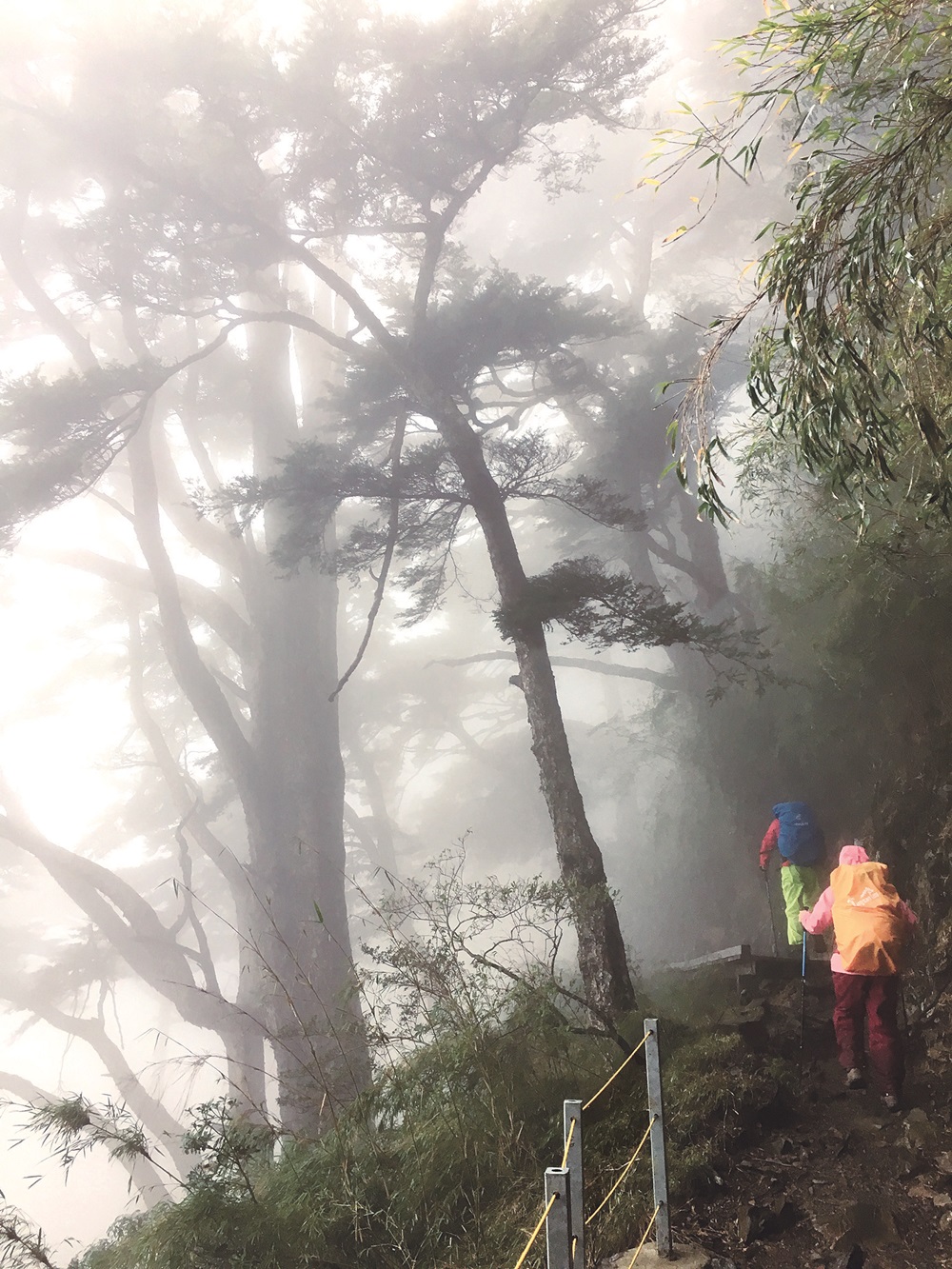
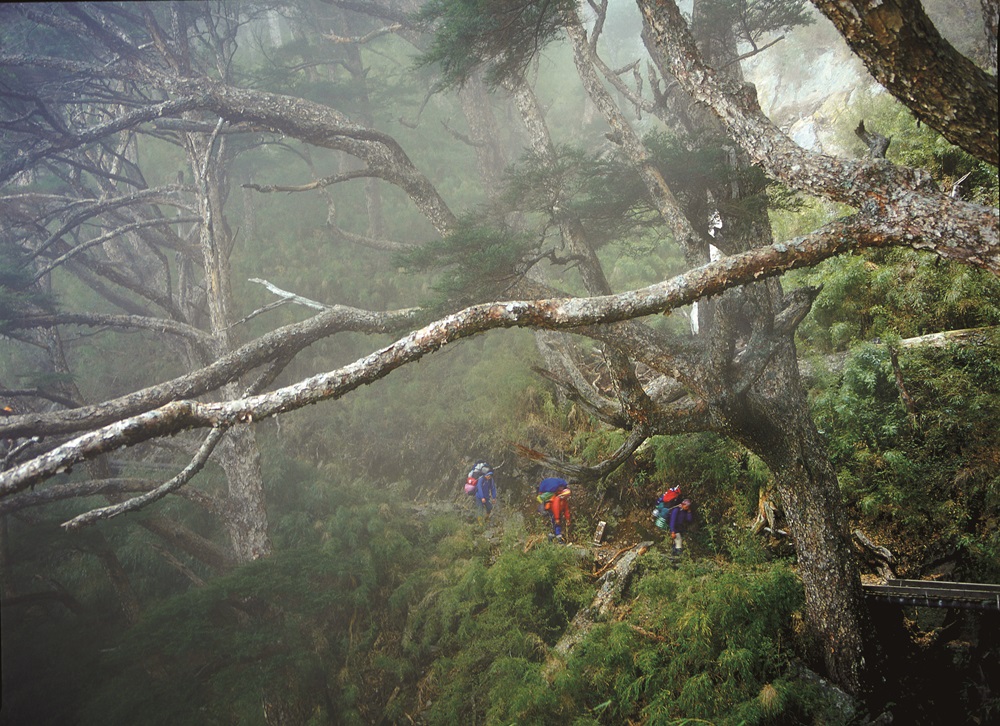
All 3 alpine national parks have their ecological features but in general, the beautiful and complex fog forests are their shared characteristic. Fog forest belts are formed by the damp air from the ocean which is lifted due to the terrain and then condenses due to the lower temperatures of the mid-altitude mountain region, ultimately forming dense clouds of fog. The poetry of forest fog belts sings the tune of ecological diversity. The ample water vapor provided by fogs of cloud allows these regions to grow rich, layered vegetation such as arbor (spruce, red cypress, oak), shrubs (such as Taiwan rhododendron), epiphytes (creeping eria, Pleione), and ground cover (bryophyte layers), creating a high degree of biodiversity.
Taiwan’s fog forest belt is located at an altitude of 1,800- 2,400 meters and is a transition zone for coniferous and broadleaf forests, with forest physiognomy covering the tree species of these 2 types of forests. The fog belts of forests around the world account for only 1% of total forest area but studies in recent years have discovered that the water resources hidden within fog forest belts exceed our imaginations. For instance: Shei-Pa National Park discovered in relevant studies that the amount of water in fog clouds intercepted by fog forest belts account for 34% of total local rainfall for an entire year; it is a water source that should not be underestimated. In recent years, the “receding water sources” of Taroko’s alpine regions is becoming more apparent; this further emphasizes the importance of water retention capabilities contained in fog forest belts.
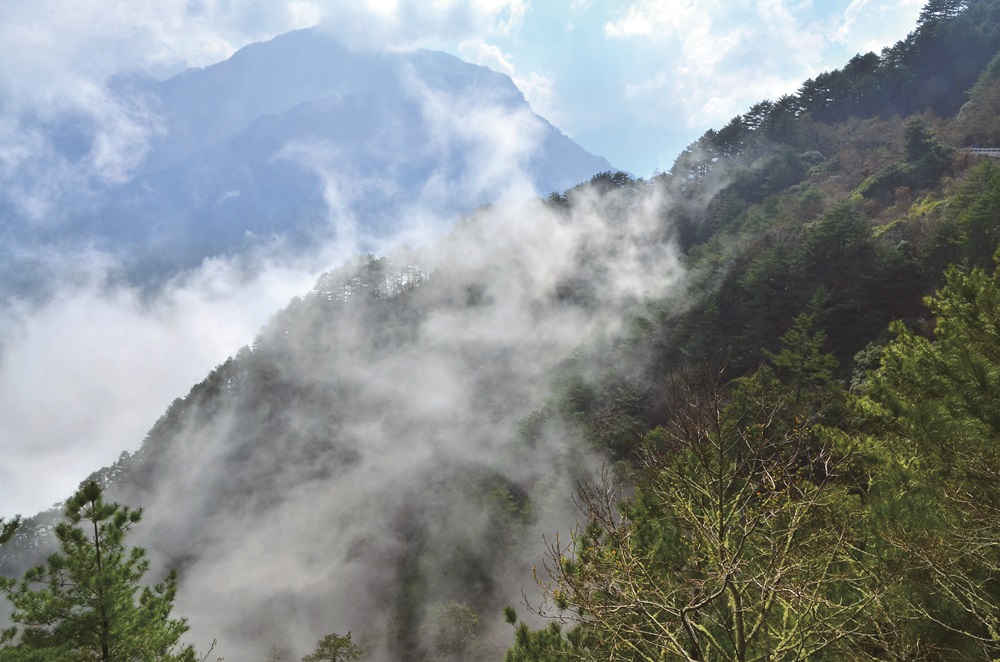
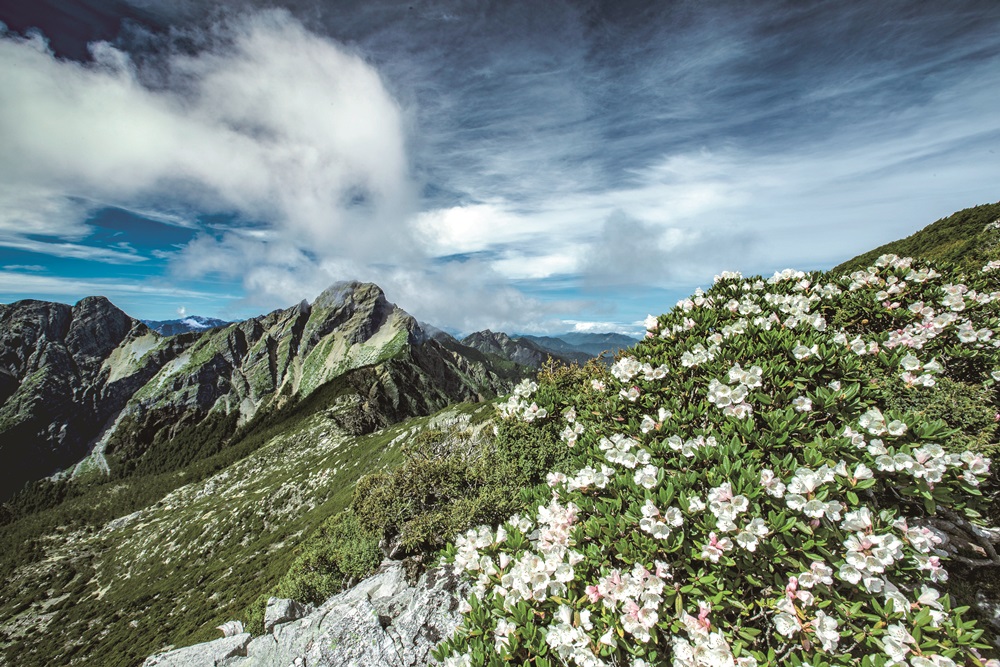
Fog forest belts are a treasure vault for species and water resources but they have also begun to change in recent years due to climate change. For example: each year, Yushan rhododendron attracts many tourists to visit but due to the decreasing snow coverage of the winter season and warmer climate, their flowering period and insect ecology have changed. Yushan rhododendron on average flower every 2 years within Yushan Cirque at 3,600 meters; extreme flowering periods occur once every 4 years, during which a sea of pink flowers form what mountaineers call Garden of the Gods. However, the flowers fell short of expectations in 2020; Pan Chen- Chang points out that this is most likely due to the decreased snow coverage in winter and pests such as leaf beetles eating the rhododendron flowers.
Alpine environments have much harsher phenological conditions compared to flatlands, meaning the growth environment of plants is much more restricted. With climate change upon us, alpine ecology will face an even more severe threat.
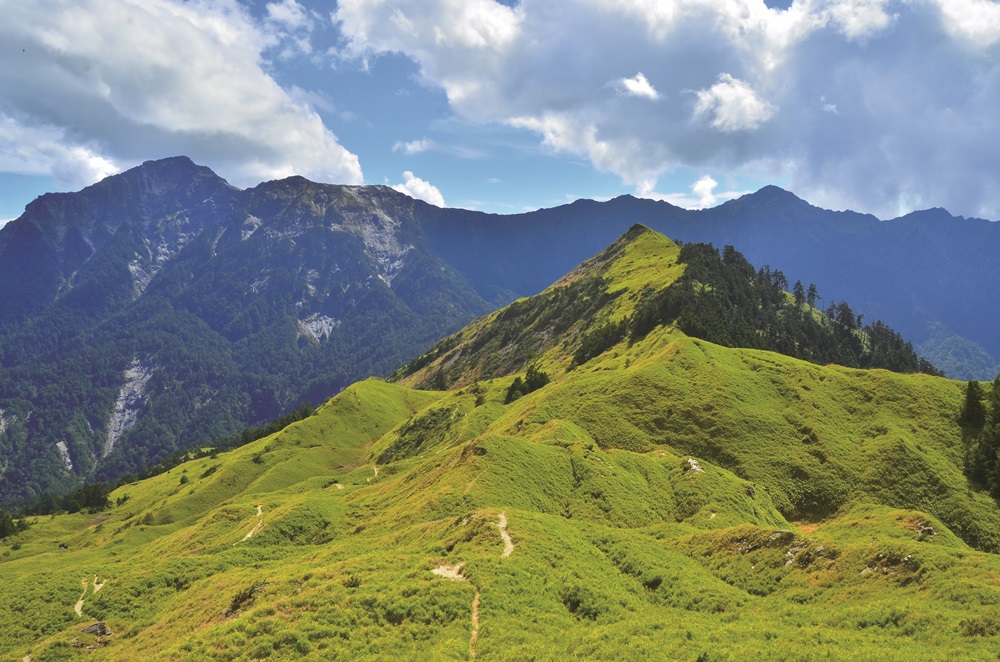
The many landscapes of alpine national parks require people to work together to preserve its allure and biodiversity. The best option for appreciating the forests without harming nature is well planned trails that will allow the public to feel nature’s preciousness and feel a yearning to protect it.
When discussing Yushan National Park’s trails, Tataka Visitor Center researcher Yin Li-Min speaks of “Yushan Peaks Trail” with familiarity. Most of the trail is above 3,000 meters and is intensely draining on stamina to climb, but it is the best trail for experiencing forest physiognomy from mid to high altitudes and the beauty of alpine cold plains. Depart from Yushan Trailhead (altitude of 2,610 meters) and one first encounters the grassy environment of the succession stage after fires. The season for appreciating alpine flowers is between May to November where a different, vibrant flower blooms nearly each month. If visiting from April to June, the trail section between 2 km and 5 km is where Yushan rhododendron and red-hairy rhododendrons bloom.
Both types of rhododendrons are the focus of summer visitors as they boast differing colors and forms; starting at the 5 km section is a mixed forest of Taiwan hemlock and Taiwan white fir but after passing Paiyun Lodge which is 3,402 meters, forest physiognomy becomes primarily Taiwan white fir. The subsequent gravel slope is where you’ll find single-seed junipers which are low to the ground and have a century of history as well as Yushan rhododendrons which bloom between May and June. While traveling this trail, the many flowers seem to bloom in encouragement for mountaineers, making each visit truly worthwhile.
Taiwan cherries bloom at the beginning of spring in Taroko National Park; between April and June, Yushan rhododendron bloom on Hehuanshan and in the summer, many grass and flowers such as Taiwan scabiosa, Nepal pearleverlasting, Taiwan ladybell, Morrisor stonecrop, and other plants vie for your attention.
When visiting Taroko in the winter, hike to alpine regions above 3,000 meters and you’ll find that the Taiwan white fir covered in snow remain green and vibrant. If you want to relax while experiencing the alpine scenery unique to Taroko National Park, Chen Shu-Pao recommends taking the “Xiaoqilai Trail” located about 1.3 km from Qilai Trailhead. Experience the joy of the climb in a 50-minute one-way journey where you can appreciate scenery such as the grassy plains and Yushan cane or gaze at the majesty of Qilai’s main northern summit. While taking in the breathtaking peaks of the central mountain range, let the beauty of our national parks’ forests cleanse your soul.
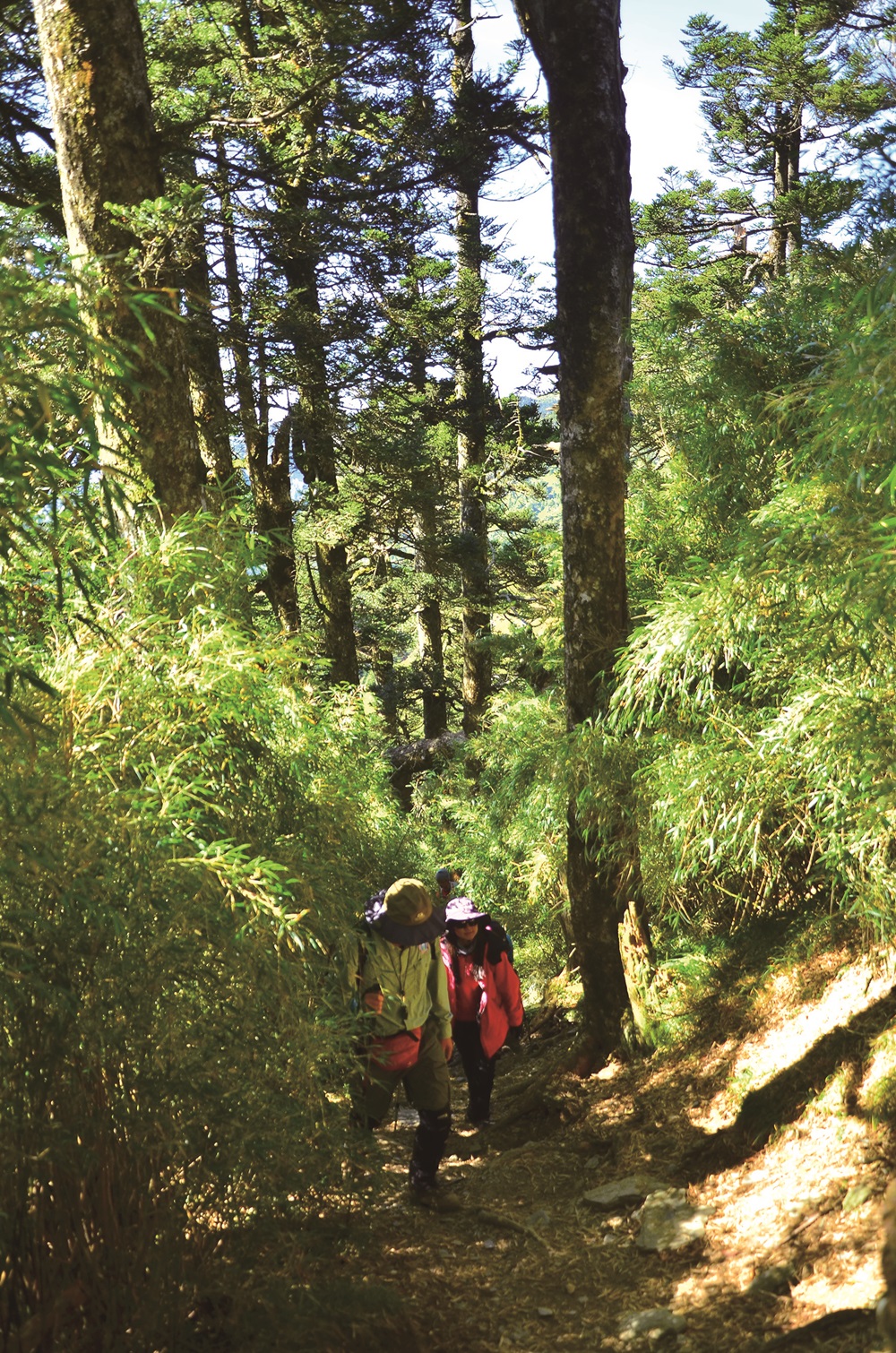
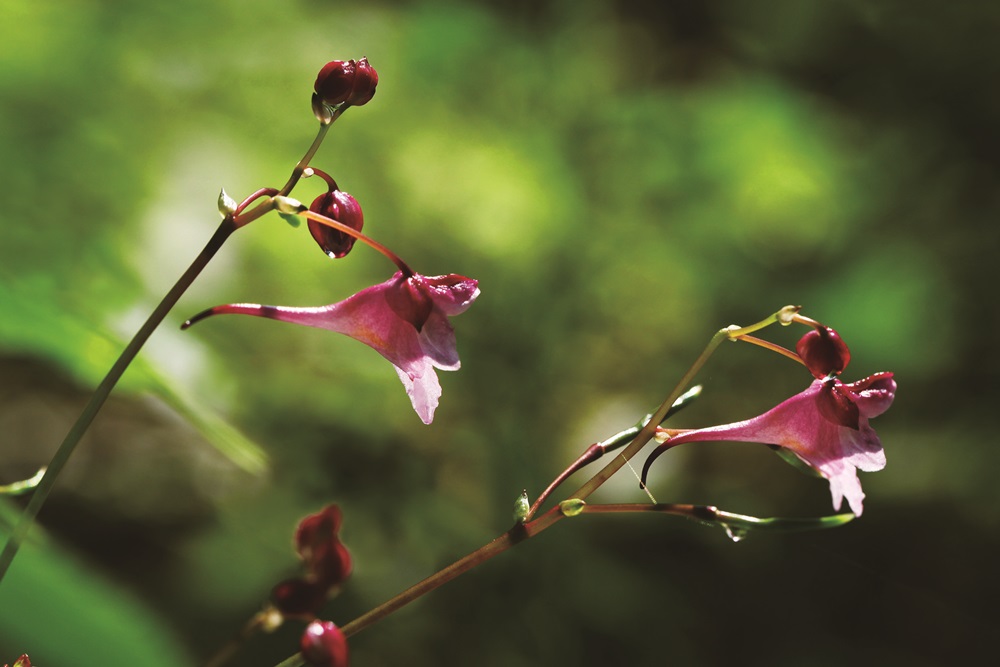
For spring trails at Shei-Pa National Park, Pan Chen-Chang recommends Guanwu Recreation Area’s “Kuaishan Big Tree Trail” which is between altitudes of 2,000-2,300 meters; the trail was previously a cart lane during logging periods. The gentle slope is easy to travel and is perfect for enjoying the forest as well as visiting 5 Taiwan red cypress trees that have survived for over a millennium. Both spring and summer are great seasonsfor appreciating wild flowers and endemic species such as violet balsam, yellow balsam, and impatiens devolii which appear along the trail in an area also known as a treasure vault of ecological tours.
Know Your Condition, Approach Nature at Your Own Ability
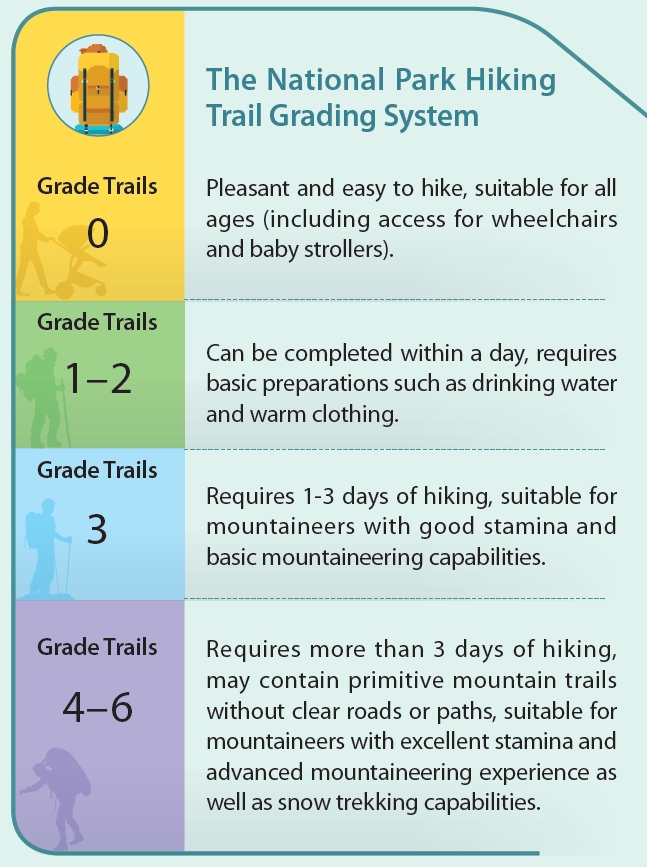
When approaching the mountains and forests, the most important thing is choosing a suitable trail for your personal condition. Before departing, research the difficulty of the trail and make comprehensive preparations to guarantee your personal safety. In 2021, the Construction and Planning Agency of the Ministry of the Interior announced “National Park Hiking Trail Grading System” making it easy for the public to find information on trail difficulty and selecting a trail that suits their personal conditions.
The National Park Hiking Trail Grading System is based on the core principles of “information disclosure, attemptto the best of your ability”. Mountaineers can grasp the conditions of each trail from their grading before determining whether their stamina and technique are suitable for each challenge. The trails are categorized into 6 grades classified as:
After finding and visiting a trail that fits your requirements, it’s important to remember how you can “reduce the ecological impact of travel activities”. Generally speaking, Leave No Trace (LNT) is the most important rule when partaking in activities in mountains or forests. Aside from preparing for and understanding the information and risks of your travel location, activities should remain on trials whenever possible to avoid unnecessary trampling and destruction.Chen Shu-Paoalso states that avoiding popular periods such as long weekends will result in improved travel quality while also reducing the stress to mountain and forest environments caused by crowds. Yin Li-Min reminds us that trekking poles should be used very carefully in natural environments to avoid damaging precious vegetation located along trails. Pan Chen-Chang also mentions that food waste should be properly disposed of during mountain activities and not to feed wild animals to avoid changing their natural habits. Kuo Chun-Fen expressed that fires should be used with caution when camping in mountains to prevent forest fires and harming the development of plant communities.
Go into the mountains to rejuvenate your mind and body but remember to maintain this beauty for others when leaving the mountains.
About the author: Huang Chun-Han
Research associate at Biodiversity Research Center, Academia Sinica. Columnist of Nature Trail, environmental education planner, currently a professional worker in sustainable tourism.


