
Uninvited Guests from Afar-The Ecological Conundrum of Alien Species
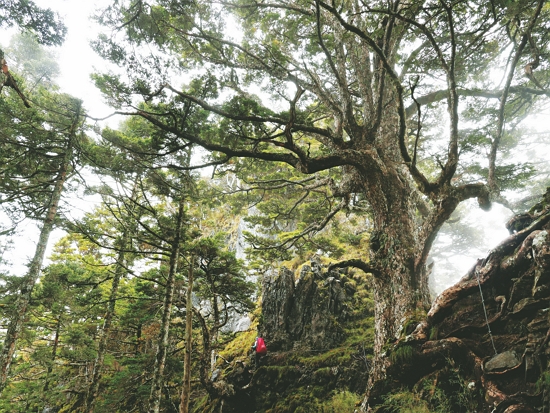
Forests are the lungs of the Earth, and they constantly breathe out fresh air for the world. However, they are more than just lungs. They are wombs that nurture rich species. They are walls that protect the land from being eroded by seawater, maintaining the connections of numerous lives. To live better, humans used to wantonly fell trees in the forest that took thousands of years to be exuberant. However, forests are never obstacles to economic growth, they are shields that protect humans’ destinies instead. Nowadays, more people have become aware of this, and they have started planting native seedlings n the barren land in the hope that the lungs of the Earth will flourish again.

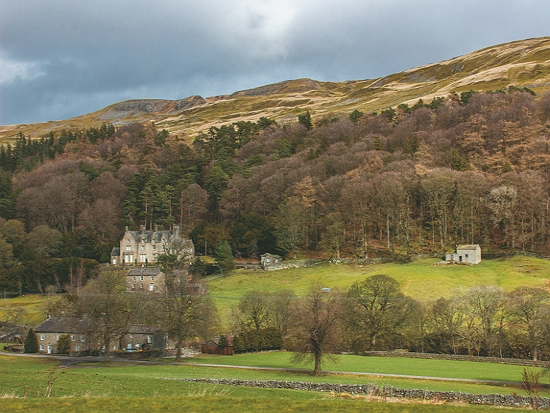
/ Provided by Yorkshire Dales National Park (Photo by Wendy McDonnell)
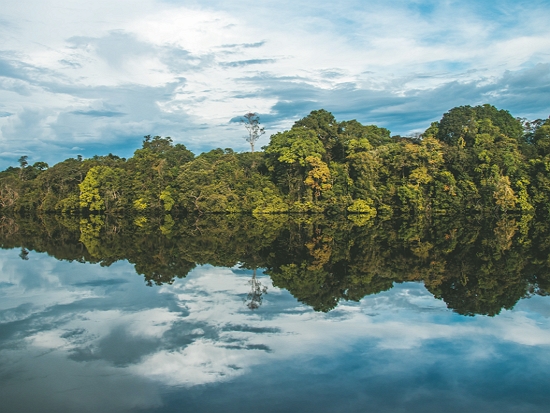
3,000 football pitches was destroyed every day in 2022 / Provided by Dalia McGill. (Source:https://commons.wikimedia.org/wiki/File:Parque_Nacional_do_Ja%C3%BA_Dalia_McGill_(1).jpg)
In 2015, the United Nations announced 2030 Sustainable Development Goals (SDGs), and formulated 17 core goals in the hope of searching for solutions for economy, energy resources, food, human rights, natural environment, climate change, and other major issues. Among which, the 15th SDG is to “protect, restore, and promote sustainable use of terrestrial ecosystems...reverse land degradation and halt biodiversity loss.” For many years, governments all over the world have been actively working towards this goal. For example, over one hundred leaders signed the Glasgow Leaders’ Declaration on Forest and Land Use at the 26th UN Climate Change Conference (COP26) held in Glasgow, England in 2021, resolving to take action to protect forests and halting destructive land use to prevent forests from disappearing at a terrifying speed.
How can we slow down the disappearance of forests? In addition to halting logging operations in forests, restoration is extremely important. Take Yorkshire Dales National Park for example: the park authority plans to restore 6,000 hectares of coniferous forest by 2030. This forest will fortify soil and water conservation and increase animals’ habitats in the park. Most importantly, it will enlarge the carbon storage capacity of the park, making contributions to carbon reduction.
Let’s take a look at the situation in Taiwan. National parks around Taiwan have actually walked on the road to afforestation and restoration for a long time. Some projects have been promoted by national parks, while others have been launched by private sectors. However, their final goal is to actively increase the restored area of forests without destroying their native ecology and species. This paper introduces projects involving the Wuling abandoned farmland and the restoration of Lycoris aurea (golden spider lilies) and Pyracantha koidzumii (Taiwan firethorn), promoted by Shei-Pa National Park Headquarters and Taroko National Park Headquarters, respectively; and the tree planting achievements of Taijiang National Park Headquarters, Kenting National Park Headquarters, and private enterprises.
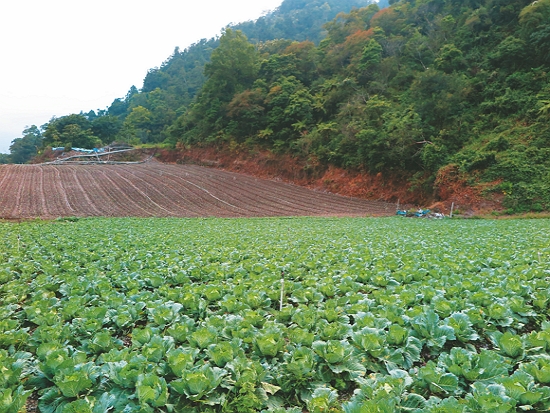
Rebirth of Forest on the Wuling Abandoned Farmland
Since the 1960s, Wuling Farm area, which was reclaimed to plant temperate fruit trees and grow cold highland vegetables and fruits, has been the epitome of Taiwan’s cultivated mountains and forests, as well as representing a typical form of land degradation. Although at the end of 2006, Shei-Pa National Park Headquarters reclaimed 8.1 hectares of vegetable fields in Wuling in order to improve the habitat environment of Oncorhynchusmasou formosanus. The fields entered a transformation period of “giving up cultivation to restore the forest”. But until 2011, the Wuling abandoned farmland ares could not be naturally restored to its original ecological look until as late as 2015. “This means that land degradation is very serious here,” said Ching-An Chiu, a researcher at the Experimental Forest of National Chung Hsing University , accept the commission from Shei-Pa National Park Headquarters, involved in the long-term study of the ecological restoration on the Wuling abandoned farmland. “There are many issues that hinder the restoration of ecology here, including the flourishing of invasive alien plants, lack of sources of native trees, destruction of seedlings by animals, arid topsoil, and so on. However, soil nutrient imbalance is the most significant disastrous consequence caused by long-term cultivation. Additionally, this is an endemic situation in Taiwan. It is rarely seen in foreign countries.”
As a matter of fact, the land was originally fertilized primarily with cheap chicken manure. However, chicken manure attracts pests. To sterilize, farmers sprinkled lime powder over the fields, which led to soil calcification and acid-base imbalance. Additionally, the soil at the farm has an unusually high stone content, reducing its ability to retain water and fer tilizer. Moreover, the area was spacious, with strong sunshine, which accelerated the speed of water loss. As a result, it was difficult for the natural forest to restore itself, and it was not easy for artificial seedling rearing and afforestation to succeed, either.
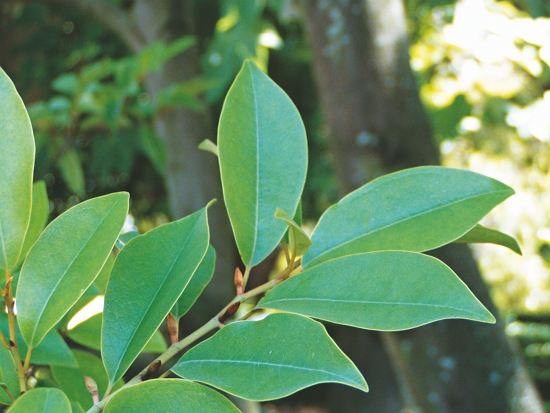
(source: https://commons.wikimedia.org/wiki/File:Michelia_compressa_leaves.jpg)
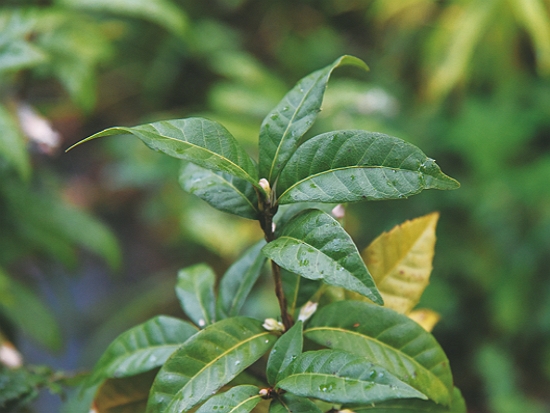
For the first step towards success, Shei-Pa National Park Headquarters has made sufficient investigations and preparations for seed collection in the early stage. However, there are more than 500 kinds of plants in Wuling area, and the methods of raising seedlings have different tricks and barriers. After trying hard, there are finally more than 80 kinds of plants, which provenance seedlings from native species sample areas were successfully raised. In doing so, they not only hope to restore a diverse ecological environment with multiple tree species, but also make the seedings come from the local area as much as possible, rather than simply afforestation with a single tree species.
“Therefore, it is important to allocate tree species and arrange the time of planting. We cannot plant every tree species right from the start. We were too optimistic at first. We thought we could immediately restore a native forest with diverse trees.”
Ching-An Chiu came to understand the importance of following a prescribed order and overcoming adversity by considering the “Cannikin Law” or “bucket effect” from management studies, “How much water a wooden bucket can hold depends not on its longest plank, but the shortest one on the rim of the bucket. Each species of tree has its own strengths and weaknesses. We need to recognize this, and help all kinds of trees face adversity.”
Therefore, the restoration process was divided into early, intermediate, and late stages of tree planting. For example, in the early stage, Alnus formosana, Alianthus altissima (tree of heaven) , and Quercus variabilis (Chinese cork oak) were planted. In the intermediate stage, Michelia compressa, Cinnamomum osmophloeum (indigenous cinnamon), and Malus doumeri (Formosan apple) were planted. The foundation and protection of trees planted in the early and intermediate stages elevated the survival rate of Castanopsis cuspidate and Pasania kawakamii , which were planted in the late stage.
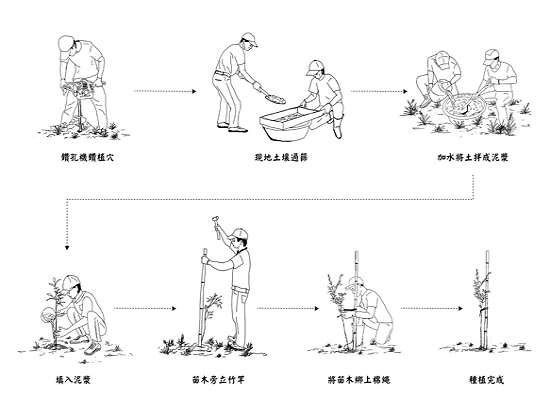
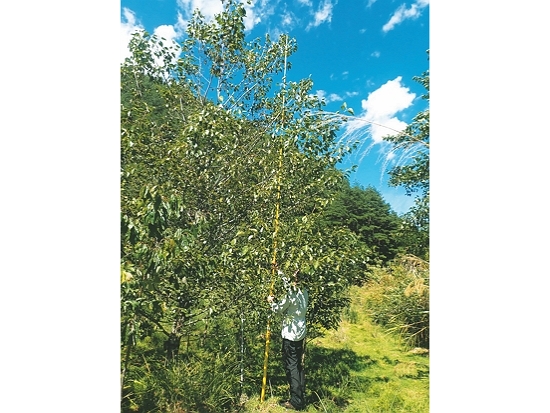
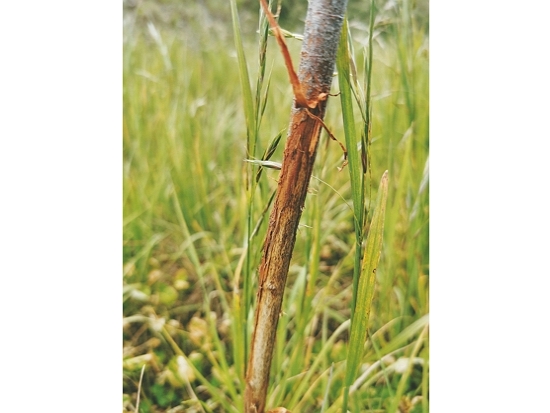
However, in the adverse environment of the abandoned farmland, it was difficult for trees planted in the ear ly stage, such as Alnus formosana , to survive. “Alnus formosana grows fast, and it can adapt to alkaline soil as well. Once it grows, it can provide shade for incoming tree species. However, it needs a lot of water. We grew a batch of Alnus formosana seedlings during the plum rain season. In the beginning, they grew quite well. However, once the plum rain season was over, they were exposed to the sun. Around two weeks later, a batch of seedlings died.” To create a moist environment for the roots of the Alnus formosana seedlings, the tree planting team abandoned the traditional flat planting method in favor of the deep planting method: The team first sifted out pebbles in the soil, added water to sifted soil, and turned it into mud to fill vacant spaces between the roots of seedlings and the soil in the planting pit. This prevented the roots from hanging and increased water retention in the soil.
Additionally, the team discovered that covering topsoil with organic matter improves the soil quality and reduces evaporation, increasing the survival rate of seedlings. “So far, around 70% of Alnus formosana have been successfully restored, and they have grown to 6 or 7 meters tall.” Discussing the results, Ching-An Chiu sounded happy, “When each ‘short plank’ is elongated by us, doesn’t it mean that we can slowly add more water to the wooden bucket?”
From investigations, producing seeds to growing seedlings to planting, the team has attempted to reintroduce nearly one hundred native tree species, and experimented with various methods for planting seedlings and sowing seeds directly. The results which can be seen today were achieved through the accumulated experiences of failures, trials, adjustments, and practice. However, Shei-Pa National Park Headquarters and Ching-An Chiu are never discouraged. They think ecological restoration and afforestation are actually a method to verify the theory of ecology. Additionally, they have proved that it is such a long and tough journey to imitate the succession of Nature. However, the process of restoring the Wuling abandoned farmland has clearly demonstrated that it is essential to cherish the land and maintain the ecology.
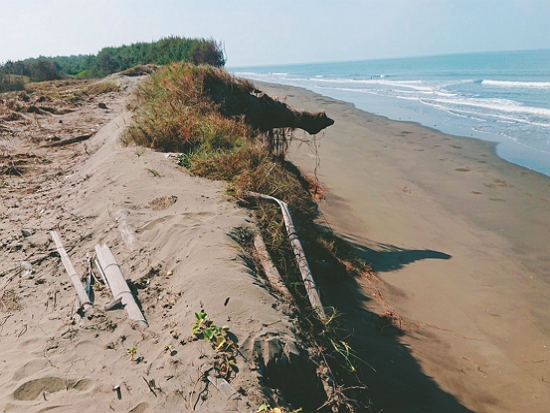
to slow down the further erosion of the sandbank. / Provided by Tse-Xin Organic Agriculture Foundation
Building a Protective Great Wall for the Taijiang Sandbank
The Wangzailiao Barrier Island Sandbank Rescue Project was carried out by Taijiang National Park along with Tse Xin Organic Agriculture Foundation, which had also realized the impor tance of allocat ing tree species and prioritizing the process of afforestation. “Wangzailiao Barrier Island is a sandbank that has suffered from a serious erosion crisis. Once a narrow point is broken through, lagoons are not lagoons anymore. The only feasible solution is to plant trees to solidify the sandbank,” said Li-Yi Cheng, Director of Tse Xin Organic Agriculture Foundation’s Tree Planting Initiative. “We are racing against time. So, when you ask me if it is difficult to plant trees on the sandbank, my answer will be the same as that of our founder, ‘sometimes we have to do hard things because it is the right thing to do.’”
Due to the urgency of the situation, action needed to be taken immediately. Taijiang National Park entrusted the entire rescue project to Tse Xin Organic Agriculture Foundation, which has ample tree planting experience and skills “We couldn’t wait for the budget, so we raised funds rapidly through the method of self-fundraising. However, our own power was not enough.” The assistance of Taijiang National Park Headquarters impressed Li-Yi Cheng. “Without the active support of Taijiang National Park Headquarters, the process wouldn’t have gone so smoothly. If I said Taijiang National Park Headquarters ‘cooperated’ with us, it wouldn’t begin to describe how hard they worked and how much they dedicated to the project. They carried out the project wholeheartedly.” With a shared belief, a consistent goal, and sheer tacit understanding between both parties, the sandbank tree planting project launched smoothly in 2021. However, planting 70,000 trees within 3 years on the area of the sandbank that needed them the most was not as easy as it appeared.
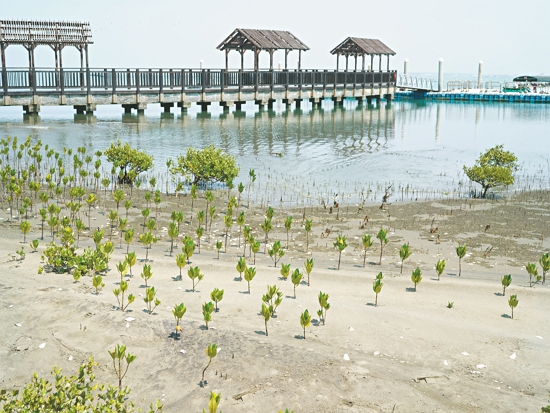
/ Provided by Tse-Xin Organic Agriculture Foundation
During its first year, the project planned on planting 16,000 trees on the 3 hectares of narrow sand dune, 9,400 trees at the 3.3 hectares of forest gap, and 4,000 trees in the 2 hectares of angrove forest. “We thought Pandanus odoratissimus could be the frontline on the side facing the Taiwan Strait, because it has the advantages of salt tolerance, flooding tolerance and sand fixation. Based on past experience, Pandanus odoratissimus could survive even if it was buried in the sand or flooded by waves.” However, this experiment was unsuccessful, because Pandanus odoratissimus grows slowly in the early stage. This shows the arduous condition of the local environment.
“Additionally, the terrain of Taijiang National Park is uneven. Some low-lying land is dry land. However, after we planted drought-tolerant trees, the land turned into a puddle after the rain season. Water in the land never receded when the spring tide arrived. Moreover, due to the water’s high salinity, the trees we planted in the low-lying land never survived.” During the process, frustrating results kept emerging. However, the team did not have time to feel sorry for themselves. They actively reviewed what they had done, made rolling adjustments based on their experience in planting trees all over Taiwan, and redeployed tree species according to their observations of the surviving trees on-site.
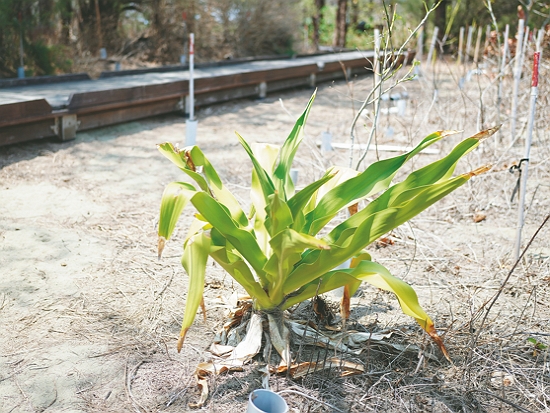
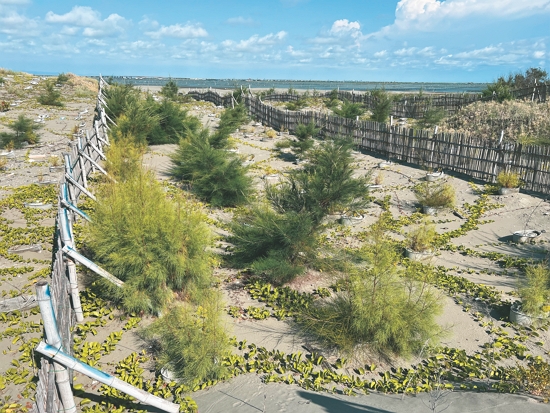
/ Provided by Tse-Xin Organic Agriculture Foundation
They began planting Excoecaria agallocha, Lumnitzera racemosa , Crinum asiaticum, and other tree species and herbal plants suited for the coastal environment in response to the predicament of having stagnant water in the lowlying land. Crinum asiaticum is a rarely grown plant in forestry. However, with the team’s experience in afforestation all over Taiwan, they found that Crinum asiaticum is a wind-resistant, salt-tolerant, shadetolerant and sun-resistant plant with great vitality. Additionally, it can rapidly grow roots to fix sand. Therefore, after including it in the tree planting project, significant results were seen.
Considering the sandbank tree planting project in its entirety, tree species play different roles in the short, middle and long term. “We ask ourselves: what is the most important goal for now? The answer is, to plant the first batch of trees that are able to survive in the most unfavorable environment. This batch of trees needs to grow rapidly, and play the role of shielding other trees from the wind. We must alleviate the growing adversity before leaving a space where native tree species can survive and gradually grow up strong.” Therefore, the team first planted Casuarina equisetifolia (beef wood), which grows fast even though it is not tolerant of seawater. Planting Casuarina equisetifolia has given slow-growing Tamarix chinensis the time to grow. Tamarix chinensis is more salt tolerant than Casuarina equisetifolia after all, and it can serve as the “Great Wall” to resist the salty wind. Later, Hibiscus tiliaceus , Excoecaria agallocha and other native tree species were planted.
Moreover, Li-Yi Cheng, who used to work at a national park, volunteered long term, and researched national park policies for her master’s thesis, has a firm understanding of the relevant core laws and regulations and the idea of conservation. “I know Casuarina equisetifolia and Tamarix chinensis are exotic tree species, but I chose to plant them after repeated examination, research, and consideration. We paid attention to the plants to ensure they are not invasive, and to see whether they might threaten the living space of native tree species. We didn’t plant these exotic trees until we were well-prepared. We have to focus on whether the windbreak forest at the frontline can survive to become a wall for native tree species behind it. Only when the native tree species in the rear survive will the sandbank become firm and steady, and the entire ecosystem have a future.”
After multiple trials and adjustments, and utilizing a water-storing tree planter to efficiently plant trees by the coast, the team has seen a 70-80% success rate from the tree planting project. Additionally, with the assistance of sand-fixed hedges and wave reduction railings, sand brought by great wind and waves has been retained, and the terrain in some areas has been elevated significantly. These results have inspired the team. However, these are all short-term results, and Li-Yi Cheng’s entire plan is expected to unfold over the course of more than a decade. She has even prepared for the worst, “Rising sea levels are a global phenomenon. When that day comes, we might not be able to resist it. Even so, we have had a contingency plan for ‘when all sandbanks disappear.’ In a word, we will never give up easily.”
Reviving Kenting’s Native Forest by Overcoming Obstacles
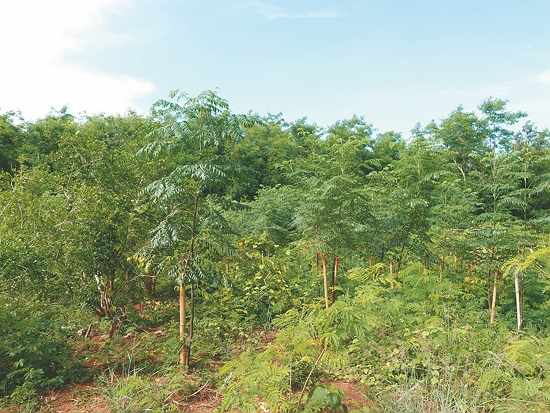
Kenting National Park also cooperated with private sectors for afforestation. However, Kenting National Park Headquarters faced a challenge before afforestation—eliminating Leucaena leucocephala, an invasive alien species growing locally. Hsin-Hung Chen, who is in charge of the project, explained why there were a great number of Leucaena leucocephala in Kenting: “When Taiwan was under colonial rule by the Dutch Republic, Leucaena leucocephala was introduced to Taiwan to be used as feed for livestock and as firewood. In the 1960s, Taiwan promoted economic afforestation. To obtain raw materials for paper pulp, the selection of Leucaena leucocephala for afforestation rose. Later, after Taiwan went through different kinds of economic transformation, Leucaena leucocephala was no longer felled and used. Fields were left fallow and discarded. In the end, Leucaena leucocephala took advantage by taking over the forest.” Kenting National Park Headquarters began examining the problems caused by Leucaena leucocephala quite early in the hope of restoring biodiversity to the ecological environment. In 2022, after being matched by Pingtung Forest District Office, Kenting National Park Headquarters had an opportunity to cooperate with Taiwan Rotary Clubs Association.
“It is actually a long journey for public sectors to budget. In contrast to public sectors, private sectors are not restricted regarding budgeting, and they enjoy the advantages of being rapid and flexible in executing a project, which has better ideal results.” Therefore, Kenting National Park Headquarters cooperated with Taiwan Rotary Clubs Association, with Mount Gui as the hinterland. Kenting National Park Headquarters selected an appropriate location, and gave construction instructions and suggestions for the restoration of tree species and follow-up maintenance. Then, Taiwan Rotary Clubs Association invested in budgets and manpower to carry out the project. “As for regions where it was complex or difficult to fell Leucaena leucocephala , Kenting National Park Headquarters would budget to take care of it. By working on two tasks at the same time, burdens for the public sector were alleviated, and enterprises were able to fulfill their responsibility toward society and the environment,” Hsin-Hung Chen said with great satisfaction.
After removing Leucaena leucocephala, the team had to plant a great number of tree species such as Acacia confusa , Aglaia formosana , Melia azedarach , Eriobotrya deflexa f. koshunensis, Terminalia catappa , Cerbera manghas , Bischofia javanica and so on. As these trees were planted not that long ago, and still have challenges to endure, including the downhill wind every winter, water shor tages during the droughts, and saline soil damage, it will take three to five years of nurturing before significant results will appear. However, Hsin-Hung Chen still has high expectations for this collaboration, and believes that the expansion of Leucaena leucocephala at Mount Gui can be effectively inhibited, and the land can be restored to its original natural environment and ecological diversity.
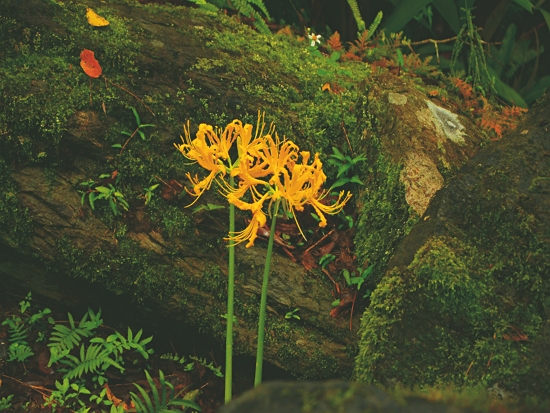
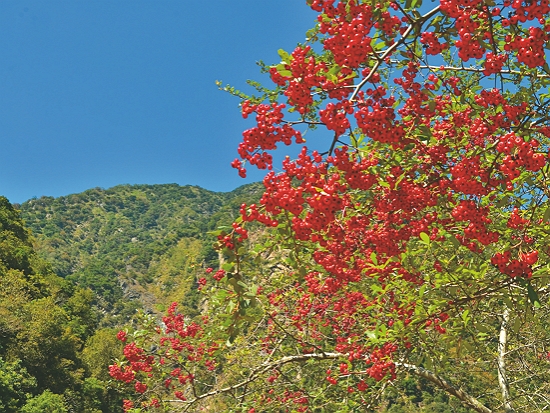
Restoring the Glamor of Golden Spider Lily and Taiwan Firethorn
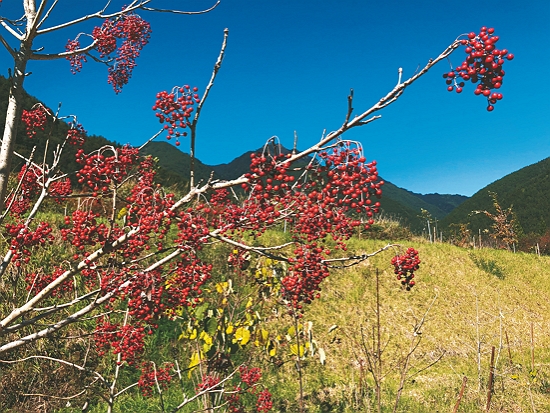
Due to economic factors, a great number of Leucaena leucocephala were introduced to Kenting, and Taiwan firethorn in Eastern Taiwan also had their destiny reversed because of its economic value. Unlike Leucaena leucocephala, however, Taiwan firethorn gradually disappeared from its original habitat. Taiwan firethorn originally grew on the East Rift Valley and Plain, and they could be seen from the estuary of Liwu River at Taroko Gorge, from Hualien to Taitung. They are often viewed as ornamental plants because they are endearing and cute when they blossom or bear fruit. However, because they have thorns which hinder pedestrians from walking, they have been removed. Nowadays, wild Taiwan firethorn are rarely seen.
Fortunately, Taroko National Park welcomed the restoration project for Taiwan’s native species in the 1990s. Pao-Kuang Chen, Director of Buluowan Service Station, said, “We planned on restoring four star species, including Lilium formosanum (Taiwan lily), Lycoris aurea (golden spider lily), Taiwan firethorn, and Hypericum geminiflorum . (paired flower St. John’s wort) which are impressivelooking plants.” Among the four, golden spider lilies and Taiwan firethorn are the most successfully restored plants. He said, “Taiwan lily has to grow by the places with adequate amount of sunshine. However, Bulowan Plateau is wetter, which causes gray mold on lilies growing together. By contrast, golden spider lilies and Taiwan firethorn adapt to the environment of Bulowan very well, and they completely conform to the principles of low maintenance and growing the right species in the right location.
The reappearance of Taiwan firethorn in Bulowan indicates the success of the restoration project. Additionally, the plant has become an important food source for many mountain birds when they fly down the mountain in winter. Golden spider lilies adapt to crumbled or barren land, adding vegetation to the uncovered surface of the land. Moreover, golden spider lilies are poisonous, which effectively inhibits pests. These two kinds of plants have undergone over twenty years of restoration, and adapted well to the environment, making them a success story. Only a few withered plants have needed to be replaced with new ones. “But when I think back, to produce the seeds of golden spider lilies, we risked our lives climbing up the cliff. Taiwan firethorn was nearly extinct, and it took us a great effort to find it.” Pao-Kuang Chen talked about the process of restoration, which is still fresh in his memory.
Today, the restoration project is in the midst of a transformation period, and is focusing on restoring honey plants that are readily available, have short growing periods, and low consumption, such as Eupatorium formosanum and Sambucus formosana to bring the tree species restoration project one step forward at Taroko National Park.
Afforestation is more than just burying seedlings and seeds in the soil. The arduous processes that these afforestation teams have been through demonstrate that the creation of a forest might take over one hundred or even one thousand years. In the past, people felled trees in the forest to improve their lives. Today, we not only pursue a better life, but also hope to lead a sustainable life with all living creatures. Therefore, we sow seeds and plant tree species for afforestation to restore the diverse functions of the forest, thus helping to maintain ecology. We hope that when people witness the arduous labor involved in carrying out these afforestation projects they will be inspired to start loving each tree on the Earth.


