
Have Fun in Spring:A Spring Thunder Brings Insects Back to Life-Bug Time in National Parks-
“Spring thunder claps, everything grows”—in the agricultural society of the past, Jingzhe was the first solar sign of the year that farmers based their predictions of harvest on. If a Spring thunder clapped on the day of Jingzhe, the year would contain a great harvest. The insects that were hiding deep in the soil or in the stony caves would begin to wake up and start a variety of activities. The trumpets of Spring has begun to sound, everybody prepare to embrace a prosperous year!
- upper:A Spring Thunder Brings Insects Back to Life
Article / Editors
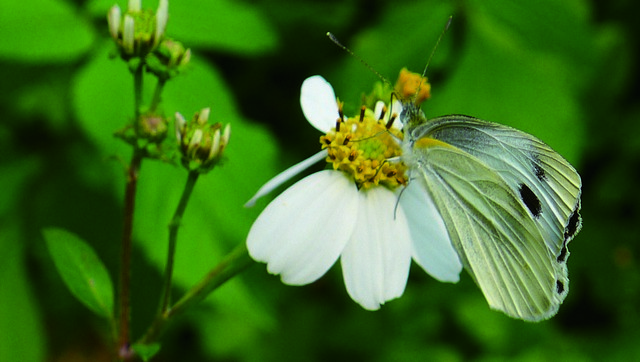
There are now 6 national parks on the island of Taiwan and they are Yangmingshan, Shei-pa, Taroko, Yushan, Kenting and Taijiang. These parks cover all the characteristic geographic features of Taiwan from sea level to mountains more than 3,000m high. Meteorologically, they include tropical, subtropical, and temperate weathers. Taiwan is a young island that was born from the pushing and shoving between the Eurasia and the Philippine plates. It is a small island but is extremely ecologically diverse compared to countries hundreds of times larger, thus resulting in extraordinary biodiversity. Many unique creatures have evolved on this island thanks to the isolation created by the ocean. When the first thunder comes in spring, the temperature starts to rise, and many insects that hibernated throughout the chilly winter in the form of eggs, larvae, pupae or adults begin to reawaken. A variety of beautiful insects are everywhere in the national parks, whether they are butterflies looking for nectar, caterpillars feeding on leaves, or fireflies glistening at night. A tour of insect ecology is always a good way for people to get close to nature. No matter where you are, take a day off and give yourself a chance to relax. Let’s turn off the anxiety and empty our brains that have been full since eternity. Let’s go watch some bugs.
Before Insect Watching—What Do You Need?
For insect watching, what matters is not what you wear or how big your super magnifier should be. It is the “heart” and “eye” that matter. Through the appreciation of insects, an insect ecology tour helps you leave behind all of the tensions built up in your office and through living life in the fast lane. What is the difference between insect watching and your daily routine if you cannot unwind?
The “eye” is the instrument of insect watching, but that does not mean you have to have a 2.0 eye sight to see bugs. The key word for insect watching is “slowly.” Walk slowly and watch slowly. The start and end of the park trail systems do not mark the only places for insect watching. Insect watching starts from the moment that you are willing to walk slowly and pay close attention to the vegetation along the trails. By doing so, only then will your eyes will be able to pick up these masters of disguise. And the end of insect watching? It seems that insect watching is an endless road if you are ready to walk, watch and even “live” slowly.
All you need is your most comfortable pair of shoes (low-heeled shoes, sneakers or hiking boots will do just fine) and a long-sleeved shirt. Bring your super high-end stateof-the-art digital camera, a small, ordinary, plain camera or nothing at all. You can start your own road of insect watching at anytime, and don’t forget that bottle of water.
Where Are the Bugs?
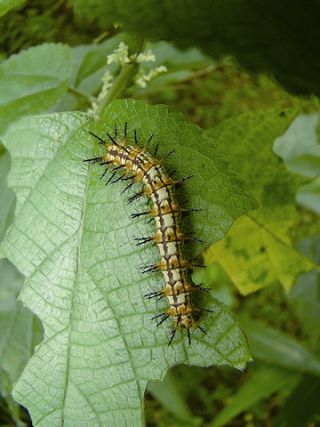
You can find different insects in many places including under vegetation or between rocks. For example, the larvae of Acraea issoria commonly seen in spring are often found strolling up and down on ramie – the plant that their mothers carefully chose for them to feed on. On the under side of leaves and on the branches are where a lot of caterpillars pupate.
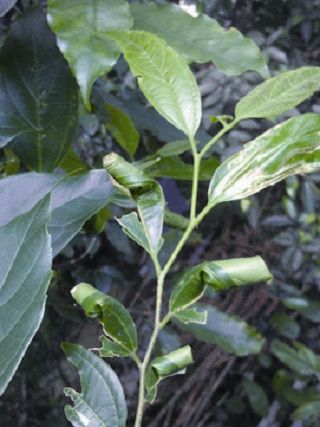
Also, there are some things that may appear different from what you know. For example, a leaf is supposed to be flat and unfolded, why would any one want to roll it up like the one wrapped around a betel nut? It turns out to be the handy work of an Attelabidae bug. This is the suite where Attelabidae larvae eat, drink, sleep, go to toilet and eventually emerge as an adult insect.
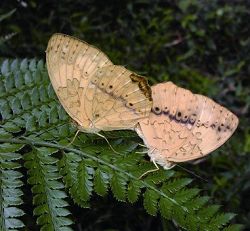
Spring is the season for butterfly mating, such as the Junonia almanac . If you want to experience the most romantic love scene at springtime in the national parks, the fireflies at night between March and May are a must see. In various scenic areas, there have been many firefly season events in recent years following the cherry blossoming season, and visitors attend these events like one tidal wave after another. Firefly season has had a positive impact on reviving the local economy. However, excessive visitors will create stress to the delicate firefly population if there is not a sufficient number of firefly ecology guides. If you don’t want to be stuck in the flood of people in popular scenic areas, there are fireflies along the national park trails as well. But remember this: bring a flashlight covered with a piece of red cellophane film and travel in group. Traveling in a group not only allows friends to take care one another, but also provides safety. This is also the best way to minimize the disturbance to the fireflies.
Insect Ecology Features in National Parks
Tirumala Butterflies in Yangmingshan National Park
It is late spring and early summer and firefly season has just ended. The Tirumala butterflies start to emerge from May to August every year in Yangmingshan National Park. The Mt. Datun in the park are the stronghold of Tirumala butterflies, which are mostly distributed on the western slopes of these peaks (leeward side of northeaster seasonal winds in winter). The population of these butterflies reach more than a hundred thousand during the peak season in June and July when there are plenty of Eupatorium shimadai Hay. spreading all over the Mt. Datun. It can be describedas a “world wonder.” The nectar of Eupatorium shimadai Hay., which the Tirumala butterflies feed on, contains a group of plant alkaloids generally named pyrrolizidine alkaloids (PAs). In addition to the energy provided by the nectar, these butterflies absorb these secondary metabolic substances of plant irrelevant to energy. It is these PAs that make up the primary composition of the butterflies’ sexual pheromone. This feeding habit of Tirumala butterflies is known as pharmacophagy. When the Eupatorium shimadai Hay. start to blossom in Yangmingshan National Park, it is rare to see these butterflies on any other plants, which makes it the perfect time to watch Tirumala butterflies.
- left:An Acraea issoria caterpillar
- right:These rolled-up leaves are the suites of Attelabidae larvae
Article & Photos / Wu, Chia-Hsiung & Yang, Ping-Shih
Highland Red-belly Swallowtail Butterfly in Shei-pa, Taroko and Yushan National Parks
Highland red-belly swallowtail butterfly is one of the few butterfly species in Taiwan that is found more in high altitudes than in low altitudes. Research shows that Highland red-belly swallowtail butterfly reproduces one generation every year. Adults start to emerge in July, and these emerged adult butterflies feed mostly on the nectar of China elder blossoms. After mating, the females will lay their eggs on the back side of the leaves of Aristolochia liukiuensis Hatusima or Aristolochia shimadai Hayata. The population reaches its peak in number in August and September. The national parks featuring alpine geography, such as Shei-pa, Taroko and Yushan National Parks, are important habitats for Highland red-belly swallowtail butterflies.
Fireflies in Kenting National Park
The fireflies in Kenting National Park are different not because of their species, but because of the time they being to emerge. For example, the Luciola praeusta Kiesenwetter, which are common from June to August in other areas, are seen all year round in Kenting. Large populations are spotted at Jiupeng, Manjhou and the hills of Mt. Nanren. In recent years, at least 4 new species of fireflies were registered in Kenting National Parks.
Enjoy Insect Watching and Natural Photography, But Don’t Be Obsessed
The popularity of digital cameras makes natural photography, which was once known for its high technical threshold, much more accessible. Natural photography started as a way to document the beauty of creation and
allowed everyone to share the nature through the eyes of photographers. Recently, the number of people who love natural photography exploded. Once one photographer finds a good spot, the word spreads rapidly. These “natural photographers” start to show up with all kinds of equipment that few have even heard of. It is a very interesting sight when dozens of cannon-like camera lenses are pointing at the targets the photographers are looking for. The crowd is a direct threat to the insects’ survival. Some photographers may manipulate the spot to create a perfect scene he/she desires. Some of the most common manipulations are trimming off branches and leaves growing in all direction and luring their targets with tasty worms for a perfect shot. Also, the flashing of flash lights and shooting of close-ups are some of the disturbances, and this excessive disturbance can lead to stress or can expose the insects to the eyes of predators.
When You Are Done Insect Watching and if You Have Extra Energy or Time to Spare, Please…
Share what you experienced and the beauty you observed from insect watching with your friends and family. Help them feel the joy you experienced in insect watching and take them with you on your next trip. By allowing more people to experience the beauty of insects and freeing them from the stereotype of “swatting roaches with a slipper,” a much wider “basis of public opinions” will be established for conservation of insect ecology. Let’s help those who are determined to conduct insect conservation to continue their efforts for the natural ecology of Taiwan.
- left:Two mating Junonia almanac
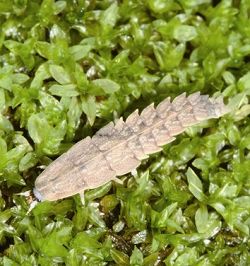
- right:A larva of Diaphanes formosus Olivier.To find one, you have to train youreyes to get used to the dark so youcan spot the tiny bright speckle in thebushes.
Article & Photos / Wu, Chia-Hsiung & Yang, Ping-Shih
Profile

Wu, Chia-Hsiung | Post-doctoral of Department & Graduate Instituteof Entomology, National Taiwan University
Wu has been studying firefly ecologyfor years and has committed himself tothe sustainable development of fireflyecological resources.
Yang, Ping-Shih | Distinguished Professor, Department & Graduate Institute of Entomology,National Taiwan University
He plays a leading role in entomology ecological conservationand is an expert in aquatic insects, butterflies, firefly ecologicalconservation, prevention and controlling of infectious animals,agricultural policy, and environmental education.


