
Article/ Chen Hsiao-Chun
Interviewees/ Hsieh Ming-Chuan, Chief, Planning and Management Section, Shei-Pa National Park Headquarters Chang Shun-Fa, Director, Taijiang National Park Headquarters, National Park Service (former Chief of Recreation Management Division)
The Shei-Pa Protection Pledge
I promise to safeguard Shei-Pa’s natural resources, an ecological legacy for future generations.
I promise to respect Shei-Pa’s Indigenous cultures, a human heritage worthy of cherishing.
I promise to comply with the Leave No Trace principles, the fundamental practice of every hiker.
I promise to take personal responsibility for my hiking behaviors, the essential duty every hiker must uphold.
May ecosystem remain sustainable and hiking safety be our priority.
In the face of the looming sustainability crisis, national parks’ original approach of relying solely on government funds to sustain conservation, education and recreation activities, and research may now face funding and staffing challenges. Meanwhile, a new force emerging from the private sector is quietly gathering momentum.
To facilitate the integration of corporate resources and implement the core values of national parks, Shei-Pa National Park and the National Park Service have successively worked to establish the ESG Public-Private Collaboration Platform. Through the platform, enterprises are able to easily identify shared values and principles and experience profound connection of coexisting with nature and land protection by engaging in sustainability initiatives.
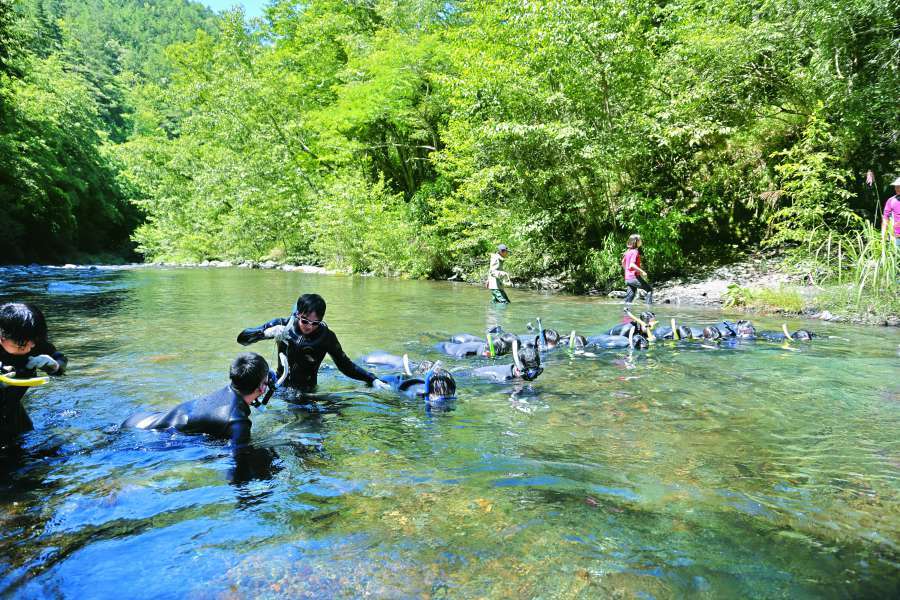
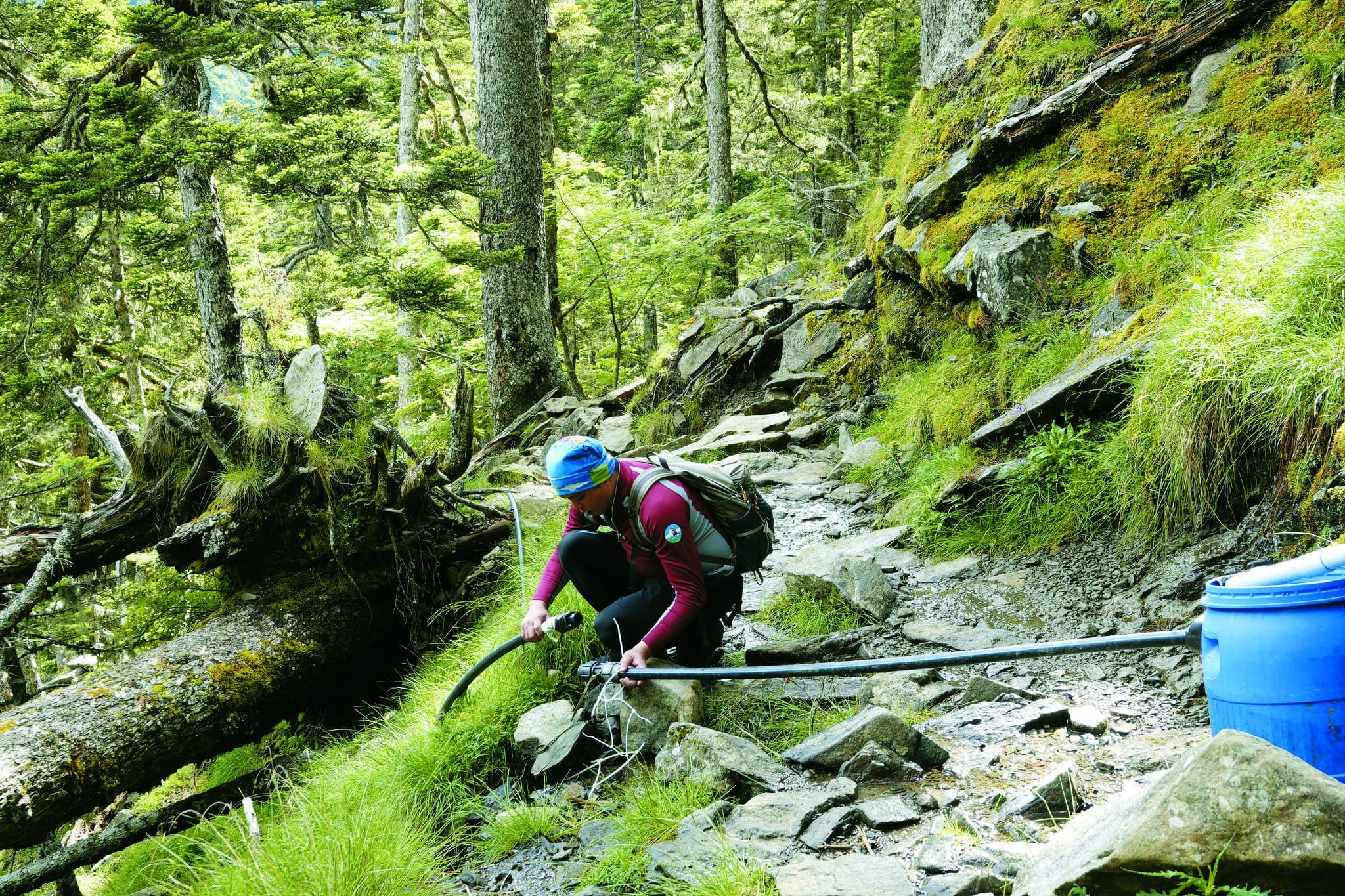
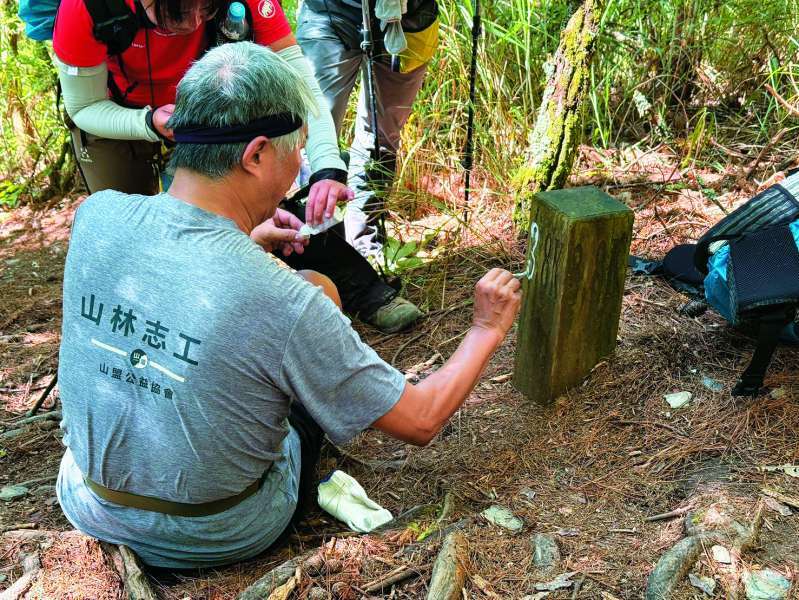
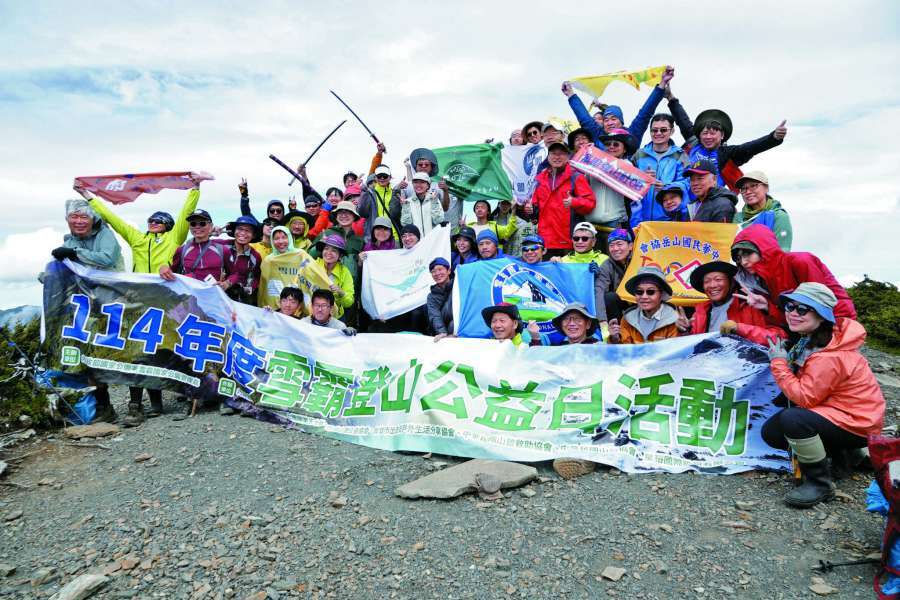
This was no ordinary hiking expedition. The hikers were from nine different organizations that have adopted trails, including the Taiwan Climbing & Mountaineering Alliance; Taipei City Outdoors Fun Outdoor Activity Sharing Association; Starlike International Ltd.; ROC Mountain Rescue Association; Chinese Taipei Alpine Association; and Calmport Healthy Life Co., Ltd. Starting in late June 2025, more than a hundred hikers traversed trails within the jurisdiction of Shei-Pa National Park Headquarters (SNPH) of the Ministry of the Interior’s National Park Service (NPS). It took them almost a week to complete journeys along the eight different trails in the Park, including the West Xue Mountain Trail, Shengleng Trail (Holy Ridge Trail), East Xue Mountain Trail, and Xuejian Trail.
They admired the scenic beauty, but all participants were also tasked with the responsibility of cleaning the mountains, inspecting mountain cabins and trails, documenting natural resources, and promoting hiking safety tips while ascending to the summit of Mt. Xue Main Peak. Participants eventually gathered with SNPH Director Lin Wen-He and other employees at the summit, where they concluded the activity with a group recitation of the “Shei-Pa Protection Pledge” under the bright sunlight. They also made a promise to dedicate funding and labor to incorporate similar public welfare activities into the hiking events held within the park.
A Journey to Seek the Best Partners
Trail maintenance is ultimately the responsibility of the ranger. But NPS rangers’ scope of duties is vast, “embracing both mountains and sea”, and many places humans rarely go. Daily forestry operations and emergency services in parks like SNPH heavily depend on the limited labor such personnel can provide. As a result, trail adoption programs become that much more crucial; hikers may provide assistance during their hikes and help to jointly guard the mountains and forests.
To the understaffed SNPH, the workload for maintaining eight trails can be quite overwhelming. In the past, only a scant few hiking groups have adopted trails, and so trail cleanliness and maintenance depended on hikers’ self-discipline. Hsieh Ming-Chuan, SNPH Planning and Management Section Chief, describes the challenges he has encountered in the past when seeking external resources: “In fact, for a lot of tasks such as ecological conservation, environmental education, and hiking safety, SNPH requires resources and support from external enterprises and organizations. But we had no idea where to seek these partners.”
In October of 2024, though, a turning point emerged with the official launch of the SNPH’s “ESG Public-Private Collaboration Platform”.
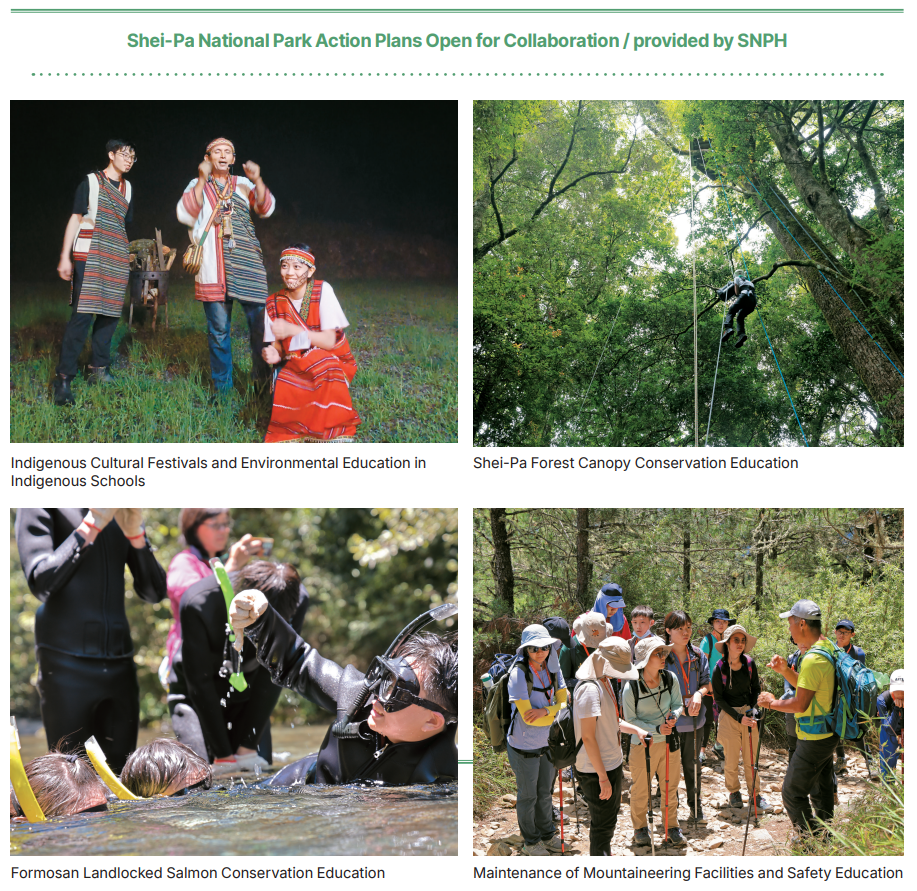
On the platform hosted on the SNPH official website, many ongoing initiatives and concerns are clearly shown. These include the Formosan SalmonConservation and Education project; the Broad-tailed Swallowtail Butterfly Conservation Project; Indigenous cultural festival and Indigenous school environmental education; Shei-Pa forest canopy conservation education; Climbing Facilities Maintenance and Safety Education program; and more. “From then on,” Hsieh continues, “SNPH began getting requests for corporate collaborations. We predict that we will reach nearly 20 collaborating partners in the different SNPH initiatives by the end of 2025, representing a twofold increase.”
Chang Shun-Fa, then Chief of Recreation Management Division of NPS, cuts to the heart of the issue: “Almost every Headquarters experiences budget and staffing constraints. But we can extend beyond these capabilities to serve as an intermediary, helping facilitate partnerships between businesses and headquarters through matchmaking. With the trend of sustainability, enterprises and organizations are more willing to invest resources in these kinds of initiatives. Partnering with like-minded parties not only provides tangible support but also boosts staff morale.”
In light of this, the NPS, allocated resources to set up a corporate partnership section on its website. This section of the website went online on September 1, 2025, comprehensively introducing the national parks’ values and missions. There are six major areas for corporate collaborations: Habitat Maintenance and Restoration; Species Conservation and Restoration; Eco-Schools; Facility Maintenance; Visual Marketing and Promotion; and Other Collaborations. All past and ongoing collaboration achievements as well as projects awaiting collaborating partners are listed under this section.
The Platform Is the Means; Trust Is the Core
The greatest challenge in corporate collaborations lies not in resource availability, but rather in establishing mutual trust.
“Do you need people or money?” This seemingly simple question reflects both sides’ fundamental attitudes and hopes for collaboration. Hsieh confesses that every collaboration, even when it’s one initiated by an enterprise, has its challenges: “Once the partnership negotiations begin, we must clearly, specifically express the core value of each collaboration.” A prime example is St. Stone Gold. This company reached out after they felt a resonance with the store of SNPH’s successful restoration of Taiwan’s national treasure fish, the Formosan Landlocked salmon . Over the course of 30 years, these fish have gone from a critically-endangered population count of 283, to over 18,000 – a 60-fold increase. St. Stone Gold reached out in hopes of producing gold coins and bars imprinted with the image of this iconic species.
The collaboration with St. Stone Gold started off as just a licensing deal. However, during the partnership negotiation process, as SNPH approached the matter from a sustainability perspective, and explained the importance of species conservation efforts in Taiwan. The company was so impressed that eventually they resolved to make annual donations of NT$500,000 for the conservation of the Formosan Landlocked salmon.
The collaboration with St. Stone Gold initially seemed like nothing more than a simple licensing deal. However, during the negotiation process, SNPH approached the discussion from the perspective of sustainability, explaining in depth the importance of various conservation efforts to Taiwan’s native species. In the end, the company was moved and decided to make annual donations of NT$500,000 to support the conservation of the Formosan salmon.
Beyond the mere monetary sums, this funding holds a profound underlying significance. The funding supports demographic survey studies of upstream populations in Hehuan Creek and Qijiawan Creek, as well as habitat restoration at their sources. “We invite companies to bring their employees along and participate in fish stocking activities,” says Hsieh. “By personally getting the experience of relocating these national treasure from water-deprived areas to headwaters, employees get to see the impact of corporate investment in conservation initiatives, first-hand.”
Not all corporate enthusiasm can be successfully turned into concrete action, though. On the same topic of salmon restoration, a company proposed a BOT project to construct a large restoration center, akin to an aquarium. However, the endeavor failed due to its massive scale and operational complexity. As Chang re-examines the proposal, he acknowledg-es that not every conservation task is appropriate for corporate participation . Therefore, before any partnership negotiations begin, NPS or the specific park headquarters has to brief the company first, while also understanding its strengths and core competencies, and considering the viability of collaboration to increase the chances of success.
A sustainability ‘final exam’ for a listed company: Sustainability disclosure standards
From the perspective of investors, the International Sustainability Standards Board (ISSB) created a set of standards for sustainability disclosures. These standards regulate how listed companies disclose sustainability information in terms of governance, strategy, risk management, metrics, and targets; and these standards constitute a part of the International Financial Reporting Standards (IFRS).
Starting in 2024, listed companies worldwide that prepare their financial statements in accordance with the IFRS are required to comply with the new ISSB standards, namely IFRS S1 framework (General Requirements for Disclosure of Sustainability-Related Financial Information) and IFRS S2 framework (Climate-Related Disclosures) starting in 2024. The S3 framework (Taskforce on Nature-Related Financial Disclosures) is expected to be proposed in 2026.
In consideration of the size and scale of its enterprises, Taiwan plans to implement the IFRS Sustainability Disclosure Standards in three phases starting from the 2026 fiscal year, with specific phases defined by enterprise capital levels.
Move Swiftly, Think Slowly
“True collaboration can only happen when companies identify with these values,” says Chang. “Put another way, if all we talk about is doing business, the negotiations almost always fall apart.” Chang, who frequently connects businesses with headquarters, reflects: “With the S3 (IFRS S3 nature-related disclosure standard) framework announcement approaching, we are aiming to use the platform to bring together the conservation issues and collaboration opportunities brought up by the NPS and the specific headquarters, all in one place. This will help companies select and participate in green action plans that align with their needs. This way, even small and medium-sized enterprises can participate through small investments.”
Finding a partner, however, is only the beginning of the journey. The key to success and deepening the long-term benefits is defining the scope of the col-laboration and mutual interests through a MOU. Additionally, companies must understand and accept that the results of many conservation efforts may take time and may fall short of their expectations. “Though we make an estimation of the preliminary results,” Chang notes, “the final results of each study or project may still be affected by uncontrollable factors in nature.” Chang shares from his experience that companies are willing to sign an MOU only when they recognize ecological conservation as a longterm undertaking and trust that the implementers will take all feasible measures to minimize ecological risks.
![[Website] National Parks Thematic
Website - Projects Seeking Partnership](https://www.taiwan.nps.gov.tw/upload/image/2025-12-10/ca20963c-6523-4f47-b77e-00c704c497db/48-1.jpg)
Traveling The Path of Rebirth for Southern Corals, Together
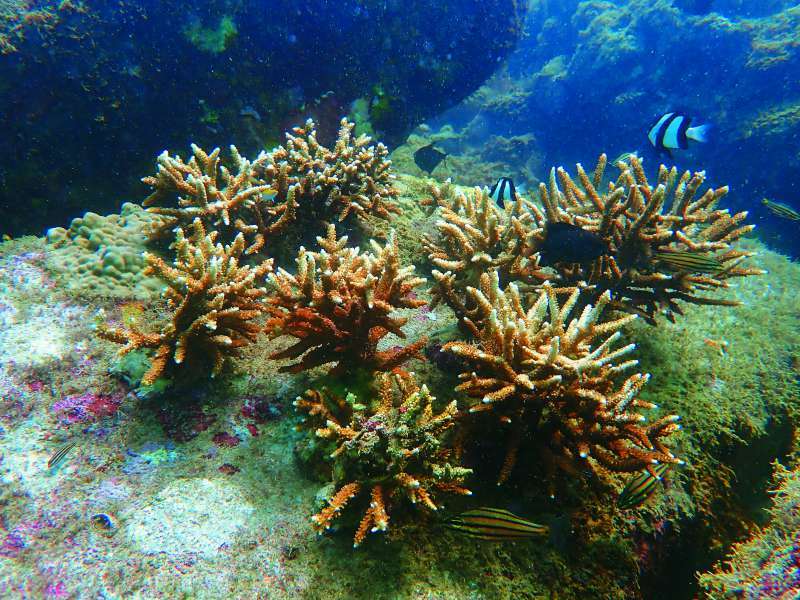
Another good example of public-private partnerships is the coral restoration project carried out at Kenting National Park Headquarters (KNPH) for over 40 years. Over that time, many different corporate collaboration models have been used. Encompassing virtually the essence of public-private collaboration, they now stand as a reference. Approaches such as addressing funding gaps for coral conservation, and empowering employees to become coral conservation advocates through hands-on experiences, can be replicated infinitely within future species conservation work. For this reason, when a corporation reaches out to express interest in coral restoration, KNPH’s first step isn’t to jump in and say “Yes!”, but rather, to get ready for an in-depth discussion.
For example, prior to signing an MOU with Mingtai Insurance recently, KNPH explained in its presentations that the abandoned Nanren Fishing Harbor near Xuhai in Pingtung was selected as a location for outplanting heat-resistant coral fragments. This was primarily due to the harbor’s limited exposure to ocean currents and adverse weather, which would improve the success rate. Chang emphasizes, “We must clearly communicate what we are doing and how the company can help us. We need to have mutual consensus before we can go further.”
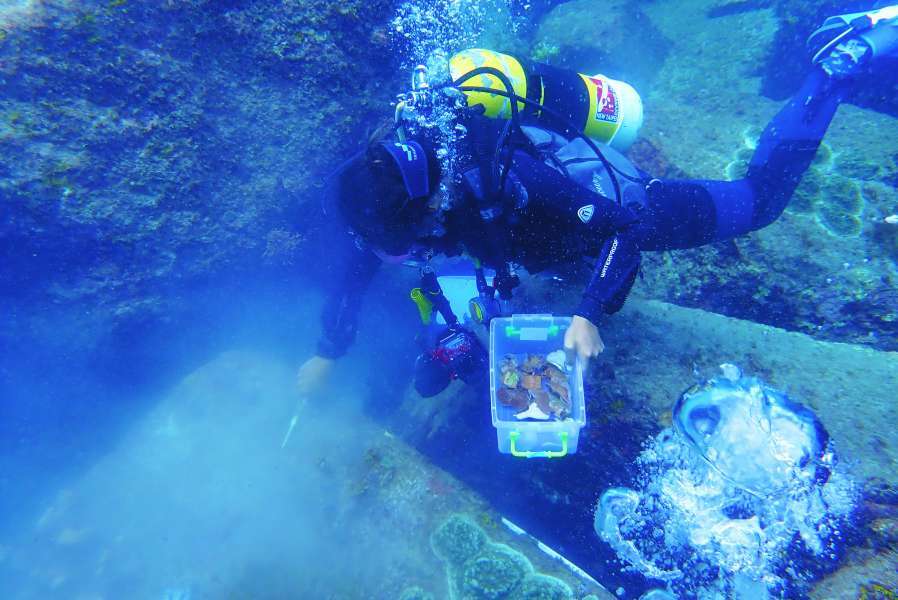
Divergent opinions are inevitable within an organization. For this reason, ecological and environmental education collaborations were crucial as a means to educate every employee about the coral restoration, and to help them understand how valuable every single coral is. The process offered them an insight into the different collaboration models that are possible for coral restoration. Coral restoration largely depends on the company’s support and hiring experts who can assist in identifying suitable sites and restoring habitat quality. It’s not about requiring employees to dive for coral planting themselves. Before concluding the session, prior achievements were presented. When employees saw how a barren reef was transformed over the course of a year into vibrant, colorful array of corals, this was far more compelling than any KPIs in an annual report. It was only at that point that the project could proceed to signing and implementing the MOU, and specifying the expected count of corals to be propagated and outcomes to be anticipated.

Sustainability Initiatives That Span Mountains and Seas
The NPS’ Public-Private Collaboration Platform elevates habitat and species conservation stories from official documents to societal practice. Putting corporate strengths to work, the platform amplifies impacts through environmental education, eco-schools, and public screenings of documentary footage. The platform also highlights the importance of major environmental and cultural issues by promoting local revitalization initiatives and tribal village tourism that helps preserve Indigenous traditions. Chang and Hsieh speak with one voice: “With so many collaboration models possible, the platform serves as the most convenient gateway for companies to initiate sustainability efforts.”
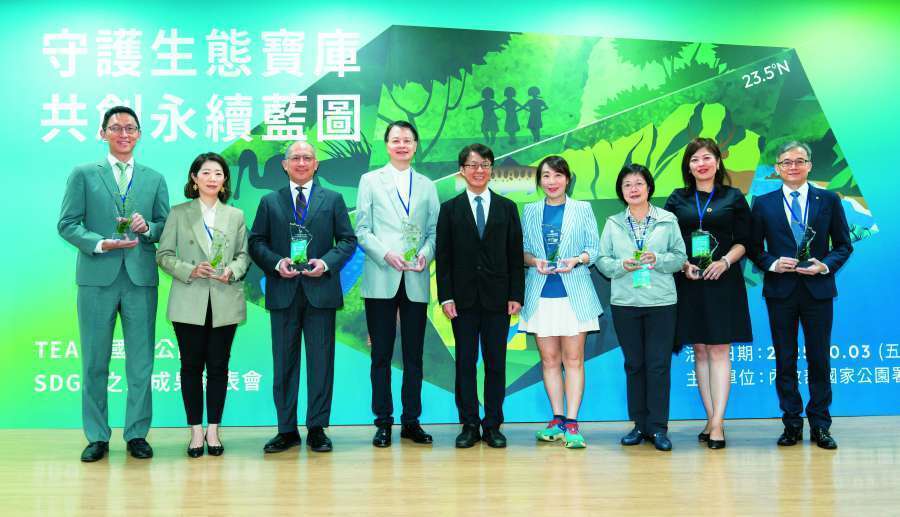
The National Parks' ESG/USR Partners
Kenting National Park
USR Partner|National Pingtung University of Science and Technology
National Pingtung University of Science and Technology continues to implement a Ministry of Education-funded USR project called Satoyama Deep Economy 2.0: Under-Forest Economy, Ecotourism Alliance Development, and Talent Incubation in Agricultural-Forest Land Carbon Sinks. As part of this, in July 2025, they organized a transnational exchange on ecotourism. Three youth leaders from the Indonesian Ecotourism Network (INDECON) were invited to visit six representative communities promoting ecotourism in central and southern Taiwan. These communities included Lide and Gangkou villages in Manzhou Township, which are receiving guidance from Kenting National Park Headquarters. During the visit, the participants had lively interactions and exchanges with local communities.
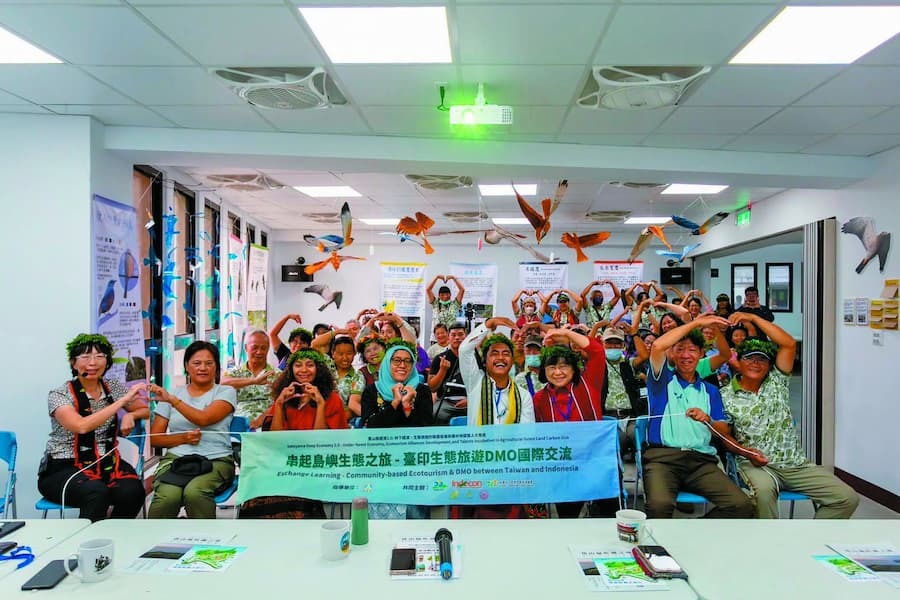
The Taiwan–Indonesia Community-based Ecotourism & DMO Exchange Group visits Lide Community, creating a vibrant and lively atmosphere./Provided by KNPH
Yushan National Park
USR Partner|Taiwan Mobile Co., Ltd.; IBF Financial Holdings Co., Ltd.
To support Yushan National Park's ecological conservation, academic research, and environmental education programs for Alishan salamander (Hynobius arisanensis), Taiwan Mobile has sponsored Alishan salamander breeding tanks and free frozen storage of cryogenic storage for genetic materials, while IBF Financial Holdings provides fixed financial support for conservation activities.
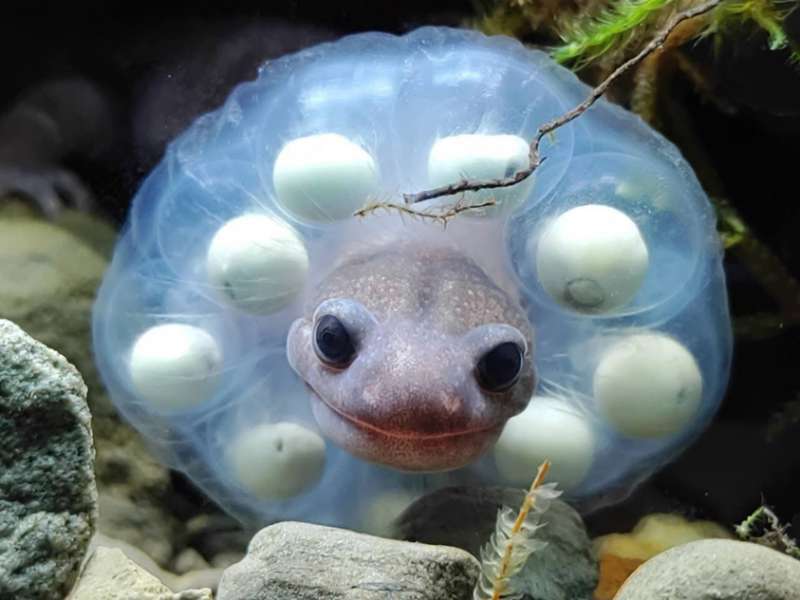
Many corporate partners have joined the effort to protect the salamander (photo: egg-guarding behavior of Alishan salamander). /Photo by Yin Li-Min
Yangmingshan National Park
ESG Partner|Mega Financial Holding Co., Ltd.
Mega Financial Holding's employees have assisted in planting native aquatic plants in Asiatic banded water snake habitats at Dinghu. More than 2,000 aquatic plants, including Java water dropwort (Oenanthe javanica) and Chinese arrowhead (Sagittaria trifolia), were planted; 360 kg of invasive parrot feather (Myriophyllum aquaticum) and 20 kg of channeled apple snails (Pomacea canaliculata) were removed. As of October 16, 133 Taiwan catties (c. 79 kg) of water bamboo (Zizania latifolia) have been purchased from farmers practicing eco-friendly farming at Dinghu. This helps achieve ecological maintenance by engaging with local farmers in preserving the wetland ecosystem through eco-friendly farming. The company also provided funding to create a brochure about the Dinghu habitat ecosystem.
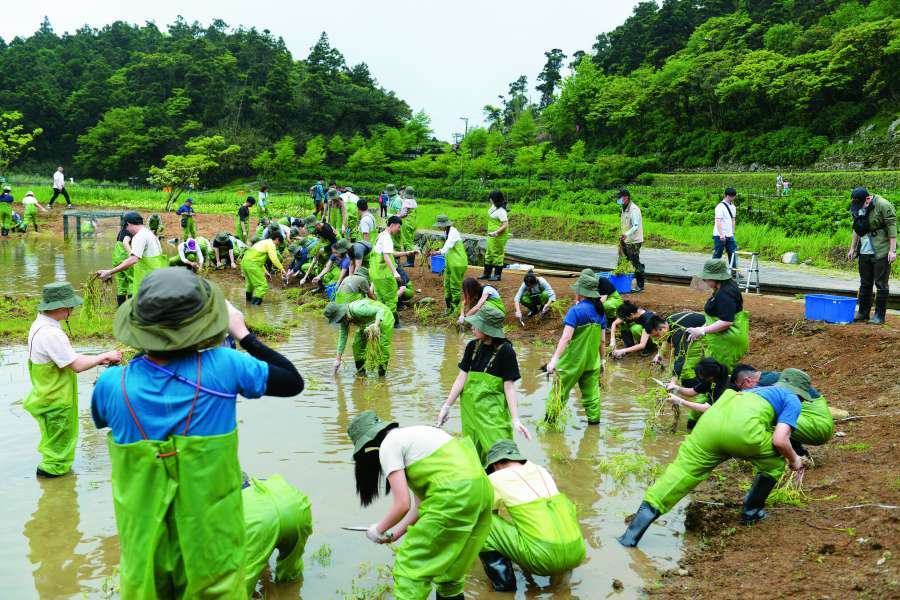
Company employees assist in planting native aquatic plants at the Dinghu habitat./Provided by YNPH
Taroko National Park
ESG Partner|Accton Cultural & Educational Foundation
The April 3, 2024 Hualien earthquake and typhoons since then have devastated Taroko. To support post-disaster recovery, Taroko National Park Headquarters launched the Do One Thing for Taroko program, which aims to reconnect people with the land by bringing together the strengths of all sectors of society. As part of this program, Accton Cultural & Educational Foundation donated 10 hotels for solitary bees, called Accton Nurseries. Each bee hotel simulates the bees' native habitats, and is crafted from natural materials, including bamboo tubes and wood. The bee hotels serve as a safe space for female bees and their larvae.
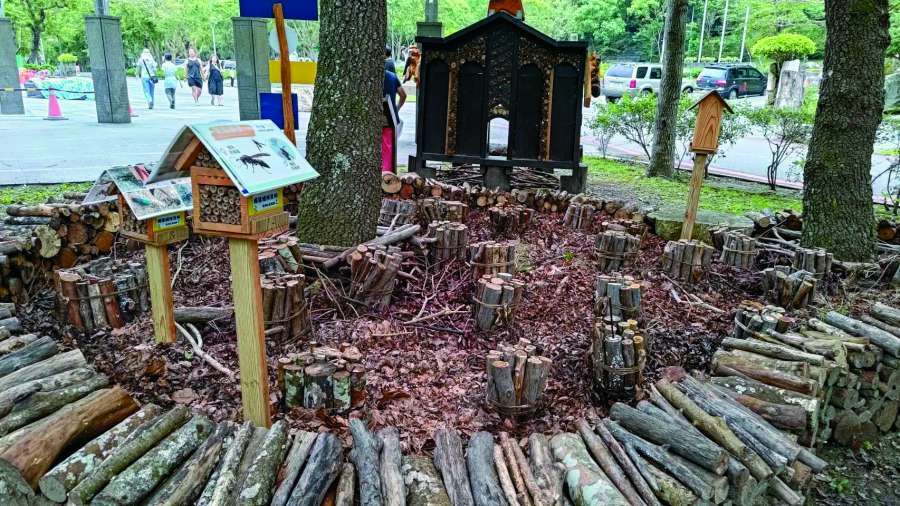
Solitary bee hotels crafted from natural materials./ Provided by Accton Cultural & Educational Foundation
Shei-Pa National Park
ESG Partner|Pelican Express Co., Ltd.
Pelican Express signed a memorandum of understanding in July 2024 to help SNPH remove invasive plants, and will collaborate on environmental education, ecological conservation, and related activities. Pelican has collaborated with SNPH on the invasive plant removal working holiday program in the Wenshui area, with 65 participants removing 400 kg of invasive plants from approximately 0.1 ha. Pelican and SNPH also held the program in Wuling Recreation Area, with 50 participants removing 300 kg of invasive plants from approximately 0.1 ha.
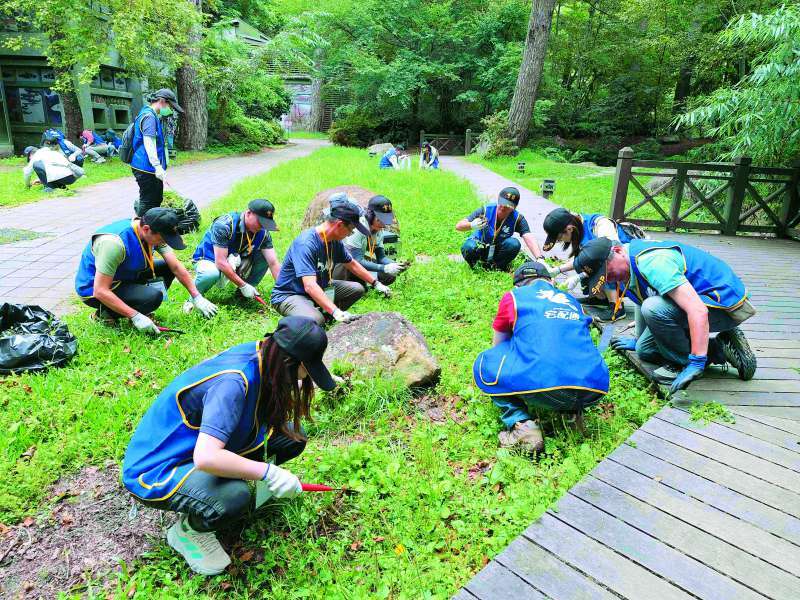
SNPH teams up with Pelican Express to remove invasive plants./Provided by SNPH
Kinmen National Park
SDGs Partner|Guningtou Community Development Association; Oucuo Community Development Association; Kinmen County Telecommunications Industry Union; Hufeng Community Development Association; Gugang Community Development Association; Qionglin Community Development Association; Caicuo Minxiang Community Development Association; and Kinmen Sports Association Tennis Committee
They collaborate to clean beaches and trails nearby communities, and thus preserve Kinmen's coastal ecology, park green spaces, and landscapes.
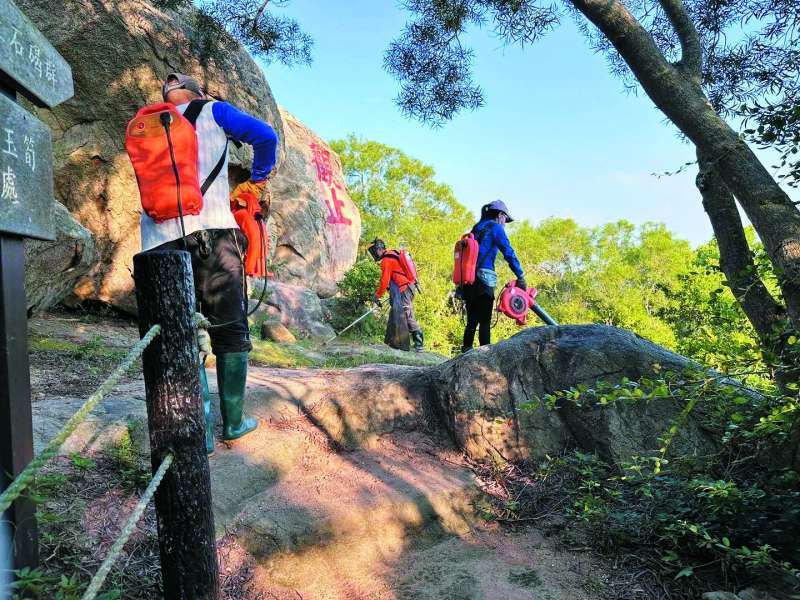
Clearing fallen leaves and weeds./Provided by KNPH
Taijiang National Park
ESG Partner|Taiwan Mobile Co., Ltd.
In response to Taiwan's key the Natural Carbon Sink strategy for the 2050 Net-Zero Transition, Taiwan Mobile sponsored TNPH's mangrove restoration experiments in abandoned fish ponds, invasive species removal, native species replanting, mangrove carbon sink field measurements, biodiversity assessments, and other related projects. These projects aim to provide water purification and carbon removal, and thus strengthen the mangrove ecosystem, promote biodiversity, revitalize abandoned salt fields, and restore the land.
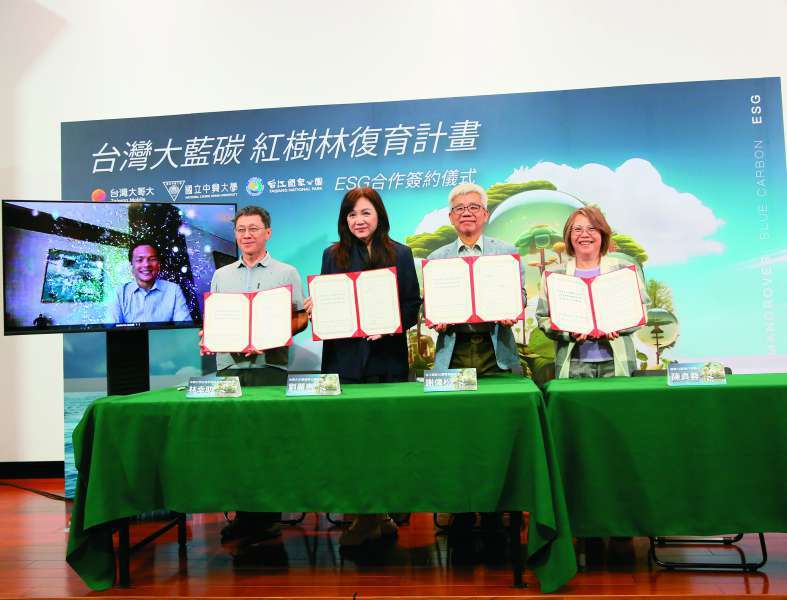
Signing a mangrove restoration MOU./Provided by TNPH
Shoushan National Natural Park
USR Partner|Wenzao Ursuline University of Languages
The park and the university collaborated on the Our Town Sustainable Community Platform Project and the Shoushan National Natural Park English Tour Guide Volunteer Training. In 2023, seven sessions (14 hours of class time) were conducted, and with 16 volunteer and staff members.
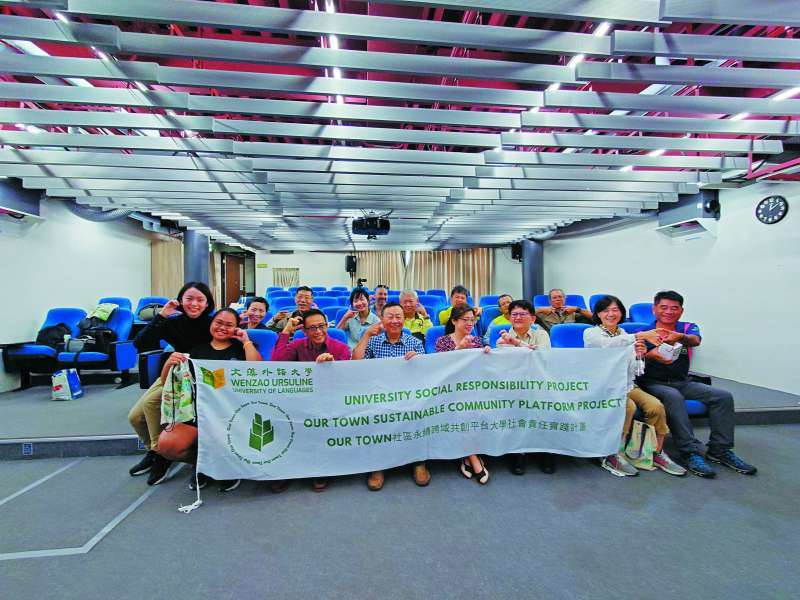
Group photo of training course participants./Provided by NNPH


