Article / Chao Hsin-Ning
Photos / Yangmingshan National Park Headquarters, Kinmen National Park Headquarters
Interviewees / Sun Wei-Chieh, Director, Yangmingshan National Park Headquarters Cheng Rui-Chang, Director, Kinmen National Park Headquarters
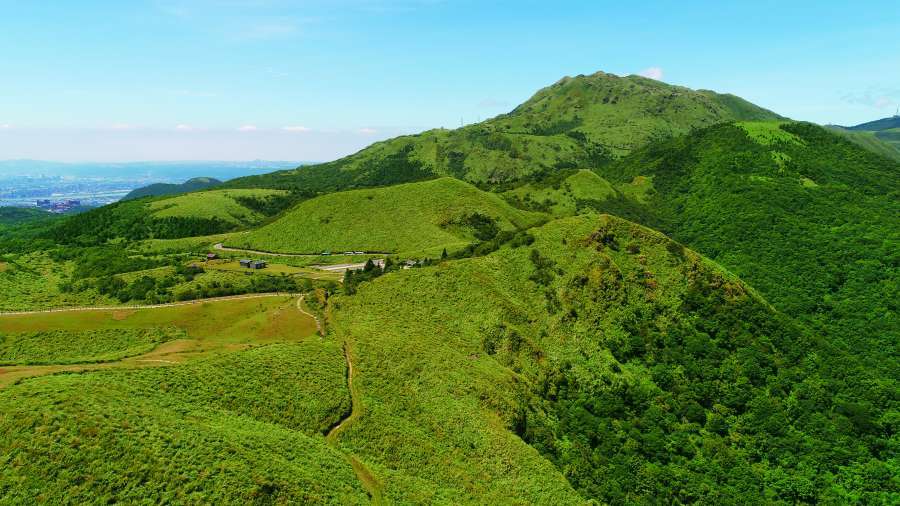
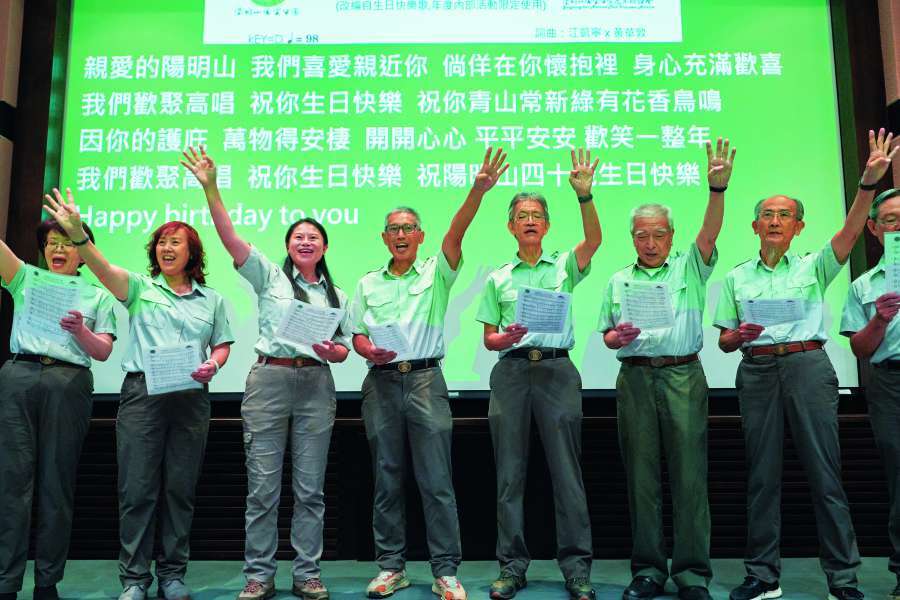
An anniversary is not just about reflecting on where we've been, either; it also marks a new starting point. Every conference, exhibition, and walking tour offers an opportunity to reconnect people with the land. The true value of the national parks comes not from what they enclose within them, but from the understanding and trust they bring to the wider world.
Be it the coexistence of volcanoes and human culture on Yangmingshan or Kinmen's transformation from a military stronghold to a place of peace, each park anniversary reminds us that environmental conservation is not merely a duty but the nurturing of a bond. Only by understanding the land can we truly embrace it.
A Realm of Tranquility atop the Volcanoes
In the special exhibition hall at the Yangmingshan National Park Visitor Center, images from the past are projected on a deep-blue wall. They are black-and-white film images from the 1920s, showing geologists mapping craters along the slopes of Liuhuanggu (Sulfur Valley) with heavy instruments on their backs. Through a shaky camera, the outlines of Mt. Datun gradually form; steam rises up slowly into the air. Today, nearly a century later, this volcanic mountain range is still radiating heat. The difference is that now, those who view the mountains are no longer the explorers of old, but exhibition visitors seated in the hall.
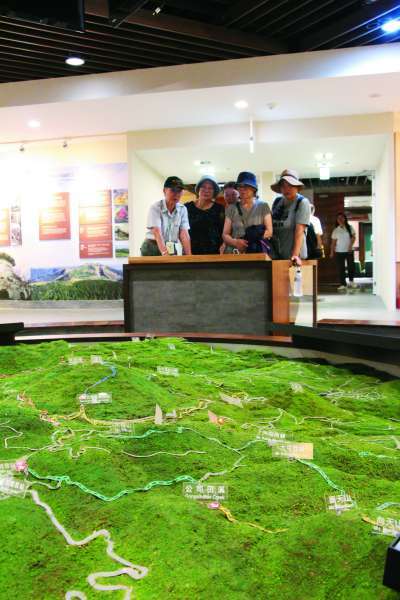
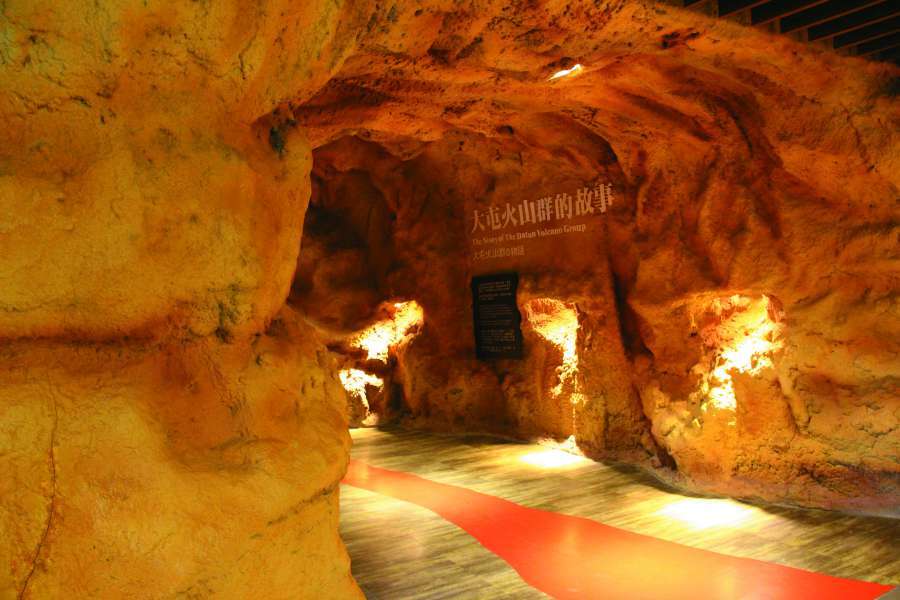
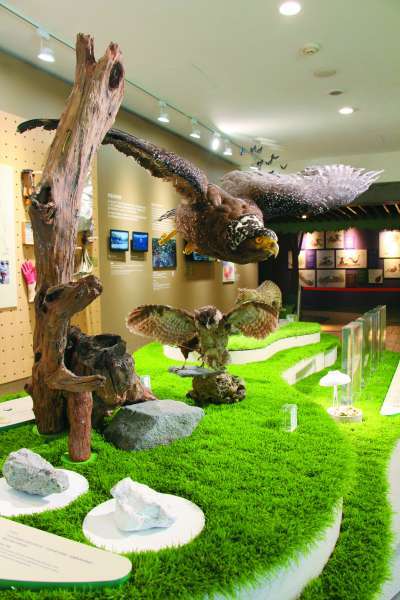
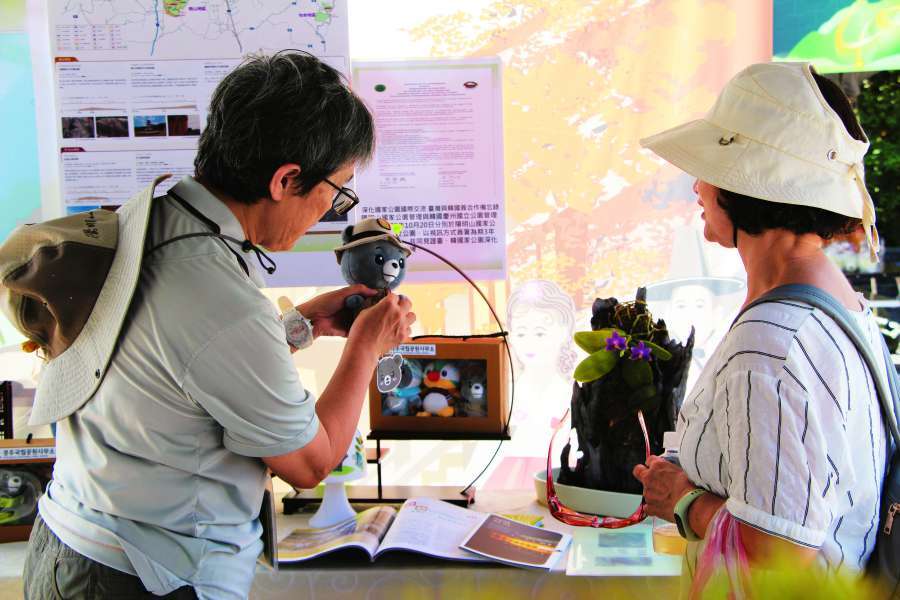
These images form the opening for the special exhibition titled "As Nature: The Datun Volcanic Multiverse", which has served as the prelude to Yangmingshan National Park's 40th Anniversary celebration. Through its themes of "Mountains of the City, Mountains of the State, the Locale Mountains", the exhibition looks back on this land from diverse perspectives. The exhibition elevates the concept of "nature" beyond a mere geological phenomenon, into a language that links people and mountains.
Looking Back Over 40 years:From Conservation to Co-governance
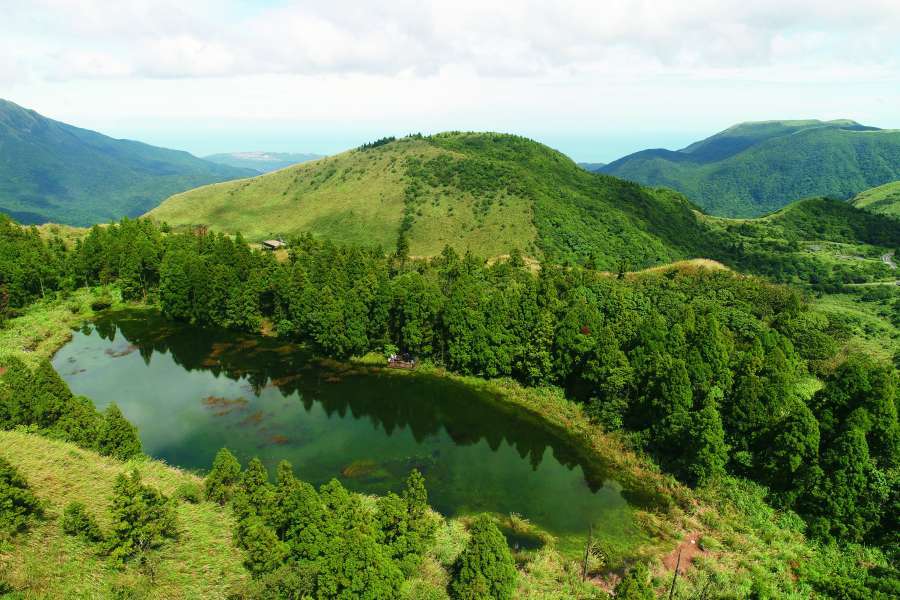
Established in 1985, Yangmingshan National Park is the first national park in Taiwan that is closely connected with urban life. The Park spans Taipei City and New Taipei City, and includes within it over 9,000 residents. It is, in other words, "a park inhabited by people". For that reason, park administrators seek to strike a balance between conservation and everyday life.
"The mission of the national parks is not to keep people away from nature," says Yangmingshan National Park Headquarters Director Sun Wei-Chieh, "but rather to help them understand and live harmoniously with it." She recalls that the parks' original focus on preventing development and preserving landscapes has shifted, as societal views have evolved, to seeking coexistence and conservation. In recent years, "community-based co-management" has replaced the previous one-way approach to conservation. In this new model, residents also take part as conservationists.
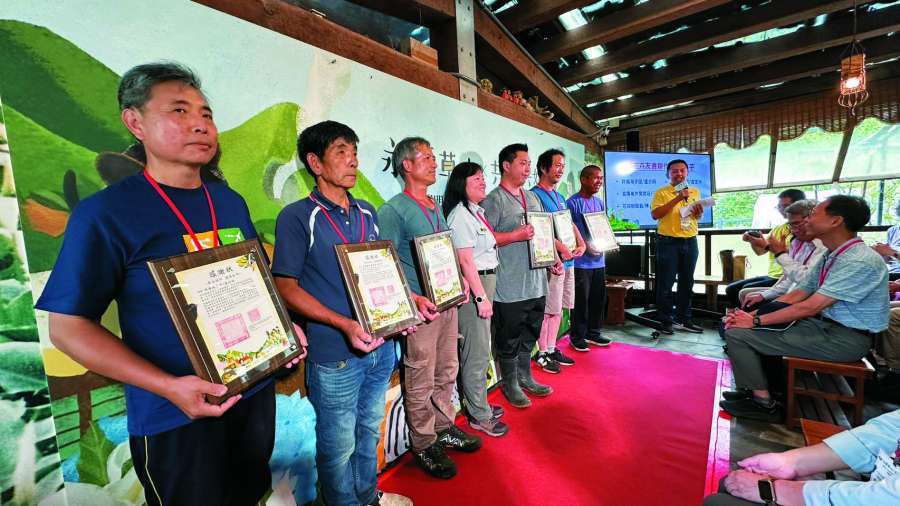
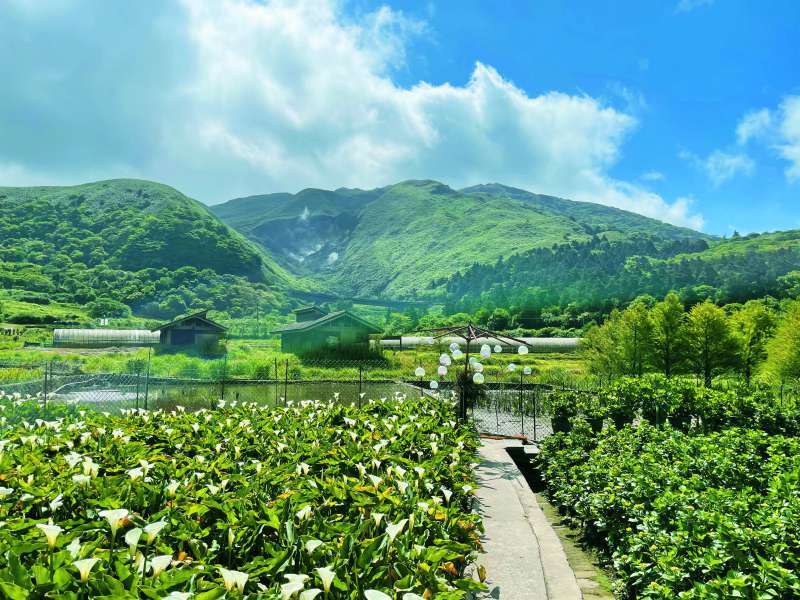
The long-running eco-friendly farming initiative is the most representative example. Since 2019, YNPH has promoted eco-friendly farming, and in 2020 it began collaborating with Tse-Xin Organic Agriculture Foundation to better meet farmers' needs and communicate the park's habitat conservation principles. Together, they have guided and supported local farmers in adopting pesticide-free cultivation, and the area of eco-friendly farmland has now reached about 20 hectares.From the calla lily (Zantedeschia aethiopica) fields in Zhuzihu and the vegetable gardens in Pingdeng Village to the farming areas of Jinshan, Wanli, and Shimen, YNPH has continued to accompany local farmers through this transition. Through the process, farmers have rediscovered the land's resilience, while conservation principles have taken root in daily agricultural work. Local residents have become partners in conservation, strengthening the bond between people and the environment.
Alongside agriculture, culture and education have also become essential to achieving co-governance.YNPH restores historic buildings and integrates interpretive systems, helping visitors to explore forestry culture and volcanic geology in the course of their recreation activities. Chen notes that this development over 40 years, from closing off mountain areas for forest protection to community-based co-management, is not merely an adjustment in management strategy but a deepening of the parks’ role.
Tranquility in the City: Rediscovering Nature through Sound
Yangmingshan National Park was certified as the world's first Urban Quiet Park by Quiet Parks International (QPI) in 2020. The philosophy behind this honor is that quietness isn't complete silence; rather, it's about helping us perceive the sounds of nature.
Wind rustling through trees, stream waters splashing on rocks, and birdsong wafting through mist along Yangmingshan's trails -these are the rhythms of nature. For YNPH, preserving this "soundscape" is just as important as maintaining the forest cover.
Sun explains, "It's harder to foster tranquility in urban areas than in the wilderness, because eliminating all human-generated sounds is impossible. But we can teach people how to listen." For a better understanding of this concept, YNPH promotes Quiet Walking Tour and Soundscape Education programs. In addition to serving as environmental education, these programs often form a kind of psychological therapy. Many participants have noted in their feedback that "hearing" silence for the first time here in the outskirts of the city gave them an experience of reconnecting with nature.
In addition, YNPH has collaborated with the Taiwan Biodiversity Research Institute to study ecological changes in different zones through long-term soundscape records and monitoring of breeding birds. Preliminary findings suggest that invasive species account for less than 3% of the total, and that native bird populations breed consistently in areas with high forest cover. These data demonstrates that tranquility is not just an abstract feeling, but an ecological indicator that is quantifiable and manageable.
What is an "Urban Quiet Park"?
Promoted by the US-based Quiet Parks International, the Urban Quiet Park system is an international certification that aims to preserve city areas where the sounds of nature are audible. Assessment criteria include sound purity, ecological integrity, and management effectiveness. In 2020, Yangmingshan National Park received this certification to become the world's first certified Urban Quiet Park.
Shared Environmental Learning from Taipei to Gyeongju
The quiet of Yangmingshan has been heard around the world; a silent transnational dialogue has unfolded.
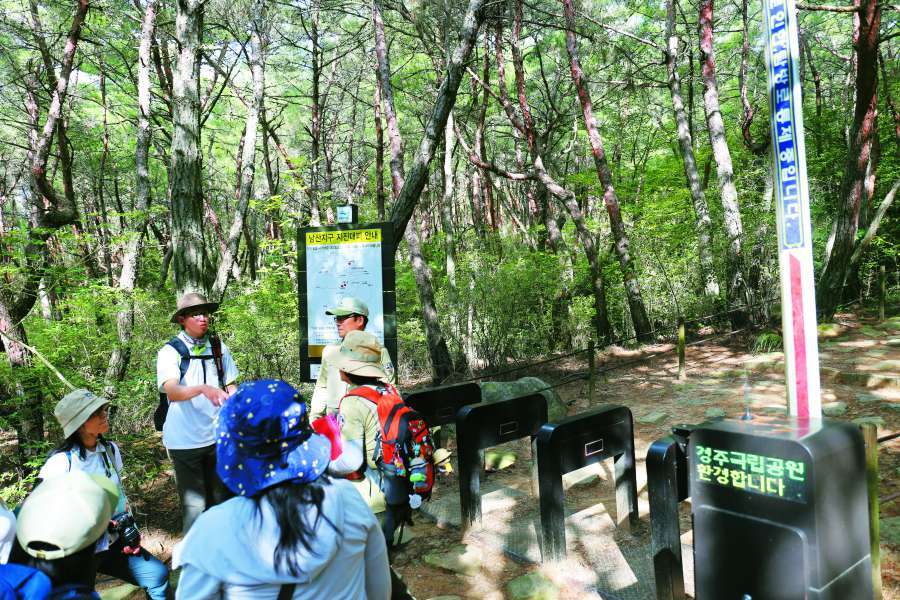
In 2022, Yangmingshan National Park and South Korea's Gyeongju National Park signed an MOU to initiate exchanges between these two sites where culture and nature coexist. Although they are separated by hundreds of miles apart, they face similar challenges: finding a balance between urban development and ecological conservation for the symbiotic coexistence of humans and nature.
South Korea's national parks are renowned for their Exploration Centers, which are environmental education centers that integrate lodging, courses, and hands-on activities. In a forest setting, visitors can spend a few days immersing themselves in nature through ecological observation and cultural tours. After the visit, the YNPH team adapted this concept for Taiwan and launched the Quiet Trail Experience program and the Volunteer Docent Training program.
The Korean team has been particularly amazed by the maturity and routine operation of Yangmingshan's volunteer docent system; they have praised the Taiwanese docents as being "like living textbooks!" Based on this model, the team has formed a foreign-language volunteer docent group. In 2025, the MOU was renewed for another three years to support more in-depth collaborations. The goal is to expand from the initial educational outreach to strengthen efforts in brand marketing and volunteer training.
"A national park does not belong to just one country," says Chen, with conviction. "The parks serve as a global platform for addressing environmental challenges. Through exchanging experiences, we make Taiwan's conservation and education efforts visible to the world."

The Next 40 years of Guarding Mountains and People
Every moment in Yangmingshan National Park, from the steam emerging from a volcano to the song of birds at Erziping, reminds us that nature is not a distant thing; it is a part of our lives. Over the past 40 years, this park situated on the outskirts of Taipei City has developed from a “protected zone” into a “part of the community”. It blends conservation into residents’ everyday culture, and brings a new way of interpret ing the national park system in Taiwan.
Looking ahead, YNPH will continue to strengthen nature conservation practices and co-governance with the community, while enhancing climate monitoring, environmental education, and brand promotion. And casting an eye further ahead, YNPH will seek approaches that achieve coexistence between people and nature for the next generation to come.
"We protect not only the mountains, but also their relationship with people," Sun adds. As "Nature" has become the theme of this special exhibition, "Nature" has also become YNPH's guiding principle. This mountain forest will remain a tranquil, embracing companion to the city for the next 40 years.
A Collection of Historical Materials on the Datun Volcano Group and the "As Nature" Special Exhibition
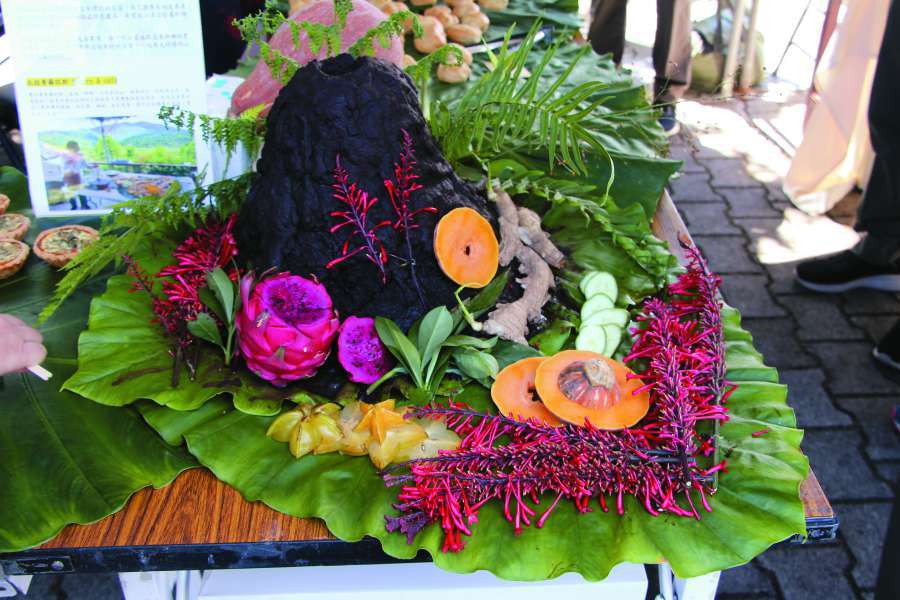
A Collection of Historical Materials on the Datun Volcano Group collects geological surveys, visual records, and archival documents on the Datun Volcanic Group since the Japanese colonial period. Extracted from academic research and official records, this collection presents a complete trajectory of volcano studies in Taiwan over the past 100 years. The book not only gather natural science achievements, but also reveal how early Taiwan came to understand its volcanic landscapes. This embodies how Yangmingshan is not just a scenic location, but a starting place for scientific observation.
Another achievement is the "As Nature" special exhibition curated by Professor Hung Kuang-Chi. Centered on "Mountains of the City, Mountains of the State, Mountains of Locale", the exhibition juxtaposes volcanic geology, local memory, and artistic creation to form a multi-perspective narrative structure. Old film images, specimens, and new media installations are integrated, bringing visitors on a journey from historical footage to contemporary imaginations, and prompting the viewer to reconceptualize what we mean by Nature.
"'Nature' is not a static form of existence. It is what has resulted from long-term interactions between humans and the mountains," says Hung, who attended the 40th anniversary celebration. From pages in books to the exhibition hall, Yangmingshan's 40th anniversary celebration stands as an opportunity for people to reconnect with nature.
From Battlefield to a shared Future
At a street corner in Gugang Settlement, a Kinmen el der sets up his easel. With light touches of his brush, each brick and tile appears on the paper. The house he paints is the same one where he once played as a child; today, it has become a distinctive guesthouse beloved by travelers.
“I never imagined that the place where we used to run and play would one day become one of Kinmen’s treasures,” he says. As he looks at the restored roof tiles and ceramic decorations, the brushstrokes seem to echo Kinmen’s thirty years of transformation— from a military frontline to a steady rhythm of every day life.
A Peaceful Island Full of Vitality
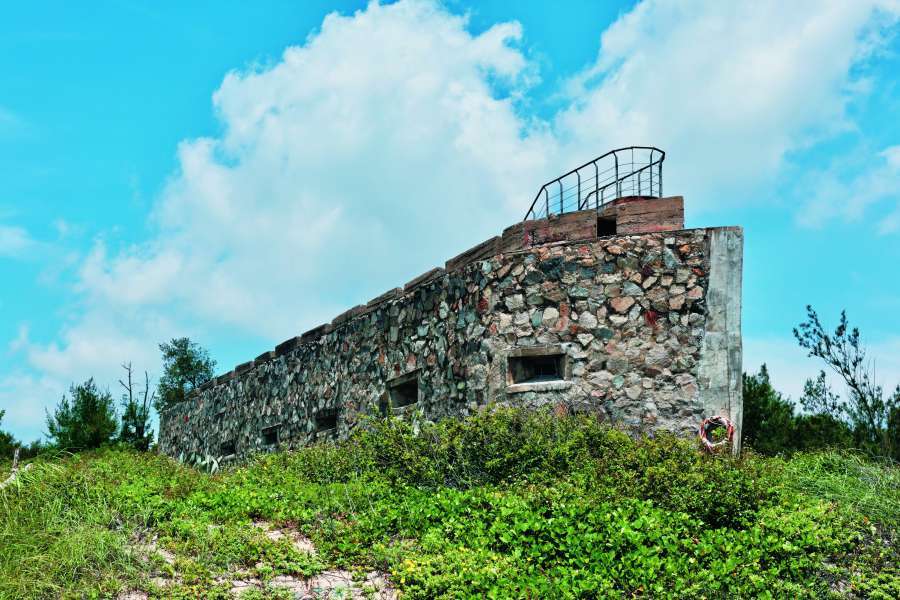
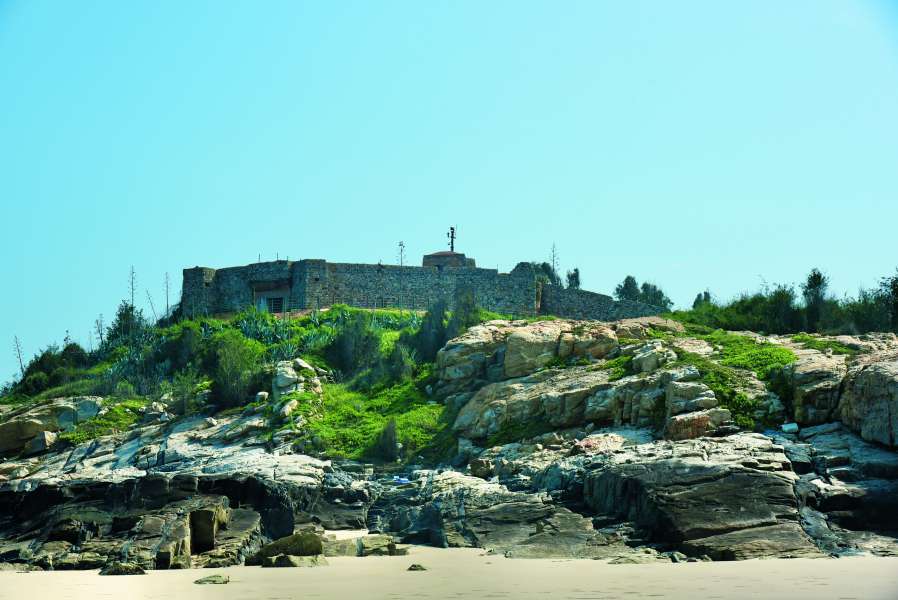
In 1995, Kinmen National Park was officially estab lished. Kinmen’s status as a Battlefield Administration had only just ended that year, so the area was dotted with tunnels, pillboxes, and military camps. Residents had a lot of skepticism about the government’s plans. The team charged with creating the park was no more than a team of just over ten people; they had no computers, nor even complete cadastral maps.
“We had nothing back then,” says Hsu Wen-Long, former Director-General of the Construction and Planning Agency, Ministry of Interior and the second Director of the Kinmen National Park Headquarters. "We had to rely on the single map, and our own two feet. We had to build the park piece by piece." Former officials and senior employees were invited to reunite for the 30th anniversary celebration. There, they recalled those years in which they were starting from scratch, with few hands and much work to do, but also a lot of camaraderie. At this gathering, two emotionally resonant short films, "30th Anniversary of Kinmen Park" and "Kinmen at 30: It Starts with the Heart", were also presented. Hsu smiles as he mentions that, at that time, there were six colleagues who were pregnant at the same time. "Kinmen truly is a land brimming with vitality."
Chen Mao-Chun, former Director-General of the National Park Service and former Director of the Kinmen National Park Headquarters, adds: "Our mission here extends beyond preserving military relics, to transforming wartime history into educational assets." He explains that Kinmen was Taiwan's first battle-culture-centered national park, and thus there was no domestic precedent to follow in creating it. The national park workers at the time could only learn by doing.
Lin Yung-Fa, former Deputy Mayor of Keelung City and former Director of Kinmen National Park Headquarters, noted that the most significant challenge in early years was "to convince residents that preservation does not equal demolition". Villagers were concerned about their land being expropriated and their homes demolished, so KNPH staff had to keep making visits to their homes to explain the situation. They spent time having tea and talking with the elders, to establish trust and dispel their concerns.
"We hope that every site in Kinmen gets not only protected, but also utilized and understood," says Cheng Jui-Chang, current Director of Kinmen National Park Headquarters. He points out that Kinmen is unique for "how people and the environment work together". From its early beginnings, the park has grown over the past 30 years into a comprehensive system of 48 sites that integrates cultural heritage, ecological conservation, and environmental education.

From Ancient House Restoration to Guesthouse Leasing
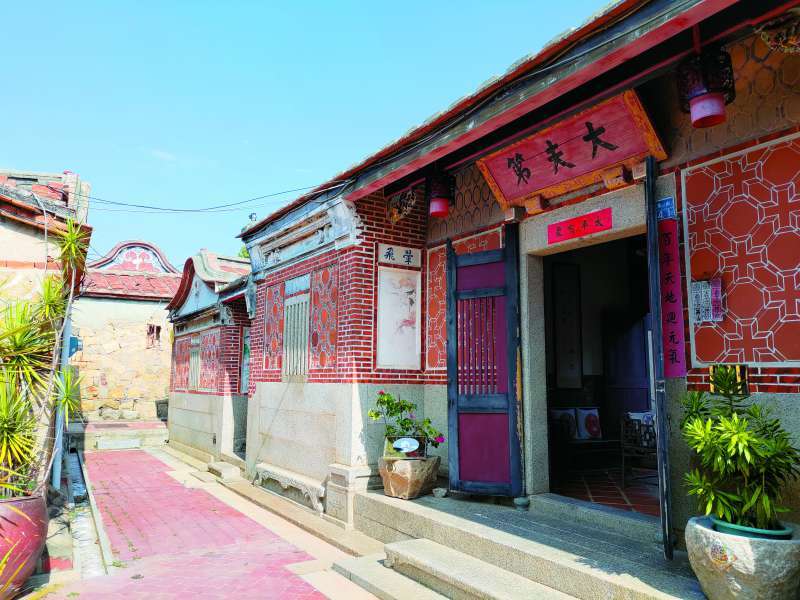
The unique style of Kinmen settlements is a key calling card of this island's culture. After the period of battle administration ended, a large number of traditional Minnan-style houses that had been left vacant for an extended period fell into disrepair. Following the establishment of Kinmen National Park, the first task was to preserve these settlements and restore the ancient houses, finding ways to incorporate these structures back into everyday life.
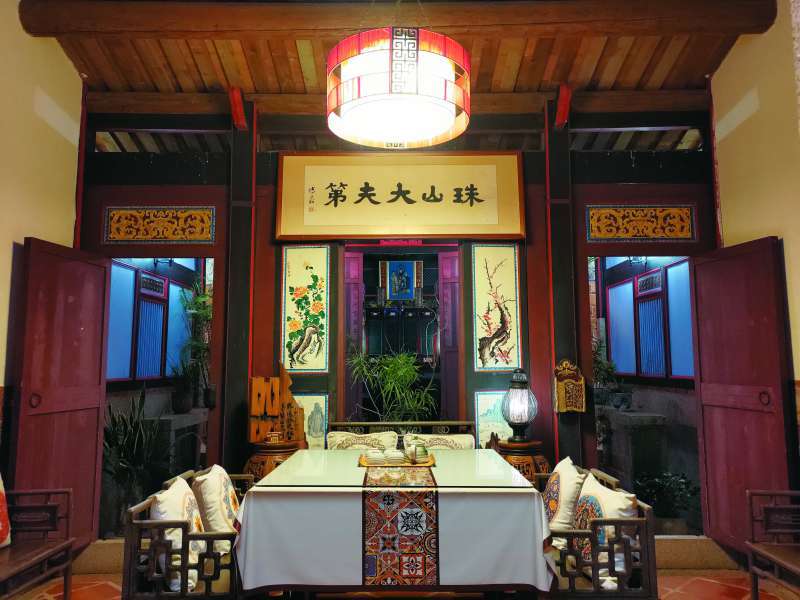
Since 2000, KNPH has implemented the Guesthouse Leasing System in Shuitou, Zhushan, and Gugang settlements. Under this program, inviting operators to move in through an open bidding process. This way, a classic old building becomes not just a place you can stay, but a driver for community revitalization.
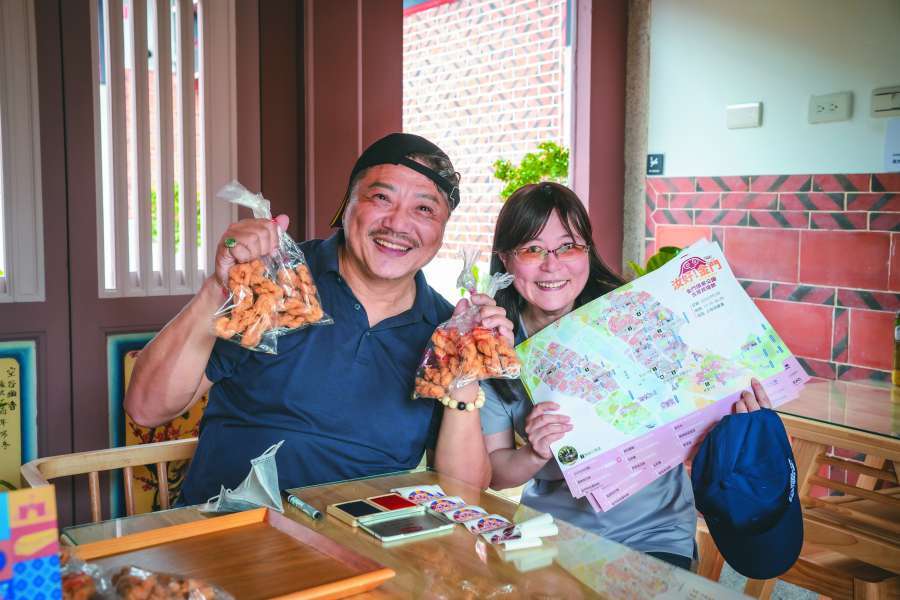
In the early days, the program started with only a dozen or so buildings; now, the guesthouse leasing system has grown to nearly a hundred success stories. The Guesthouse Leasing System has created links of mutual benefit between preservation and the local economy. In addition, it has made Kinmen's unique clan systems and ancestral hall culture into a realm of cultural asset. This year (2025), a grand Hello! Kinmen Ancient Guesthouse Festival ceremony was also held to celebrate the system’s 20th anniver sary.
Director Cheng notes, “What we’re doing here isn’t replicating the past; rather, it’s about continuing everyday life.” Cheng adds that when a tourist wears a classic cheongsam, enjoys a coffee, and watches the sunset in one of Kinmen’s settlements, then that is a dialogue with history. This makes it so that the passage of time leaves not only architecture, but also living memories.
A Paradise for Migratory Birds, a Habitat for Otters
If ancient house preservation is bringing the lifestyles of Kinmen’s people back, then ecological restoration is helping visitors to deeply immerse themselves in the natural contexts of the island.
Kinmen is small in area but vast in biological diver sity, featuring one of most intact wetland systems in Taiwan. KNPH has worked with academic and NGO partners on a long-term project to conduct bird moni toring and wetland surveys. Their research revealed that Kinmen is a vital stopover for migratory birds, with over 430 bird species passing through or stop ping to rest in this area.
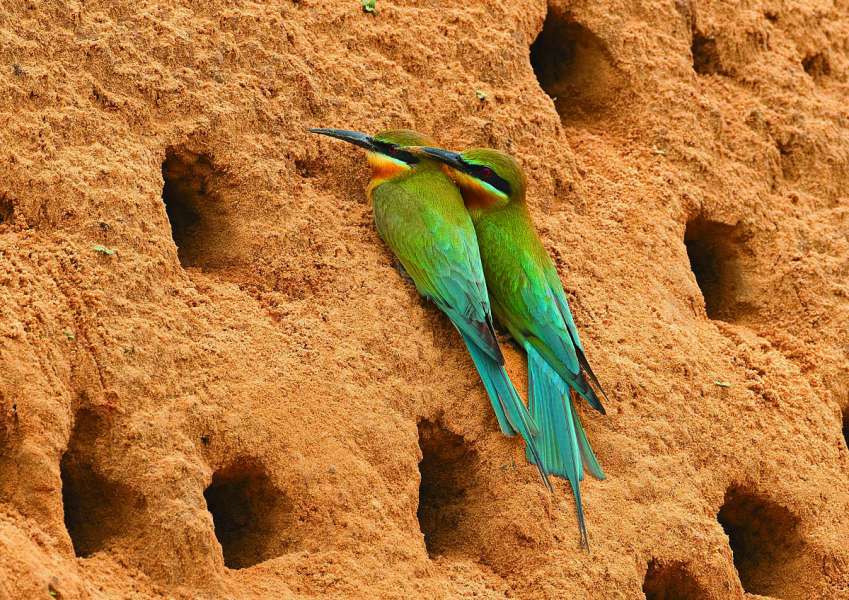
Each spring, Kinmen National Park prepares nesting slopes for blue-tailed bee-eaters (Merops philippinus), offering a safe nesting habitat for these of colorful birds. When winter arrives, the wetlands become home to thousands of migratory birds, creating a natu ral spectacle unique to Kinmen’s winter season.
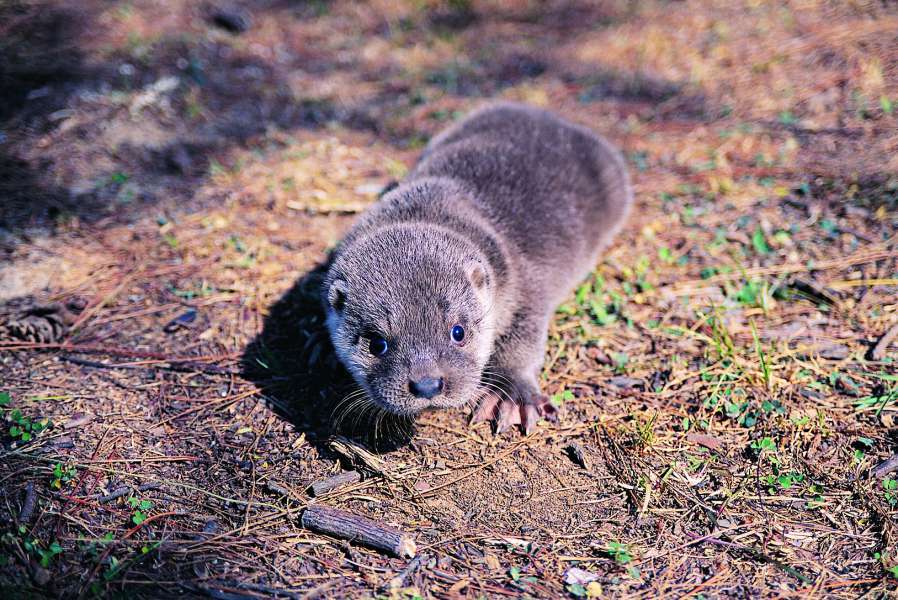
In recent years, KNPH has made the Eurasian Otter Conservation Program the centerpiece of its eco logical work. Through scat DNA analysis, population monitoring, and studies on feeding habits, research ers are gaining a clearer understanding of how otters use different habitats across Kinmen. These data are helping to build habitat-selection models that will form the basis for long-term conservation strategies.
With the joint efforts of the national park, research teams, and local residents, Kinmen continues to move toward a landscape where people and wildlife can coexist.
“Natural restoration isn’t just about environmental en gineering. It’s also an extension of trust,” says Cheng. Previously a military outpost, and now an ecological island, Kinmen National Park has shown that “conservation” is not merely a concept but a daily practice of coexistence between residents and nature.
From Static Displays to First-hand Experiences
In Kinmen, education is not limited to the classroom; it happens in every corner of the island.
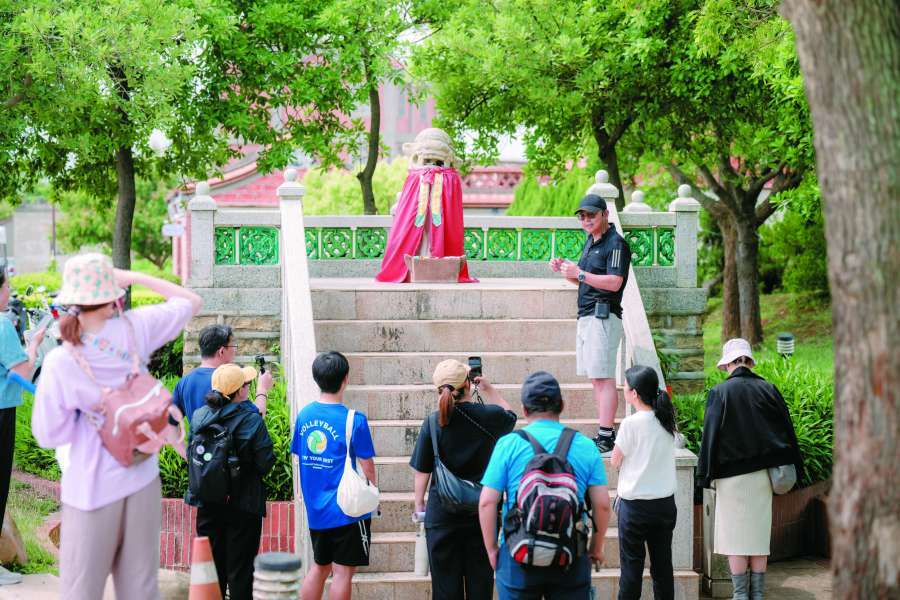
Through school curricula, volunteer docents, and public activities, Kinmen National Park has gradually built a learning system that helps people "understand nature and understand the land." The Zhongshanlin Visitor Center presents the park's overall resources; the Rushan Visitor Center showcases plant life and wetland ecology; and the Lieyu Visitor Center introduces the island's military landscapes, scenic features, and natural ecology. Meanwhile, revitalized military sites throughout the park recreate historic wartime settings. These places are not merely exhibition venues-they function as open-air classrooms where visitors learn about the environment and history through walking, seeing, and experiencing.
In addition to its static exhibition spaces, the park headquarters has, since 2001, organized the "Environmental Education Program for Elementary School Students." Except for a one-year pause during the pandemic, the program has been running for 24 years. By combining visitor center exhibitions with Kinmen's history, culture, and natural environment, the program's teaching materials help fourth-grade students understand the unique value of this island.
In recent years, the headquarters has also introduced a series of "military experience programs," transforming former military sites into dynamic spaces for environmental education. These include an escape-room activity inside the Nanshantou Tunnels; shooting exercises for Kinmen Senior High School students at the Nanshantou 4th Battalion Area, the Guningtou 3rd Battalion Area, and the Jiacun Combat Training Ground; and marching activities that link together historical battle sites, allowing participants to experience the rhythm and pressure once faced by the soldiers who defended the island.
True immersion can only happen when people experience something for themselves. These activities are designed to help participants understand the value of peace and learn to cherish it. They are not meant to provoke excitement, but to guide people into history through all five senses, allowing them to truly grasp what peace means.
Over the past 30 years, Kinmen National Park has witnessed the transformation of this island from a battlefield to land of peace. Former bunkers and tunnels have become spaces for environmental education, while once-forgotten traditional houses have been revived through restoration and adaptive reuse. What has been preserved is not only the architecture and ecology, but also the enduring connection between the people and their land.
"We hope that Kinmen's culture can continue to breathe, allowing residents to thrive together with this land," says Cheng. Moving forward, the headquarters will keep strengthening collaboration with local communities and expanding environmental education, so that more residents can become partners in cultural preservation and younger generations can come to understand nature and peace through lived experience. At the same time, efforts toward international exchange and low-carbon transition will continue-positioning Kinmen as a model of peace education and a sustainable island, and sharing its journey from battlefield to co-prosperity with the world.
As sunset glows on the red-tiled roofs, as migratory birds sweep across the wetlands, and as gentle music lingers through old tunnels, Kinmen is quietly, tenderly writing the next chapter of its future.

Kinmen at 30: The Celebrations Don’t Stop
In celebration of the 30th anniversary of Kinmen National Park, KNPH has launched a series of events starting in July. Through different formats, these programs allow the public to witness and better understand the island’s ongoing transformation.
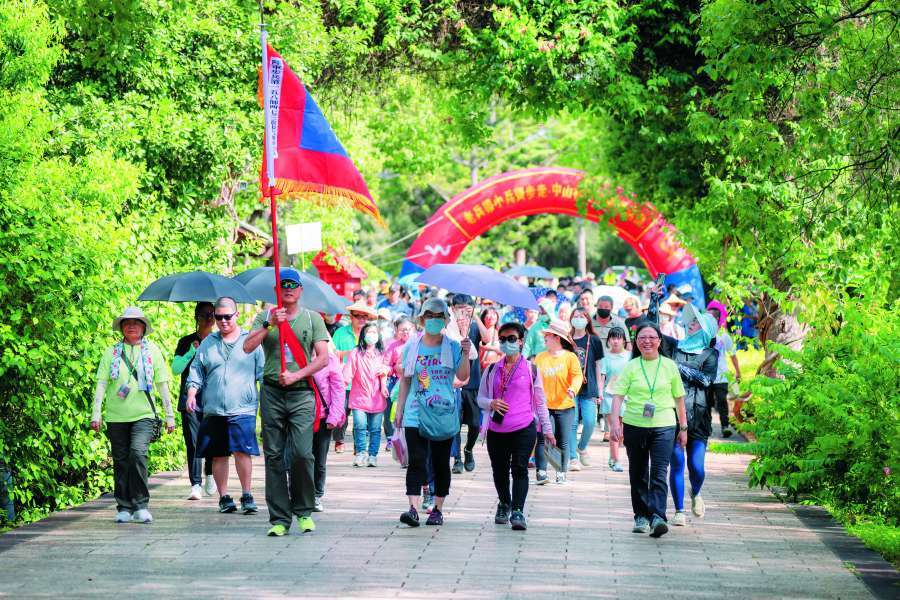
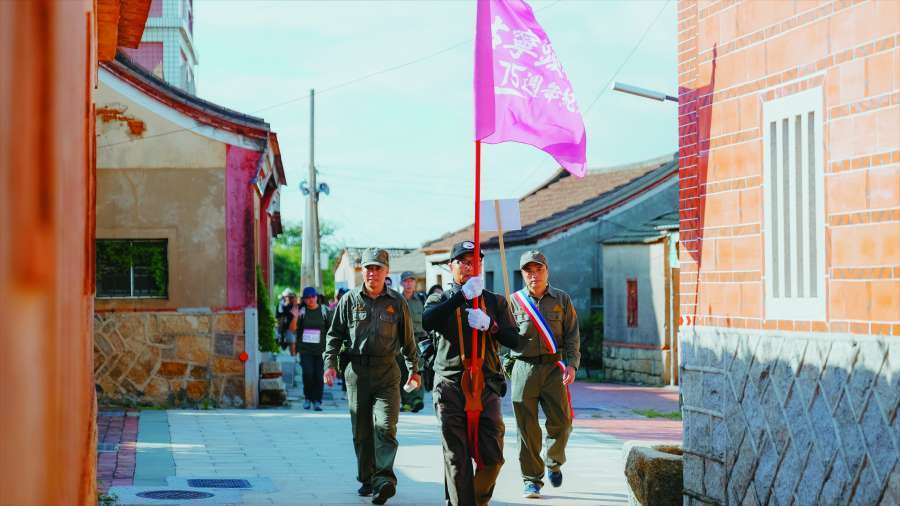
The first to kick off in July was “Veterans Lead the Young: A Zhongshan Forest Military Experience.” Designed for families spanning three generations as well as participants with disabilities, the event took place along the accessible trails of the Zhongshan Forest Recreation Area. Combining marching activities with interactive challenges, it offered the public a chance to experience Kinmen’s distinctive military landscape and to step directly into historic battlefield sites.
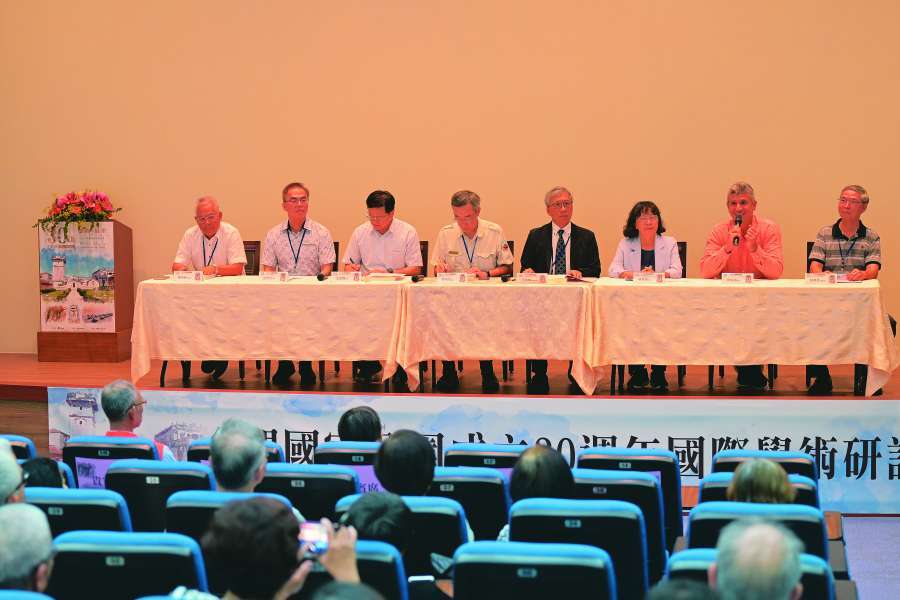
In August, the “International Academic Symposium for the 30th Anniversary of Kinmen National Park” brought together ex perts from Taiwan and abroad to explore new trends in the preservation of battlefield cultural heritage and nature conser vation, viewing Kinmen’s 30 years of experience from a global perspective. Distinguished scholars and specialists from the United States, Japan, South Korea, Malaysia, and Singapore joined the event, engaging in in-depth exchanges on emerging issues such as climate change, environmental conservation, social resilience, inclusiveness, sustainable development, local revitalization, technological applications, and creative innovation. Their discussions helped amplify Kinmen’s story, extend ing the park’s influence on the international stage.
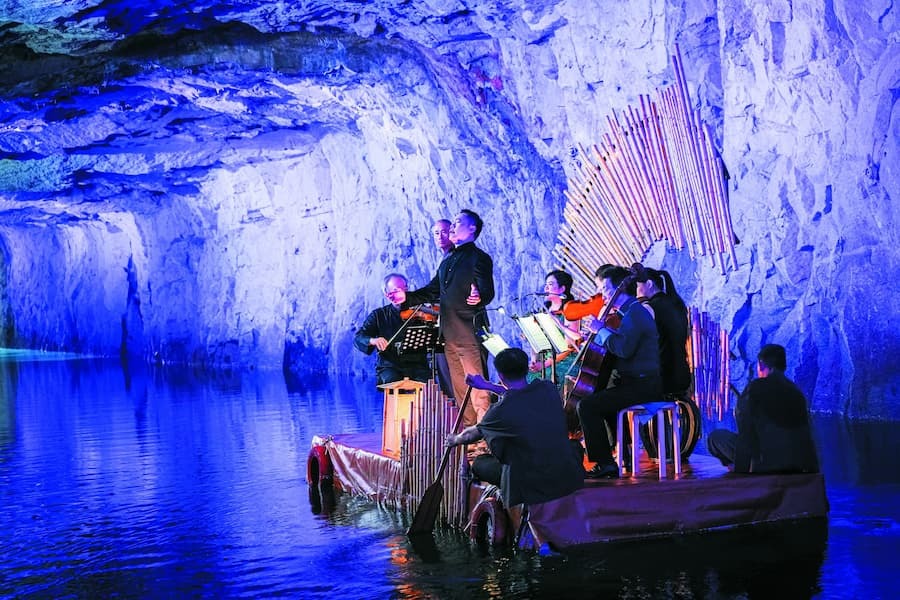
After the October anniversary celebrations, the grand finale followed with the 2025 Kinmen Tunnel Music Festival. As the sounds of a string quartet and human voices resonated through the granite tunnels, the melodies became a hymn to peace. Many in the audience closed their eyes, quietly listening as the notes bounced and intertwined along the rock walls — as if hearing time itself move. More than a cultural performance, this event symbolizes Kinmen’s transformation from a military frontline into an island of peace.