ESG/USR PARTNERS | ESG CORPORATE PARTNER PERSPECTIVE
Article / Cheng Chih-Ya
Photos / Provided by MSIG Mingtai Insurance Co., Ltd.
Interviewee / Lee Chih-Chang, Division Head, MSIG Mingtai Insurance Co., Ltd.
On June 5, 2024, World Environment Day, as the sky was getting darker, a group of people moved cautiously on the beach along the coastline of Taijiang National Park. This was no treasure hunt; it was an act of cleaning the coastal environment. They were helping female land crabs to safely migrate to the ocean, where the crabs would soon release their larvae.
The people were a mix of conservation officers from Taijiang National Park Headquarters (TNPH) and enthusiastic members of the public from a myriad of professions. This seemingly common crab protection initiative quietly paved the way for an extensive collaboration with private enterprises.

Implementing ESG to Discover Shared Corporate Value
Lee Chih-Chang, Division Head of MSIG Mingtai Insurance (Mingtai), recalls his participation in the crab protection event. He notes that the whole serendipitous connection that resulted in the event was because of a retired Mingtai employee who had been volunteering for years at Taijiang National Park. During a leisure trip at the park, they encountered Wang Chien-Chih, Section Chief of TNPH Conservation Research (now heading the Conservation Research Division), by chance, and the possibility for collaboration happened to arise from there.
Before this chance encounter, Mingtai had already integrated ESG concepts into its daily operations with an annual budget allocated for ESG-related initiatives. These include replacing fuel-powered company vehicles with hybrid models; organizing water and electricity conservation competitions; building rooftop gardens; participating in social welfare activities at long-term care centers and nursing homes; and supporting beach cleanup campaigns. Even more importantly, Mingtai has applied sustainability principles within their insurance product development, using insurance to encourage environmentally friendly behavior.
Lee provides a concrete example: “Take, for instance, our residential green energy insurance, which is designed to offer more favorable insurance terms to homeowners who use green building materials and equipment with energy-efficient labels.” Other innovative Mingtai products, including agricultural insurance, electric vehicle insurance, and third-party liability insurance for delivery workers, are specific responses to societal demands for climate action, energy transition, and emerging industries, not just products launched to cater to the ESG trend. Although each is separate, they all revolve around a core principle: Implementing sustainable development goals to discover shared value.
Soaring with the Black-Faced Spoonbills
Lee highlights that these are all incremental steps toward the goal of green finance: “At the end of the crab protection event, TNPH specifically briefed us on their current conservation efforts. We were impressed by their expertise, passion, ideas, and plans. We discovered that they actually align very well with Mingtai’s philosophy.”
Through the experience, Lee learned that every national park headquarters has a strong desire to promote public-private collaborations and engage private enterprises in conservation efforts. As Lee puts it, “Going beyond governmental support, if private enterprises are willing to get involved, too, this will make biodiversity conservation go ever deeper, broader, and more far-reaching.” With Mingtai corporate supervisors’ backing, Taijiang National Park became the first national park to partner with Mingtai.
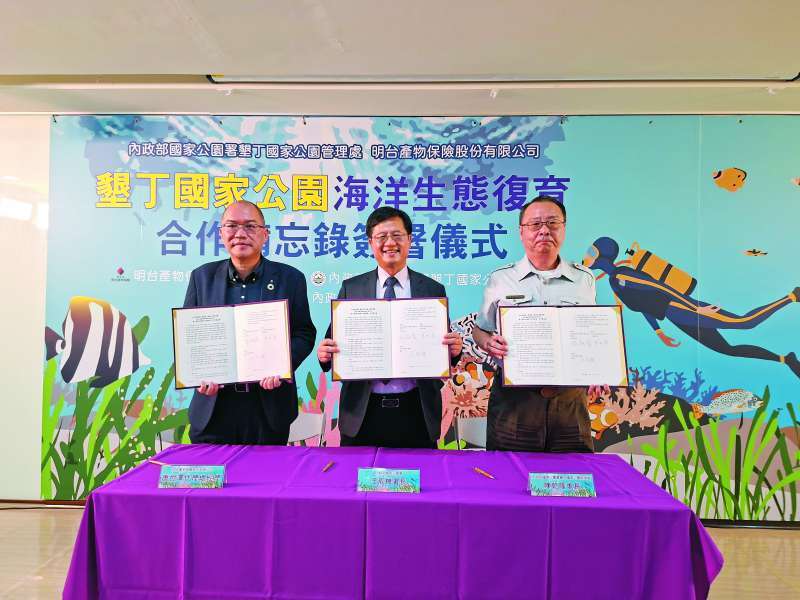
Taijiang National Park serves as a wintering ground for one of the world’s largest populations of blackfaced spoonbills. This made black-faced spoonbill conservation a natural goal for the collaboration. On September 6, 2024, the Mingtai ESG team signed a Black-faced Spoonbill Habitat Management and Corporate ESG Collaboration memorandum of understanding (MOU) with TNPH.
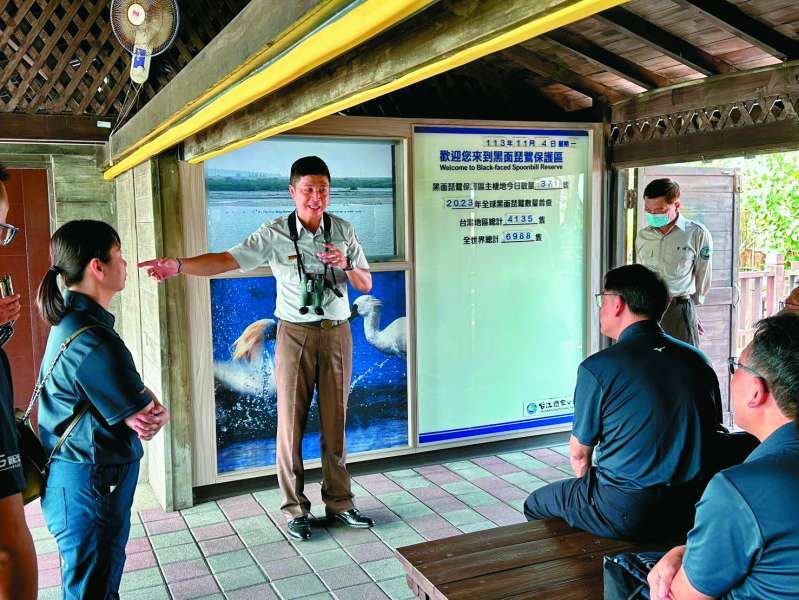
Following this, Mingtai supervisors and employees made onsite visits to gain insight into the details and realities of black-faced spoonbill conservation. Lee shares that this collaboration has primarily focused on creating habitats that are friendly to the species. Black-faced spoonbills migrate southward from South Korea every year, passing through Japan and China before reaching their primary wintering grounds in Taiwan. This is what makes habitat conservation so important. Food is a major factor, and so this requires communication and coordination with local fishers.
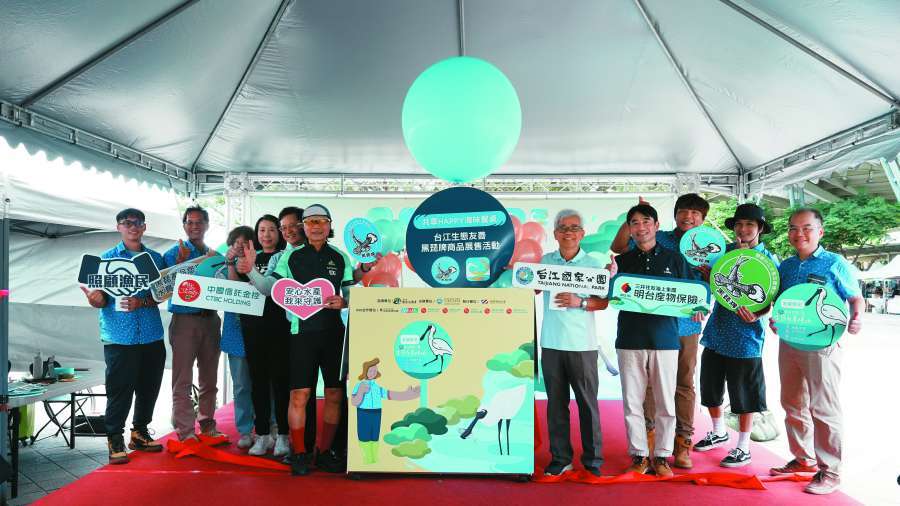
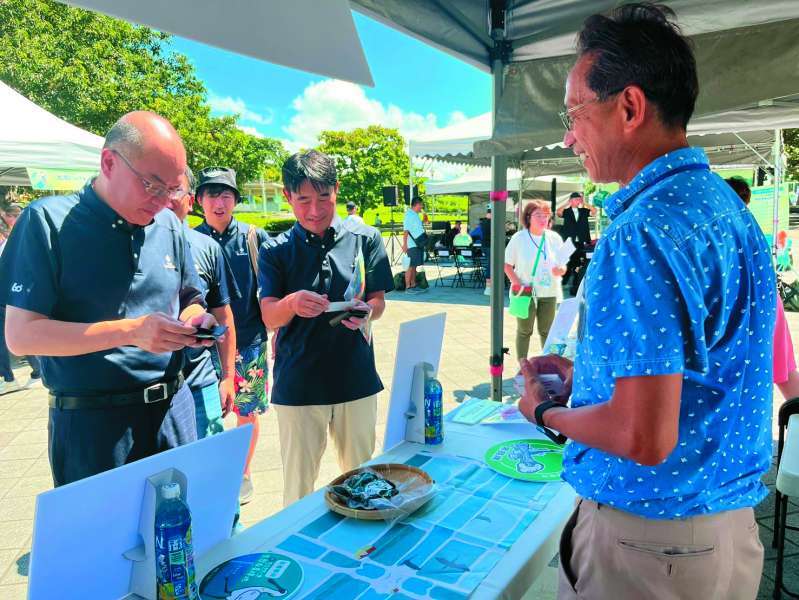
“Fishers would always drain and sun-dry their fish ponds for disinfection purposes after the harvest, leaving black-faced spoonbills without food,” says Lee. “So there was a need for funding to maintain a specific water level, aiming to provide sufficient food for the spoonbills, while at the same time completely disinfecting the ponds, to avoid disrupting the next season’s harvest.” Lee states that Mingtai strongly identifies with environmentally friendly aquaculture practices that form sustainable cycles and balance economic and ecological needs, which echoes the shared-value principle of ‘coexisting with the Earth’ upheld by Mingtai’s Japanese parent company. For those reasons, Mingtai participated in an exhibition and sales event held by TNPH to showcase eco-friendly black-faced spoonbill products.
Mingtai has also devoted substantial resources to improving hardware infrastructure. For example, Mingtai donated HD LCD TVs and other equipment to TNPH to help the public get a great view of the spoonbills from birdwatching pavilions, or even online, all without excessively disturbing the ecosystem. This fully responds to the national parks’ missions in terms of ecological conservation, local industry economy, and recreational tourism.


Getting ESG into the Corporate DNA
With an increased emphasis on sustainable development in recent years, stakeholders look at a company’s ESG report, they want to see not just the company’s internal actions, but also proactive collaborations with external organizations. To Lee, and from a corporate perspective, collaboration with the National Park Service has added significant value to Mingtai’s ESG report. Lee sees ESG’s significance to a business as taking three aspects: risk management—helping clients address climate change; enhancing corporate value and competitiveness; and aligning with the company’s core values and creating a corporate culture.
As the partnership with TNPH grows stronger, it has expanded to include Kenting National Park and SheiPa National Park as well, offering more avenues for employee participation. Lee states, “We want our employees to be truly engaged. That’s why we’ve made national park visits part of the employee educational training program. This sparks employee interest, so they may take family members to the parks on weekends. We also hold talks featuring National Park Service staff, conservation groups, and academic institutions to jointly explore how we can contribute to biodiversity and local revitalization as a property and casualty insurer.”
As part of the MSIG Group, Mingtai Insurance also visited the MSIG Group’s tropical rainforest conservation initiative in Indonesia in 2024. Mingtai understands that environmental protection is a global issue. Lee emphasizes, “We don’t rely solely on quantitative KPIs for effectiveness measurement. This prevents us from falling into the trap of doing things for their own sake.”
The insurance industry has evolved from a mindset focused on claims settlement to one centered on loss prevention. This is also reflected in ecological, societal, and economic trends within climate change. “Every step of Mingtai’s ESG practice aligns with our core insurance business. We monitor developments in all sectors through our expertise in risk management, and we identify linkages with sustainable development by leveraging our core competencies.”
The collaboration between Mingtai and the national parks ranges from the ocean coastlines to the mountain forests. Corporate participation is driving a solid understanding of the concepts for a wider audience. “This is precisely what ESG should be,” says Lee. “Only then can it truly evolve from mere ‘regulatory compliance’ to ‘creating value’, and from the ‘report’ to true ‘influence’.”