
Article / Cheng Chih-Ya
Interviewee / Chang Shun-Fa, Director, Taijiang National Park Headquarters, National Park Service (former Chief of Recreation Management Division)
Early one Saturday morning, when most people are still fast asleep, Zhushan Show Chwan Hospital medical shoulder on their backpacks and set off to provide medical care at high altitude. Along the quiet nighttime coastline of Taijiang National Park, Mingtai Insurance employees, with flashlights in hand, carefully clear a path for egg-bearing female land crabs. And atop landslide terrain above Taroko’s Liwu River estuary, Tzu Chi University faculty and students brave the scorching sun to hang seed bags, vigilantly fighting against invasive species. These kind of ESG and USR practice have long been part of our daily lives; through all our collective efforts, we make that vision clearer and clearer.
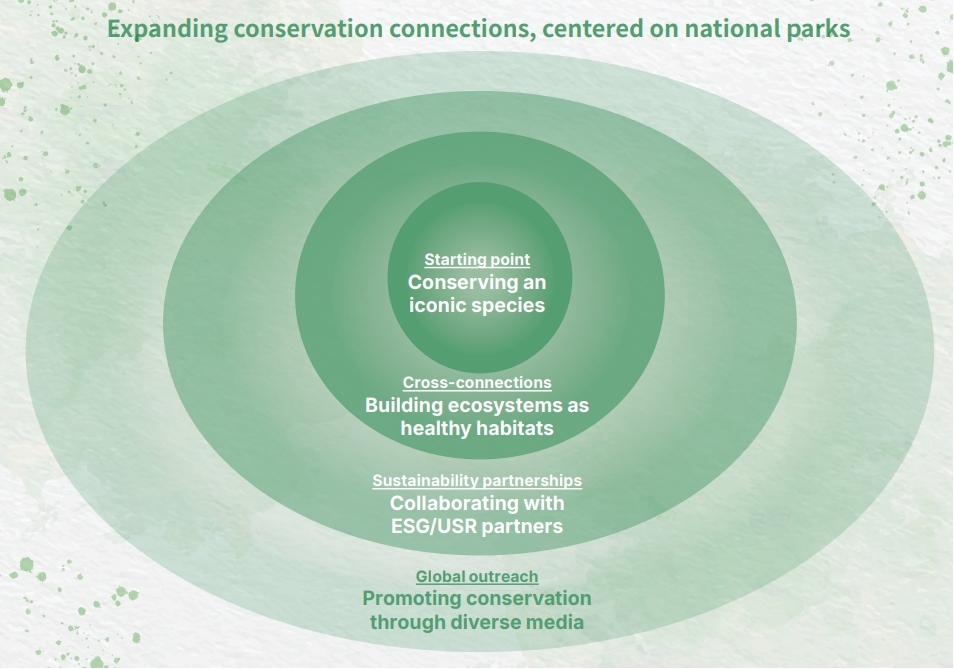
The 20-year corporate trail adoption program in Yushan National Park; the habitat restoration program for black-faced spoonbills (Platalea minor) in Taijiang National Park; the “battle to help the God of the Land” in Taroko National Park… Through contributions of their expertise and resources, the medical, finance, technology, and academic sectors are partnering with the national parks. National parks are no longer in the fight alone; they have evolved into hubs that create ESG, USR, and local revitalization connections.

Cross-Disciplinary Integration Adds Strength
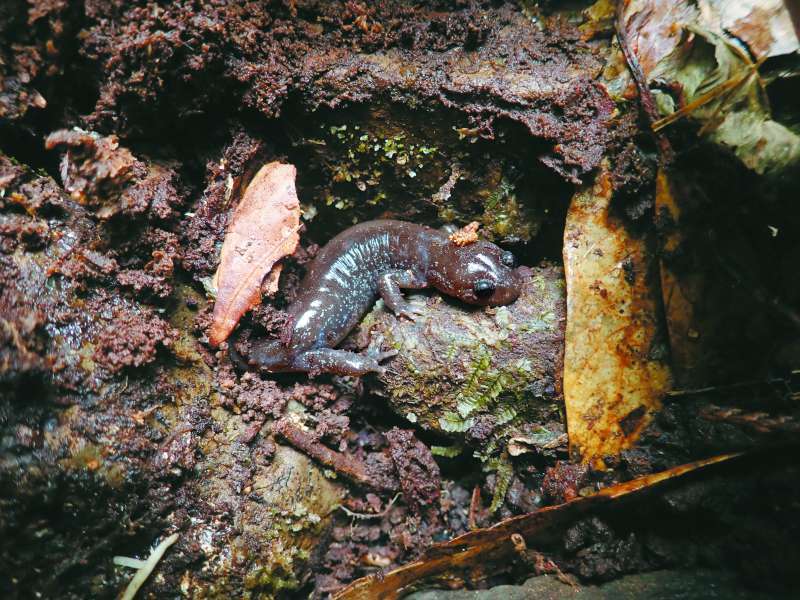
The Salamander Restoration Project serves as a prime example. Spanning three national parks (SheiPa, Yushan, and Taroko), the project collaborates with academic institutions on a comprehensive study of the multifaceted interactions between geography, flora, fauna, and climate change. Rather than focusing on single-species research, it aims to build an extensive repository of ecosystem knowledge.
Some corporations have offered financial support. In addition to these, integrated chip manufacturers have also contributed their tracking and monitoring technology; optics manufacturing companies have sponsored ecological monitoring cameras; and telecommunications providers have installed communication equipment. Chang Shun-Fa, then–Chief of the Recreation Management Division at the National Park Service, makes this point emphatically: “Even more importantly, employees from our collaborating partners also personally engage in habitat restoration efforts. This transforms ESG from mere report data to a real first-hand experience, and identification with the ESG goals.”
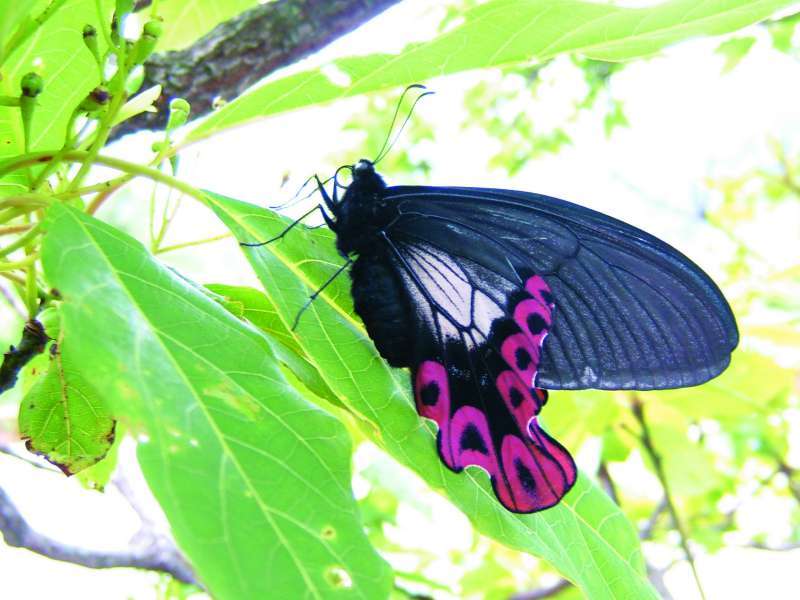
The value of cross-disciplinary connection is also reflected in the conservation of the Broad-tailed Swallowtail Butterfly (Agehana maraho). This endangered species, whose larval stage feeds exclusively on Taiwan sassafras (Sassafras randaiense), is endemic to and considered a national treasure in Taiwan. SheiPa National Park Headquarters first used academic research to identify relationships between the local geography, climatic conditions, and species’ population distribution. Based on this, they engaged residents from R’uzyan Tribal Village to give Taiwan sassafras saplings close-up care. The Headquarters further guided the entire group to design ecotourism routes. If you come here and see the beautiful butterflies, you will understand how crucial the roles of habitat conservation and Indigenous culture are in helping local revitalization advance hand in hand with ecological education.
From Solo Efforts to Collective Strength
The NPS officially launched its Public-Private Collaboration Platform on September 1, 2025. This platform is another step forward for cross-domain collaboration. The platform clearly displays the requirements and contributions of industry, government, and academia at a single glance; and through this, it builds the mutual trust that is required to achieve a truly sustainable future, with biodiversity benefits reaching every corner.
Chang explains that, in the past, corporations have attempted to fulfill their corporate social responsibilities (CSR) through “giving back to society”. This tends to position national parks as passive recipients. However, the international trend has developed from the Task Force on Climate-related Financial Disclosures (TCFD) in 2015 to the Taskforce on Nature-related Financial Disclosures (TNFD) in 2021. Now, TNFD highlights the concept of ‘biocredits’, and new opportunities have emerged.
“With our long-standing experience in scientific research,” says Chang, “national parks are able to help companies understand the true value of biodiversity.” Chang shared that he has visited 74 companies over the past two years, and has successfully established 51 collaborations. This transforms the collaboration model into “what we take from nature, we give back to nature.”
In the next phase, NPS will collaborate with the Big Four accounting firms to ensure that collaboration projects comply with the upcoming IFRS S3 (biodiversity-related financial information disclosure) standards. This will enable its ESG investments to truly be reflected in their sustainability report, and to adhere to global standards.
Past collaborations with academia were similarly more narrowly focused on single-species research. “Once we’ve accumulated the findings,” says Chang, “we must then conduct comprehensive studies of the entire ecosystem, if we want it to be meaningful. That’s why we started providing postgraduate thesis research grants to the universities and colleges near the national parks. The graduate students’ thesis topics can really integrate with the national parks’ specific needs.” Subtly but powerfully, this has formed an incentive within academia for researchers to get out of the lab and conduct in-depth field research in nature. At the same time, they can cultivate the talents needed for the next generation of conservation.

Sustainable Development Is Part of Our Daily Lives
Chang states that the purpose of the ESG Public-Private Collaboration Platform promoted by the NPS is to “use an open, transparent online platform to help corporations select collaboration partners that meet their needs, whenever they want”. Whether it’s iconic species conservation, eco-friendly farming product subscriptions, or low-carbon ecotourism, there’s certain to be space for every company to participate.
For instance, a single-species restoration project can be jointly funded and administered by multiple companies; or specialized guidance can be provided to help a company create an “eco-island” within their own manufacturing plant area that aligns with local ecological planting practices. In addition, the NPS will be launching low-carbon ecotourism routes in the coming year. These will integrate local produce with green transportation, and a portion of the revenue will be allocated as ecological restoration funds.
The public offers direct support to conservation through their spending; corporate employees experience Indigenous cultures and habitat restoration in tribal communities; university students complete their ecological research papers within national park sites… Events such as these show that conservation priorities have shifted from designating protected areas, to building sustainable ecosystems. Not only does the NPS invite everyone to jointly serve as a guardian for Taiwan’s most precious natural assets, but it also demonstrates how the environment, society, and economy can thrive together.
These collaborative relationships, rooted in sustainable development, will form a sort of ‘national park studies’, giving everyone a chance to help maintain the environment.
This is a commitment in practice: As we transition from beneficiaries of biodiversity to co-creators of its value, we commit to preserving every breath of air, every drop of water, and every vista of mountains and sea on this island as an eternal gift – one worthy of passing down from generation to generation.


